From 'Me' to 'We': The Psychological Alchemy of Audience Engagement
The Threshold of Connection
Picture the moment. You’re one of 50,000 souls flooding into a stadium, a single point of data in a sprawling human matrix. The air crackles with anticipation, but your experience is still fundamentally your own. You navigate the concourse, find your seat, and observe the vastness of the space, acutely aware of your individuality. Then, the house lights fall, a roar erupts, and a single, unified pulse seems to seize the entire architecture. In that instant, the psychological distance between you and the tens of thousands of strangers around you evaporates. The concept of "me" dissolves into the powerful, intoxicating reality of "we."
This transformation is not accidental; it’s the holy grail of live event production. For producers, artists, and brands, the goal is no longer just to entertain an audience but to forge a collective, to turn a gathering of individuals into a unified, sentient body. Achieving this requires a deep understanding of the psychological mechanics of mass audiences—the unseen forces that govern how we connect, feel, and act when we become part of a crowd. It’s a craft that blends art, science, and some of the most advanced Immersive Event Technology available today.
The Science of Oneness: Core Psychological Drivers
At the heart of this collective phenomenon are several key psychological principles. Understanding them is the first step toward architecting events that don't just capture attention but create genuine, lasting human connection.
Social Identity Theory
This theory posits that a significant part of our sense of self is derived from the groups we belong to. At a concert, festival, or sporting event, the shared focus on the performance or game creates a powerful, temporary ingroup. The jersey you wear, the artist you’re singing along with, the sheer fact of being in that space at that time—it all reinforces a shared identity. The external world fades, and for a few hours, your primary identity is "fan," "attendee," "participant." This shift is the foundational layer upon which all other engagement is built.
Deindividuation and Shared Emotion
Anonymity in a crowd lowers self-consciousness. This state, known as deindividuation, allows individuals to shed the inhibitions that govern their everyday behavior. It’s why you might scream a lyric at the top of your lungs or hug a stranger after a championship-winning goal. This isn’t a loss of self, but a liberation into a collective self. This liberation is amplified by emotional contagion—the rapid spread of emotions through a crowd. One person’s visible joy can cascade through a section, which then ripples through the entire venue, creating a powerful feedback loop of shared feeling.
Architecting Unity: The Role of Synchronized Light
These psychological principles are the invisible architecture of audience engagement. But how do you make that architecture visible, tangible, and intentional? How do you accelerate the shift from ‘me’ to ‘we’? The answer lies in synchronization. Humans are neurologically wired to feel a sense of unity through synchronized action—from ancient drum circles to modern flash mobs. The most powerful tool for achieving this on a mass scale today is light.
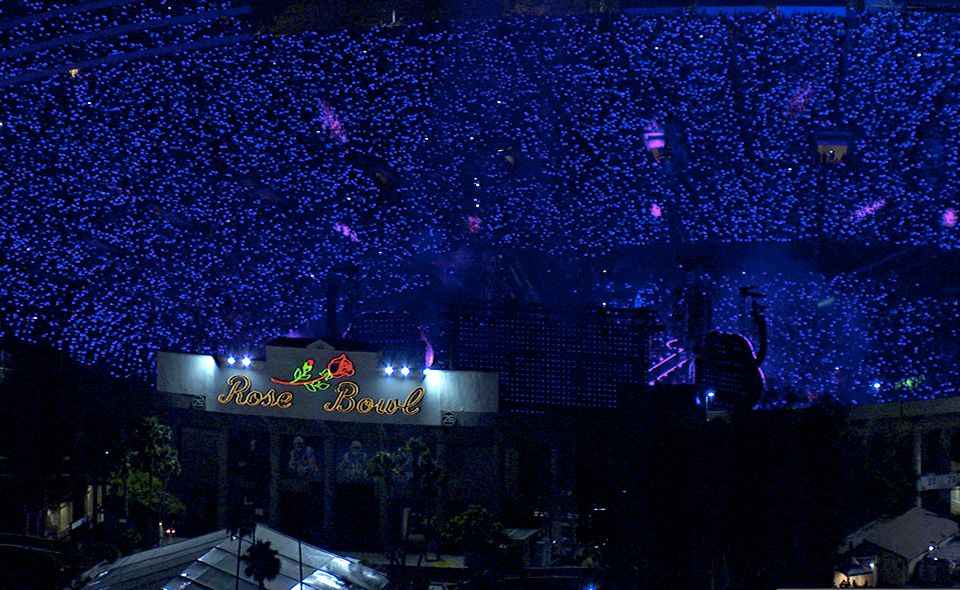
When the Coldplay Xylo Band first lit up on the Mylo Xyloto tour, it represented a paradigm shift. For the first time, every single member of the audience became a pixel in a vast, dynamic canvas. The crowd wasn’t just watching the show; they were the show. This is the core of what Xylobands technology enables: it takes the abstract feeling of unity and makes it breathtakingly real.
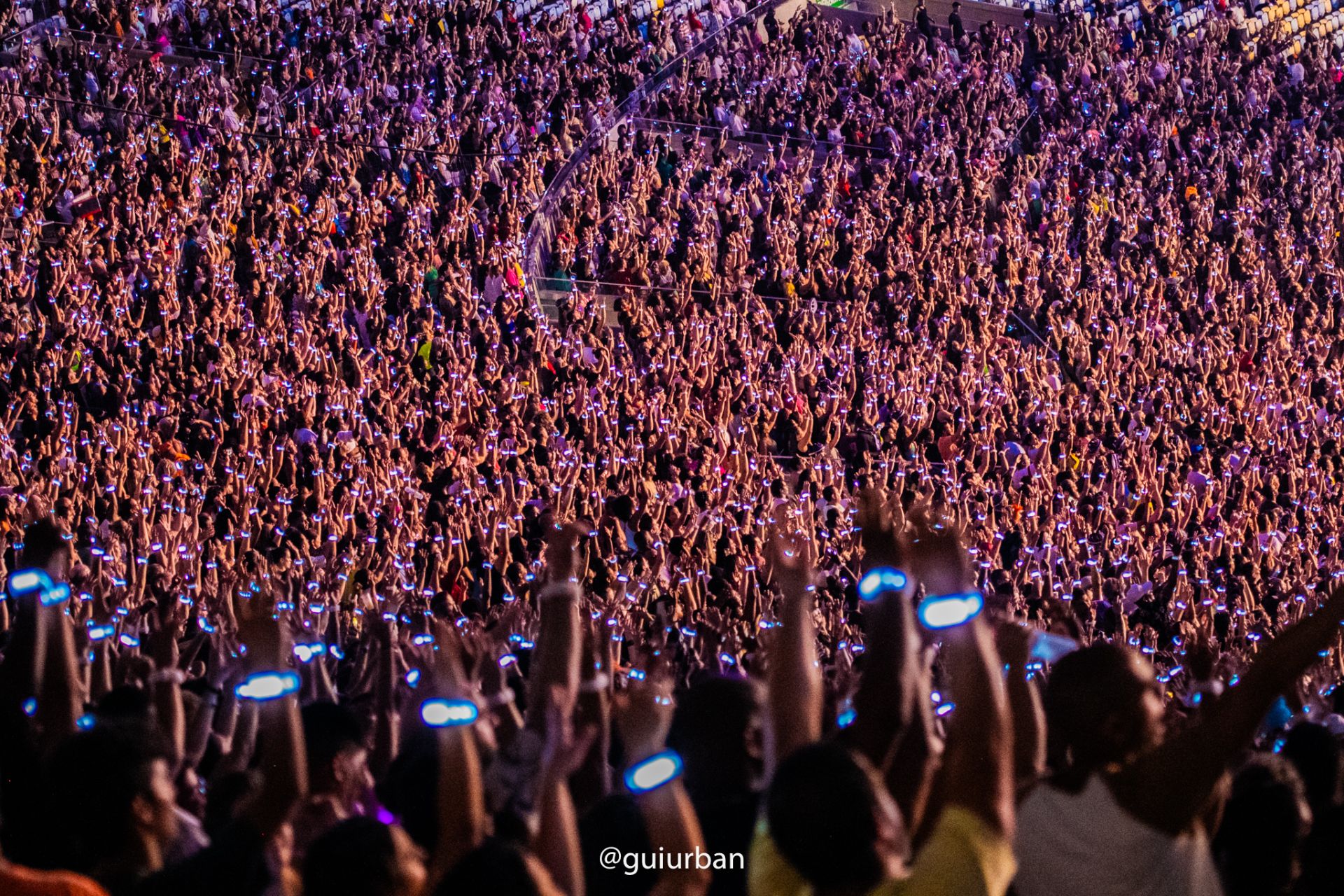
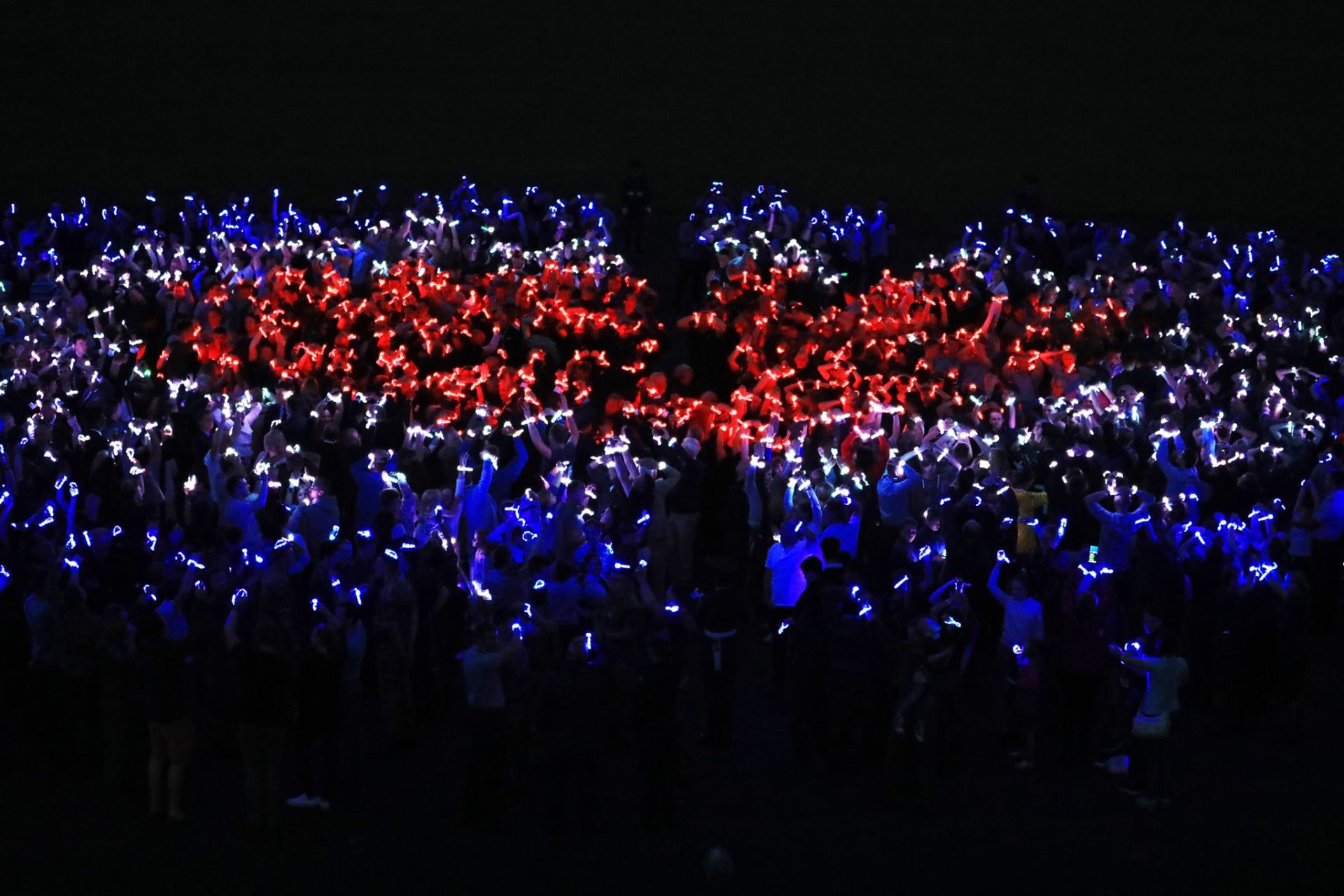
This technology—whether in the form of LED Bracelets, Festival Wristbands, or custom LED Lanyards—acts as an invisible conductor, unifying tens of thousands of people in a single, perfectly timed moment. The system of Radio Controlled LED Wristbands allows a show designer to choreograph the crowd itself, painting with light across the entire stadium. This visual confirmation of unity—seeing your wristband light up at the exact same moment as 50,000 others—is a profound psychological catalyst. It provides immediate, powerful proof that you are part of something larger than yourself.
The Canvas in Action: From Festivals to Global Brands
The applications are as diverse as the events themselves. At an electronic music festival like Primer in Greece, LED wristbands can pulse in perfect sync with the DJ’s beat, transforming the audience into a living, breathing visualizer and deepening the collective euphoria. On a global tour for an artist like Maluma or Wizkid, these Concert Wristbands create an epic sense of scale, ensuring every single person, from the front row to the highest tier, feels like a direct participant in the spectacle. The shared experience is documented on thousands of phones, broadcasting the visual unity to a global audience.
This isn’t limited to music. At major sporting events like the Davis Cup or for iconic brands like Formula One, Wearable LED Technology transforms a passive audience into an active participant in the ceremony. Imagine celebrating a 75-year legacy where fans for ten different teams, each with a custom-branded pendant, are united in a singular, choreographed light show. This is the power of Corporate Event Activations that prioritize genuine connection. It forges a shared memory that binds the fan to the brand long after the event concludes.
Closing the Loop: A Shared Pulse
This technology also creates a powerful feedback loop between the artist and the audience. The performer isn’t just playing to a dark, anonymous sea of people anymore. They are seeing their music reflected back at them in waves of synchronized light, a real-time visualization of the crowd’s energy. This connection fuels the performance, elevates the energy, and reinforces the very sense of unity that Jason Regler first envisioned when the concept for Xylobands was born: a moment where the crowd and the artist become one.
Ultimately, engineering profound LED Crowd Experiences is a form of psychological alchemy. It’s about understanding the deep-seated human need to belong and using tools like Immersive Events technology to meet that need. It’s a process of dissolving the individual ego, not to erase it, but to allow it to merge into a temporary, transcendent collective. By turning the audience into the spectacle, we don’t just create a memorable show; we create a shared identity, a shared pulse, and a shared, unforgettable story.