From Lighters to LEDs: The Evolution of the Live Audience
The Spark: A Sea of Flames
It’s a scene etched into the collective memory of live music: the slow, deliberate ballad begins, and one by one, tiny flames emerge from the darkness. For decades, the simple act of holding up a lighter was the definitive symbol of audience-to-artist connection. It was analogue, unprompted, and deeply human—a spontaneous gesture of solidarity that transformed a passive crowd into a field of light. This was the birth of large-scale audience participation, a visual chorus echoing the music.
As technology progressed, the flicker of lighters gave way to the blue-white glow of mobile phone screens. While the medium changed, the impulse remained the same: a desire to be seen, to connect, and to physically manifest the emotional energy of a shared moment. But these were still individual acts, beautiful in their randomness but limited in their scope. The true revolution in audience participation was yet to come, and it would require a shift from individual gestures to a collective, synchronised experience.
The Vision: An Audience Illuminated
The next leap forward wasn’t just a technological upgrade; it was a fundamental reimagining of the relationship between the performer, the production, and the people in the seats. The question became: what if the audience could become part of the show’s design? What if every single person could be a pixel in a vast, moving canvas of light?
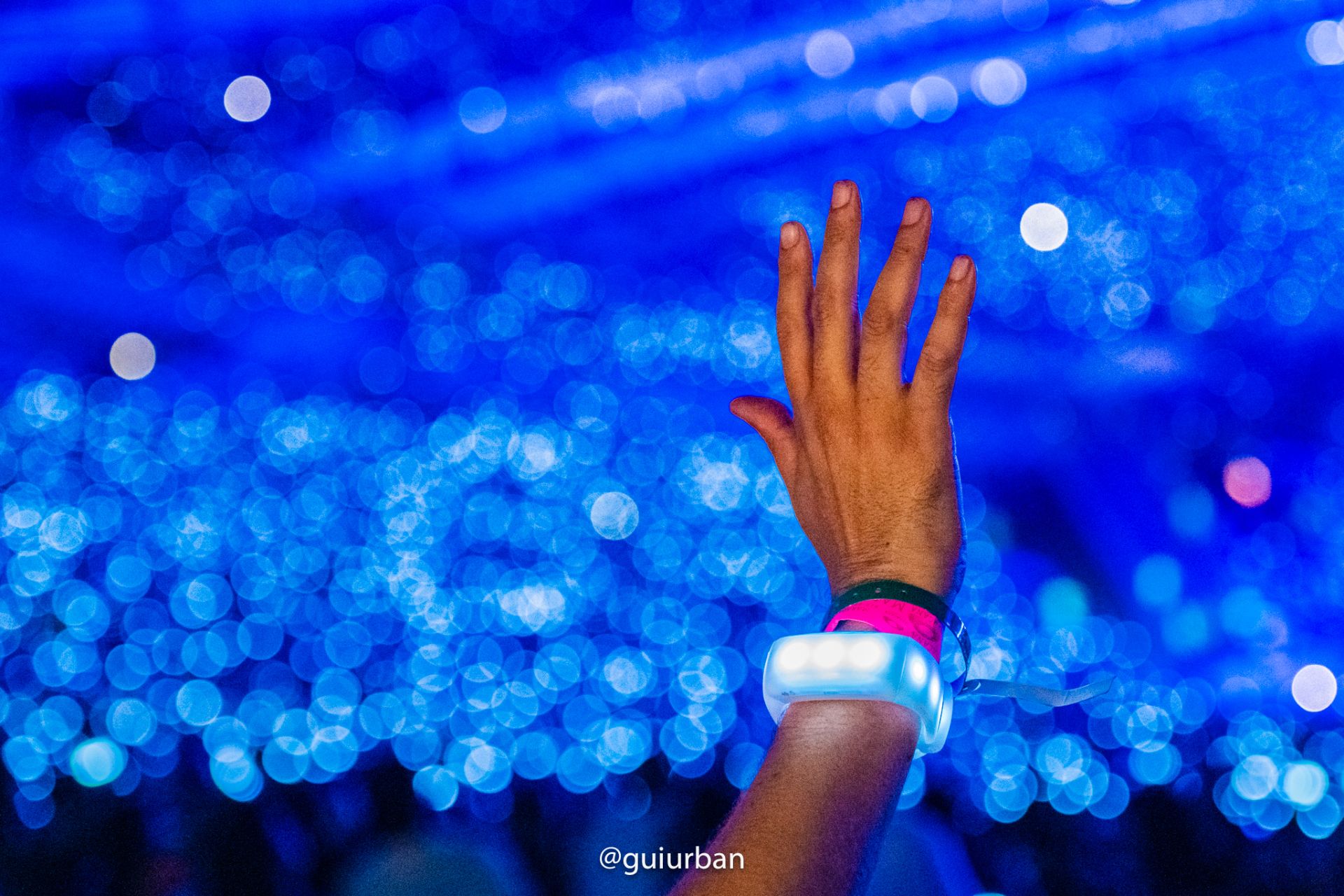
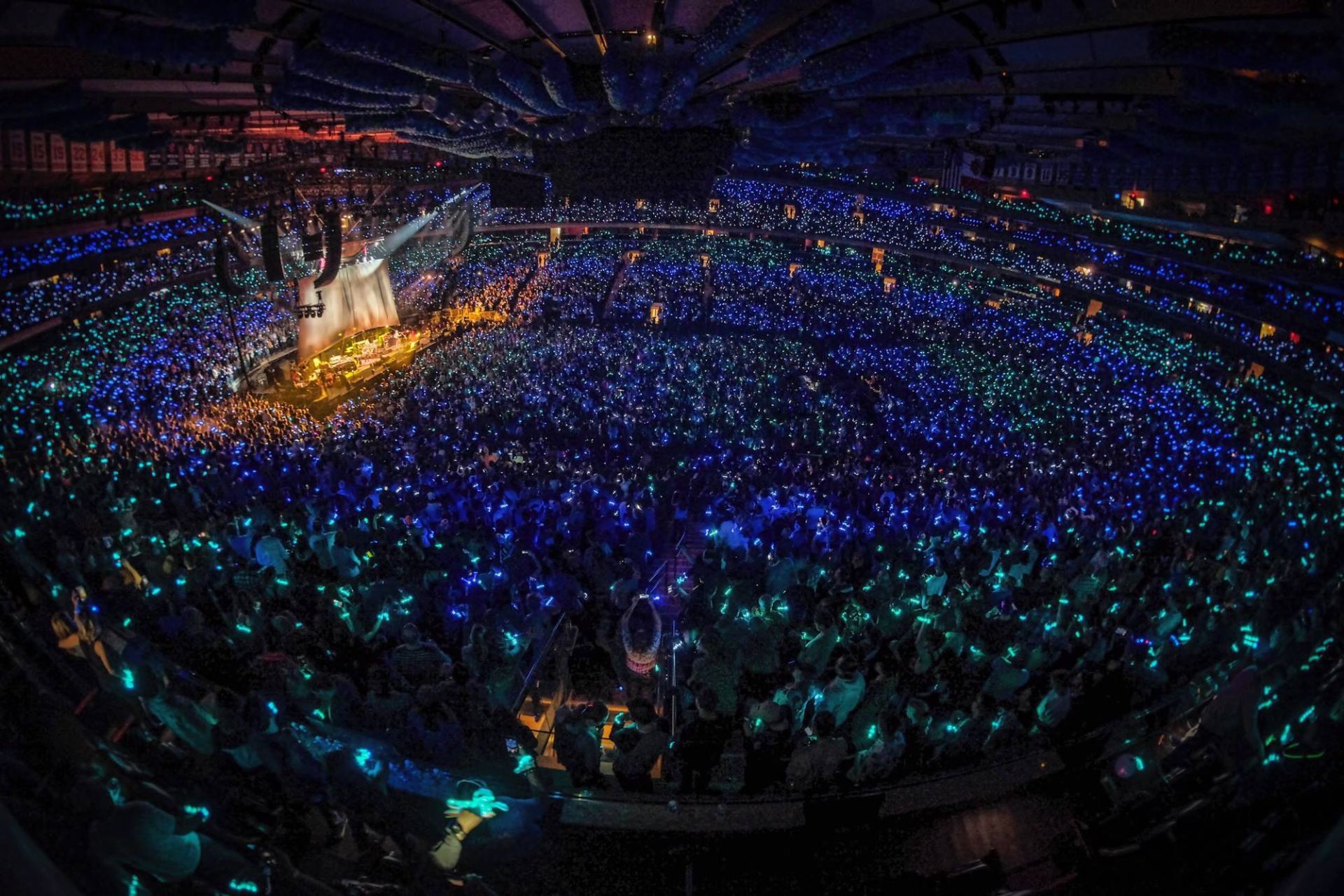
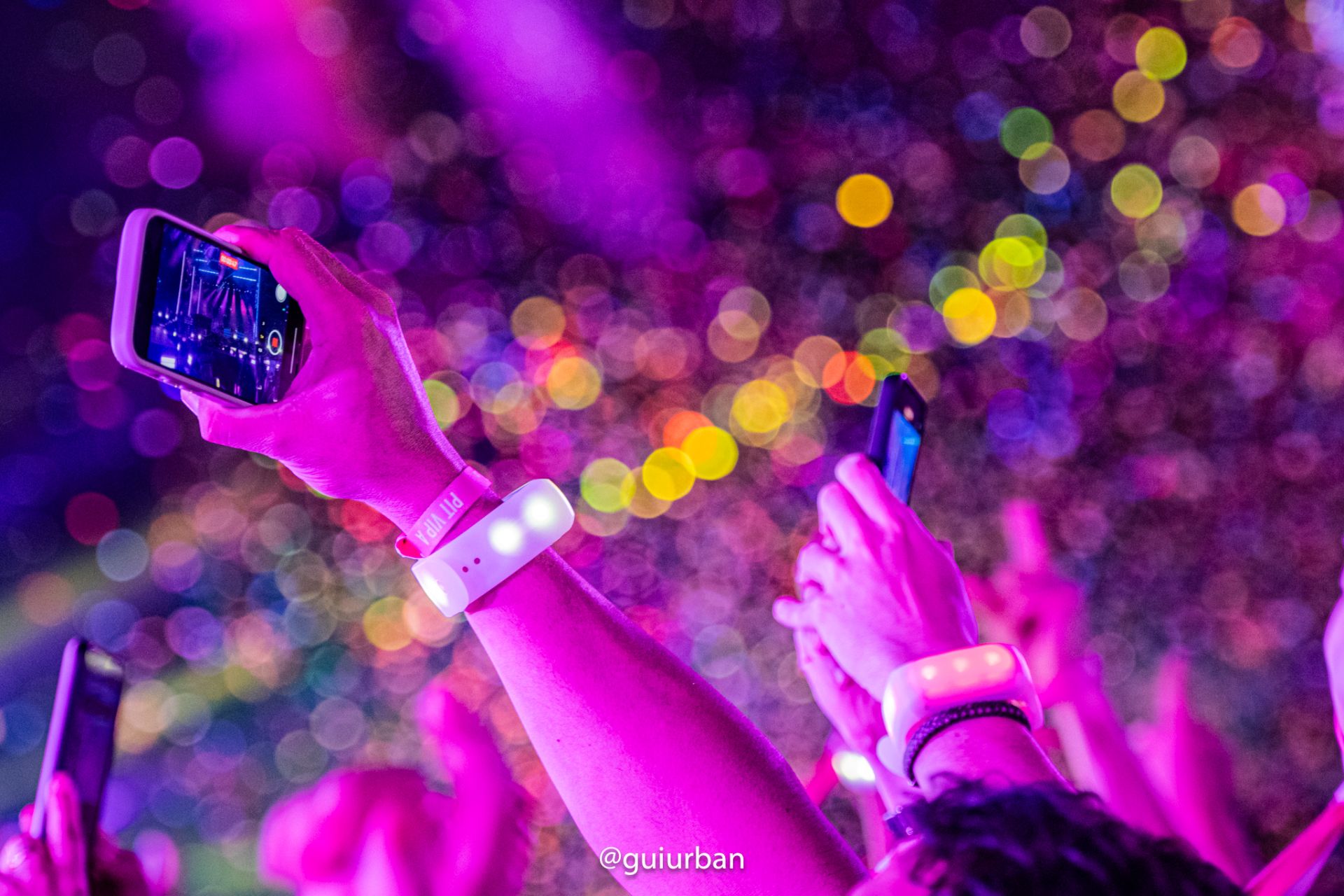
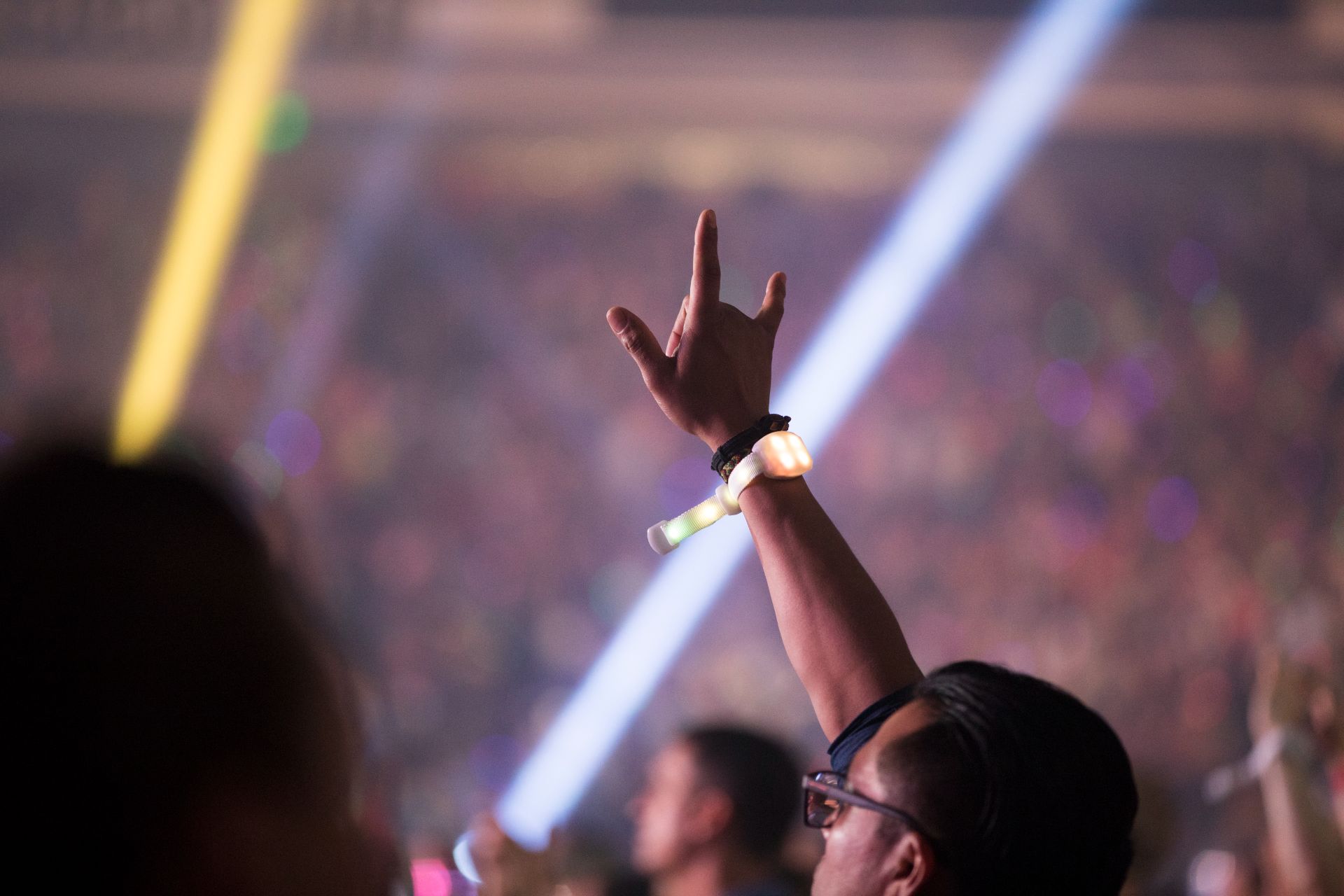
This was the vision that sparked the invention of Xylobands. Inspired by the lyrics of Coldplay's "Fix You" at Glastonbury, our founder, Jason Regler, pictured an audience not just holding lights, but wearing them. He imagined a technology that could synchronise tens of thousands of individuals into a single, breathtaking spectacle, controlled in real-time to match the emotional arc of a performance. The Coldplay Xyloband was born from this idea, debuting on their Mylo Xyloto tour and forever changing what was possible in a live setting. The era of radio controlled LED wristbands had begun.
The Technology: Engineering a Collective Experience
Moving from a sea of disconnected phone screens to a fully integrated light show required a new kind of immersive event technology. The challenge was immense: how to reliably control thousands—or even tens of thousands—of individual light sources in perfect sync, often across the challenging radio frequency environment of a stadium or festival field.
The answer lay in developing robust RF systems capable of sending complex commands to purpose-built LED wearables. Unlike a simple on/off switch, this technology allows show designers to paint with the crowd, creating intricate patterns, dynamic chases, and waves of colour that flow across the venue. This turns the audience from passive spectators into a living, breathing part of the stage design.
Today, this wearable LED technology extends beyond the wrist. We now see LED Lanyards and even custom shapes like the Xylo Pendants used for the Formula 1 75th Anniversary event, where thousands of fans became part of a broadcast-ready spectacle. It’s a testament to how far the technology has come, offering creative teams an ever-expanding toolkit for crafting LED crowd experiences.
The Impact: From Concerts to Corporate Stages
While the technology was forged in the world of stadium rock, its applications have proven to be universal. The power of a shared, illuminated experience transcends genre and venue. At music festivals like Greece’s PRIMER, festival wristbands unite thousands of fans into a single, pulsating entity, amplifying the energy of the DJs on stage. The same principle applies to major sporting events like the Davis Cup or the FIFA World Cup, where national colours can wash over the stands to celebrate a victory, creating powerful, camera-ready moments of unity.
This evolution has also found a powerful home in the corporate world. Brands are increasingly recognising that memorable corporate event activations are built on shared experiences. When an entire conference audience is lit up in brand colours to punctuate a CEO’s keynote or celebrate a product launch, the message is no longer just being heard; it’s being felt. It transforms a standard corporate gathering into one of the most compelling immersive events imaginable, creating a sense of unity and excitement that lingers long after the lights go down.
The Future: A More Connected Canvas
The journey from lighters to LEDs is more than just a story about technology; it’s a story about human connection. The desire to share a moment, to be part of something larger than ourselves, has always been at the heart of the live experience. Early forms of participation were analogue and spontaneous, while today’s LED experiences are digitally choreographed and infinitely scalable, yet the fundamental goal remains the same.
Looking ahead, the evolution continues. As event technology becomes more integrated and data-driven, we will unlock even deeper forms of interaction. The audience is no longer just a collection of individuals; they are a sentient canvas, a dynamic instrument that can be played, and an essential partner in the art of creating unforgettable live events. The single flame has become a networked constellation, and the future of audience participation is brighter than ever.