The Global Circuit: Navigating Freight, Customs, and Logistics for World Tours
The Moment Before the Magic
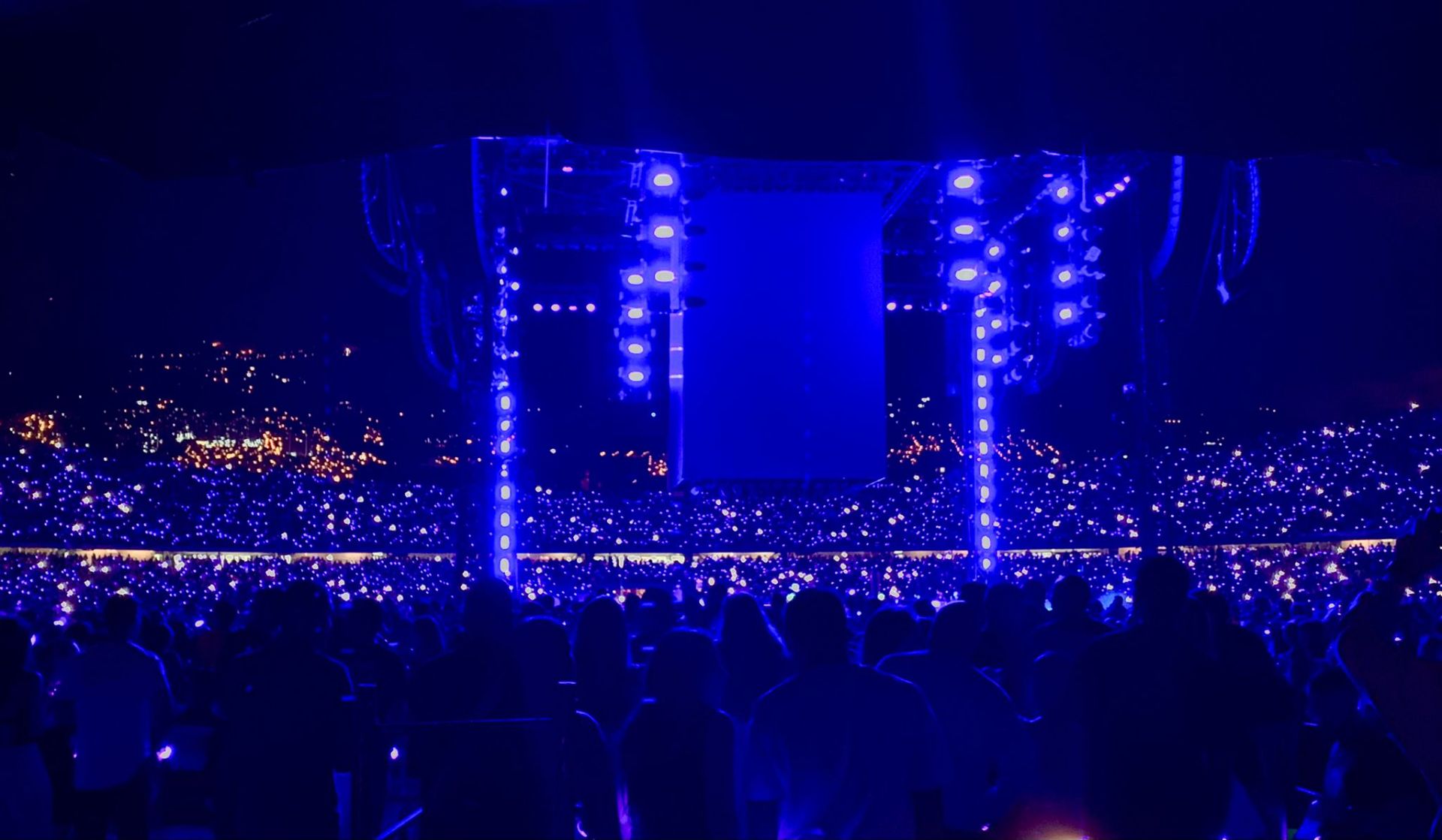
The house lights dim. A roar erupts from 50,000 people as a sea of light washes over the stadium, every single wristband, lanyard, and orb glowing in perfect unison. For the audience, this is the moment the spectacle begins. But for the production team, it’s the final, triumphant confirmation of a journey that began months earlier and thousands of miles away. A flawless show feels effortless, but that effortlessness is a testament to one of the most complex and high-stakes disciplines in the live events industry: global logistics.
Taking a large-scale production on a world tour is a formidable undertaking. It’s an intricate ballet of freight, customs, and technology, where a single missing document or delayed container can have cascading, catastrophic consequences for a multi-million-dollar show. This is the unseen engine of the immersive events we create, a world where precision, foresight, and deep institutional knowledge are paramount.
The First Hurdle: The Language of Customs
Moving high-value, specialized equipment across international borders is the single greatest challenge in touring logistics. You can’t simply box up your consoles, servers, and thousands of LED wristbands and send them on their way. Every country has its own unique set of import/export laws, taxes, and duties.
The foundational tool for any global tour is the ATA Carnet. Often called a “passport for goods,” a carnet is an international customs document that allows for the temporary, tax-free, and duty-free importation of merchandise. It presents a unified declaration for customs officials, pre-approved and guaranteed by a network of national organizations. Without it, a production would be forced to post costly bonds or pay duties in every single country, an unfeasible financial and administrative burden.
But even with a carnet, the devil is in the details. Every single item in every flight case must be meticulously itemized, with serial numbers, weights, and values correctly listed. A single discrepancy can lead to inspections, delays, or even the seizure of an entire shipment—a disaster when the show is on a tight schedule. This is where experience counts. Our teams have navigated this process for thousands of events across more than 70 countries, from major music festivals like Greece’s PRIMER to landmark sporting events like the Davis Cup.
Signal Integrity: Navigating a World of Frequencies
Beyond customs paperwork lies a complex technical hurdle: radio frequency (RF) compliance. The Radio Controlled LED Wristbands that form the heart of modern LED Crowd Experiences operate on specific radio frequencies. The challenge? The legal, license-free RF spectrum is different in different parts of the world.
A system configured for North America may be illegal to operate in Japan or parts of Europe. Attempting to do so can result in significant fines and, more critically, the shutdown of the RF transmission—the very technology that makes the show work. At Xylobands, our R&D has been dedicated to solving this problem from day one. Our control systems and products, including the latest LED Bands and LED Lanyards, are engineered for global compliance. Our transmitters are designed to be agile, capable of operating on the correct frequencies for any given territory. This requires an in-depth, constantly updated understanding of global telecommunications regulations—a core competency built into our operational DNA. It ensures that when our gear lands in a new country, it works perfectly and legally, straight out of the box.
The Kinetic Chain: A Symphony of Movement
Once the legal and technical groundwork is laid, the physical movement of assets—the freight itself—begins. This kinetic chain is a masterpiece of planning, involving a combination of air, sea, and land transport tailored to the tour’s schedule and budget.
Sea Freight vs. Air Freight
Sea freight is the workhorse for non-urgent, bulk equipment. It’s cost-effective but slow, requiring lead times of weeks or even months. This is often used for the main bulk of gear at the start of a major multi-continent tour. Air freight, conversely, is the rapid-response solution. It’s significantly more expensive but essential for moving key technology between back-to-back show dates. For a major artist tour, it’s not uncommon to have multiple, identical sets of key equipment leapfrogging each other around the globe via air freight to ensure they arrive ahead of the artist and crew.
The Humble Flight Case
Everything travels in custom-built, ruggedized flight cases. These are more than just boxes; they are precisely engineered mobile cocoons. They are designed for maximum protection, efficient packing, and rapid deployment. A well-organized pack means that when cases are opened on-site, the local crew knows exactly where to find every component, from charging racks for Concert Wristbands to the central control servers. Meticulous labeling, color-coding, and inventory management are not just best practices; they are the bedrock of a smooth load-in.
The Final Mile: From Tarmac to Tech Booth
The journey doesn’t end when the plane lands or the truck docks. The “final mile” involves moving the equipment from the port of entry to the venue and into the hands of the deployment team. This is a critical handover point, managed by advance teams and local logistics partners who understand the specific challenges of each city and venue.
Ultimately, this entire global ballet—the carnets, the RF compliance, the strategic freight decisions, the precision packing—serves a single purpose: to deliver a flawless, powerful, and deeply moving experience for the audience. When the Coldplay Xylo Band effect first lit up stadiums, it was the culmination of this immense logistical effort. Today, whether it's for a brand like Formula One celebrating its history or a superstar like Maluma making history in his hometown, the principle is the same.
The spectacle of immersive event technology is a promise to the audience. And that promise is kept not just by creative vision, but by a mastery of the unseen, complex, and absolutely essential world of global logistics.