The Grand Scale: A Modern Playbook for Arena and Stadium Lighting
From Intimacy to Immensity: The Art of Scaling Light
Designing a lighting experience for a 500-seat theatre versus a 50,000-capacity stadium isn’t just a matter of adding more fixtures. It’s a fundamental shift in thinking. In a theatre, the goal is often to create a focused, intimate world on stage. In an arena, the stage is merely the epicenter of a much larger universe. The architecture of the space itself—the vast vertical distances, the sprawling horizontal sightlines, the sheer volume of air—becomes your canvas.
The primary challenge is to make every single person, from the front row to the highest tier, feel like they are part of the same shared moment. This requires a multi-layered approach that combines broad, architectural strokes with intimate, human-scale details. Powerful washes can paint the entire stadium in a single colour, unifying the crowd in an instant. At the same time, intricate beam work and video content can maintain focus on the artist, preserving that crucial connection.
The Psychology of the Vertical Plane
In a stadium environment, the audience isn’t just in front of the stage; they are above it, surrounding it, and looking down upon it. This makes the vertical plane as important, if not more so, than the horizontal. Lighting designers must think in three dimensions, considering how the show looks from every conceivable angle. This is where the concept of the “audience as canvas” truly comes to life.
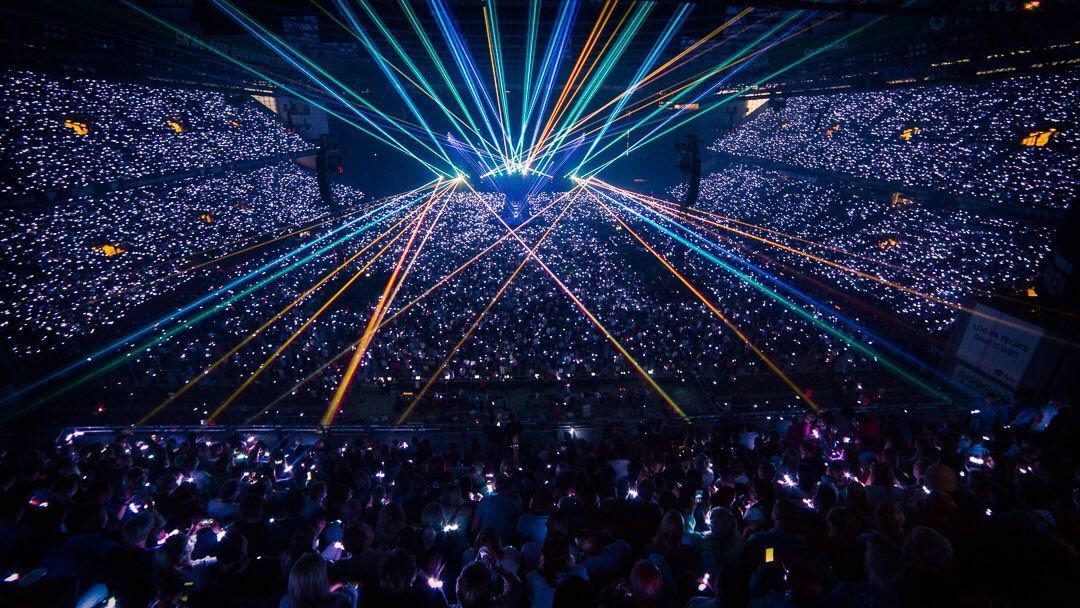
This is a principle we understand deeply at Xylobands. By turning each audience member into a pixel in a larger picture, we extend the lighting design far beyond the physical stage. Technologies like our radio controlled LED wristbands and LED Lanyards allow designers to program light across the entire seating bowl, creating waves of colour, synchronized pulses, and complex patterns that flow through the crowd. This transforms a passive audience into an active part of the spectacle, a living, breathing component of the design itself. It’s a technique that artists like Maluma have used to spectacular effect, turning a 54,000-person stadium into a single, unified visual entity.
Layering Light: The Four Pillars of Arena Design
A successful arena lighting design is built on layers. Each layer serves a different purpose, and together they create a cohesive and dynamic experience.
1. The Key Light: The Performer Connection
This is the most fundamental layer. Its job is to ensure the artist is clearly visible, carving them out from the background and establishing a direct line of sight with the audience. In an arena, this means using powerful, high-quality followspots and carefully positioned front light that can cut through the ambient wash and vast distances.
2. The Architecture: Defining the Space
This layer uses light to trace the contours of the venue. It might involve illuminating distant trusses, highlighting the roof structure, or using sweeping beam effects to give the audience a sense of the immense scale of the space. It provides context and prevents the stage from feeling like a small island in a vast sea of darkness.
3. The Spectacle: The High-Impact Moments
This is the layer of pyro, lasers, strobes, and high-impact video content. These are the “wow” moments that punctuate the show, creating peaks of energy and excitement. In a stadium setting, the scale of these effects is critical. They must be large enough to register across hundreds of metres and powerful enough to compete with the ambient light of tens of thousands of phone screens.
4. The Crowd: The Immersive Element
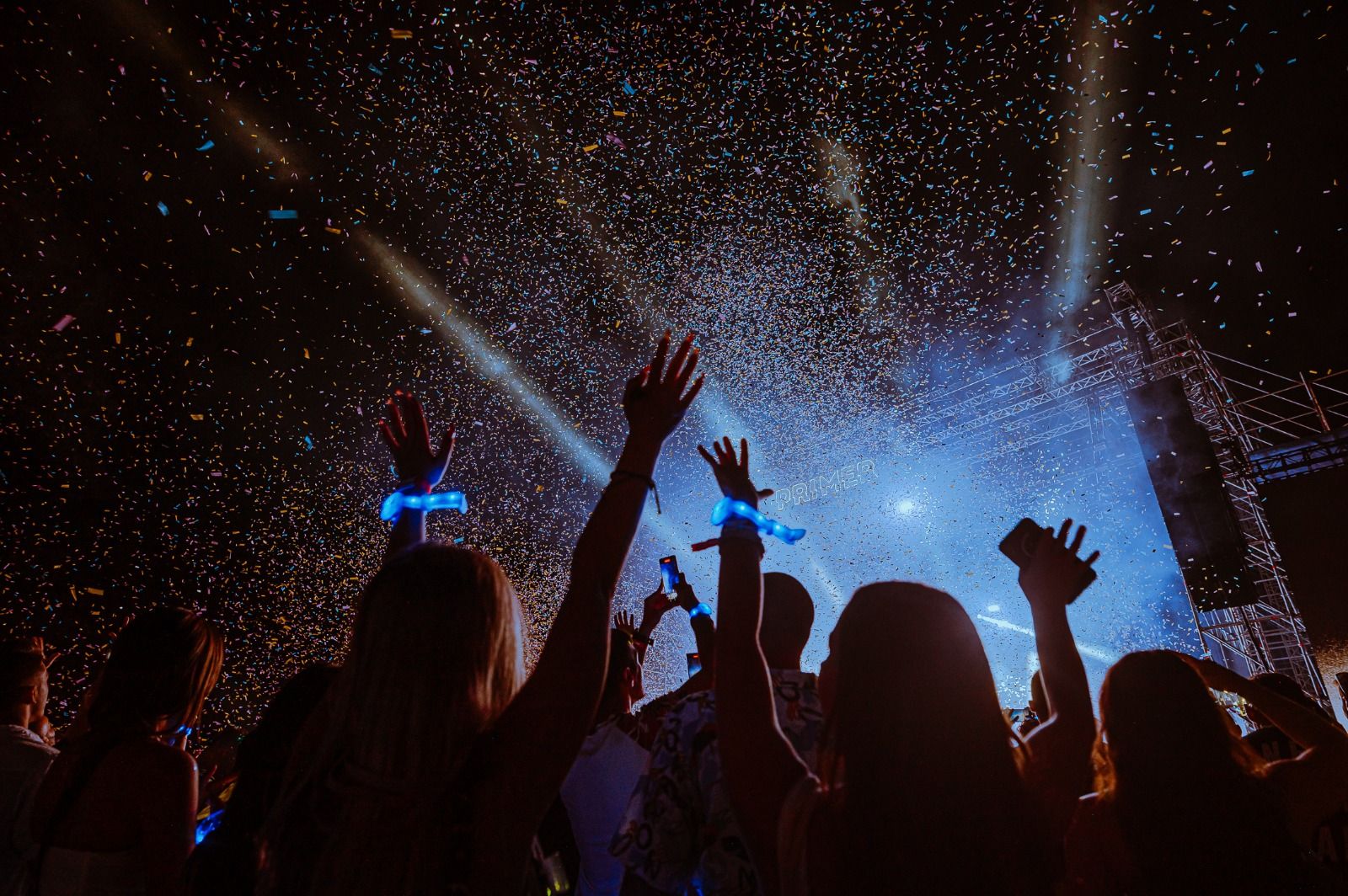
This is where wearable LED technology becomes a game-changer. By illuminating the audience, you close the loop between the stage and the seats. It’s the final and most powerful layer, transforming the entire venue into a single, immersive environment. When the crowd itself lights up in sync with a chorus or a beat drop, the barrier between performer and fan dissolves. It’s a tool for creating moments of profound collective joy, a core tenet of our work, from Coldplay Xylobands on their record-breaking tours to electrifying festival crowds at events like PRIMER Music Festival.
Designing for the Lens and the Room
Modern tours are rarely just for the people in the building. As Maluma’s Medellín concert demonstrated with its live stream to over 240 countries, today’s shows have a dual audience: the live crowd and the global broadcast. This requires a delicate balance.
Lighting that looks incredible to the human eye can sometimes appear blown out or flat on camera. Conversely, lighting designed purely for broadcast can feel sterile or underwhelming to the live audience. The solution is constant collaboration between the lighting designer, the video director, and the camera team. It involves careful management of colour temperatures, exposure levels, and the strategic use of atmospheric effects like haze that read well on camera without obscuring the view for those in the back rows.
Integrating crowd lighting, such as Xylo Bands, also enhances the broadcast. When a director cuts to a wide shot, they aren’t just capturing a dark arena dotted with phones; they are capturing a vibrant, dynamic canvas of light that mirrors the energy on stage. It provides scale, energy, and a visual narrative that translates powerfully to screens of any size.
“The goal is to create a total environment. Every lighting decision, from the choice of fixture to the colour palette to the integration of audience tech, must serve the ultimate purpose: to close the distance between 50,000 individuals and forge them into one collective, for one unforgettable night.”
Ultimately, lighting a stadium tour is an act of translation. It’s about translating the emotion of a song into the language of light and broadcasting it on a monumental scale. It requires a mastery of technology, a deep understanding of human psychology, and a vision that can fill the biggest of spaces. It’s about making the immense feel intimate, and the individual feel part of something bigger than themselves.