The Invisible Network: An Insider’s Guide to LED Wristband Technology
The Unseen Architecture of Immersion
In the ecosystem of a live event, from a sold-out stadium tour to a high-stakes corporate launch, technology is the invisible architecture that shapes human experience. It dictates sightlines, shapes soundscapes, and increasingly, crafts the very atmosphere of the room. At the heart of this atmospheric design is a technology that appears simple on its surface but is powered by a sophisticated, invisible network: the radio-controlled LED wristband.
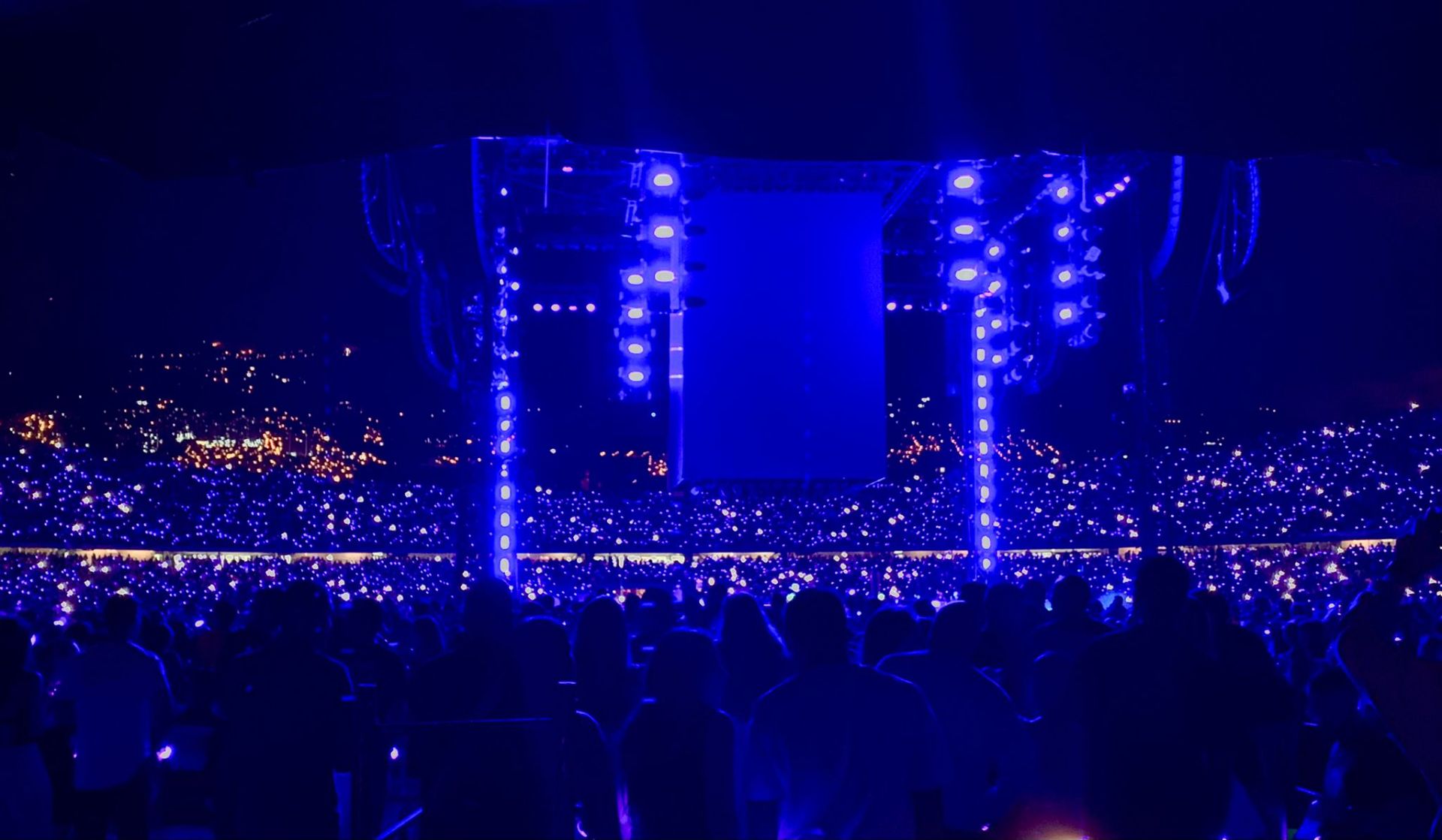
For over a decade, Xylobands have been turning passive audiences into dynamic, illuminated canvases. We transformed the fan experience for Coldplay’s iconic Mylo Xyloto tour and have since powered immersive events for global brands like Formula One, artists like Wizkid and Maluma, and broadcasters like ITV. The sight of tens of thousands of lights flashing in perfect synchronicity is a powerful spectacle, but the real magic lies in the unseen command chain—the blend of radio frequency (RF), DMX, and infrared (IR) technologies that makes these moments possible.
This is not merely about lighting up a crowd. This is about creating a unified, immersive environment where every single attendee is a pixel in a larger masterpiece. Understanding the technology that drives these LED crowd experiences is essential for any event producer, tour manager, or creative director looking to harness the full potential of their live production.
The Power of the Airwaves: Radio Frequency (RF) Control
The workhorse behind large-scale stadium and arena shows is Radio Frequency (RF) technology. An RF system consists of two primary components: a transmitter, which sends signals, and the receivers, which are embedded within each Xyloband worn by the audience.
Think of the transmitter as the conductor of a vast orchestra. From a control booth, a lighting designer or show operator can send commands over a specific radio frequency. These signals are broadcast across the entire venue, instructing the LED bands to light up in a certain color, flash at a specific tempo, or fade in and out. The range of our proprietary system is substantial, capable of covering an entire stadium and its surrounding area, ensuring that every wristband—from the front row to the highest tier—receives the command simultaneously.
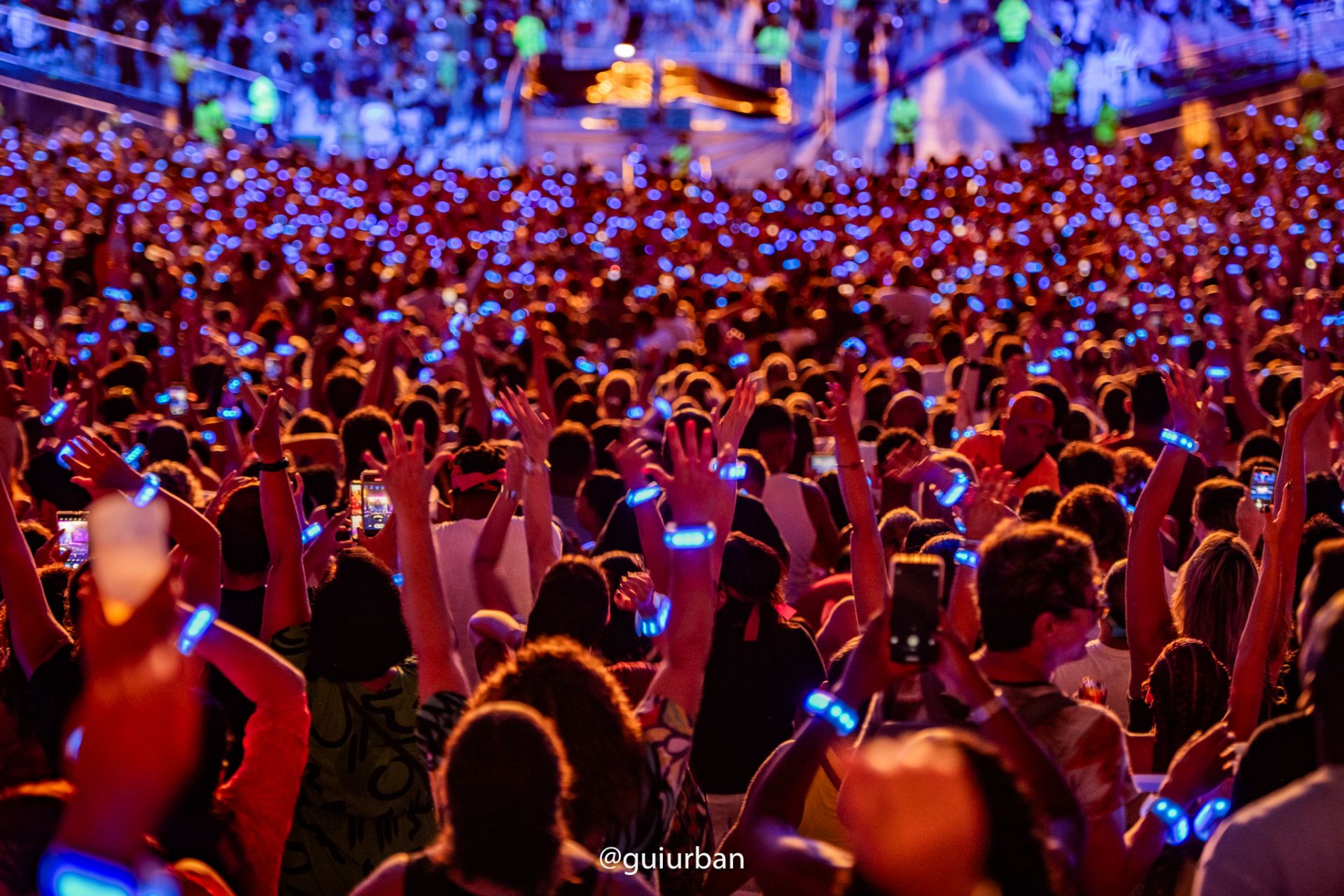
The beauty of RF lies in its scalability and flexibility. An operator can segment the audience into multiple zones, creating complex and dynamic visual effects. For example, at a festival like Primer in Greece, we could make one section of the crowd pulse in blue while another glows in red, creating a visual dialogue across the venue. This ability to “paint” with the crowd allows for a level of creative expression that traditional lighting rigs alone cannot achieve. It turns the audience from spectators into an integral part of the show’s design—a living, breathing installation of light.
The Language of Light: DMX Integration
While RF provides the broad strokes, DMX (Digital Multiplex) is the technology that allows for the fine details and intricate choreography. DMX is the industry-standard protocol for controlling professional lighting fixtures, from moving heads to stage strobes. Our systems are designed to integrate seamlessly with it.
This is where the true alchemy happens. By connecting our RF transmitter to the main lighting desk, the LED wristbands can be controlled as if they were just another set of fixtures in the lighting rig. This means the Coldplay Xylobands that famously light up their stadium shows are not running on a separate, isolated system. They are speaking the same language as the rest of the production.
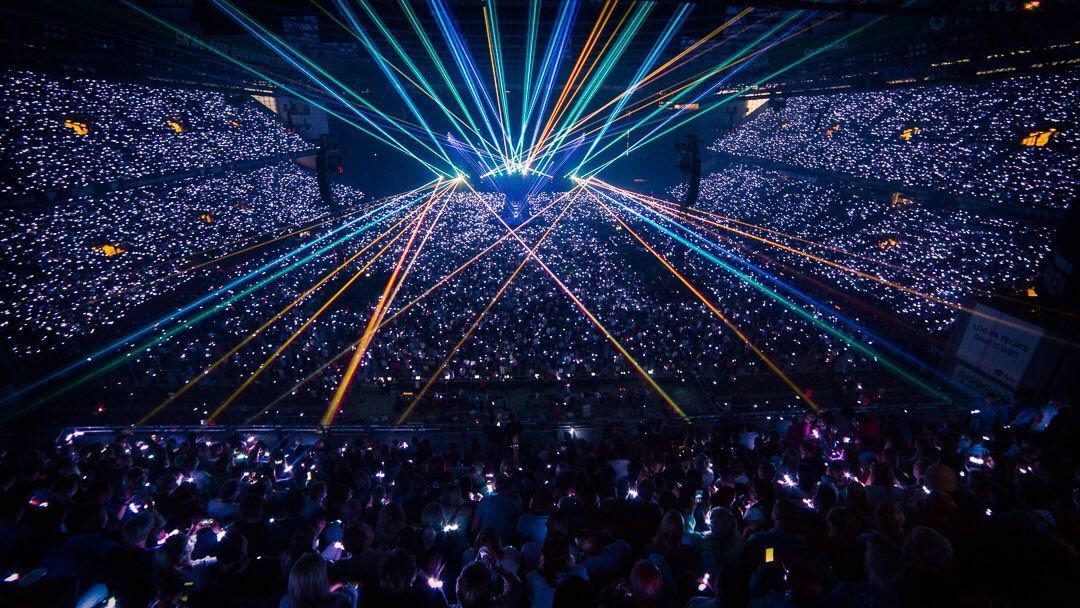
This integration allows for perfect synchronicity between the stage lighting, video content, and the audience. A wave of blue light can wash from the LED screens, across the stage, and then ripple through the crowd via their wristbands without any perceptible delay. For broadcast-ready events, like our work with the Davis Cup or for Wizkid’s historic sell-out run at The O2, this level of cohesion is non-negotiable. It ensures that the visual experience is just as stunning for the millions watching at home as it is for those in the room. The audience becomes an extension of the stage, a key component in a unified, 360-degree visual spectacle.
Up Close and Personal: Infrared (IR) and Zonal Triggers
While RF is ideal for blanketing an entire venue with a signal, there are times when a more targeted, localized effect is needed. This is where Infrared (IR) technology comes into play. Unlike the wide broadcast of RF, IR uses focused beams of light (invisible to the human eye) to send signals over shorter distances.
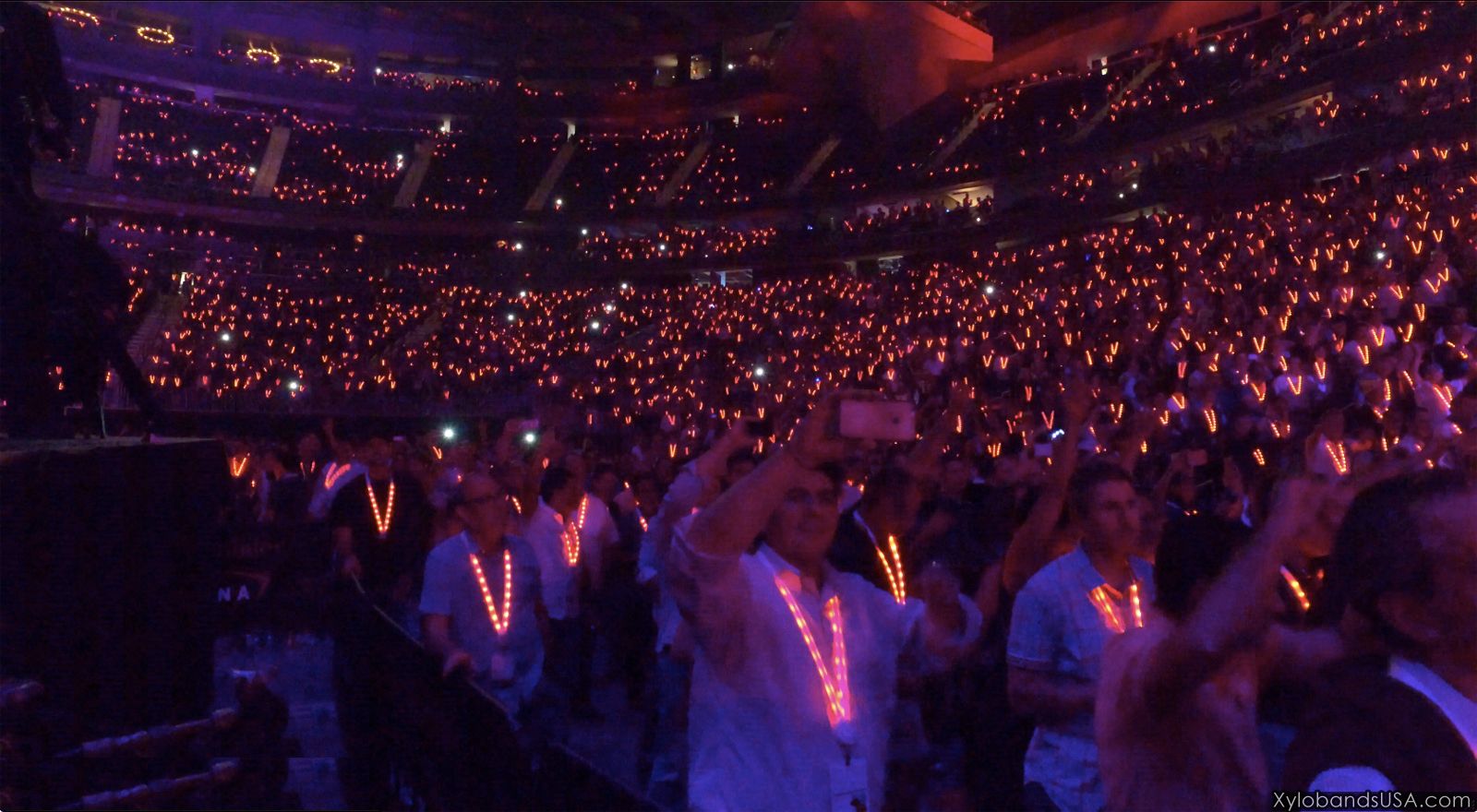
We deploy small IR transmitters in specific locations—entrances, breakout zones, product displays—to trigger wristbands as people move through a space. This makes IR an incredibly powerful tool for corporate event activations and experiential marketing. Imagine an attendee walking up to a new car at a product launch; as they approach, their custom LED wristband or LED lanyard flashes with the brand’s colors. Or consider a conference where different seminar rooms are outfitted with IR transmitters that cause attendees’ wristbands to glow in a specific color corresponding to that session’s theme.
This zonal control adds a layer of personalization and interactivity that makes a large-scale event feel intimate and responsive. It turns a passive journey through a venue into an engaging, reactive experience, creating moments of surprise and delight that are highly memorable. For events like the F1 75th-anniversary celebration, where we created custom Xylo Pendants for different teams and hospitality levels, zonal triggering could be used to create distinct lighting environments within the same venue, reinforcing brand identity and enhancing the guest experience.
The Future is Wearable: Beyond the Wristband
The core technologies of RF, DMX, and IR are not limited to wrist-worn devices. The same principles that power our concert wristbands are being integrated into a new generation of wearable LED technology, from the aforementioned LED lanyards to LED orbs and other custom form factors. This evolution is transforming our understanding of immersive event technology, moving beyond a single point of light on a wrist to a whole ecosystem of interactive, wearable devices.
As event producers continue to seek new ways to captivate audiences and create unforgettable shared moments, the invisible network that connects them will only become more sophisticated. The ability to command light on a mass scale, to paint with people as pixels, and to craft a truly immersive environment is no longer a novelty; it is a fundamental component of modern event design. The technology is unseen, but its effect—the collective gasp, the shared moment of wonder, the sea of unified light—is undeniable.