From Lighters to LEDs: The Unfolding Story of Audience Participation
The Analog Spark: A Sea of Flames
For decades, the symbol of audience connection at a concert was the simple, flickering flame of a lighter. It was an organic, unprompted gesture—a sea of individual lights raised in unison during a ballad, signaling a shared moment of emotional resonance. This was audience participation in its rawest form: analog, un-choreographed, and deeply human. It wasn’t a spectacle engineered by the production; it was a grassroots phenomenon, a way for the crowd to communicate with the artist and with each other, creating a sense of unity in the vast darkness of an arena.
This simple act laid the groundwork for everything to come. It demonstrated a fundamental human desire to be more than a passive observer. People didn't just want to see the show; they wanted to be *in* the show. This collective impulse was the seed from which the future of immersive events would grow.
The Digital Dawn: Pixels and Phones
The arrival of the mobile phone began the next chapter. The sea of flames was gradually replaced by a galaxy of glowing screens. Initially, this was a spontaneous evolution, much like the lighters before them. But savvy artists and producers quickly saw the potential. Apps were developed that could control the phone’s flash, turning the audience into a sprawling, low-resolution video screen. It was a step toward coordinated, large-scale visual effects, but it had its limitations.
The primary drawback was that it kept the audience’s attention on their devices. Instead of being immersed in the performance, they were focused on holding a phone, their connection to the event mediated through a screen. While visually interesting, it created a psychological barrier, pulling focus from the stage and disrupting the pure, unmediated connection that the lighters, for all their simplicity, had fostered.
The LED Revolution: The Birth of the Sentient Crowd
The true paradigm shift arrived with the invention of wearable LED technology. The story is now part of industry lore: our founder, Jason Regler, watching Coldplay at Glastonbury, hearing the lyric "Lights will guide you home" and imagining an entire crowd illuminated in perfect sync. This was the vision that led to the creation of Xylobands and their debut on the Mylo Xyloto tour, forever changing the landscape of live productions.
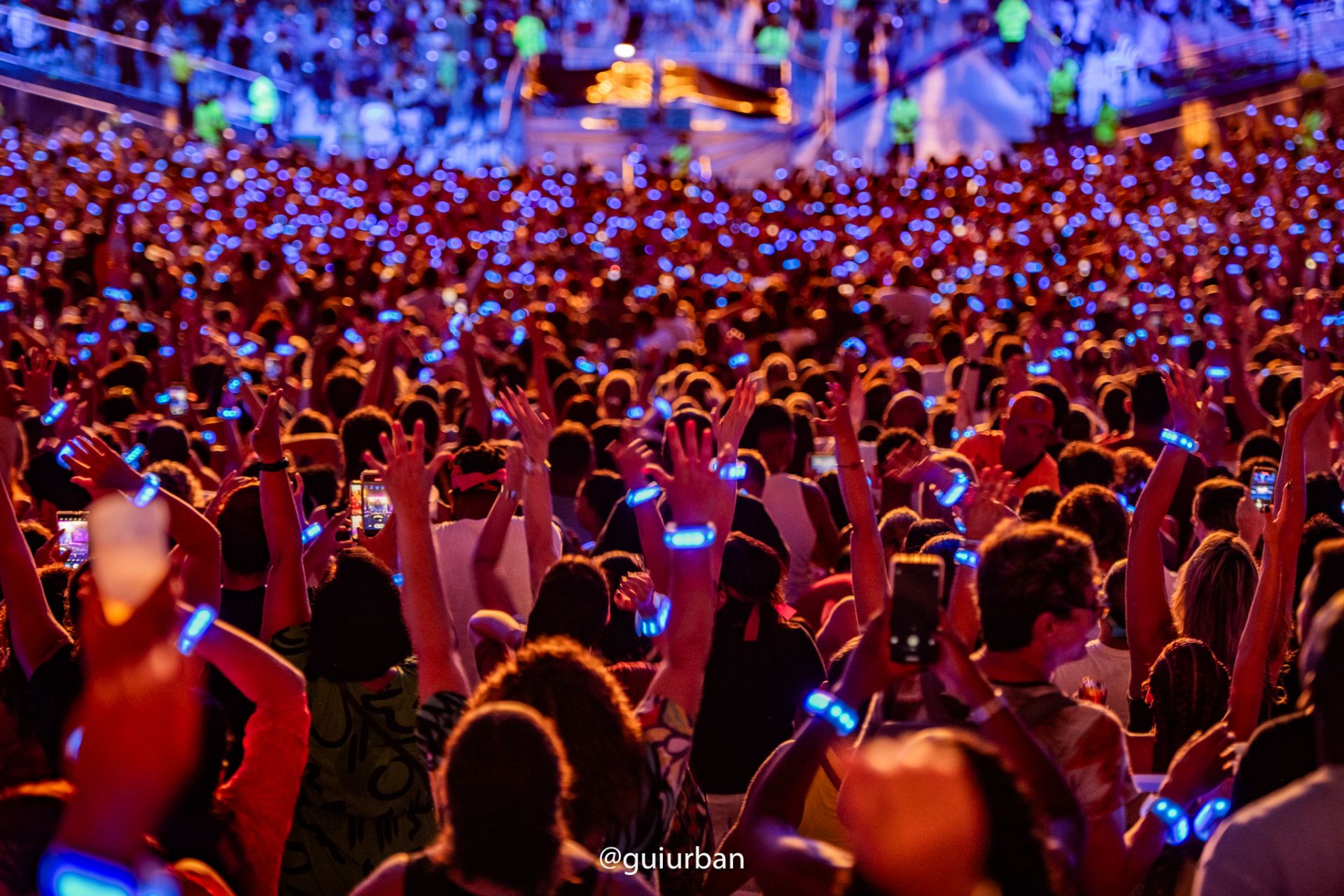
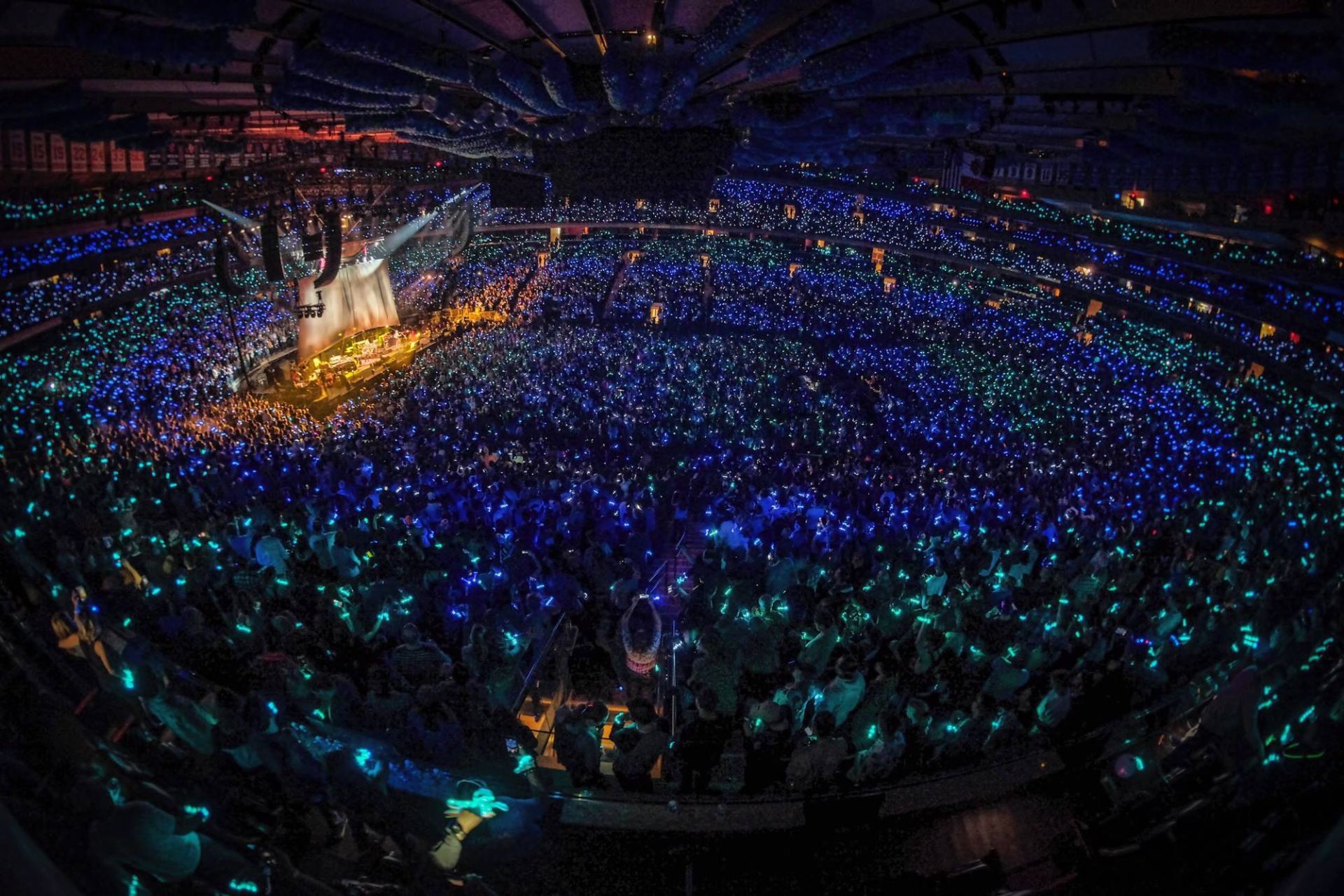
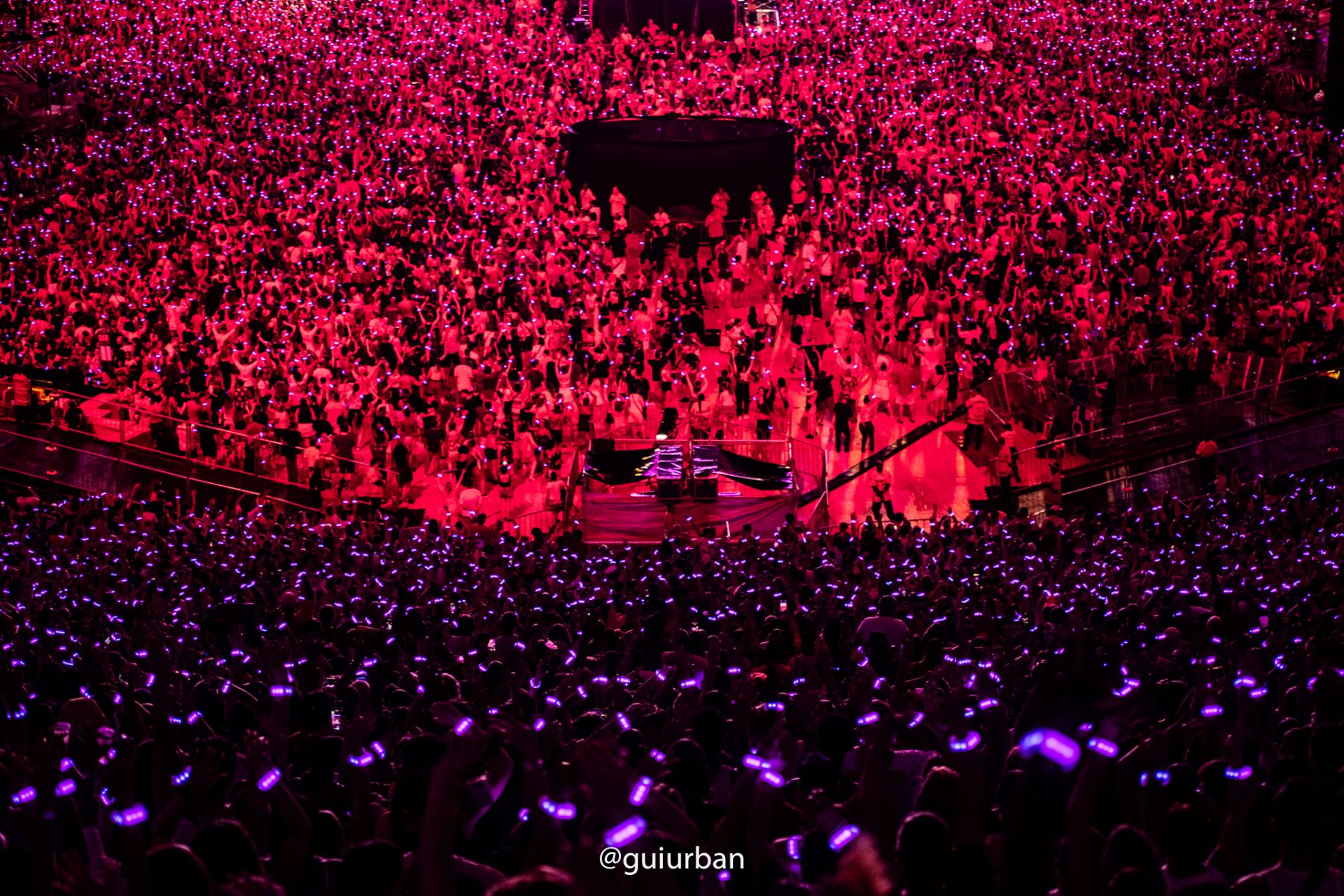
Radio-controlled LED wristbands solved the critical flaw of the mobile phone era. They untethered the audience from their devices, allowing them to become fully present in the moment while simultaneously being part of a stunning, synchronized light show. Suddenly, the crowd itself became a canvas. Complex lighting cues, once restricted to the stage and truss, could now wash over tens of thousands of people, making them the central element of the visual experience.
This innovation transformed passive spectators into active participants. The audience wasn’t just watching the spectacle; they *were* the spectacle. From massive music festivals like PRIMER in Greece to the historic three-night Wizkid sellout at London's O2 Arena, these LED bands have become a core component of modern immersive events.
The Modern Era: Immersive Event Technology and Niche Applications
Today, the technology has evolved far beyond a simple on/off flash. Modern systems allow for nuanced control over color, intensity, and grouping, enabling designers to create intricate, flowing patterns across a stadium or arena. We can segment a crowd by seating block, creating ripples of light that chase a beat or highlighting specific sections in team colors at a sporting event like the Davis Cup.
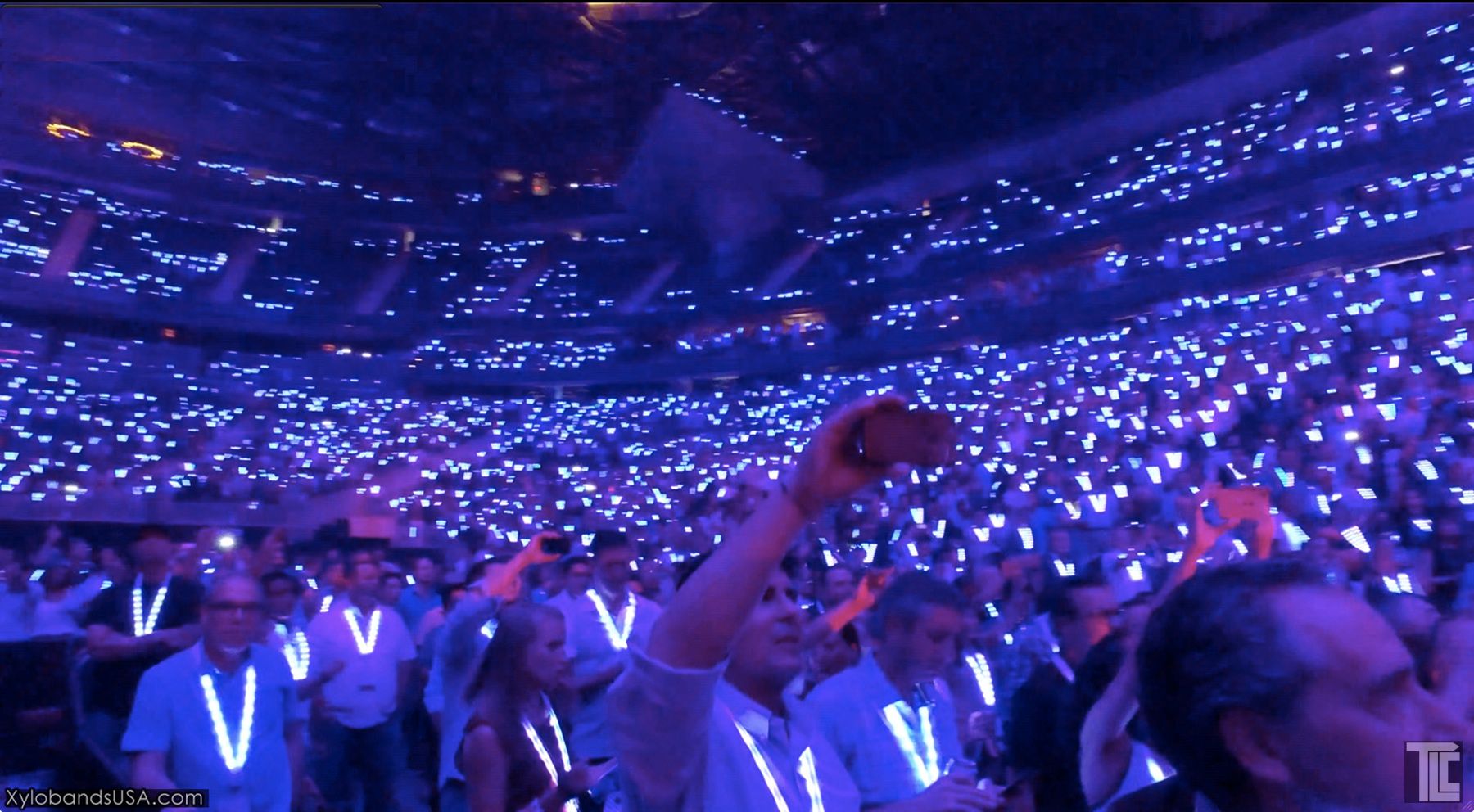
The application of this technology has also broadened significantly. It’s no longer just for rock concerts. Corporate event activations now use custom LED wristbands and lanyards to foster a sense of unity and brand engagement. The 75th-anniversary celebration for Formula One saw fans illuminated with custom Xylo Pendants, creating a broadcast-ready spectacle that united everyone in the arena. Television productions, from *The Masked Singer* to *Beat The Chasers*, use LED wearables to make the studio audience an integral, dynamic part of the show’s visual identity.
This is the era of Immersive Event Technology. It’s about creating multi-sensory environments where the line between performer and audience blurs. The goal is to foster a deeper sense of connection—to the artist, to the brand, and to the other people sharing the experience.
The Future: Data, Sustainability, and Deeper Connection
So, what comes next? The future lies in even greater integration and intelligence. The evolution from a simple flame to a smart wristband is not just a story about light; it's a story about connection. As technology continues to advance, we move closer to the "sentient crowd"—a gathering that is not just illuminated, but is responsive and interactive in ways we are only beginning to explore.
The journey from a single lighter to a stadium of synchronized LEDs is a testament to a timeless human truth: people crave connection. They want to be part of something larger than themselves. Technology, when designed with empathy and purpose, doesn't dilute that connection—it amplifies it, turning a crowd of thousands into a single, breathing, unified entity of light and energy.