The Shared Pulse: A History of Connection in the Age of Light
From Analogue Atoms to Digital Unity
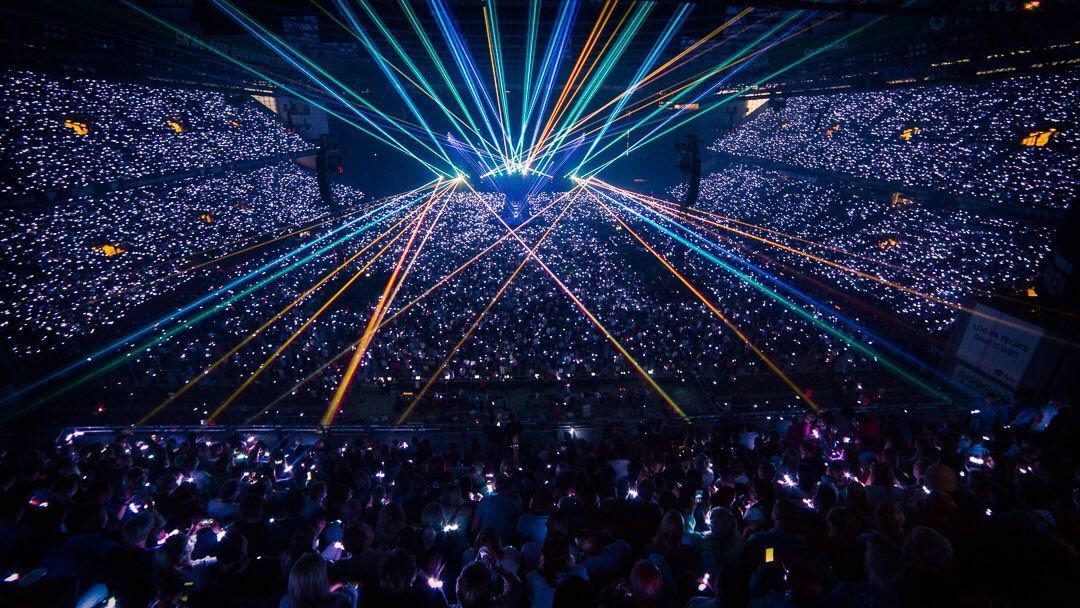
The desire to be part of something larger than oneself is a fundamental human driver. In the context of a live event, this translates into a palpable energy—a collective current that turns a gathering of strangers into a unified entity. For decades, the expression of this unity was purely analogue: the stadium wave, a unified chant, a call-and-response with an artist. And, most iconically, the flickering flame of a lighter held aloft during a ballad, transforming a dark arena into a constellation of individual, yet shared, moments.
This simple act, a beacon in the dark, was the first true piece of "audience technology." It was a visceral, visual representation of shared emotion. But it was passive, uncontrolled, and individual. The story of modern live events is the story of how that flickering flame became a programmed, synchronized, and infinitely creative pulse of light, connecting every single person in the room—and beyond.
The Catalyst: A Field of Lights
The transition from analogue expression to digital immersion had a definitive catalyst. The year was 2011, and our director, Jason Regler, was standing in a field at the Glastonbury Festival. Coldplay was on stage, performing "Fix You." As the lyric "lights will guide you home" echoed across the crowd, the air was filled with the familiar glow of lighters and early mobile phone screens. It was a powerful moment, but also a fragmented one.
What if, Jason wondered, every single person could be part of the show? Not just a spectator holding a light, but a pixel in a vast, moving canvas? What if the light wasn’t just a beacon, but a brushstroke, painted by the show’s creative director in real-time?
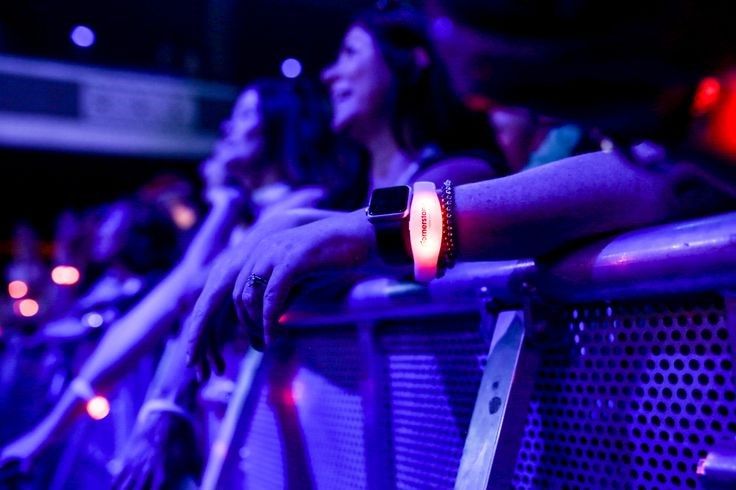
That idea sparked the invention of Xylobands. After sharing the concept with the band, the first Radio Controlled LED Wristbands were launched globally on Coldplay’s 2012 Mylo Xyloto Tour. The era of the passive audience was over. The Coldplay Xylo Band became a signature part of their show, a piece of Wearable LED Technology that irrevocably changed the dynamic between artist and fan. The audience was no longer just watching the show; they *were* the show.
The Cambrian Explosion of Immersive Event Technology
The success of the Mylo Xyloto tour opened the floodgates. The single wristband evolved, diversifying to meet new creative and commercial demands. The technology platform, initially built for arenas, proved its flexibility across a spectrum of event types. Today, the creative palette includes not just LED Bands and LED Bracelets, but custom-shaped LED Lanyards and even glowing LED Orbs.
This expansion allowed for unprecedented creative and branding opportunities. For the 75th anniversary of Formula One, we designed custom XyloPendants for 13,000 attendees, with unique branding for each F1 team and hospitality level. This wasn't just a light show; it was a sophisticated act of audience segmentation, a new tool for Corporate Event Activations that made each fan feel uniquely recognized within the larger spectacle.
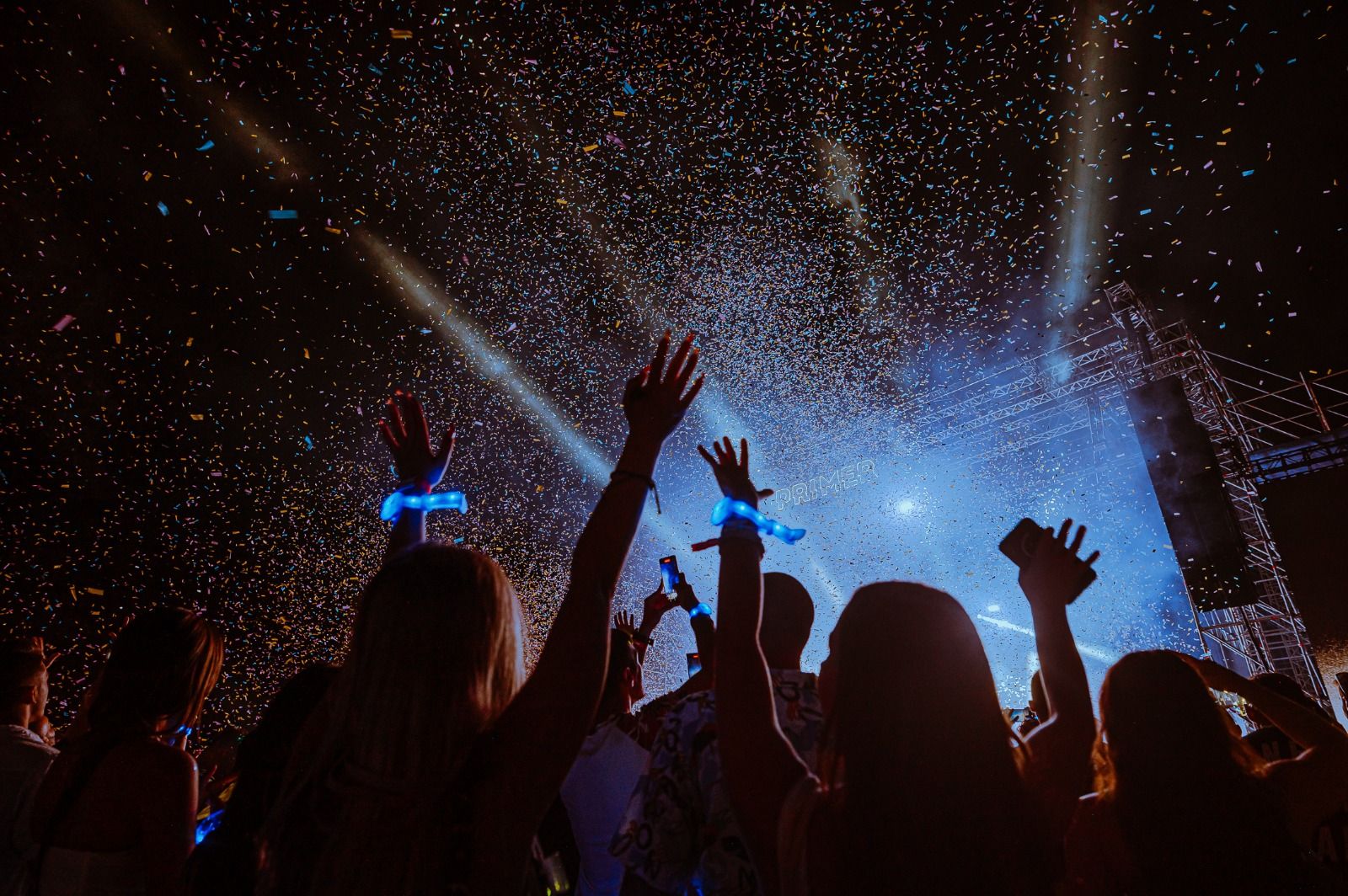
From massive Festival Wristbands lighting up crowds at Greece’s PRIMER Festival to the historic three-night, sold-out run of Wizkid at London’s O2 arena, this technology has become a new language for live music, translating rhythm and melody into a visual spectacle that engulfs the entire venue.
Beyond the Arena: The Broadcast Revolution
The evolution didn't stop at the venue walls. The true test of a truly powerful LED Event Technology is its ability to translate the energy of the live moment to a global broadcast audience. In an era of hybrid and globally streamed events, the audience is both in the room and in their living rooms.
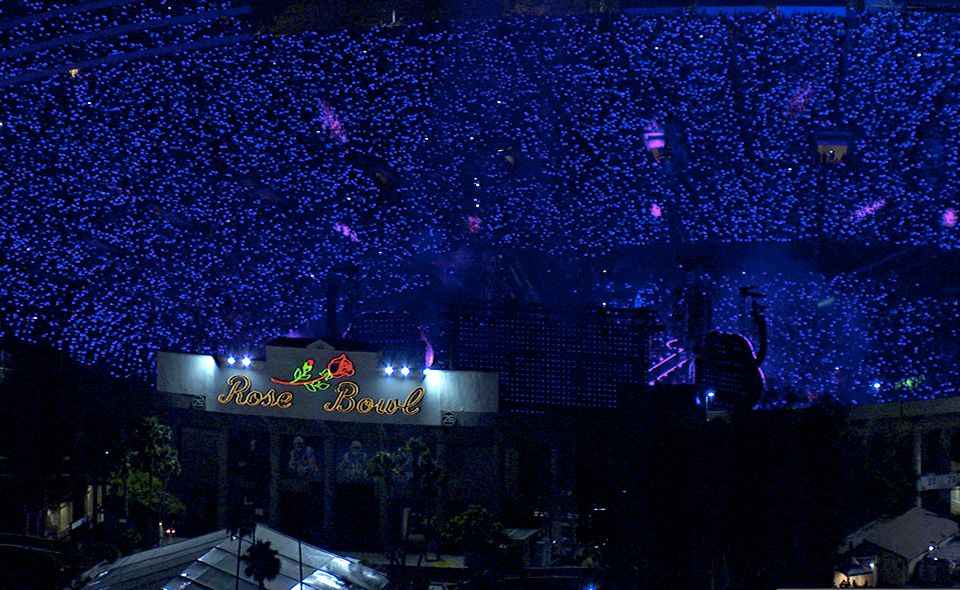
High-profile broadcast events now use in-studio audience lighting to visualize the show’s dynamics. On productions for ITV like Beat The Chasers, the ebb and flow of the game are mirrored in the reactive light of the audience’s wristbands, adding a layer of visual tension for the viewer at home. When Maluma’s Medellín concert was streamed live to 240 countries, the 54,000 fans, illuminated by Xylobands, became a dynamic, pulsating backdrop that conveyed the scale and energy of the homecoming show to a global audience.
This immersive layer is crucial for landmark national events, where connection and unity are paramount. For solemn BBC events like Remembrance Day services or celebratory concerts at the Royal Albert Hall, synchronized light transforms the audience into a respectful, unified body, amplifying the emotional weight of the moment for the millions watching at home.
The Future is intelligent, Immersive, and Integrated
We have come a long way from the analogue flame. Today’s Immersive Events are powered by a sophisticated synthesis of RF and DMX control, allowing for the creation of complex, layered, and precisely targeted lighting designs. The future of LED Crowd Experiences lies in deeper integration—with show data, with mobile applications, and with the very architecture of the venues themselves.
We are moving beyond simple synchronization to intelligent, responsive systems that can react to the crowd’s energy, create personalized moments, and offer new avenues for interaction. Yet, the goal remains the same as it was in that field at Glastonbury: to dissolve the barrier between the performer and the fan, to switch off the outside world, and to create a single, shared pulse of light, energy, and human connection.