Lighting for the Lens: A New Playbook for Live Broadcast Events
The Unseen Art of the Second Audience
In the world of live television, there are two audiences. There is the sea of faces in the studio, a living, breathing entity whose energy is the lifeblood of the show. Then there is the second audience, the millions watching from their homes, experiencing the event through the unflinching eye of a broadcast camera. For producers and creatives, this duality presents a unique challenge: how do you light for both the human eye and the camera lens simultaneously? How do you create an atmosphere that feels electric in the room while translating into a clean, compelling, and professional image on screen?
The answer lies in a sophisticated understanding of light itself — its properties, its interaction with modern camera sensors, and its profound psychological effect on both in-person and remote viewers. It’s an art form that blends technical precision with creative intuition, a field that companies like Xylobands have spent years mastering. It’s about more than just brightness; it’s about colour temperature, flicker rate, and dynamic range. Get it right, and you create a seamless, immersive experience for everyone. Get it wrong, and you risk compromising the entire broadcast, creating a visual disconnect between the live event and the televised product.
The Broadcast Camera's Sensitive Eye
A modern broadcast camera sensor doesn’t “see” light in the same way the human eye does. Our eyes are remarkably forgiving, able to process a huge dynamic range and automatically adjust to shifting colour temperatures. A camera, however, is a precision instrument that captures exactly what it sees. This is why certain types of lighting, particularly lower-quality LED sources, can create major problems for broadcast.
One of the most common issues is flicker. Many LED products, including some LED wristbands or stage lighting elements, use a technique called Pulse Width Modulation (PWM) to control brightness. To the naked eye, this strobing effect is often imperceptible. But a camera, shooting at a specific frame rate (e.g., 24, 30, or 60 frames per second), can capture the moments the light is “off,” resulting in a distracting flicker or banding on screen. This is a broadcast-killer, a technical gremlin that can instantly cheapen a high-budget production. The key to avoiding this lies in sourcing high-frequency, flicker-free LED Event Technology specifically engineered for the camera.
Color rendition is another critical factor. Broadcast cameras are white-balanced to a specific color temperature. If the lighting in the room is inconsistent—a mix of tungsten, fluorescent, and various LED sources—the camera will struggle to produce a natural and consistent image. This is why professional-grade Immersive Event Technology is designed not only for visual impact but also for color accuracy, ensuring that what the lighting designer envisions is what the audience at home sees.
Painting with Crowd-Sourced Light
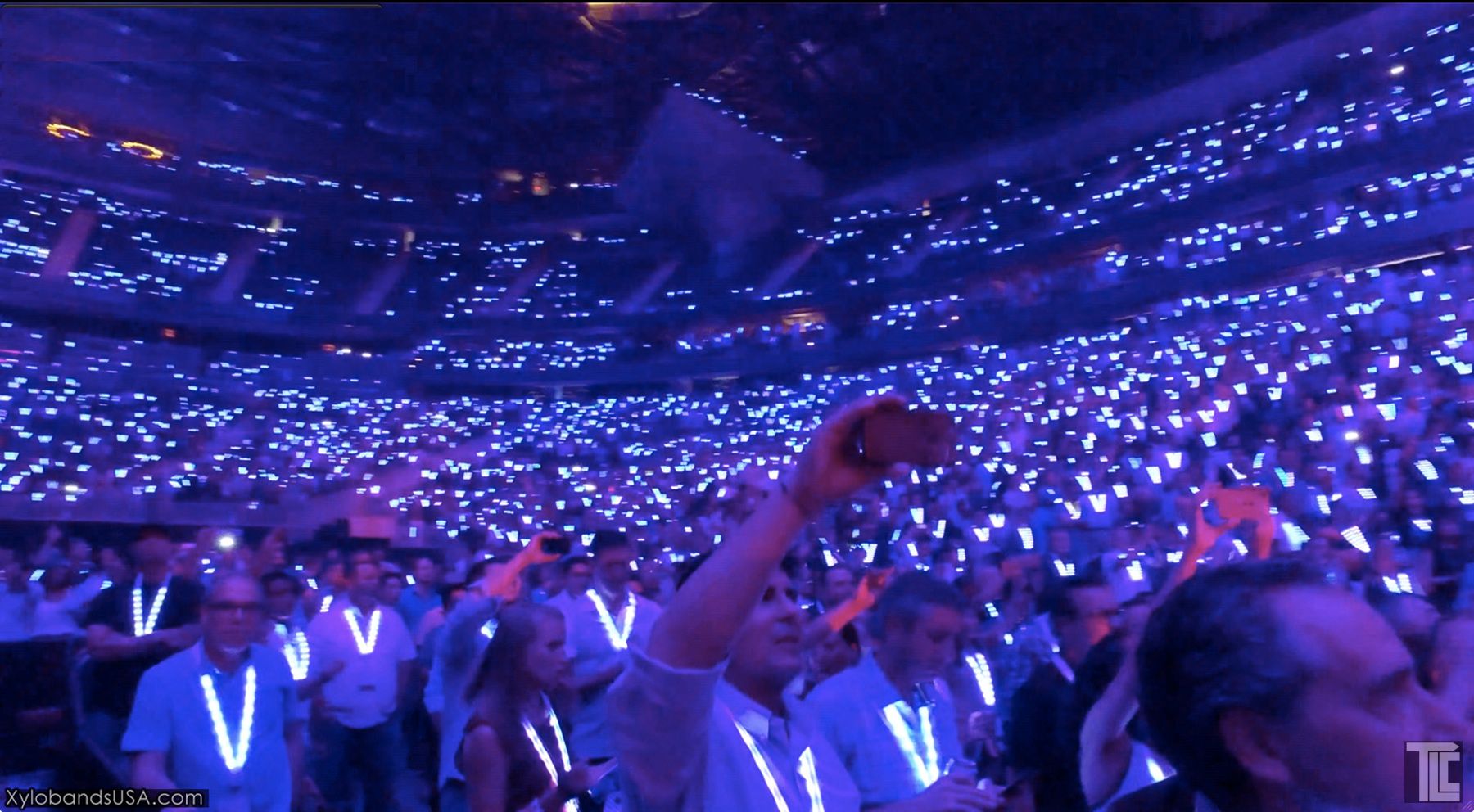
For decades, the studio audience was a passive element in the lighting design—a mass to be lit, but not a source of light itself. That paradigm has been completely upended by the advent of Wearable LED Technology. By turning each audience member into a pixel in a grand, illuminated canvas, producers can create breathtaking visual moments that are both deeply immersive for the people in the room and visually spectacular for the broadcast.
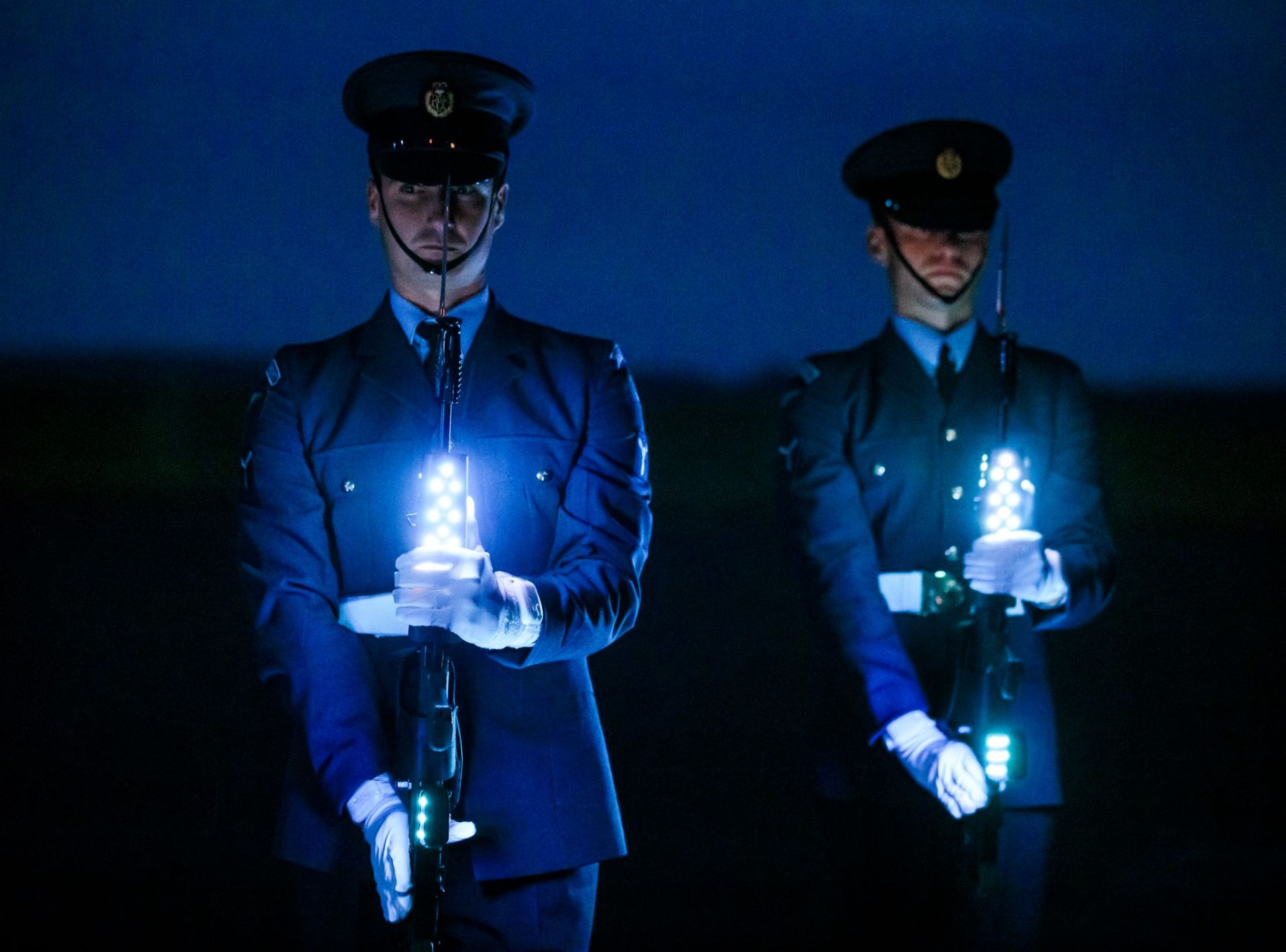
Shows like ITV’s Beat The Chasers or specials for the Eurovision Song Contest demonstrate this power perfectly. Here, Radio Controlled LED Wristbands are not just a gimmick; they are a core part of the show’s visual identity. They can be used to signal gameplay moments, wash the entire studio in a team’s color, or pulse in time with the show’s dramatic score. This creates a dynamic environment that draws the studio audience deeper into the action, fueling an energy that the cameras can capture and transmit to the viewers at home. The audience is no longer just watching the show; they *are* the show. This is the essence of modern Corporate Event Activations and large-scale broadcasts alike turning spectators into a vital part of the spectacle.
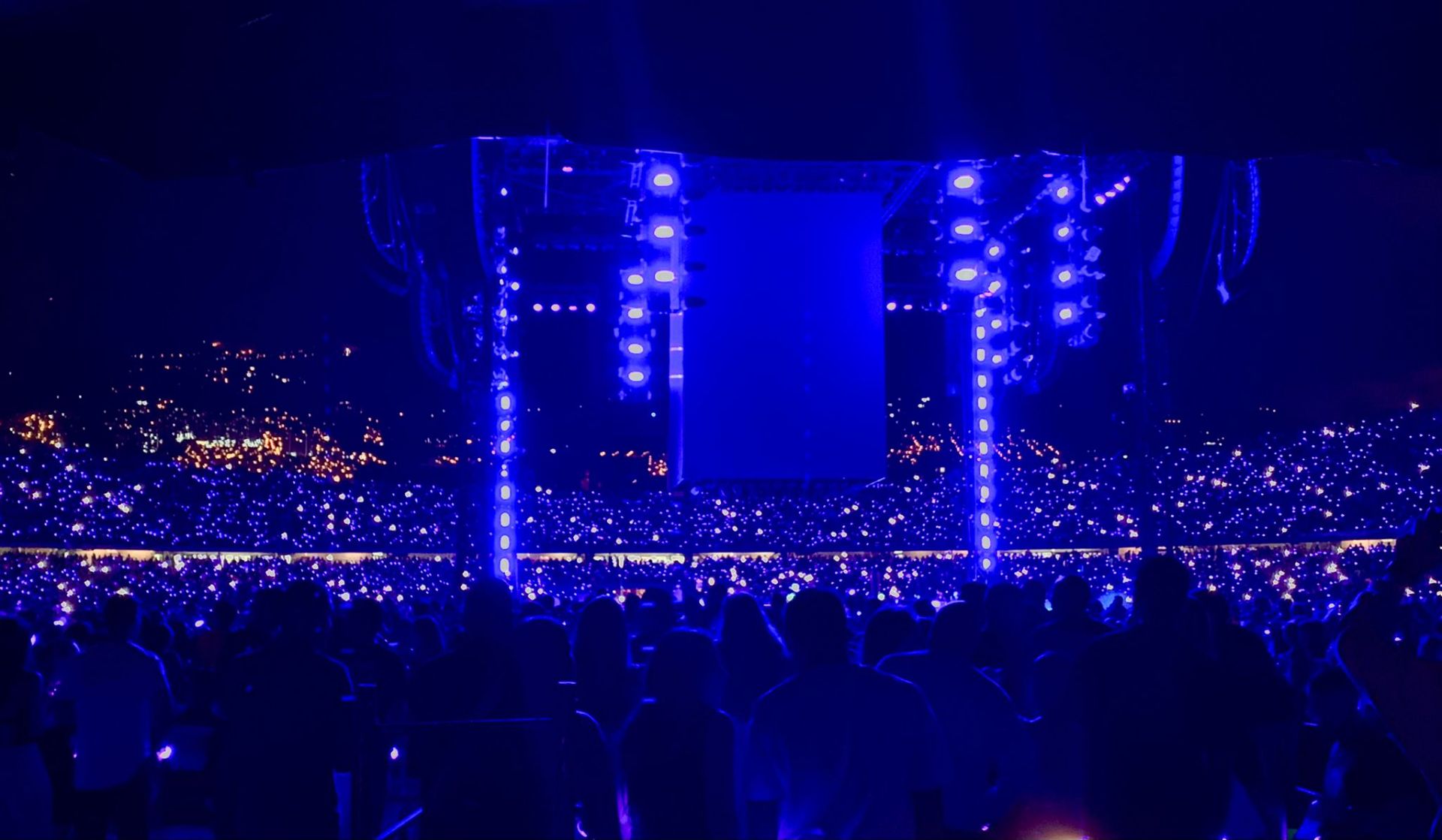
The key is control. Systems like Xylobands utilize robust RF or infrared technology, allowing a single operator to synchronize thousands of individual light sources with absolute precision. A lighting director can design cues just as they would with any other fixture, painting with the crowd to create waves of light, intricate patterns, and sudden, dramatic shifts. This capability was on full display during Maluma's landmark Medellín concert, streamed live to over 240 countries, where Xylobands unified the massive stadium crowd into a single, pulsating entity, creating an iconic moment for both the live and broadcast audiences.
Beyond the Studio: Open-Air Broadcasts
The challenge is magnified in large-scale, open-air broadcasts like festivals or major sporting events. Here, the lighting designer is competing with ambient light, vast distances, and unpredictable environmental factors. Yet, the goal remains the same: create a cohesive and camera-friendly spectacle.
This is where the power of scale becomes a strategic advantage. Transforming an entire festival field or stadium bowl into a synchronized light show provides a stunning visual anchor for cameras, especially for wide-angle aerial shots. Events like the PRIMER Music Festival or the Davis Cup finals have used LED Experiences to extend the visual design far beyond the stage. Instead of a dark, anonymous crowd, the broadcast captures a vibrant, living landscape of light, turning every spectator into a participant in the visual feast. These are not just Concert Wristbands; they are instruments of creative expression, turning thousands of individuals into a unified, dazzling whole.
A Unified Vision
Ultimately, mastering lighting for a live broadcast is about creating a unified experience. It’s about closing the gap between the energy in the room and the image on the screen. It requires a deep technical understanding of how light interacts with camera sensors and a creative vision that embraces the audience as a dynamic part of the show’s design.
As technology like Custom LED Wristbands, LED Lanyards, and even LED Orbs become more sophisticated and accessible, the creative possibilities continue to expand. For producers, tour managers, and brand marketers, the ability to control the light, not just on the stage but across the entire audience, is a powerful tool. It transforms passive viewers into active participants, creating unforgettable LED Crowd Experiences that resonate equally with the cheering fan in the front row and the captivated viewer hundreds of miles away. In the high-stakes world of live broadcast, this is no longer an option—it is the new playbook.