Beyond the Venue: Lighting the Live Broadcast Moment
The Two Audiences: In-Person and At-Home
Every major live event today serves two distinct audiences. There is the immediate, visceral energy of the crowd in the room—the thousands of fans whose collective excitement is palpable. Then, there is the broadcast audience, numbering in the millions, experiencing the event through the curated eye of the camera lens. Lighting for the former is about creating atmosphere and scale; lighting for the latter is about precision, control, and creating moments that are not just seen, but felt, through a screen.
The challenge lies in serving both masters without compromise. A light show that feels epic in a stadium can appear chaotic or blown-out on camera. Conversely, lighting designed purely for broadcast can feel sterile or underwhelming to the live attendees. The solution is not a compromise, but a synthesis: a unified lighting strategy that leverages technology to be both things at once. This is the domain of modern, controllable LED crowd experiences.
The Camera-Friendly Mandate: Flicker, Frequency, and Finesse
At the technical heart of broadcast-friendly lighting is the issue of flicker. The high-speed shutters of professional broadcast cameras are unforgiving. They can pick up the imperceptible cycling of lower-quality LED sources, rendering them as an irritating on-screen strobe or banding effect. This is non-negotiable for any high-stakes broadcast, from a global sporting event to a primetime television special.
This is where professional-grade wearable LED technology proves its worth. At Xylobands, our systems are engineered to be inherently camera-friendly, operating at frequencies that are invisible to broadcast equipment. This ensures that when a director cuts to a wide shot of an illuminated audience, the image is clean, vibrant, and free of distracting visual artifacts. The light is pure, the color is true, and the moment is captured exactly as intended.
"The camera introduces a layer of scrutiny that changes the game. It’s not just about what the crowd sees; it’s about what the viewer at home sees. Every pulse of light, every color shift, becomes part of a narrative delivered to millions."
Painting with People: Zonal Control and Narrative Impact
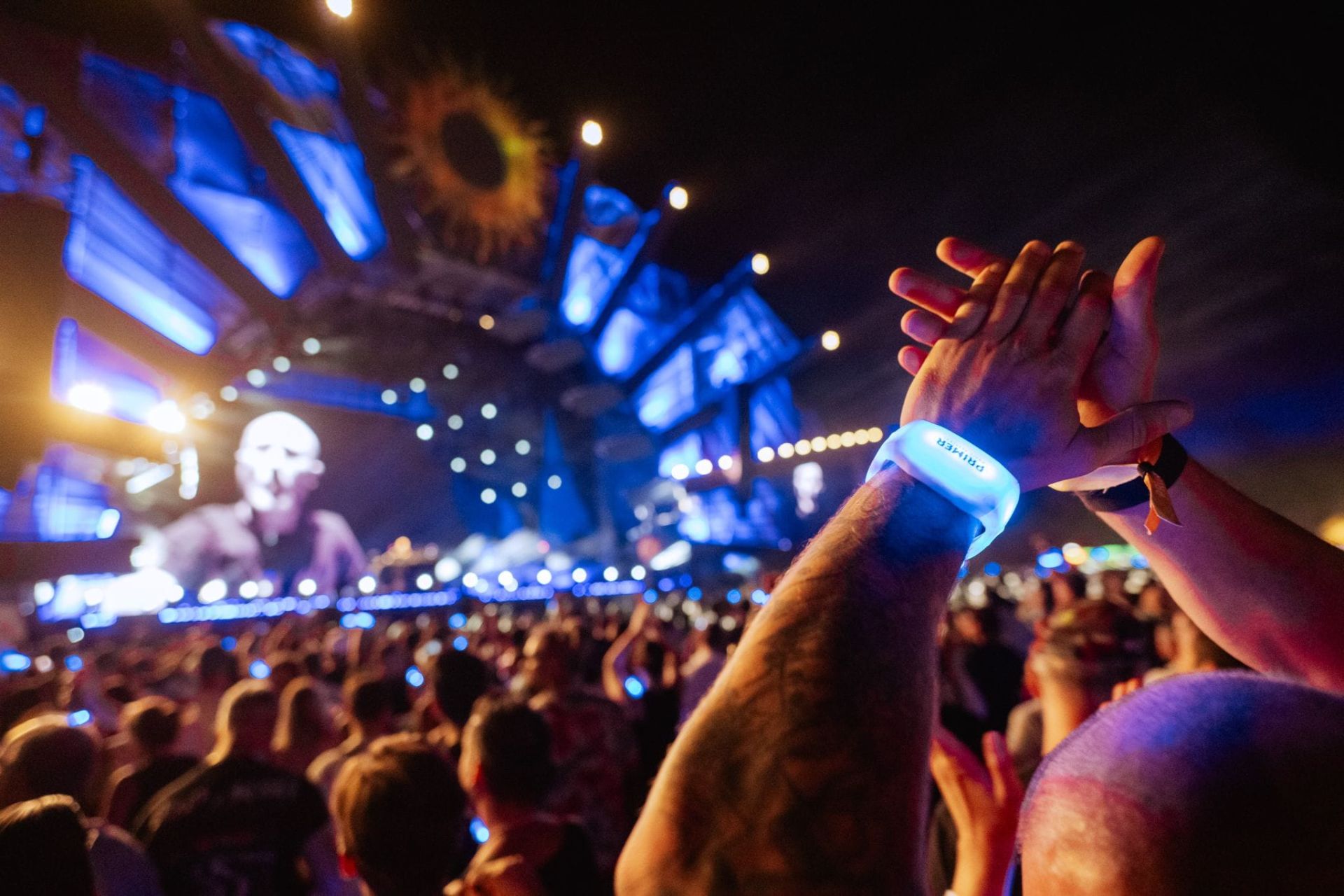
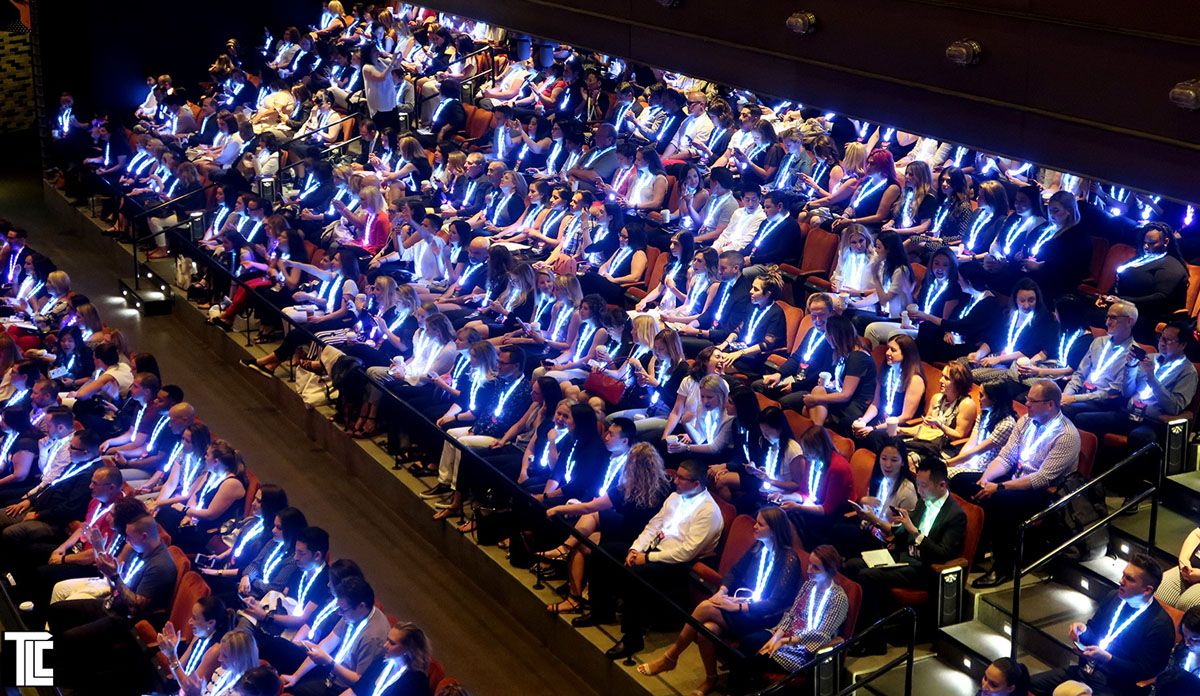
Beyond technical compliance, the true art of broadcast lighting lies in its ability to tell a story. This is where granular control becomes the show designer’s most powerful tool. With advanced RF or DMX systems, an entire arena audience equipped with LED bracelets or LED Lanyards ceases to be a monolithic entity. Instead, it becomes a living, breathing canvas of responsive pixels.
Consider the dramatic potential:
- Visualizing Tension: During a penalty shootout or a tense moment in a game show like Beat The Chasers, specific seating sections can be programmed to pulse with opposing team colors, creating a visual representation of the drama unfolding.
- Targeted Branding: For major corporate event activations, such as the Formula 1 75th-anniversary event, different hospitality tiers or fan groups can be illuminated with specific brand colors, creating powerful, camera-ready moments of sponsor integration that feel organic to the show.
- Artist-Audience Interaction: In a concert setting, a wave of light can be programmed to sweep across the stadium in perfect sync with an artist’s movement, creating a direct, visual link between the performer and the audience that translates beautifully to the screen. The live-streamed Maluma concert in Medellín, which reached over 240 countries, is a prime example of using light to bridge the gap between the stadium and the global at-home audience.
This level of control transforms the crowd from a passive observer into an active part of the broadcast set. They are no longer just watching the show; they are the show. This is the essence of creating truly immersive events for a broadcast age.
From Wide Shot to Wow Moment: The Power of the Illuminated Crowd
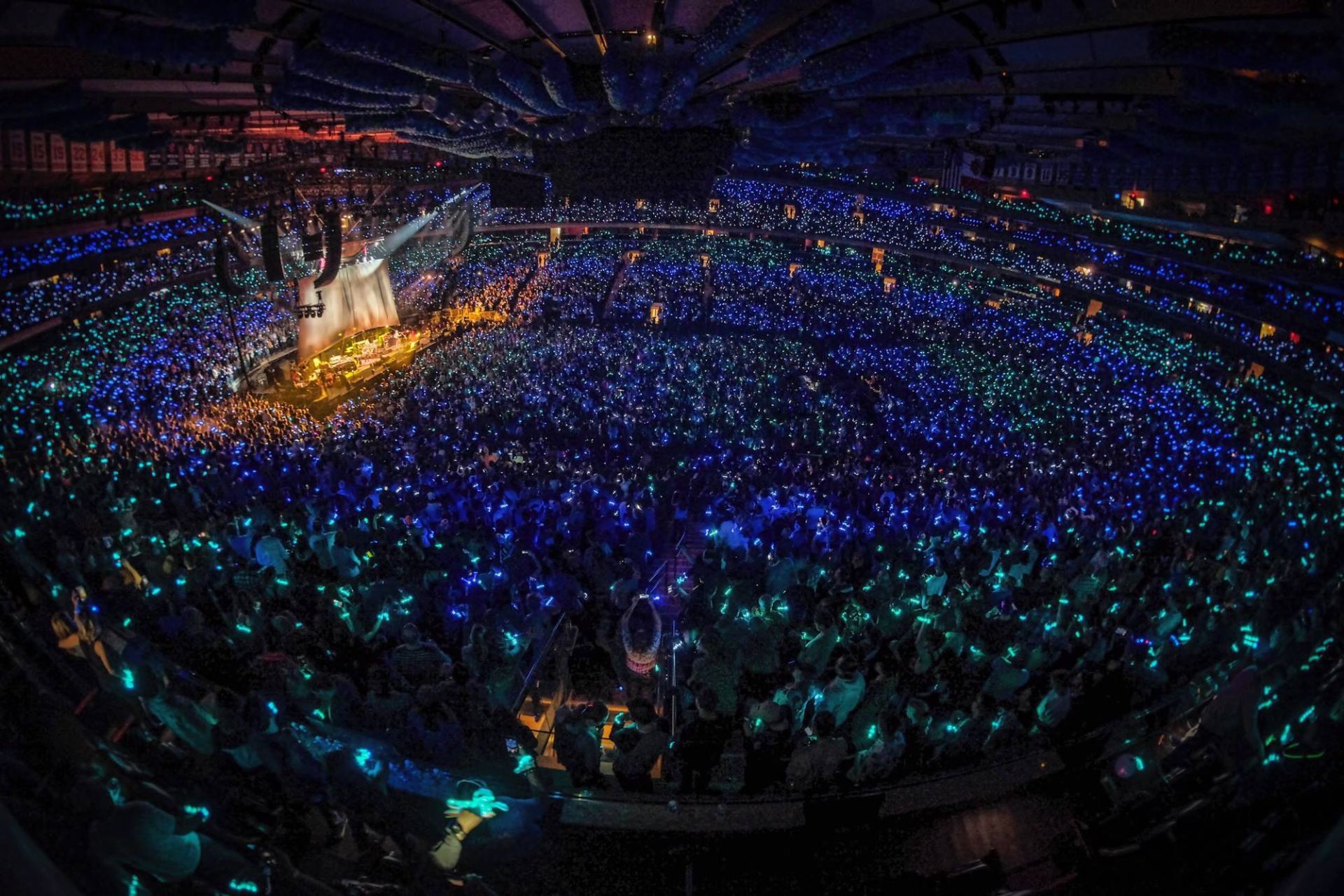
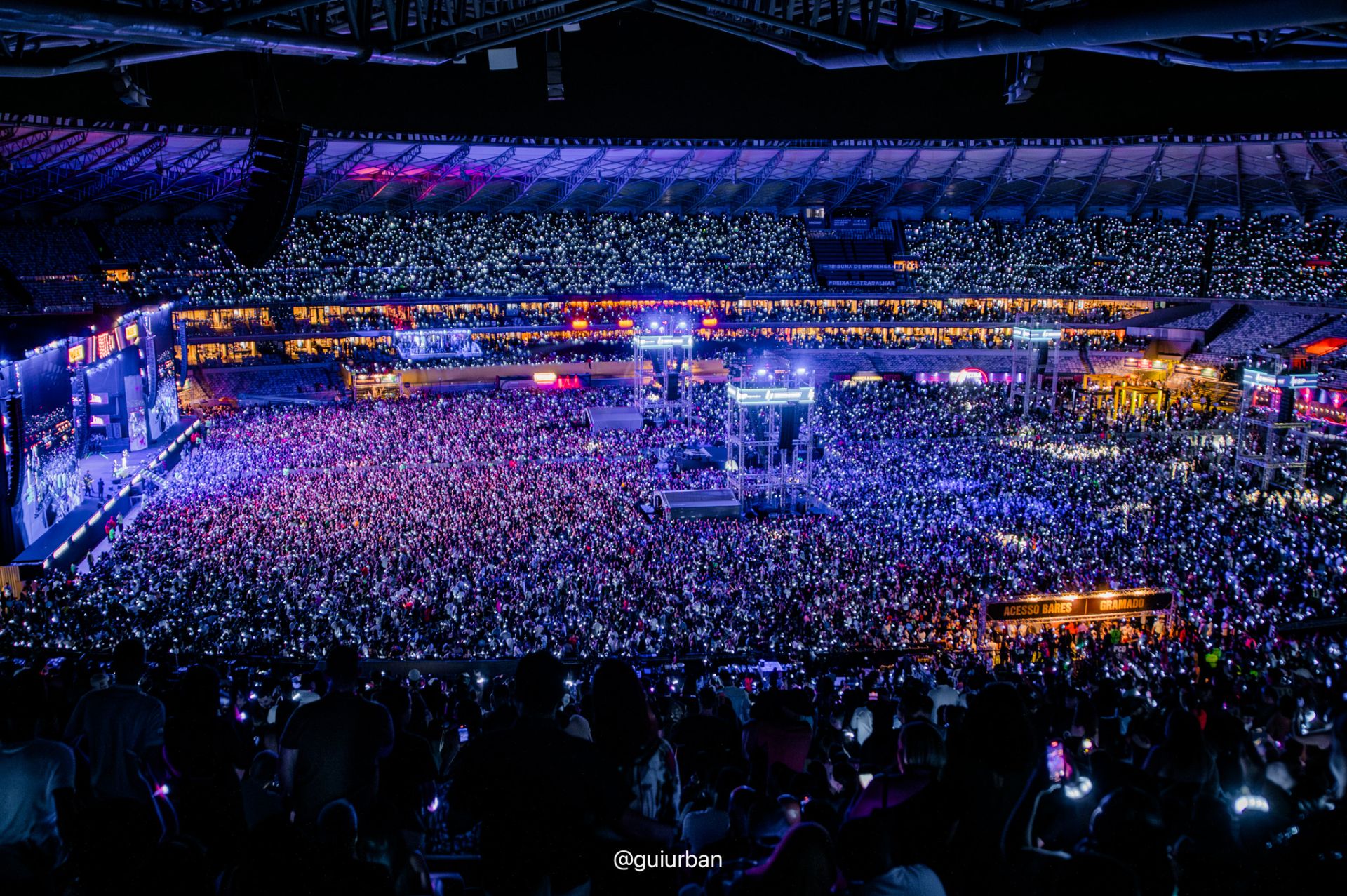
The iconic wide shot of a stadium, arena, or festival is a staple of live broadcasting. It establishes scale, communicates energy, and provides a visual anchor for the entire event. When that crowd is illuminated, with every individual a point of light in a grand, unified spectacle, the impact is magnified tenfold.
Think of the opening ceremonies of global sporting events, the headline slot at a major music festival like Glastonbury, or the electrifying atmosphere of a world tour. What makes these moments so memorable on camera is often the cohesive, large-scale use of light. Radio controlled LED wristbands allow a lighting director to effectively paint with the entire audience, creating breathtaking visual symphonies that would be impossible with traditional stage lighting alone.
These Xylo Bands become the medium through which the collective energy of the audience is made visible. A roar becomes a flash of light. A song’s chorus becomes a synchronized pulse of color. For the viewer at home, this isn’t just a crowd shot; it’s a living, dynamic representation of shared emotion, turning a passive viewing experience into a moment of connection.
The Future is Composed in Light
As broadcast technology continues to evolve, with higher resolutions and more dynamic cameras becoming standard, the demands on event lighting will only increase. The line between a live production and a broadcast production has effectively been erased. Today’s premier events are designed from the ground up to be global media spectacles.
In this new landscape, technology that can reliably and creatively bridge the in-venue experience with the at-home one is not a luxury; it’s a necessity. It requires a deep understanding of both the technical requirements of broadcasting and the artistic possibilities of light. It’s about more than just making things bright; it’s about making them meaningful, controllable, and, above all, unforgettable—both for the person in the front row and the viewer on the other side of the world.