The Macro and the Micro: A New Vision for Stadium Tour Lighting
The Art of Scale: Painting with Light on a Canvas of Thousands
Designing a lighting experience for a stadium or arena tour is an exercise in managing scale. You are working with a canvas measured in acres and a crowd size that rivals a small city. The primary challenge is to create moments that feel both vast and personal, ensuring that a fan in the last row feels as connected as someone in the front. This is the duality of modern tour lighting: the macro and the micro.
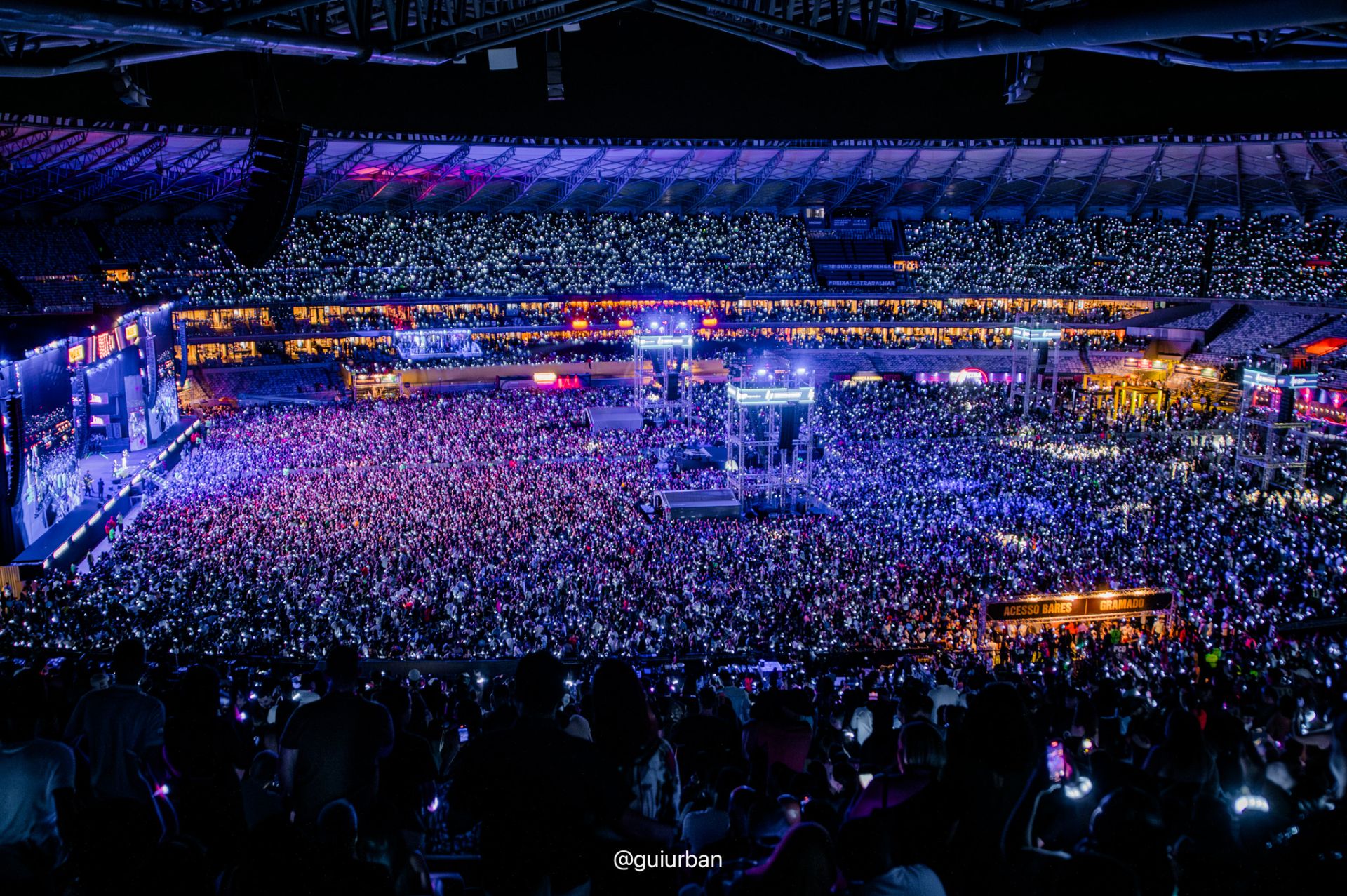
The macro is the architectural-scale statement. It’s the full-stadium blackout punctuated by a single, dramatic spotlight. It’s the massive, synchronized wave of color that washes over 50,000 people. These are the moments that create the iconic, wide-angle shots, the images that will define the tour’s visual legacy. This scale of design treats the entire venue as a single, cohesive entity, using light to trace its contours, create monolithic structures of color, and generate a sense of overwhelming power.
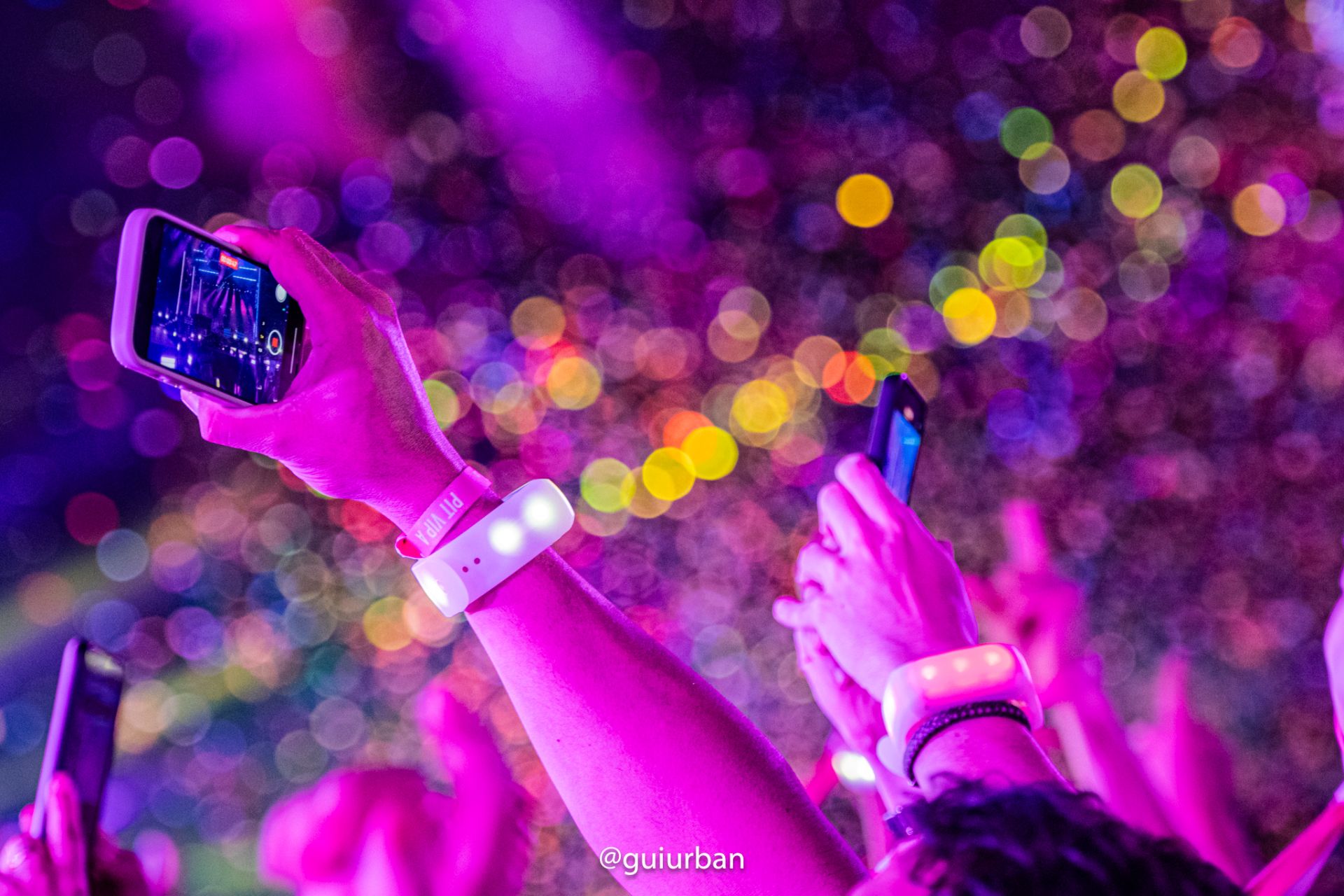
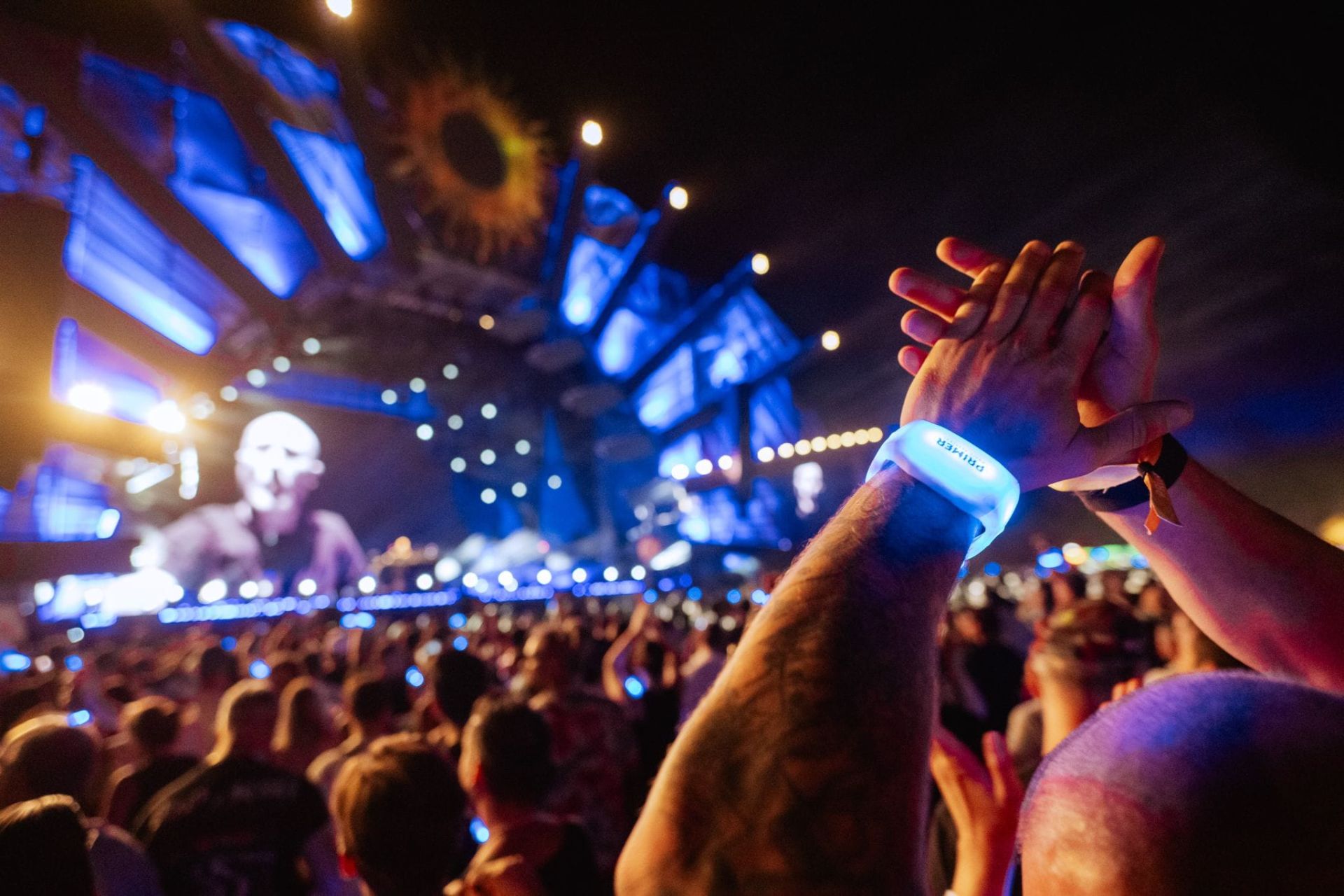
The micro, however, is where the human connection is forged. It’s the single wristband on an individual’s arm, pulsing in time with their own heartbeat. It’s the gentle glow that illuminates the faces of those around you, reminding you that you are part of a collective. This is the scale of intimacy, and it’s where wearable technology has become an indispensable tool for designers.
The First Principle: Unifying the Space
Before you can create division and dynamics, you must first establish a unified canvas. In a stadium environment, the audience itself becomes the largest visual element. For decades, artists relied on lighters and, later, phone screens to create a scattered, twinkling starfield. It was beautiful, but chaotic and uncontrolled.
Today, technologies like our radio controlled LED wristbands allow designers to treat the crowd as a single, programmable 3D video wall. This is a fundamental shift in design philosophy. Instead of being passive observers, every single audience member becomes a pixel in a larger picture. When Maluma played to a hometown crowd of 54,000 in Medellín, the show’s visual reach extended from the stage to the furthest seat, unifying the massive space into a single, shared experience.
This unification is the foundation upon which all other effects are built. It allows a designer to control the base state of the environment, whether that’s total darkness, a single block of color, or a gentle, ambient pulse. It establishes a visual grammar for the show.
The Second Principle: Creating Dynamics Through Segmentation
Once the space is unified, the real artistry begins. A show that is all macro, all the time, can feel overwhelming and monolithic. A show that is only micro lacks impact. The magic is in the interplay between them.
Advanced lighting control, including RF-powered LED wearables, allows for sophisticated audience segmentation. A designer is no longer limited to turning everything on or off. They can:
- Create Zones: Divide the stadium into geometric shapes, concentric circles, or opposing halves, creating visual conversations and contrasts across the crowd.
- Isolate Individuals: Make a single wristband—or a thousand individual wristbands—light up in a sea of darkness, creating moments of sudden, surprising intimacy.
- Generate Movement: Program chases and movements that flow through the audience, directing attention, building anticipation, and mimicking the energy of the music.
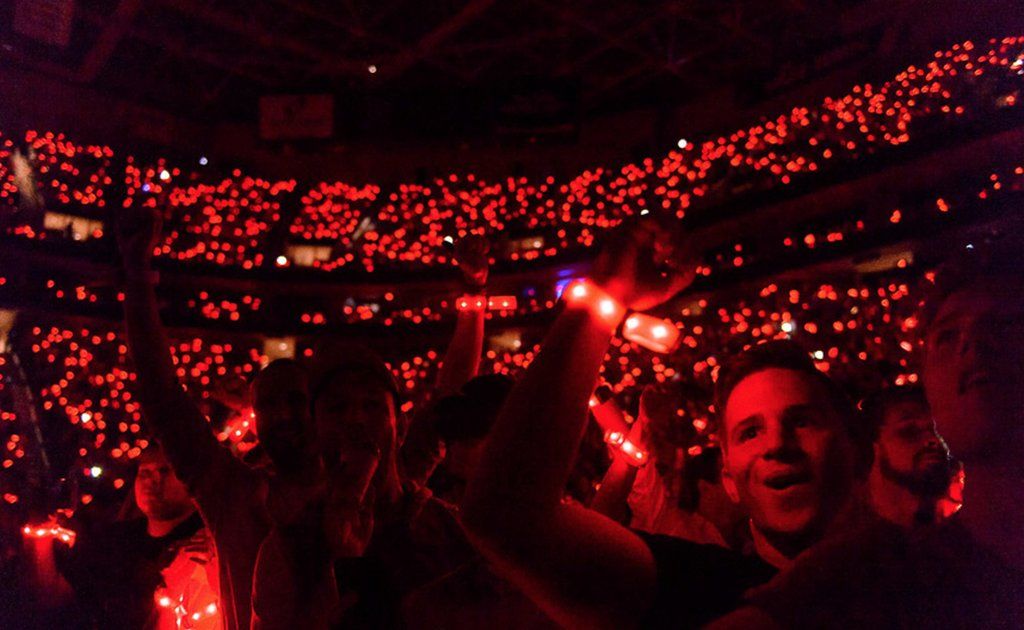
For the 75th anniversary of Formula One at The O2 Arena, we took this a step further. By pre-placing custom LED Lanyards (our Xylo Pendants) based on team affiliation and seating level, the creative team could design effects that were not just spatial, but narrative. They could light up all the fans of a specific team or create visual dialogues between different sections of the arena, making the audience an active participant in the story of the event.
The Third Principle: Designing for Two Audiences
Many major tours and events, from a Maluma concert streamed on Amazon to a Formula One celebration, are designed for two distinct audiences: the people in the room and the millions watching on a screen. This presents a unique challenge that we call the “two-screen problem.”
Lighting that looks spectacular in person can appear blown-out or chaotic on camera. Conversely, effects designed purely for broadcast can feel underwhelming to the live crowd. A successful design must serve both masters.
“The camera sees light differently than the human eye. We have to design for the sensor as much as for the soul. It requires a mastery of color temperature, intensity, and flicker rate, ensuring the broadcast director has a clean, powerful image to work with, while still delivering a visceral experience for the live attendee.”
LED crowd experiences are a powerful tool in bridging this gap. The light from Xylobands is emissive, meaning it’s generated by the wristband itself, not reflected off a surface. This makes it incredibly camera-friendly, providing clean, saturated color without the unpredictable “bounce” of traditional stage lighting. It allows a lighting director to create a rich, textured background for their camera shots that is perfectly synchronized with the main stage production, ensuring the viewer at home feels the same cohesive energy as the fan in the stadium.
The Human Element: The Final Piece of the Puzzle
Ultimately, the goal of any lighting design is to evoke emotion. The technology—whether it’s a moving head spotlight, a laser, or a stadium full of concert wristbands—is just a tool. The most effective designs are those that are deeply integrated with the artist’s performance and the emotional arc of the show.
It’s about knowing when to be big and when to be small. When to flood the stadium with euphoric light, and when to bring it all down to a single, pulsing heartbeat. When Wizkid sold out The O2 Arena for three consecutive nights, the energy was already electric. The addition of synchronized LED bands amplified that feeling, creating a visual manifestation of the collective energy, a shared rhythm that connected every single person in the room.
The new era of stadium and arena lighting is not just about bigger and brighter. It’s about being smarter, more dynamic, and more personal. It’s about understanding the unique grammar of the stadium environment and using light to tell stories that resonate on both an epic and a deeply human scale.