More Than a Memory: Redefining the Lifecycle of Live Event Tech
The Unseen Cost of the Unforgettable
In the world of live events, our currency is memory. We craft moments of collective awe, flashes of light and sound that linger long after the house lights come up. From global music tours to high-stakes corporate event activations, the goal is an indelible impression. But what is the environmental impression of our work? For too long, the industry has operated on a linear model of production: create, use, discard. This paradigm, rooted in the convenience of the single-use, is becoming increasingly untenable in a world grappling with the urgent need for sustainability.
The challenge is significant. An event’s footprint is a complex matrix of travel, energy consumption, and material waste. While many of these factors are being addressed, one area offers a powerful opportunity for reinvention: the technology we put in the hands of the audience. The conventional approach often treats experiential tools as disposable swag—a fleeting novelty for a single night. We believe this is a failure of both imagination and engineering. The future of immersive events depends on a circular model, one where the tools of our trade are built not just for a single spectacle, but for a lifetime of them.
From Disposable to Durable: A Shift in Design Philosophy
The journey toward a more sustainable event model begins at the molecular level—in the design and engineering of the technology itself. The decision to create a product that can withstand the rigors of a world tour, a multi-day festival, or an entire season of broadcast recordings is a conscious one. It requires a commitment to quality materials, robust assembly, and sophisticated power management that goes far beyond the requirements of a single-use item.
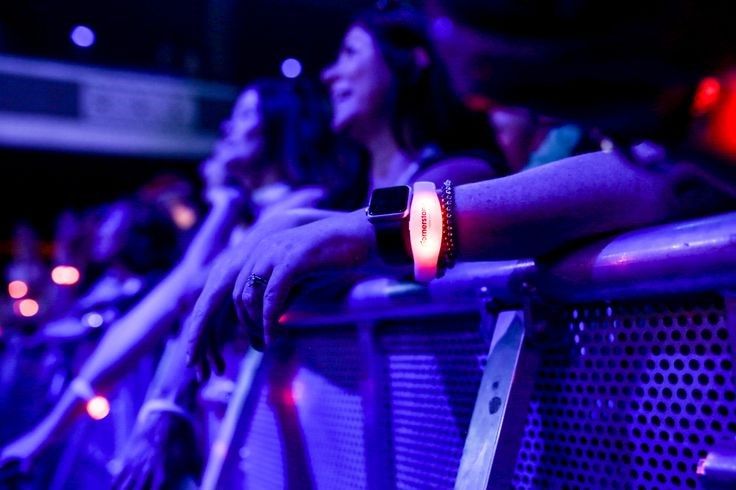
Our philosophy at Xylobands has always been grounded in this principle of durability. We architect our LED Bands, LED Lanyards, and other forms of wearable LED technology not as disposables, but as key components of a touring-grade production infrastructure. This shift in mindset from a product to a service has profound implications. When you design for reuse, you are designing a system. You are building a logistical framework for collection, refurbishment, and redeployment.
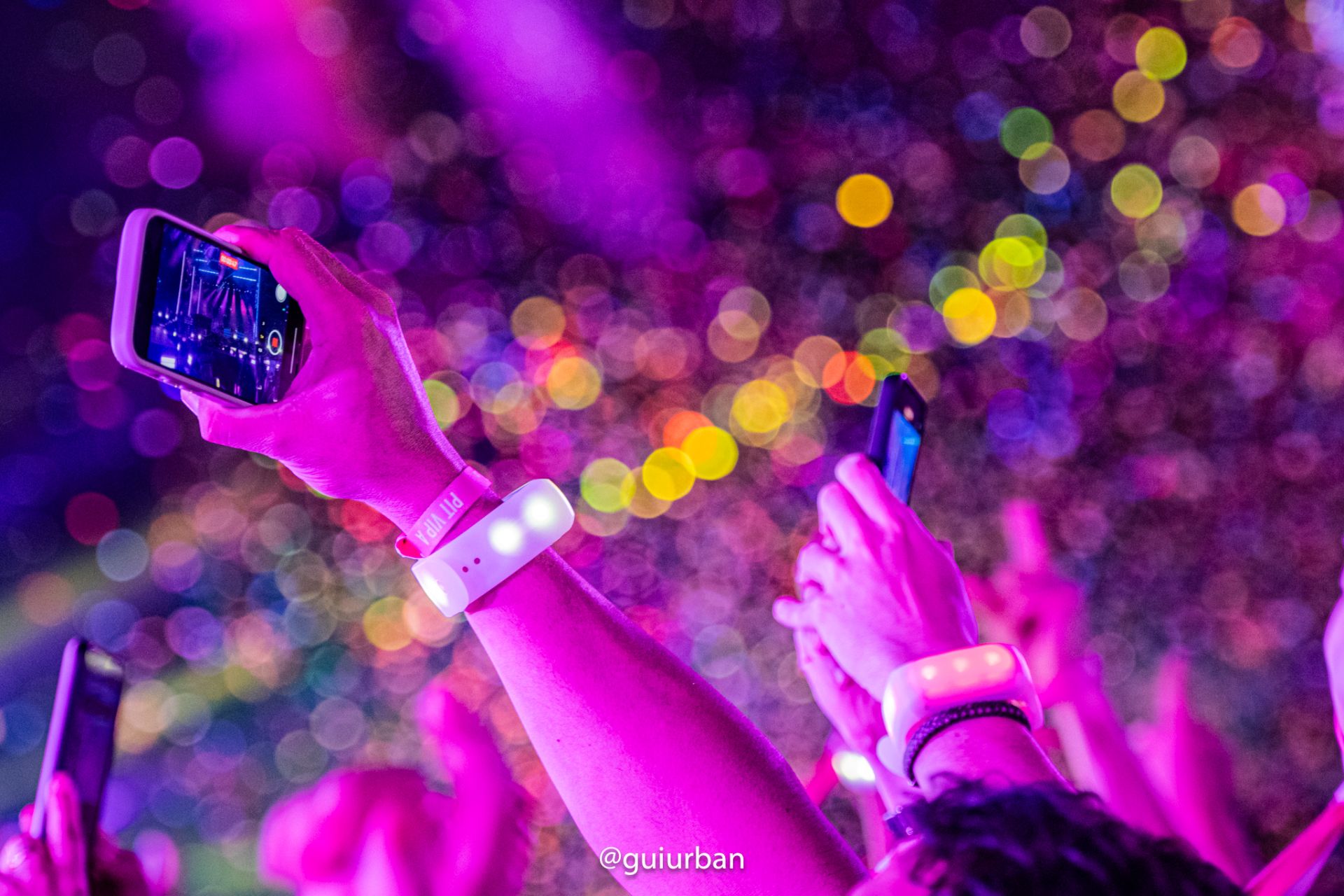
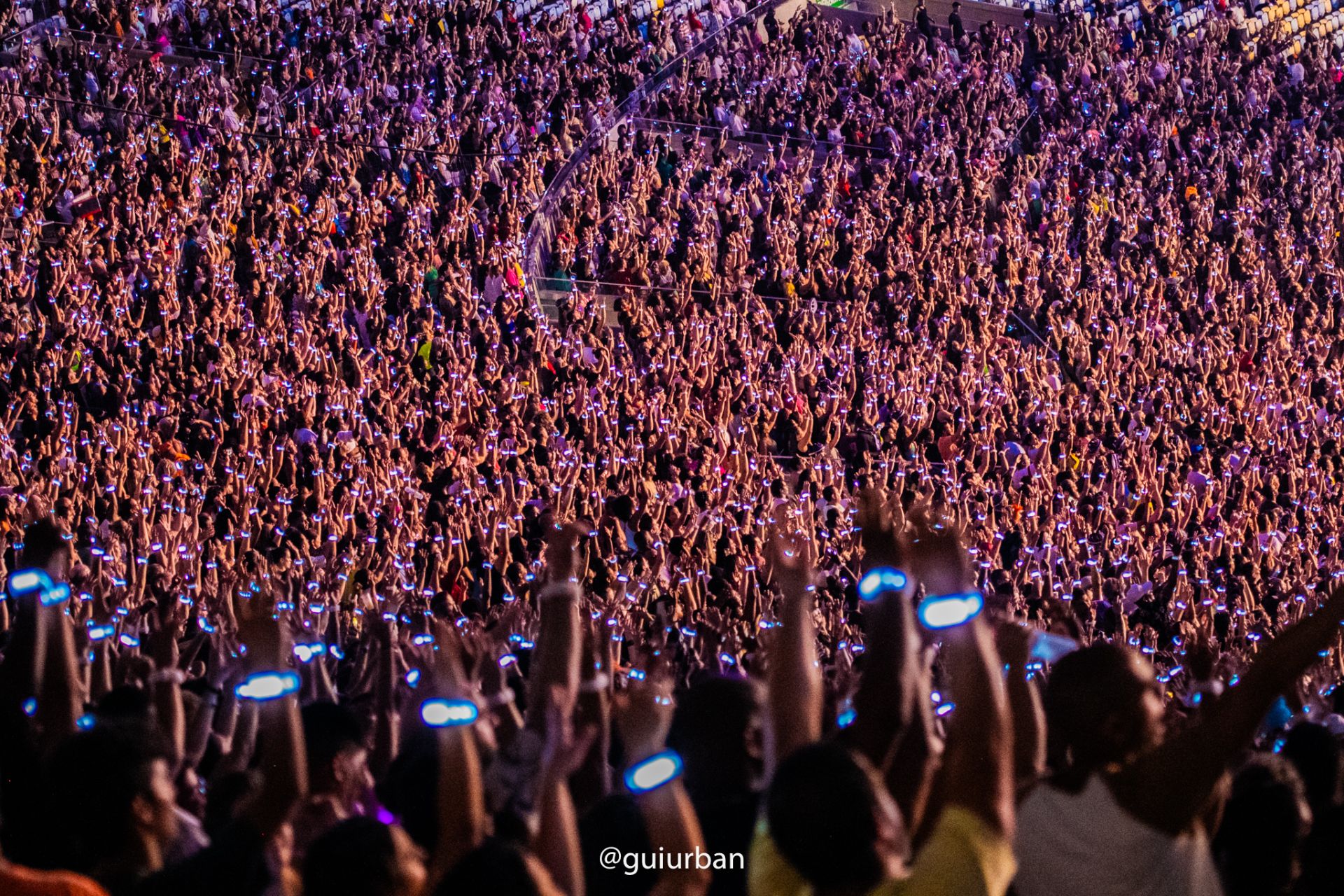
A powerful example of this model in action was Wizkid’s historic, three-night sellout run at London’s O2 Arena. For all three performances, the Xylo Bands that turned the 20,000-strong crowd into a pulsating light show were collected, refreshed, and reused. This wasn’t an afterthought; it was a core component of the production plan, ensuring that the spectacle on night three was just as brilliant as night one, all while dramatically reducing material waste. This is the circular economy in practice, transforming Concert Wristbands from souvenirs into sustainable assets.
The Logistics of the Second Act
True reusability is more than just a well-made product; it’s a mastery of logistics. The unseen choreography that happens between shows is as critical as the RF programming that happens during them. This is the operational backbone of a greener event model, a process we have refined over a decade of global deployments.
It unfolds in several key stages:
- Systematic Collection: The first step is getting the technology back. This involves clear on-site signage, well-placed collection points, and staff trained to communicate the importance of returning the devices. It reframes the audience’s final action not as discarding a trinket, but as participating in the event’s sustainable ethos.
- Triage and Refurbishment: Once collected, each unit undergoes a meticulous process. Our teams clean, inspect, and test every wristband. Batteries are recharged or replaced, and any necessary repairs are made. This ensures every piece of LED Event Technology is ready for its next performance, meeting the same high standards as a brand-new unit.
- Intelligent Redeployment: The refurbished stock is then ready for its next chapter. It might be programmed for a different artist’s tour, a premier music festival like Greece’s PRIMER, or a high-profile broadcast for a client like ITV. The technology is agnostic; its potential is unlocked by the creative and technical teams who program it for each unique experience.
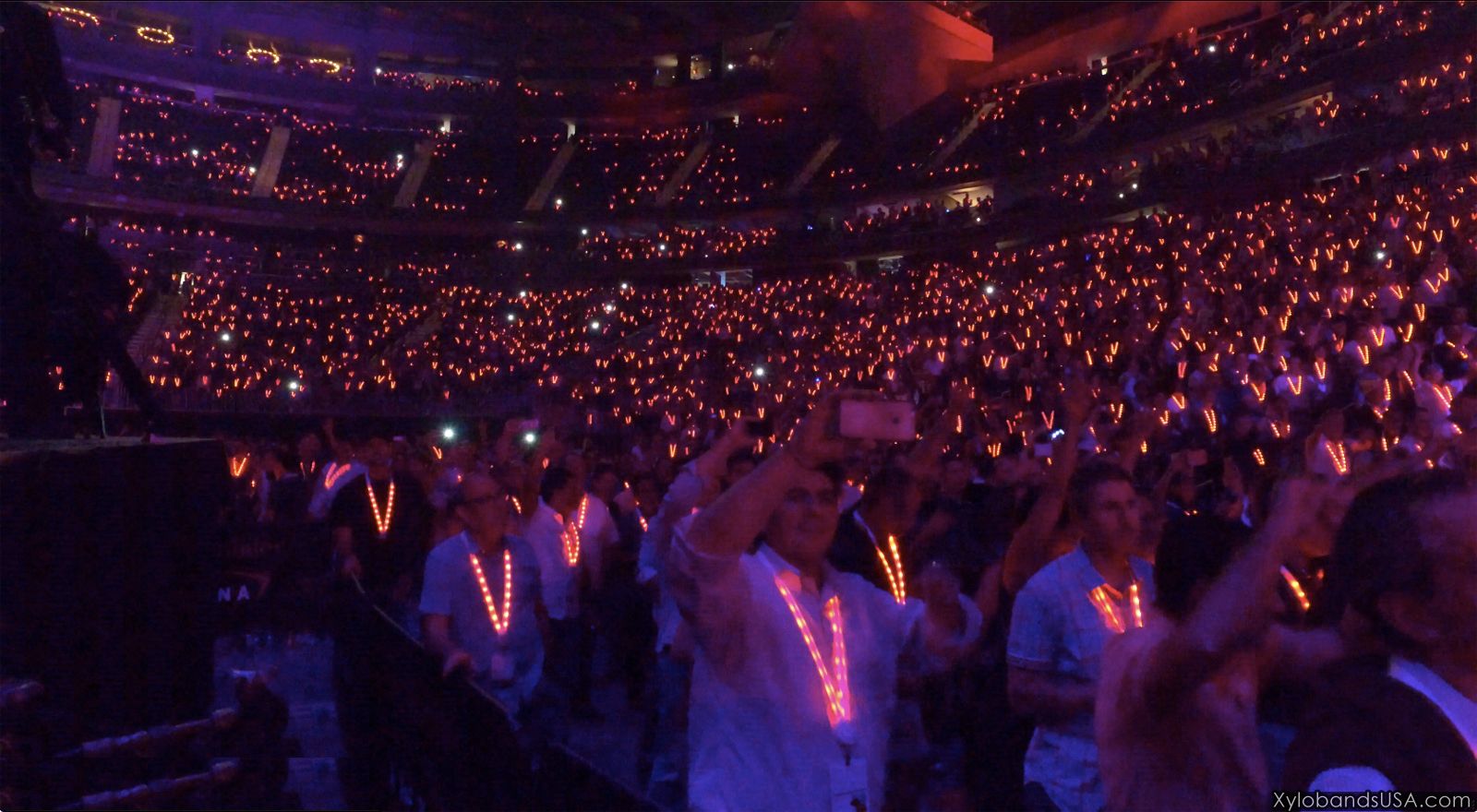
This closed-loop system was central to the F1 75 celebration at The O2 Arena, where 13,000 custom Xylo Pendants were deployed. These weren’t generic items; they were custom-branded for different teams and hospitality tiers. Our ability to manage, deploy, and collect these specific assets was fundamental to the event’s success and demonstrates how sustainability and deep customization can coexist.
Spectacle and Sustainability: A Shared Future
The beauty of a circular model is that it doesn’t ask event producers to choose between creating a breathtaking spectacle and being environmentally responsible. In fact, it argues that the two are intrinsically linked. A durable, reliable piece of immersive event technology is inherently more capable and more impressive than a flimsy, single-use alternative. It holds a brighter light, offers more complex programming capabilities, and delivers a more premium experience for the audience.
By investing in a reusable system, event producers, tour managers, and brand marketers are not just making a green choice; they are making a choice for quality. They are opting for a system proven to work for the world’s biggest artists and brands, from Coldplay to Formula One. They are creating LED Crowd Experiences that are not only visually stunning but also aligned with the growing expectations of a more conscious audience.
The most impactful moments in live events are moments of connection—of thousands of individuals becoming a single, unified entity. A sustainable production model extends this idea of collective responsibility.
The transition requires a new way of thinking. It means seeing audience technology not as an expense to be minimized, but as an investment in a powerful, reusable platform for creating immersive events. It’s a commitment to a system that delivers unforgettable moments for the audience and a lighter footprint on the planet. The ephemeral magic of a live show doesn't have to be built on a foundation of disposable things. It can, and should, be built on technology designed to create memories, again and again.