The Psychology of Collective Presence: How Synchronised Light Transforms Mass Audiences
The Anatomy of Shared Presence
In social psychology, few phenomena are as striking as collective effervescence—the state described by sociologist Émile Durkheim where a gathering of individuals, united by a common rhythm and focus, transcend their sense of self and fuse into a single emotional organism. For decades, live event producers relied on sound pressure levels, acoustic reverb, and shared sightlines to trigger this state. Yet at arena scale, physical distance naturally dilutes that connection. An attendee seated in the upper tiers of an arena or standing at the perimeter of a stadium often feels like a witness to someone else’s communion rather than an active participant.
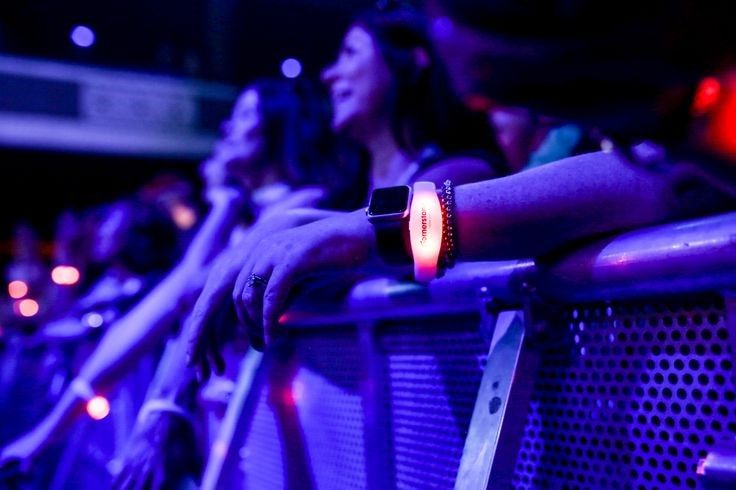
Modern experience design bridges this gap by addressing the neurobiology of perception. Human beings assess belonging through peripheral visual cues and synchronised bio-feedback. When 50,000 strangers share an auditory rhythm, the experience is powerful; when that rhythm is reinforced by identical, immediate visual feedback wrapped directly around every person's wrist, the brain processes the environment differently. The transition from passive observer to active component fundamentally alters audience psychology.
From Spectator to Synapse: Reversing the Gaze
The traditional architecture of live spectacle relies on a unidirectional broadcast model: production crews focus thousands of lumens toward the stage, framing the artist as the sole source of visual narrative. The audience remains plunged in darkness, their presence felt only as a roar between tracks.
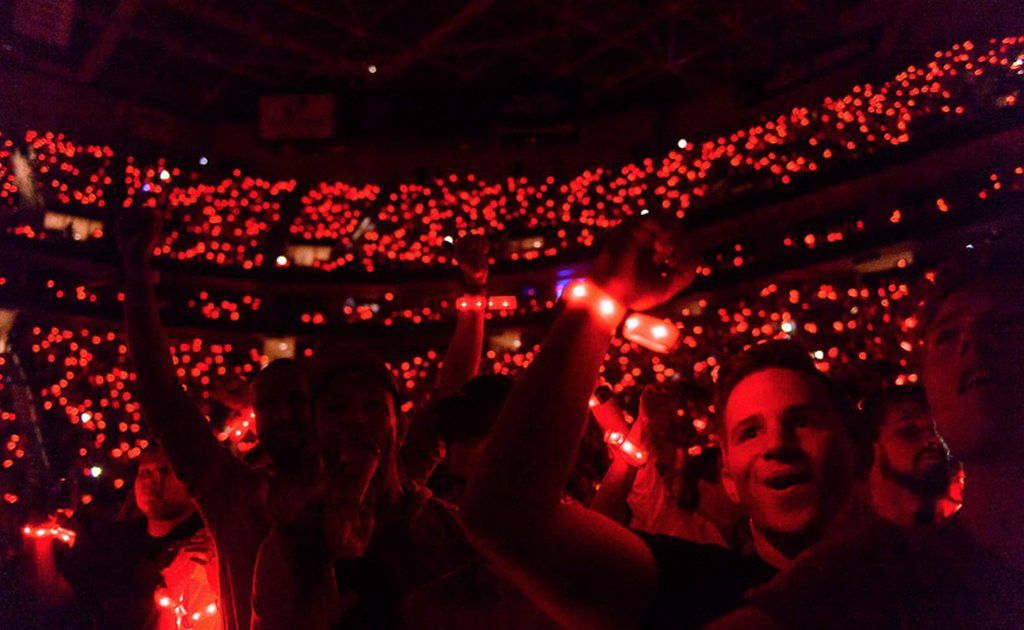
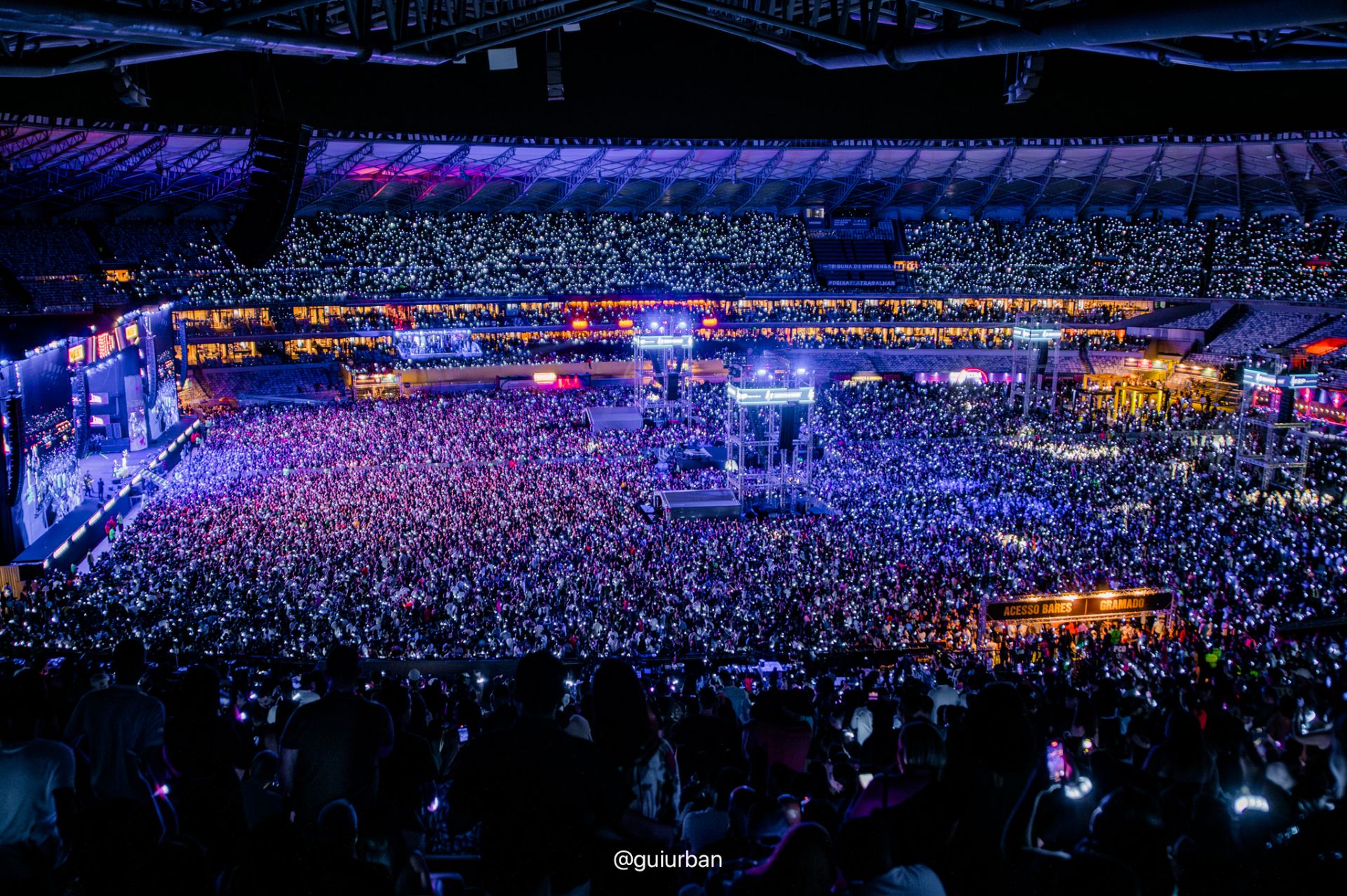
Introducing wearable LED technology reverses the primary vector of visual attention. By illuminating the seating bowl, stadium terraces, and floor concurrently, the audience ceases to be an unlit backdrop. Each attendee becomes a luminous node within a vast neural network. This shift triggers three distinct psychological mechanisms:
- Agency and Spatial Ownership: An attendee wearing a synchronised device feels physical ownership of the visual output. The pulse of light emanates from their own body, anchoring their physical presence directly into the narrative of the performance.
- De-individuation into Belonging: Paradoxically, as individual boundaries soften within a synchronized crowd, feelings of isolation evaporate. Visual alignment across tens of thousands of people offers immediate, non-verbal validation of shared sentiment.
- Dissolution of Distance: Traditional hierarchy dictates that the closest ticket commands the greatest intimacy. When radio controlled LED wristbands fire across entire venues—from front-of-house to the highest rafters—the emotional playing field is levelled. Distance from the stage no longer dictates depth of immersion.
The Mechanics of Sensory Entrainment
The human brain seeks synchronicity. Through neural entrainment, our brainwaves naturally sync to external rhythmic stimuli—particularly rhythmic auditory pulses. When that auditory cue is paired with coherent, synchronized light pulses, the psychological impact intensifies exponentially.
Consider the visual trajectory of LED crowd experiences at major global music festivals and world tours. When Jason Regler conceived the original Coldplay Xylobands concept watching the band perform at Glastonbury Festival, the realization was simple: a sea of unconnected mobile phone screens produces visual clutter, but coordinated, controlled illumination builds structural unison. Today, whether in the sprawling open-air landscape of Athens at the PRIMER Music Festival or across three sold-out nights with Wizkid at The O2 Arena, synchronized festival wristbands eliminate visual noise, replacing individual distraction with unified sensory direction.
"When light pulses from the wrist in unison with the bass drop, the nervous system stops analysing the environment from the outside in. The attendee is no longer attending a show; they have become the visual architecture of the music itself."
Broadening the Canvas: From Concerts to Broadcast Arenas
This psychological shift is not reserved exclusively for stadium anthems. Television producers and sporting leagues are adapting identical psychological principles to reshape live and televised formats. Broadcasters like ITV have recognized that audience engagement on camera is contagious to viewers at home. A seated studio audience that is visibly engaged and illuminated through dynamic lighting forms a tangible conduit of excitement for the lens.
Similarly, during high-velocity sporting showcases—such as the 75th-anniversary celebration of Formula One at The O2 London, where 13,000 attendees wore custom interactive pendants zoned by team allegiance—visual entrainment becomes tribal. The light signals identity, community, and competition. The psychology shifts from general aesthetic pleasure to visceral sports affinity, giving fans an active medium through which to declare their allegiance across the bowl.
Micro-Moments and Emotional Peaks
Crafting transformative live experiences requires understanding the emotional curve of a multi-hour event. Constant visual saturation leads to sensory habituation; if an audience is lit continuously, the lighting loses its emotional charge. Skilled lighting directors utilize LED event technology strategically:
- The Subconscious Dormancy: Devices remain silent during preliminary moments, setting the baseline expectation of standard spectatorship.
- The First Cohesion Trigger: Activating the entire stadium simultaneously at a singular narrative inflection point jolts the crowd with an instant dopamine release and collective gasp.
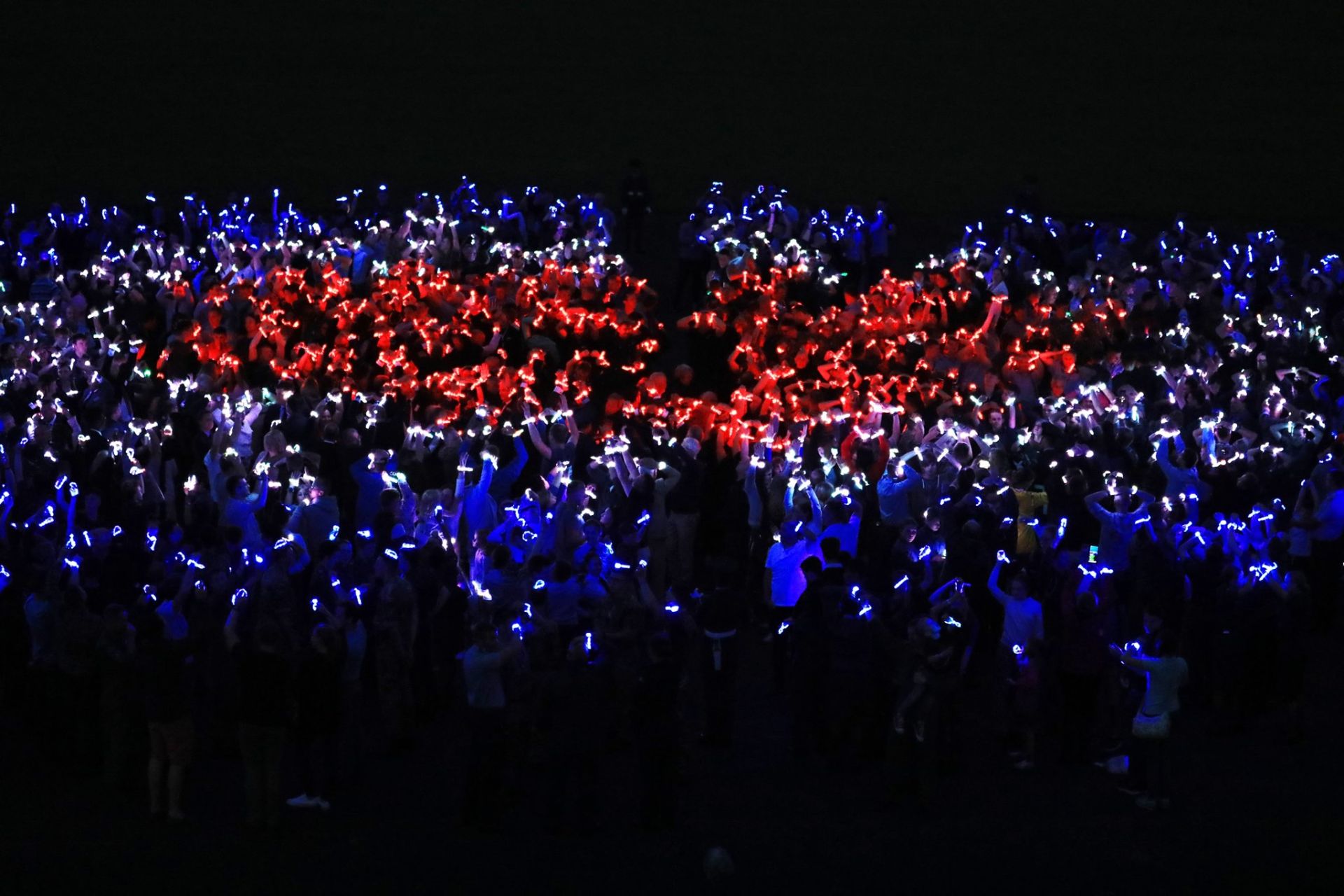
- Zoned Interaction: Dividing the room into chromatic waves—using targeted RF signals to orchestrate sweeping gradients across mezzanine levels—turns the audience into a responsive, living canvas.
The Lasting Post-Event Resonance
The ultimate test of live-event psychology occurs after the lights come up. In an era dominated by hyper-curated digital media, audiences crave authenticity and tangible communion. When an individual leaves an arena with an LED bracelet that pulsed alongside 50,000 others, the object serves as a physical talisman of a transient, unified collective.
By transforming massive crowds from passive consumers into the very fabric of the production, live experience creators unlock something far more potent than spectacle alone: genuine, shared humanity engineered at stadium scale.