The Collective Consciousness: A Psychological Deep Dive into Large-Scale Audience Engagement
From Spectator to Superorganism
There's a moment at every truly great live event. It's a palpable shift in the atmosphere, a change in the very quality of the air. A crowd of thousands, once a collection of individuals, coalesces into a single, unified entity. They breathe in unison, move as one, and share a singular emotional focus. This transformation from passive audience to active participant isn't accidental; it's the result of carefully orchestrated psychological cues that tap into fundamental human needs for connection, belonging, and shared experience.
As event producers, tour managers, and brand marketers, our primary challenge is to engineer these moments of collective effervescence. We don't just sell tickets; we create the conditions for transformative experiences. Understanding the psychological mechanics of audience engagement is no longer a soft skill—it's a technical necessity in an era defined by immersive events.
The Psychology of Unity: Breaking Down the Barriers
At its core, a large-scale event is an exercise in applied social psychology. The goal is to dissolve the invisible barriers that separate individuals and foster a sense of collective identity. Several key principles are at play:
- Social Proof: Humans are social creatures, hardwired to look to others for cues on how to behave. When a few people begin to clap, sing, or light up a wristband, it creates a powerful ripple effect. The action is validated, and others quickly join in, not wanting to be left out. This is the foundation of every stadium wave and mass singalong.
- Deindividuation: In a large crowd, the sense of individual identity can soften. Anonymity reduces self-consciousness and inhibition, freeing people to dance, cheer, and express emotion in ways they might not in a smaller setting. This is not about losing oneself, but about finding a new, temporary, collective self.
- Shared Attention: When tens of thousands of people focus their attention on a single point—a performer, a screen, an athletic contest—it creates a powerful shared reality. This joint focus synchronizes emotional responses, meaning the drama, triumph, or beauty of a moment is amplified exponentially as it is reflected and validated by thousands of others simultaneously.
Light as a Language: Engineering Collective Experience
How do we, as creators, actively trigger these psychological states? While stagecraft, sound, and narrative are crucial, light is perhaps the most powerful and primal tool at our disposal. It’s a universal language that bypasses conscious thought and speaks directly to our emotional core.
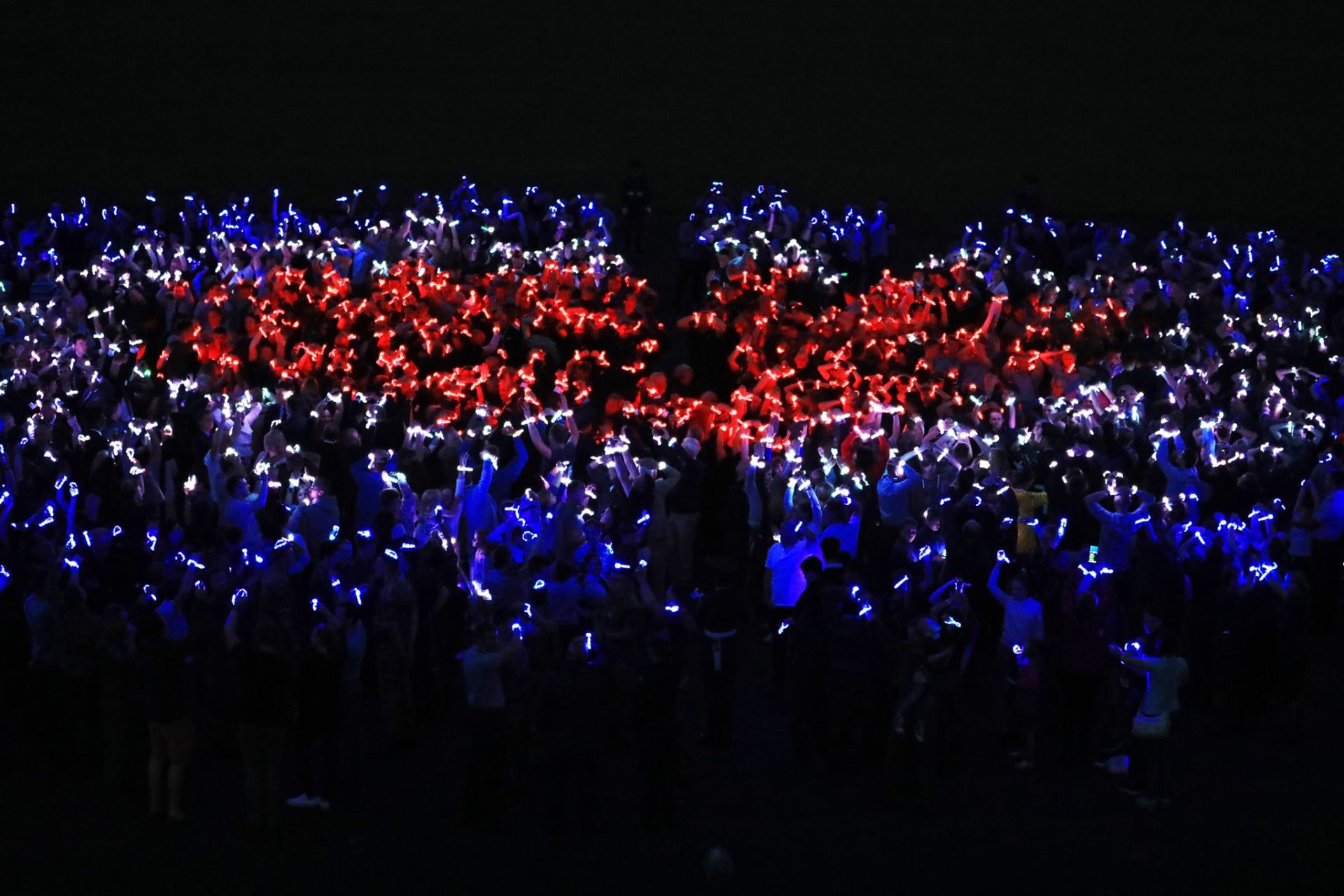
This is the principle that drove the invention of Xylobands. The sight of thousands of lighters during a festival performance sparked the idea of a centrally controlled light source for every audience member. The goal was to turn the crowd itself into a canvas, making each individual an essential pixel in a larger masterpiece. This isn’t just about creating a spectacle; it’s about giving each person a role. When an individual’s wristband illuminates in sync with 50,000 others—like during Maluma’s historic hometown concert in Medellín or for the 75th-anniversary celebration of Formula One—they are no longer just watching the show. They *are* the show.
This wearable LED technology transforms the psychological landscape:
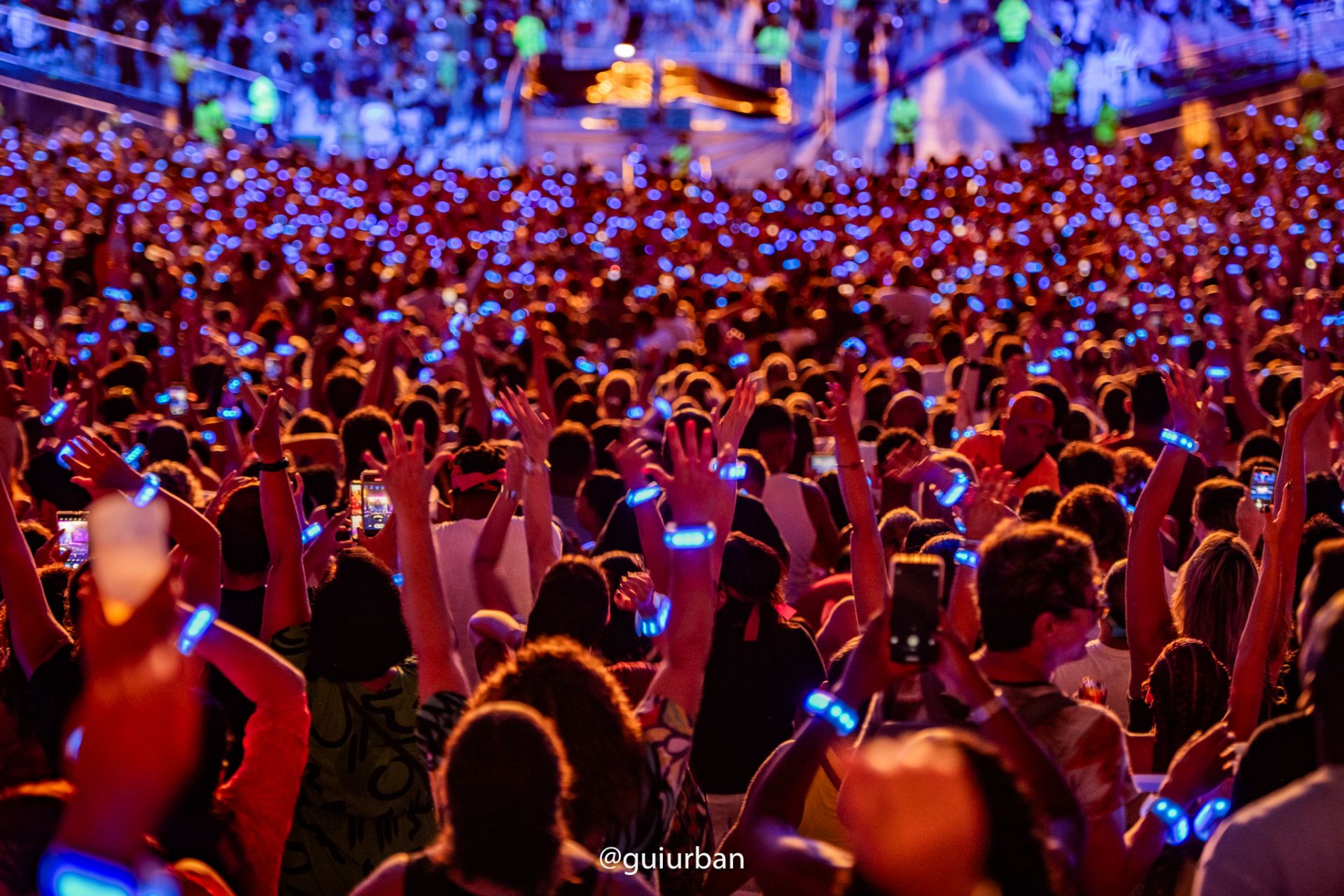
- It provides an undeniable, visual form of social proof. Seeing a sea of synchronized light confirms that you are part of a massive, unified group.
- It enhances shared attention, directing the audience's focus with waves of colour and strobing patterns that correspond directly to the action on stage or on the field.
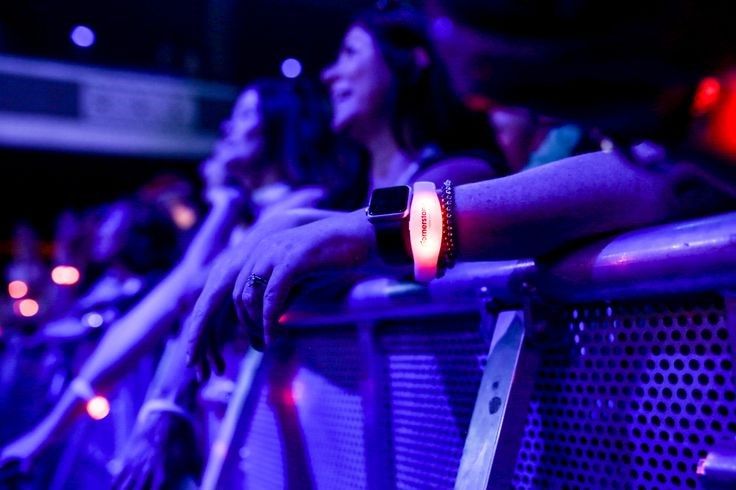
- It assigns a role, combatting the passivity that can set in during large events. The LED bands make participation effortless and inclusive, drawing everyone into the experience.
"The moment the wristbands light up, the dynamic in the room changes. The fourth wall doesn't just break; it evaporates. The audience and performer are suddenly in the same space, co-creating the experience. That's the magic."
The Architecture of an Immersive Event
Building these experiences requires a new way of thinking about event design. It’s not about a single stage and a passive crowd, but about a 360-degree environment. We see this in the intricate, broadcast-focused productions for clients like ITV, where the audience is not just a backdrop but an essential, living component of the televised spectacle. The light show must be as compelling for the viewer at home as it is for the person in the room.
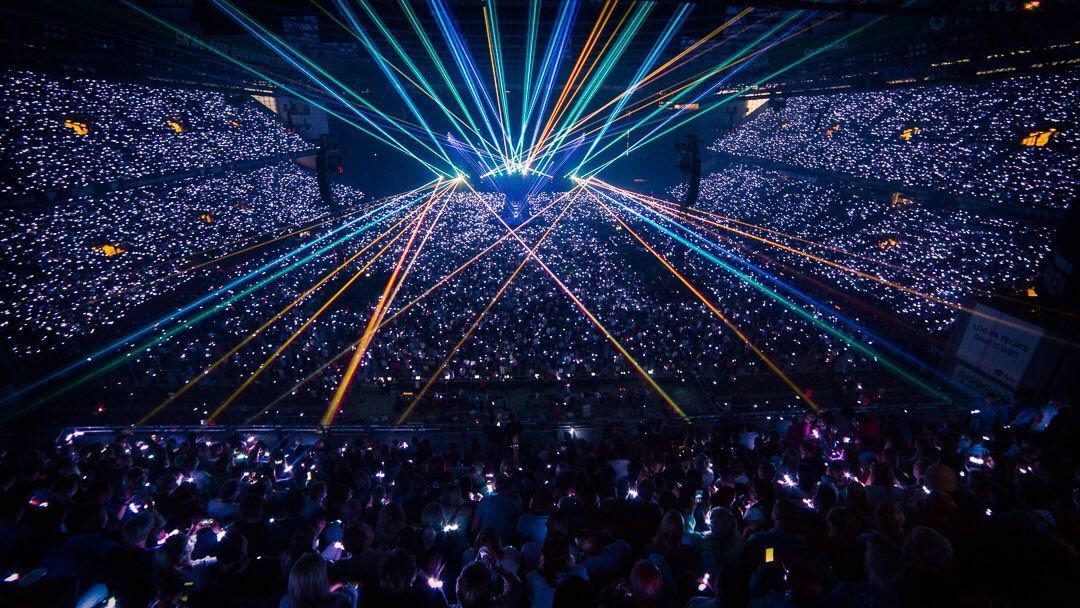
This is where immersive event technology becomes critical. Systems of radio controlled LED wristbands, lanyards, and even LED orbs allow a show designer to choreograph the entire volume of a space. You can create waves of light that chase a performer down a runway, segment an arena by team colours for a Davis Cup match, or have the entire stadium pulse with the beat of the music. These LED crowd experiences turn vast, anonymous spaces into intimate, connected environments.
The Takeaway: From Audience to Asset
In the modern experience economy, the audience is your most valuable asset. Their engagement, their emotional investment, and their shared memories are the ultimate measure of an event's success. By understanding the psychological drivers of human connection—and deploying technology that serves those drivers—we can do more than just entertain. We can create moments of profound unity, turning a simple gathering into a collective consciousness. We can guide them with light, and in doing so, help them find a powerful, shared sense of home, even if just for one night.