The Responsible Encore: A Blueprint for Sustainable Live Events
The End is Not the End: Rethinking the Event Lifecycle
The roar of the crowd, the shared pulse of the music, the sea of lights — these are the moments that define the live experience. But what happens when the lights go up and the crowds go home? The legacy of an event is no longer measured solely by ticket sales or social media impressions, but by its environmental and social footprint. In an industry built on spectacle, the most profound innovation today isn’t louder speakers or brighter lights; it’s a deeper commitment to responsibility.
For too long, the live events industry has operated on a linear model: build, use, discard. From single-use plastics to the carbon cost of global tours, the environmental toll has been significant. But a shift is underway, driven by a new generation of producers, artists, and audiences who demand more. The new challenge is to create breathtaking, immersive events that are also sustainable, circular, and responsible.
More Than a Show: The Circular Production Model
The concept of a circular economy, where resources are kept in use for as long as possible, extracting the maximum value from them whilst in use, then recovering and regenerating products and materials at the end of each service life, is gaining traction. This is not about sacrificing the quality of the experience. On the contrary, it’s about enhancing it by embedding a sense of purpose and shared responsibility.
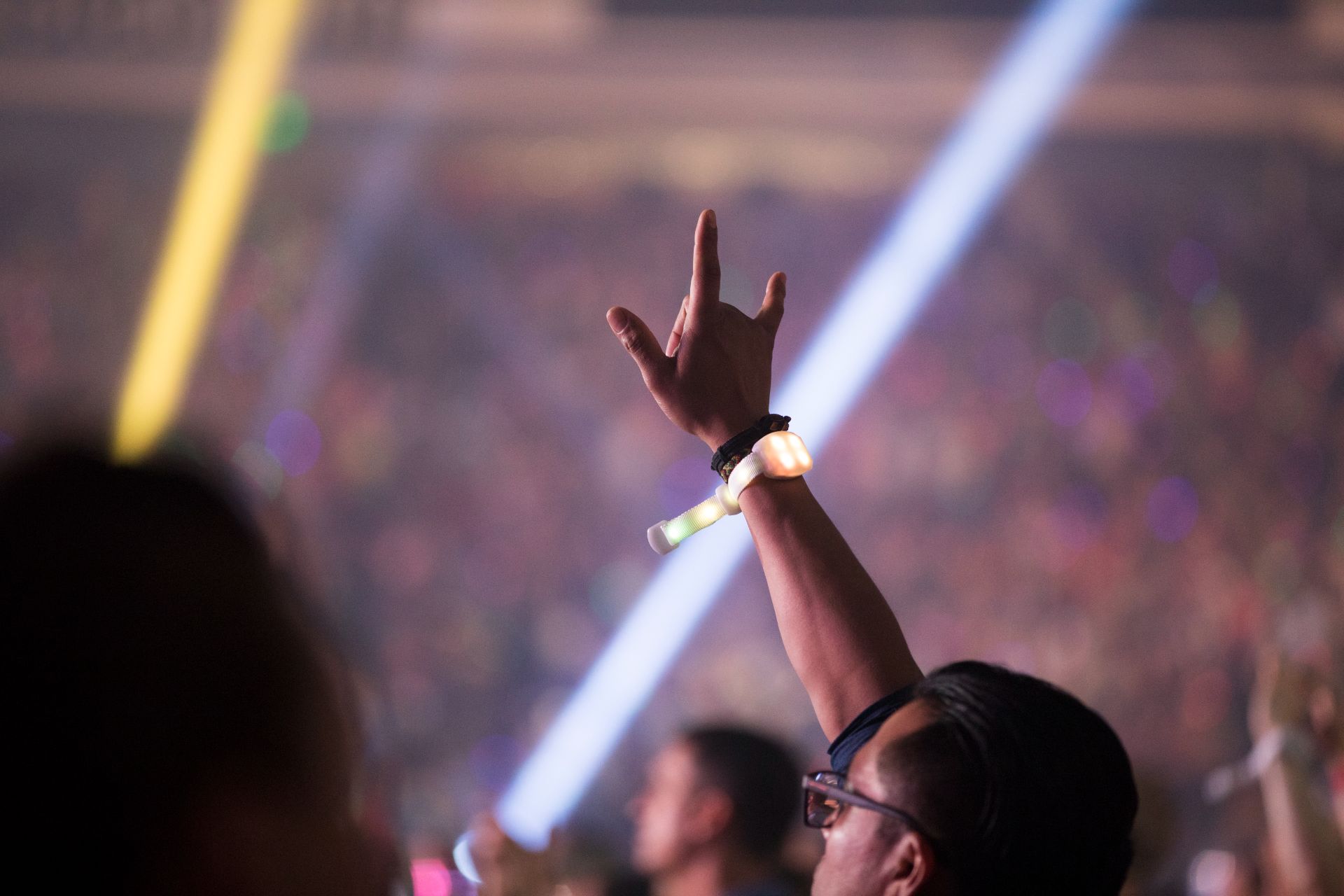
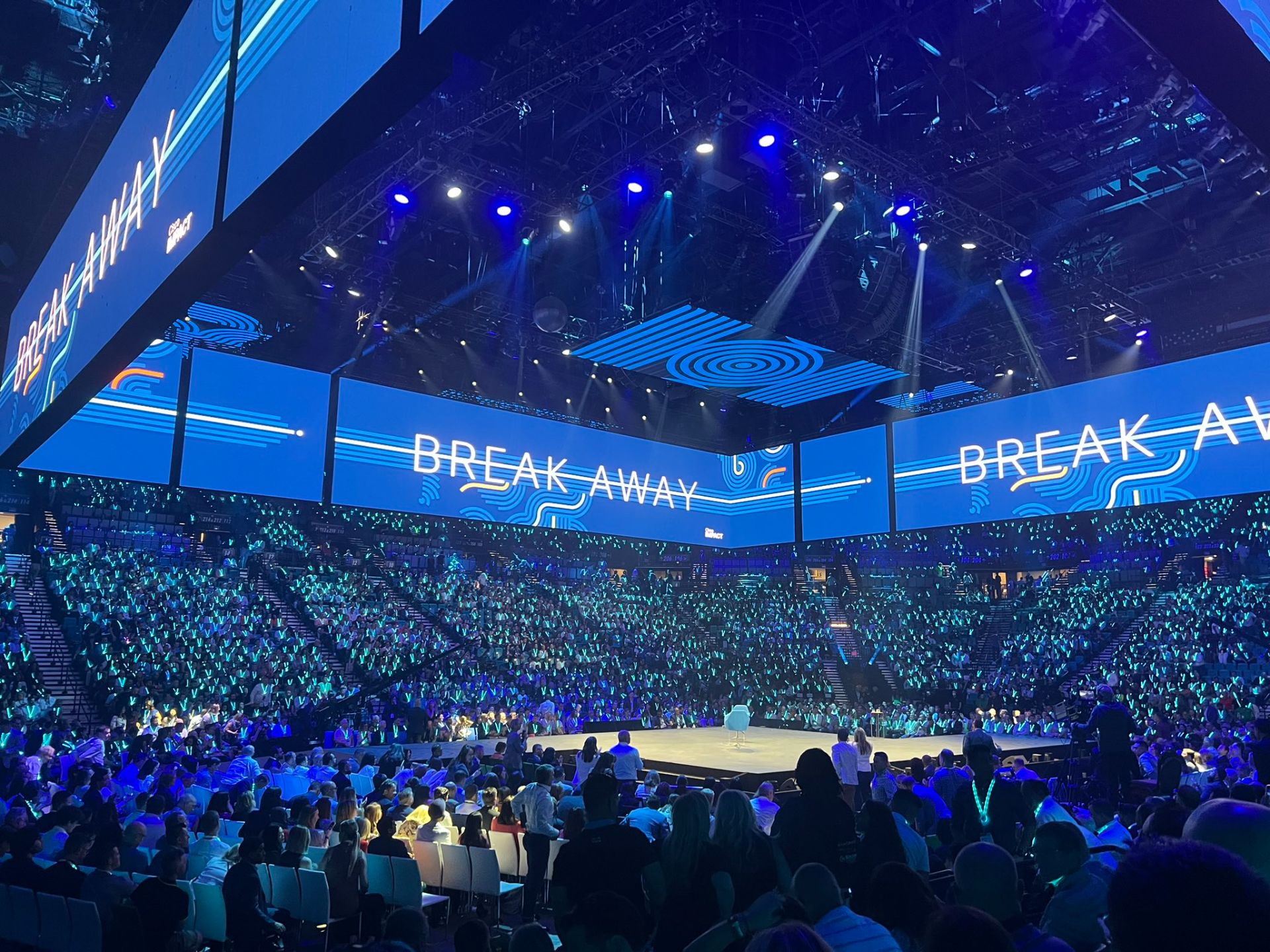
At Xylobands, we’ve seen this shift firsthand. Our wearable LED technology is designed not just for a single moment of awe, but for a sustainable lifecycle. For Wizkid’s historic three-night, sold-out run at London’s O2 Arena, for example, our LED bands were collected, topped up, and reused across all performances. This simple act prevented tens of thousands of items from becoming single-use waste, demonstrating that high-impact LED crowd experiences and environmental responsibility can go hand-in-hand.
Key Principles of Circular Event Production:
- Design for Durability and Reusability: From staging elements to wearable tech, prioritise products built to last. Our radio controlled LED wristbands are engineered for multiple uses, ensuring they can power numerous events before needing to be retired.
- Implement Robust Collection and Recycling Programs: A successful reuse strategy depends on efficient logistics. Clear signage, incentivised return points, and dedicated teams are crucial for maximising the collection of reusable assets, be they concert wristbands or drinkware.
- Educate the Audience: Responsibility is a collective effort. When audiences understand the ‘why’ behind a collection initiative — that their returned wristband will light up another show — they become active participants in the sustainability mission.
- Partner with a Sustainable Supply Chain: Scrutinise the practices of your vendors. Work with partners who share your commitment to sustainability, from catering to technology providers.
The Ripple Effect: Technology as a Force for Good
Immersive technology has the power to do more than just create a spectacle; it can be a tool for positive change. When an entire stadium lights up in unison, as they did for Maluma’s historic Medellín homecoming concert, it’s a powerful demonstration of unity. When that same technology is part of a sustainable system, it sends an even stronger message.
“The most memorable moments in live events are those of connection. When technology bridges the gap between the artist and the audience, it creates a shared experience. When that technology is also sustainable, it creates a shared responsibility.”
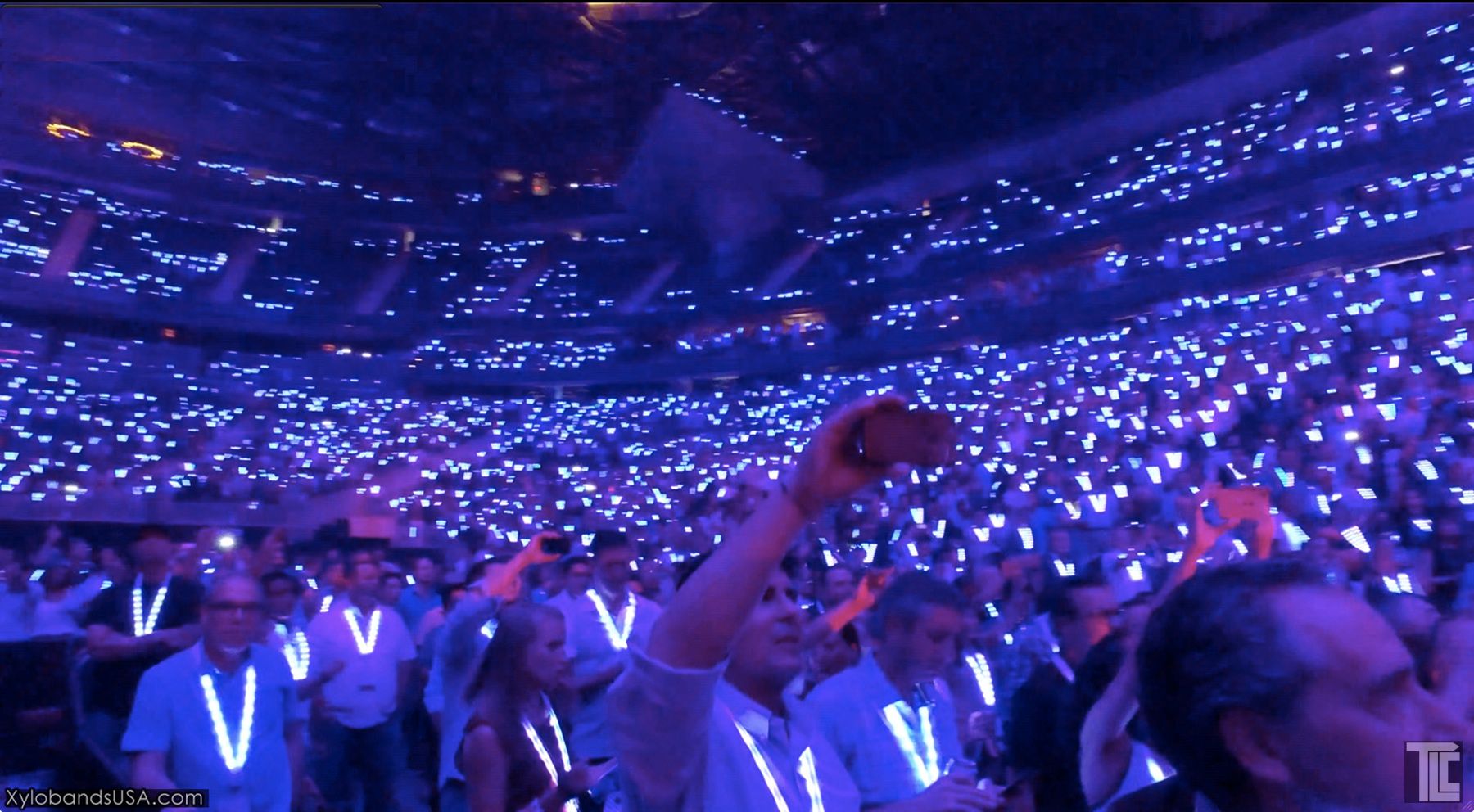
This principle extends beyond LED bracelets. Consider the custom LED Lanyards we developed for the Formula One 75th anniversary event. These were not just credentials; they were an integral part of the show’s lighting design, creating dynamic effects throughout the arena. More importantly, they were designed with reusability in mind, a premium item that fans would want to keep, extending its life far beyond the event itself.
The Business Case for Going Green
Sustainability is not just an ethical imperative; it’s a strategic advantage. In a crowded market, responsible production is a powerful differentiator that resonates with brand partners, artists, and fans. Brands like Audi, Nike, and Google are increasingly aligning themselves with partners who reflect their corporate values on sustainability. By adopting greener practices, event producers can attract premium partnerships and build a more loyal audience.
Moreover, a circular model can be economically savvy. While the initial investment in durable, reusable goods may be higher, the long-term savings from not having to repurchase for every event are substantial. Efficient reverse logistics and recycling processes turn what was once a cost centre (waste management) into a value-recovery stream.
Events like the PRIMER Music Festival in Greece and major sporting spectacles like the Davis Cup are realising that modern audiences expect immersive event technology to be part of the experience. By choosing reusable systems, they deliver on that expectation while also championing a more responsible model of production.
The Responsible Encore
The final act of any great performance is the encore — a moment that leaves a lasting impression. In the narrative of live events, our encore is our legacy. It’s the impact we leave on the environment, our communities, and the industry itself. By embracing sustainable practices, we can ensure that the magic we create on the night doesn’t come at a cost to the morning after.
The future of corporate event activations, music festivals, and global tours will be defined by this new blueprint. It’s a future where the spectacle is sustainable, where every flash of light is part of a bigger, brighter, and more responsible picture. It’s a future that Xylobands is proud to be a part of, lighting the way one reusable, recyclable, and truly unforgettable experience at a time.