The Responsive Field: Festival Production and the Evolution of Crowd Participation
The Dissolution of the Festival Stage Boundary
For decades, festival scenography operated on a clear, unidirectional contract: the stage generated energy, light, and sound, while the audience stood in the dark, absorbing it. Production designers invested heavily in expanding proscenium rigs, monumental LED video walls, and ground-shaking line arrays. Yet, as festival landscapes grew more vast and audiences more saturated with passive visual stimuli, a subtle paradox emerged. Towering stages often amplified the psychological distance between the artist and the spectator. The spectacle was enormous, but the connection felt detached.
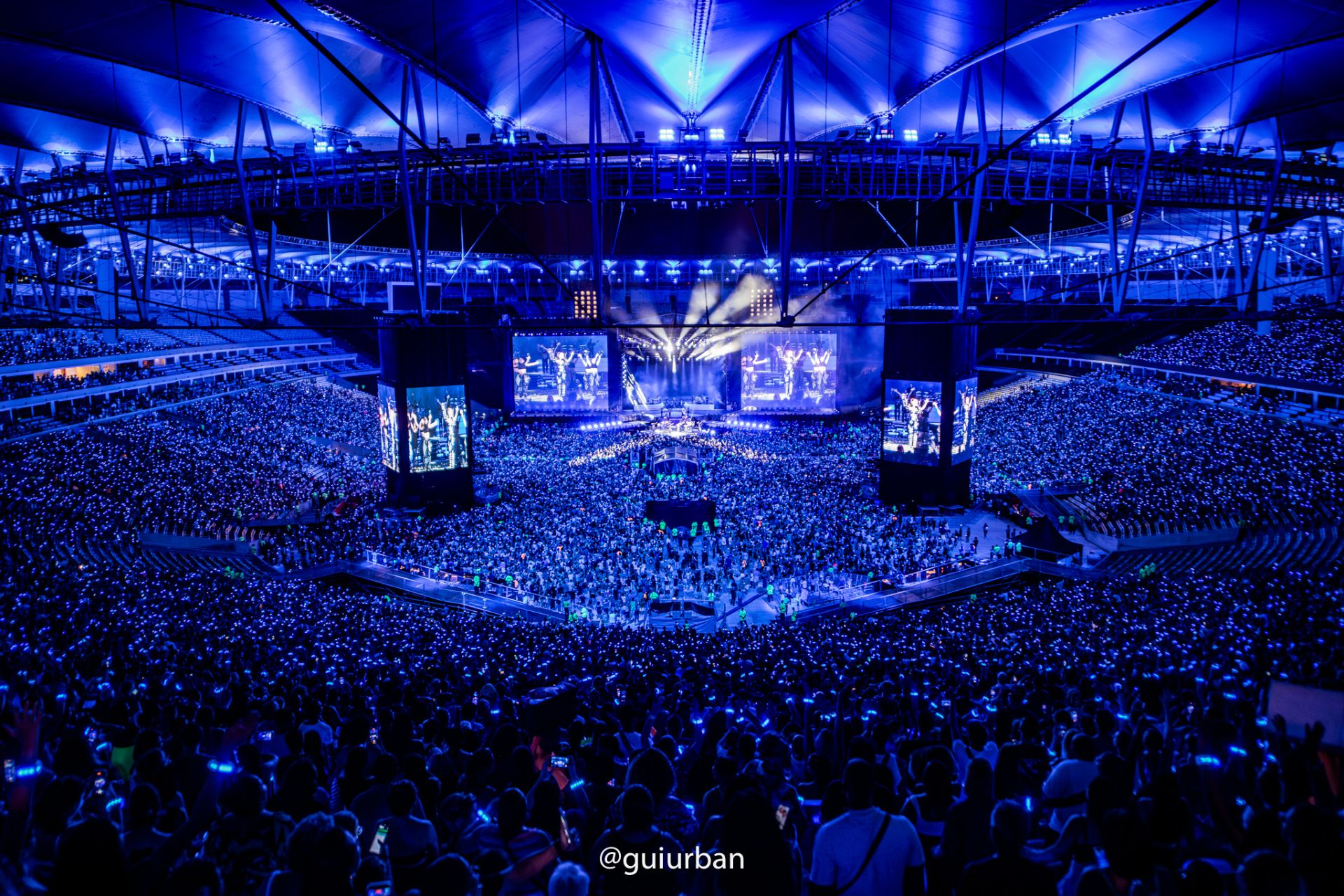
Today, a structural shift is transforming modern festival production. Contemporary experience designers are no longer treating the audience field as a passive void beneath the lighting towers. Instead, the festival lawn or arena floor is being engineered as the primary canvas. The transition from passive observation to active, decentralised co-creation represents the most significant shift in live entertainment since the advent of intelligent moving lights. The evolution of festival wristbands and wearable LED technology has fundamentally redrawn the perimeter of the show, pulling the audience directly into the lighting plot.
From Lighters to Intelligent Pixels: The Lineage of Crowd Luminance
The desire for collective visual participation is not new. In the late 1960s and 1970s, audiences spontaneously flicked open butane lighters during emotive ballads. By the 2000s, this evolved into glowing smartphone screens—an organic gesture, but one that visually fractured the field with uneven color temperatures, distracting interfaces, and uncoordinated flickers. The breakthrough came when event engineers asked a fundamental question: what happens when the lighting director at front-of-house can command every person in the crowd as a dynamic, synchronized fixture?
That paradigm shift began when Jason Regler stood in the crowd at Glastonbury Festival during Coldplay’s performance of "Fix You." Inspired by the lyric "Lights will guide you home," he envisioned a vast audience illuminated in unison, sparking the invention of Xylobands. When those early Coldplay Xylobands debuted globally on the Mylo Xyloto tour in 2012, they did more than introduce a novel concert gimmick; they fundamentally proved that radio controlled LED wristbands could turn tens of thousands of individual concertgoers into a living, responsive light sculpture.
Since that inflection point, the technological lineage has evolved dramatically. Modern LED crowd experiences are no longer limited to simple, monochromatic flashes. Advances in micro-processing, battery efficiency, and localized RF propagation have transformed concert wristbands into addressable sub-nodes capable of executing intricate spatial sweeps, complex color gradients, and real-time rhythmic pulses across sprawling festival grounds.
Spatial Engineering: Treating Mass Gatherings as an Addressable Display
Designing for a festival requires a distinct engineering mindset compared to a seated arena tour. In seated venues, ticketing databases provide a rigid Cartesian coordinate system: section, row, seat. Festivals, by contrast, are fluid environments. Audiences surge, disperse, migrate between stages, and gather in unpredictable organic clusters.
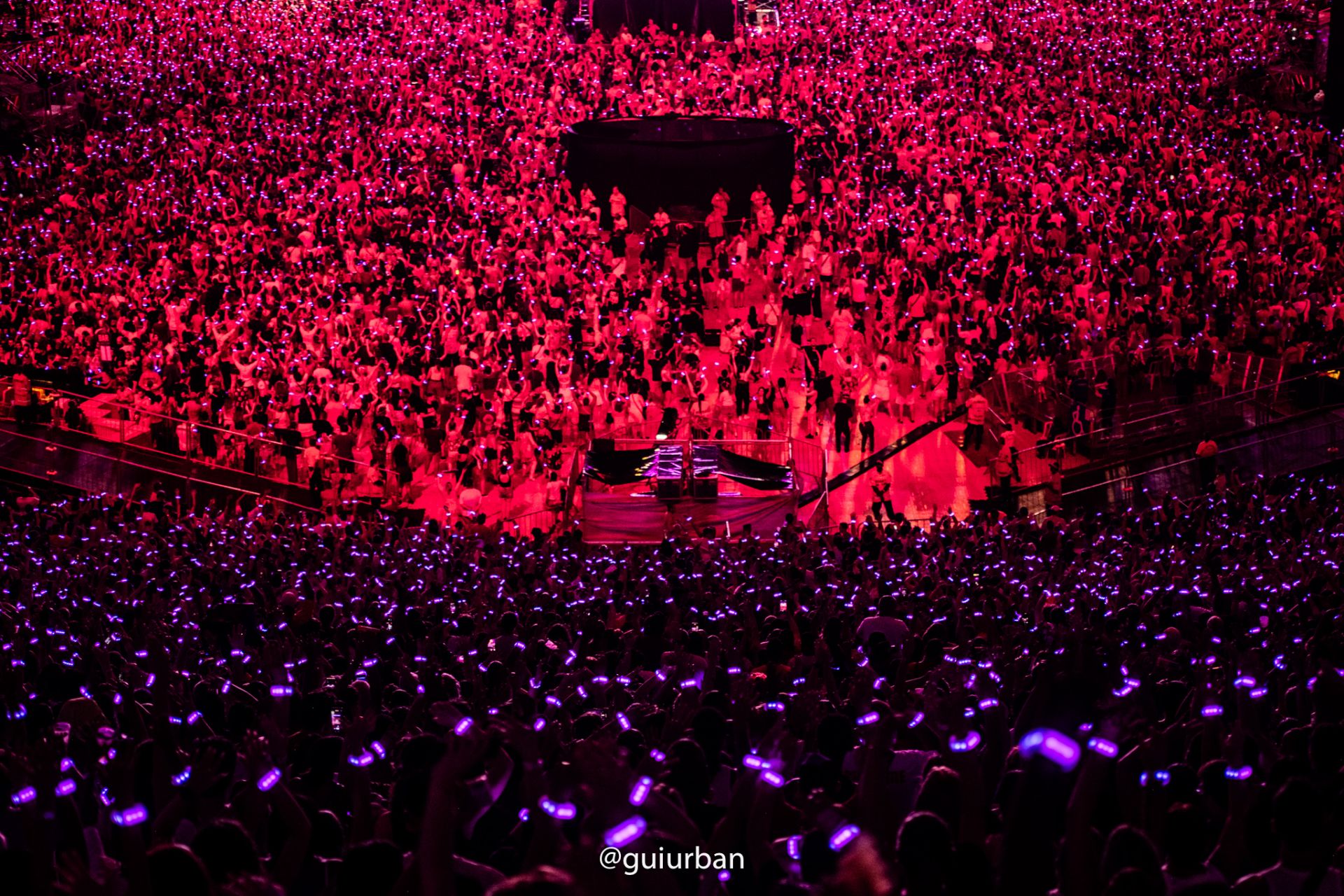
To overcome this spatial challenge, modern immersive event technology employs sophisticated multi-zone radio frequency networks. Production teams divide festival grounds into discrete RF sectors, allowing lighting designers to trigger distinct behaviors across different areas:
- Zone-Specific Wave Dynamics: Triggering cascades of light that flow organically from front-of-stage barricades out toward delay towers, physically mirroring the acoustic reverberation of the music.
- Stage-to-Stage Synchronization: Using localized RF nodes to prevent spillover between competing electronic tents while offering master control for synchronized midnight spectacles across the entire festival site.
- Dynamic Color Mapping: Extending the lighting director’s visual desk—via protocols like sACN and Art-Net—directly onto the crowd, transforming tens of thousands of LED bracelets into an extension of the stage's primary color palette.
"When an entire festival field lights up in perfect synchronicity with a bass drop or a sweeping chorus, the psychological shift is immediate: the audience ceases to look at the show and realizes they have become the show."
Case in Point: Igniting Energy at PRIMER Festival
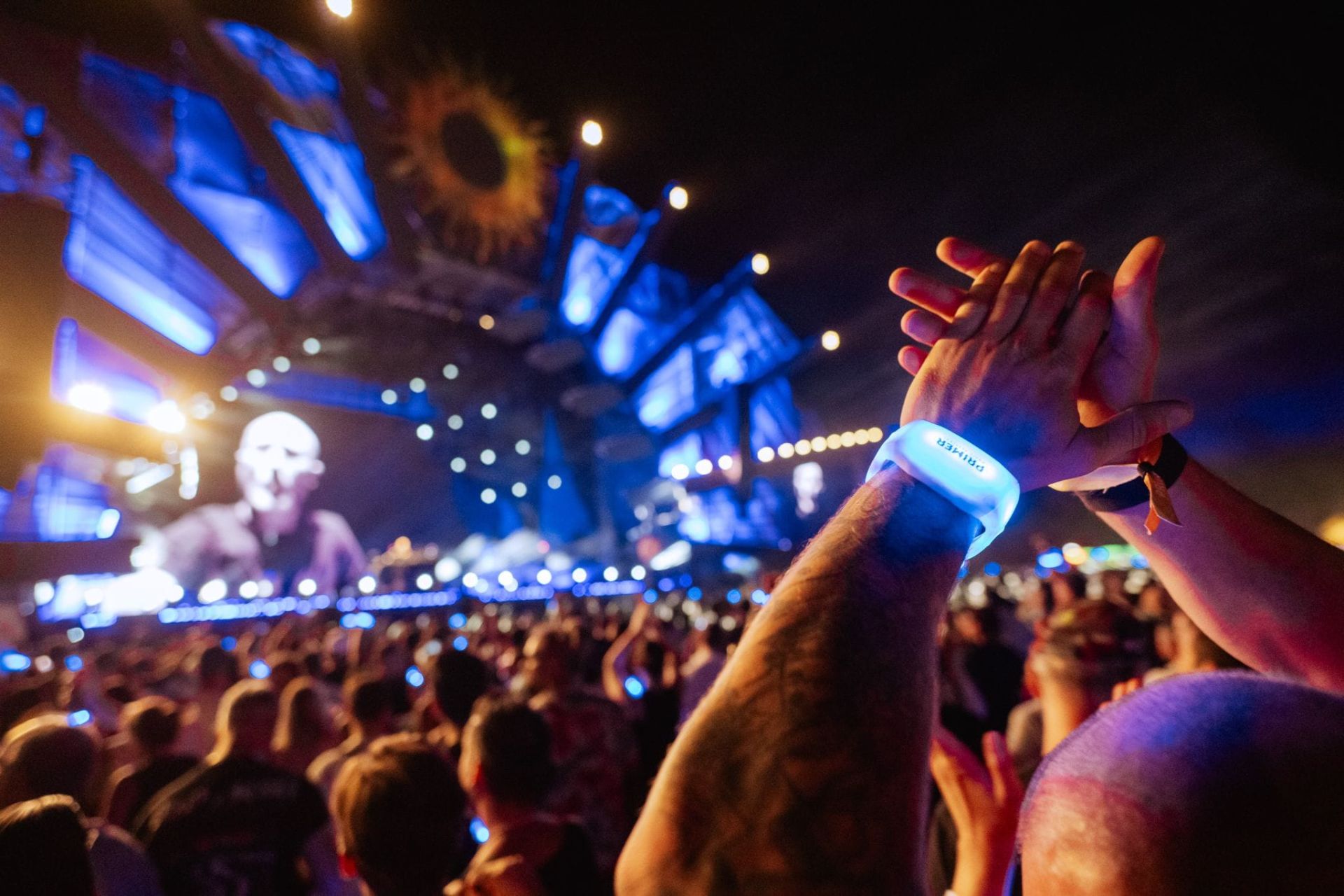
The tangible power of this technology was vividly demonstrated at the PRIMER Music Festival in Greece. As one of Athens’ premier electronic music gatherings, PRIMER brings together world-class electronic artists and tens of thousands of high-energy attendees under Mediterranean skies. In both 2023 and 2025, production organizers integrated dynamic, crowd-interactive Xylo Bands to bridge the physical gap between the DJ booth and the sprawling outdoor dancefloor.
In high-tempo electronic environments, visual timing is unforgiving. Electronic dance music relies heavily on tension, build-ups, and sudden drops. When the audio drops and the stage goes dark, turning the entire crowd into a unified, pulsating field of light through LED bands creates an overwhelming sensory surge. At PRIMER, the implementation of dynamic LED wearables did not merely illuminate the venue; it converted a dispersed gathering of music fans into a singular, cohesive organism pulsing in precise lockstep with every beat.
Immersion Over Observation: The Psychological Shift in Fan Culture
Why has the appetite for immersive events grown so rapidly among festival-goers? The answer lies in cognitive presence. In an era dominated by ambient screen consumption and short-form digital capture, modern audiences crave visceral authenticity. When an attendee holds up a smartphone to record an artist, they are partially disengaging, viewing the performance through a 6-inch digital proxy.
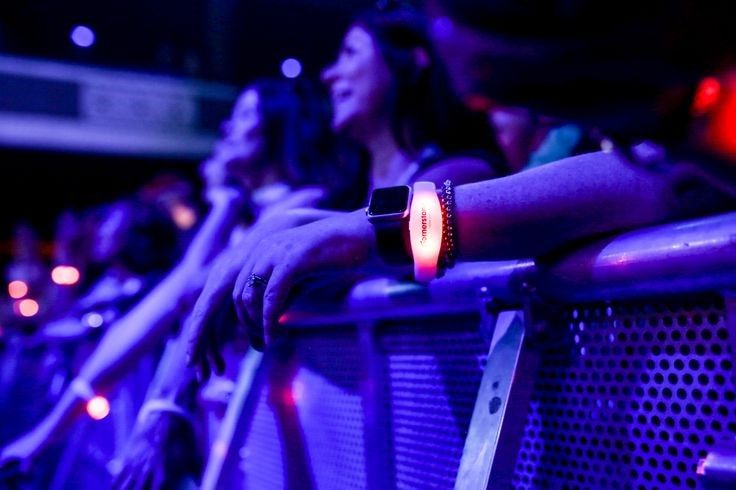
Wearable light reverses this dynamic. Because custom LED wristbands activate without user intervention, they require zero operational friction. Attendees keep their hands free, their eyes locked on the collective environment, and their attention grounded in the physical reality of the moment. Instead of documenting the show from the outside, the attendee is physically embedded within its visual choreography.
This design philosophy extends far beyond electronic music festivals. Across global tours, major sporting tournaments like the Davis Cup, Formula 1 celebrations, and large-scale corporate activations, experiential directors are realizing that lighting the crowd delivers emotional resonance that no upstage LED wall can replicate.
The Next Frontier: Interactivity and Sustainable Infrastructure
As festival production trends continue to accelerate, the integration of LED event technology is entering a new chapter characterized by deeper interactivity and responsible production lifecycles. Next-generation systems are integrating multi-spectral sensors, motion-responsive gyroscopes, and sustainable industrial design.
The future of festival crowd interaction is defined by two major design imperatives:
- Bi-directional Feedback: Integrating low-latency motion detection within LED wristbands to allow crowd density, collective jumping, or wave motions to trigger real-time lighting cues and visual responses on stage.
- Circular Logistics: Moving away from single-use mentalities toward robust collection, refurbishment, and recycling loops. High-grade materials and modular battery compartments ensure that immersive hardware can power multiple tour legs and festivals across years without unnecessary waste.
The festival stage of tomorrow is no longer confined to steel trusses and line arrays. By elevating the crowd into the central scenic element, production designers are unlocking a deeper level of collective euphoria—one synchronized pulse at a time.