The Scale of Light: Principles for Arena and Stadium Tour Lighting
From Black Box to Big Sky: The Art of Scaling Light
Every great tour lighting design tells a story. But as a show graduates from theatres to arenas, and from arenas to stadiums, that story needs a bigger, bolder vocabulary. The canvas doesn't just get larger; it fundamentally changes. The ceiling vanishes, the architecture becomes a new creative partner, and the audience transforms from a group of individuals into a vast, living landscape. Mastering this shift in scale is one of the most demanding and rewarding challenges in modern live production.
It’s a discipline built on a paradox: how do you create moments of profound intimacy for 80,000 people at once? How do you ensure the fan in the last row has as meaningful an experience as the one leaning on the barrier? The answer lies in a set of core principles that treat the entire venue not just as a space to be filled with light, but as a dynamic, three-dimensional medium to be sculpted.
Principle 1: Define the Canvas
In a theatre, the proscenium arch frames the world. In a stadium, the world is the frame. The first step is to redefine your canvas. It’s no longer just the stage; it's the entire volume of air, the structural elements of the venue, and, most importantly, the audience itself. This is where the concept of Immersive Event Technology moves from a buzzword to a core design tool.
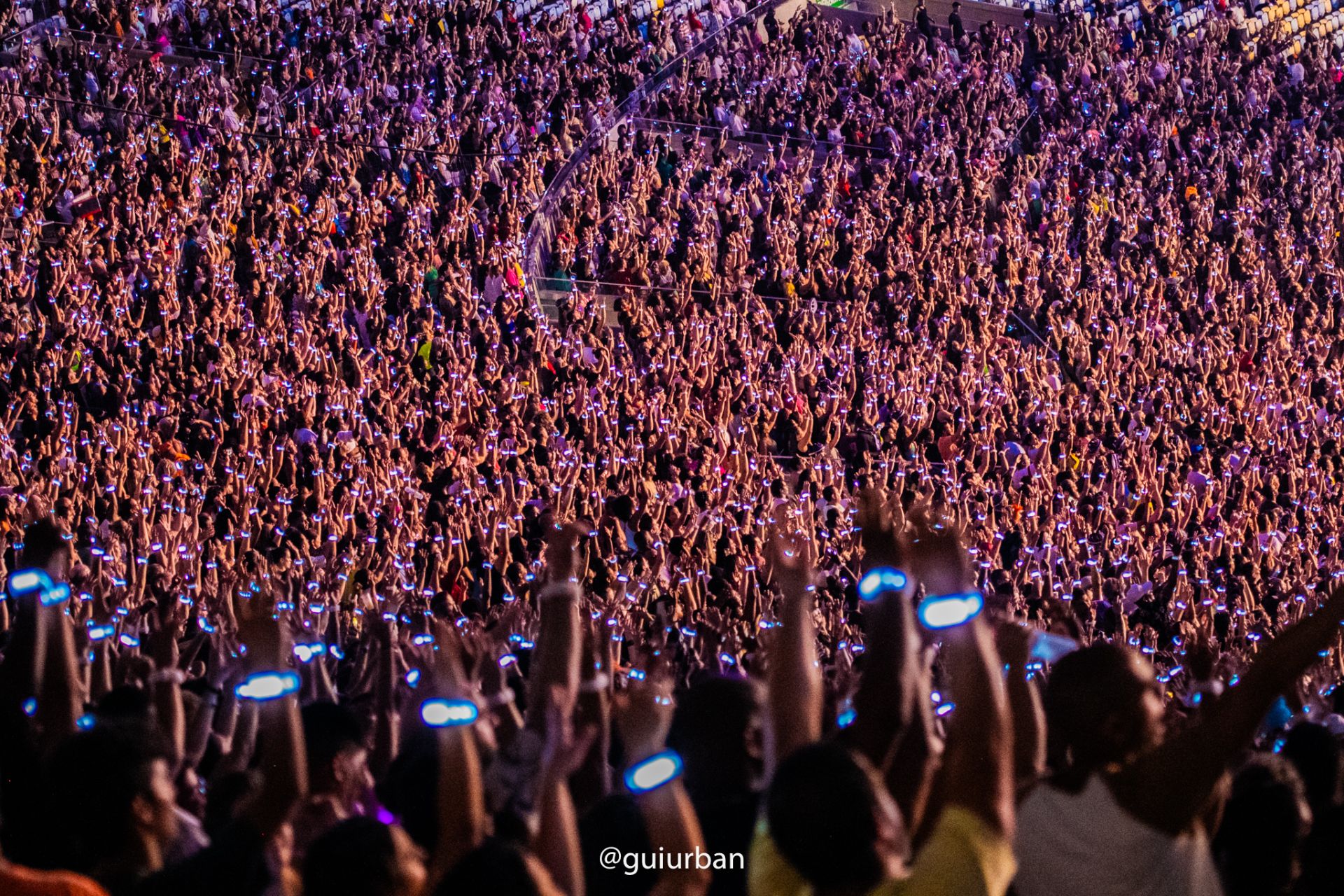
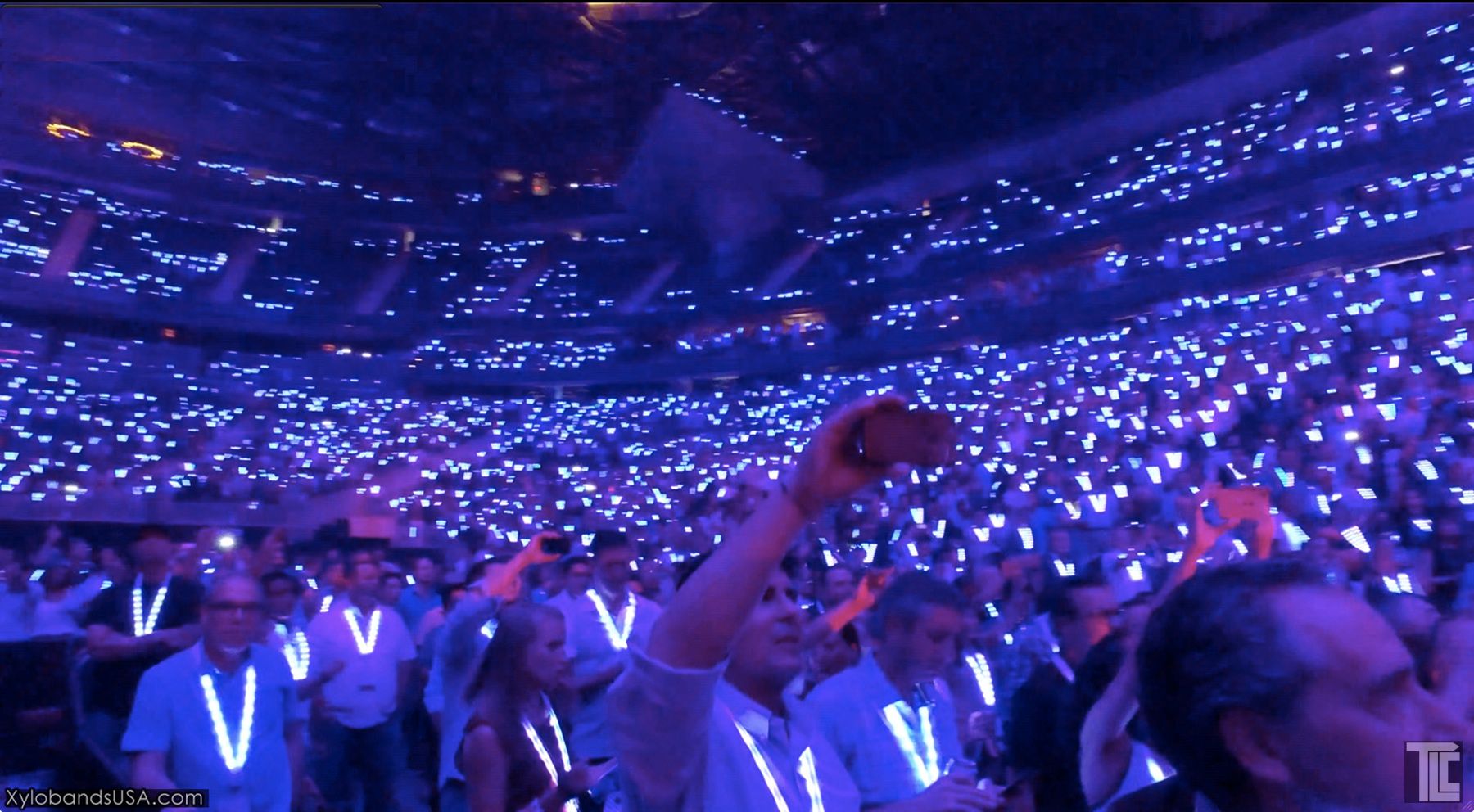
This is where technologies like Xylobands come into play. By making each audience member a pixel in a venue-wide lighting rig, you dissolve the boundary between the performance and the spectator. Suddenly, the energy isn't just flowing from the stage outwards; it's a two-way conversation. The crowd becomes a living, breathing part of the visual design, creating washes of colour and synchronized pulses that turn a passive audience into an active participant. We’ve seen this transform environments from music festivals like Primer to massive, broadcast productions for clients like ITV and the Davis Cup.
Principle 2: The Power of the Negative Space
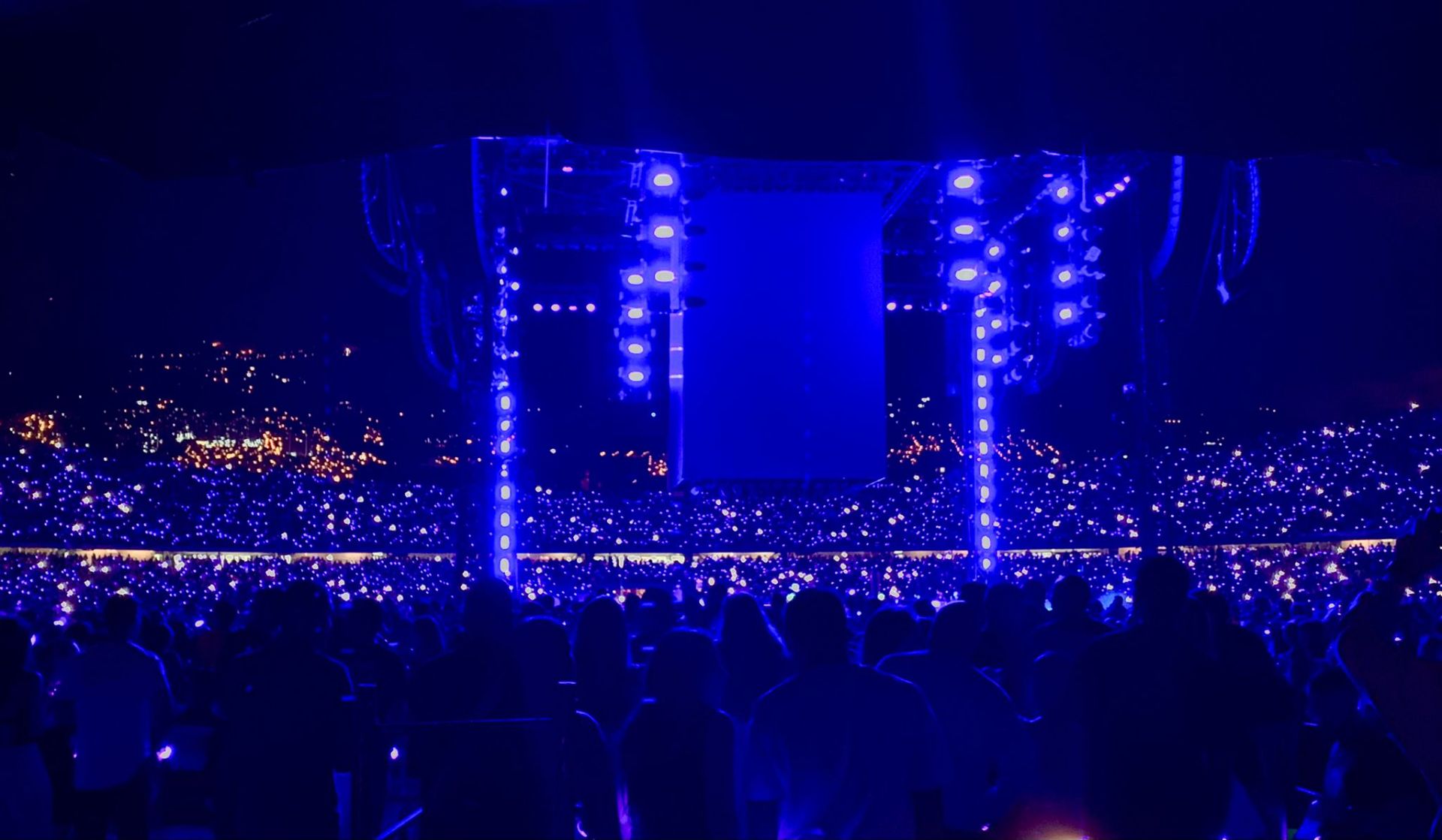
What you don't light is as important as what you do. In the vastness of a stadium, complete darkness is a powerful tool. It can shrink an overwhelming space to create a single, intimate moment, focusing every eye on a solo performer. Conversely, revealing the full scale of the crowd with a sudden burst of light can create an unforgettable moment of collective awe.
Think of it as visual dynamics. A relentless barrage of light, no matter how spectacular, quickly leads to sensory fatigue. The most effective designs use contrast to build tension and release. Moments of quiet and shadow give the big, explosive looks their power. This interplay of light and dark is fundamental to guiding the audience's emotional journey through the show.
Principle 3: Layering and Texture
A flat, uniform wash of light might be bright, but it’s rarely interesting. Great stadium lighting is about creating layers and textures. This involves thinking in three dimensions:
- The Stage Layer: The primary performance area, where the focus is on illuminating the artists.
- The Architectural Layer: Using the venue's own structure—trusses, gantries, seating bowls, and rooflines—as surfaces to be painted with light. This helps to integrate the show into the space and give it a sense of permanence.
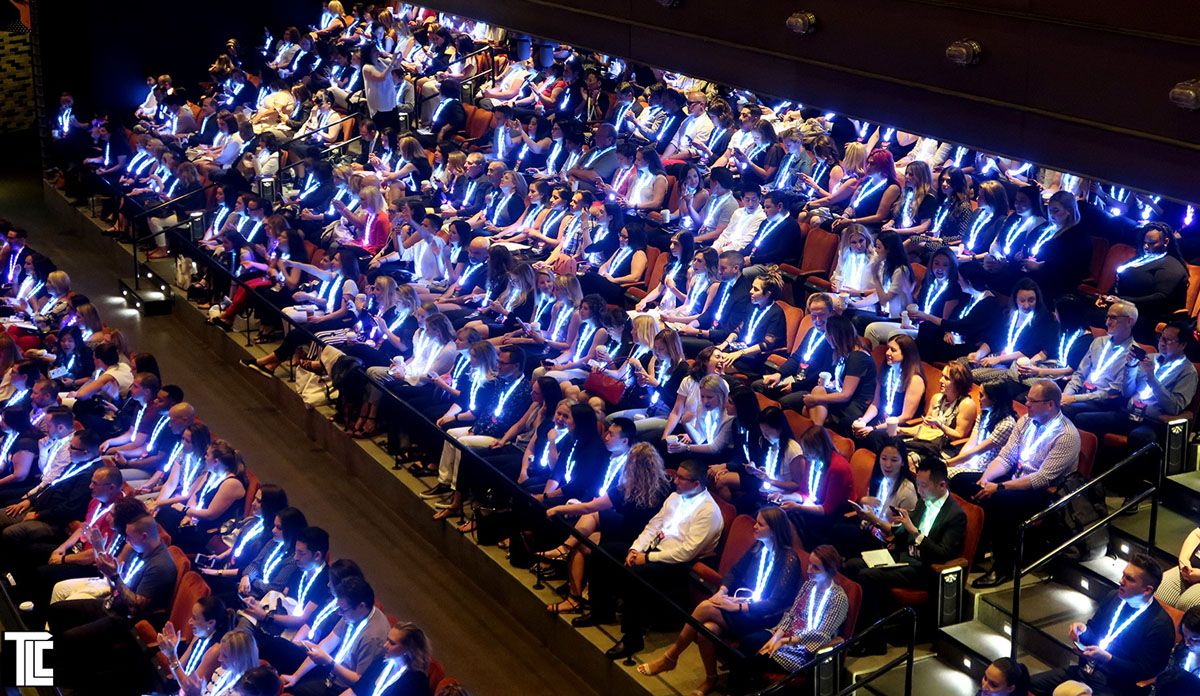
- The Audience Layer: This is where Wearable LED Technology becomes a game-changer. Whether it’s LED Wristbands, LED Lanyards, or custom pendants like those we developed for Formula One’s 75th-anniversary show, turning the audience into a canvas adds a deeply personal and powerful layer. It’s a technique that has been central to the iconic look of Coldplay’s tours since they first debuted Xylobands, creating those unforgettable seas of synchronized light.
By layering these elements, you create a rich visual tapestry that offers different experiences depending on where you are in the venue, yet feels cohesive and unified.
Principle 4: Lighting for the Lens and the Eye
In today’s live environment, the show is happening in two places at once: in the venue, and on millions of screens around the world. As we saw with Maluma’s historic hometown concert in Medellín, which was streamed globally, designing for both the live eye and the broadcast camera is non-negotiable.
This requires careful consideration of colour temperatures, flicker rates, and intensity. What looks spectacular in person can appear blown-out or muddy on camera. The design must serve the energy of the room while also translating into a compelling broadcast, a core principle we apply to high-stakes events from sports spectacles to major music tours with artists like Wizkid.
The use of Radio Controlled LED Wristbands adds a unique texture to the broadcast shot. A wide shot of the stadium pulsing in unison provides a powerful visual shorthand for the energy of the event, giving directors a stunning visual to cut to that instantly communicates the scale and excitement of the moment.
The Final Element: Unifying the Experience
Ultimately, every lighting decision should serve one purpose: to unify the experience for everyone. It’s about creating a shared emotional context, a feeling that everyone in the space is part of the same moment. Technology is the tool, but the goal is human connection.
By thinking beyond the stage and embracing the entire venue as a canvas, by layering light and shadow, and by turning the audience itself into an integral part of the design, we can create truly monumental shows that feel surprisingly, powerfully personal. It’s in this space—where scale meets intimacy—that the most memorable LED Crowd Experiences are born.