The Invisible Conductor: The Technology Behind a Perfectly Synchronized Light Show
The Moment of Ignition
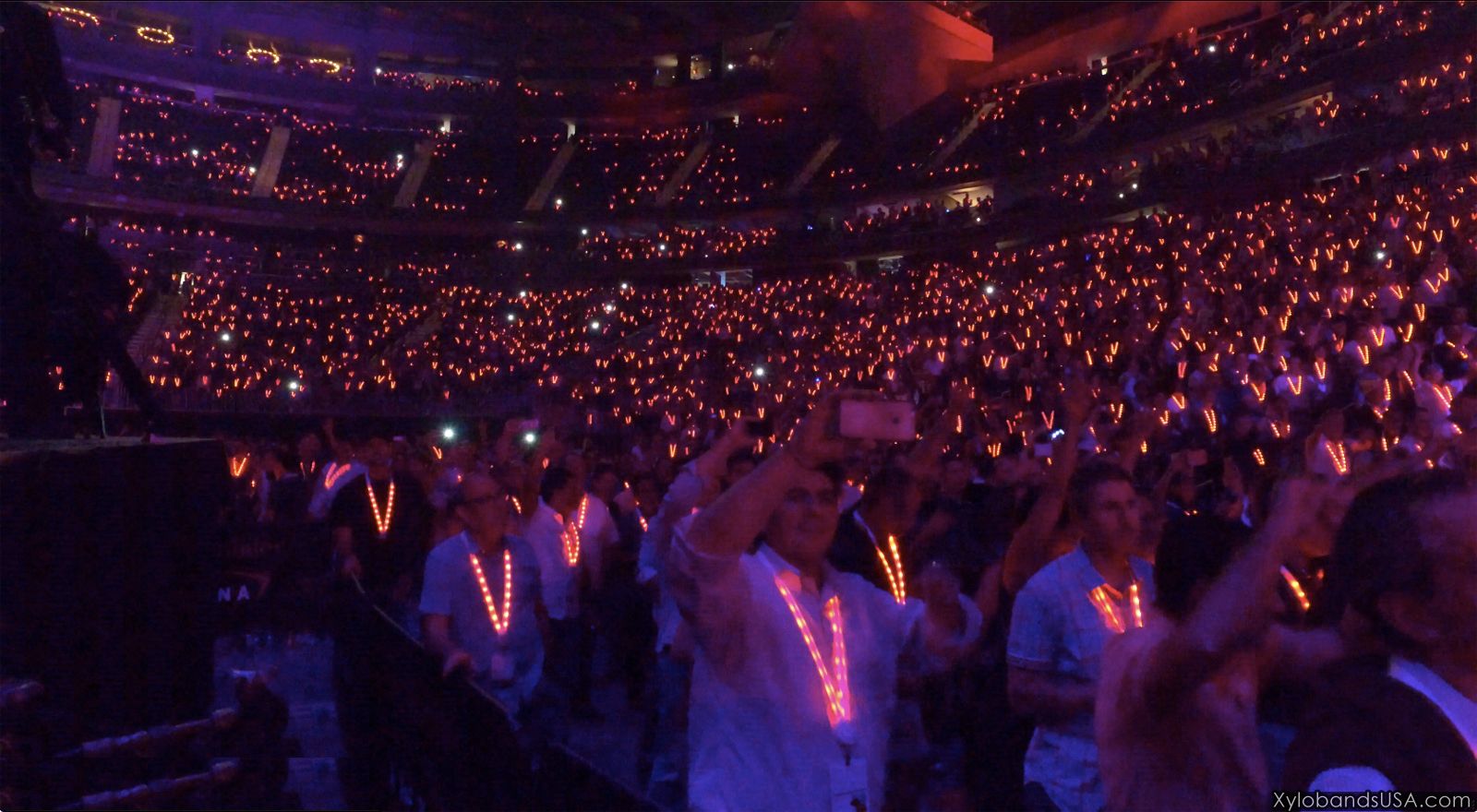
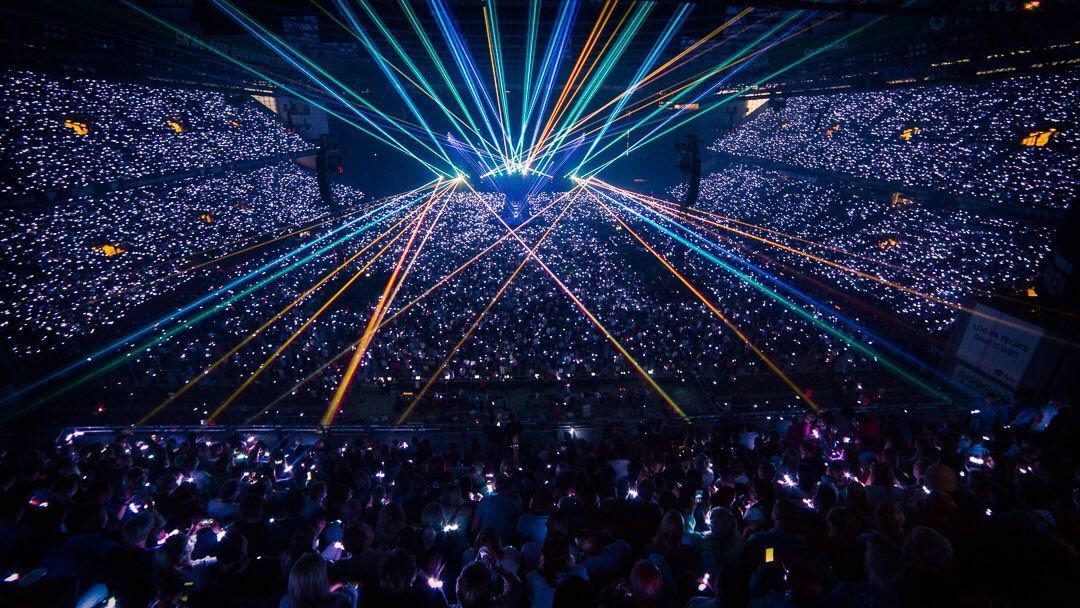
It’s a moment of collective breath-holding. The house lights dim. A sea of 50,000 people, previously a murmuring collection of individuals, is plunged into darkness. There’s a palpable sense of anticipation, a shared focus on the empty stage. Then, it happens. Not with a sudden flood of stage lights, but with a silent, instantaneous explosion of color that erupts from the crowd itself. Every single wrist, adorned with an LED wristband, flashes in perfect synchrony. A single, unified pulse of light ripples from the front row to the highest seats of the stadium. The audience is no longer just watching the show; they are the show.
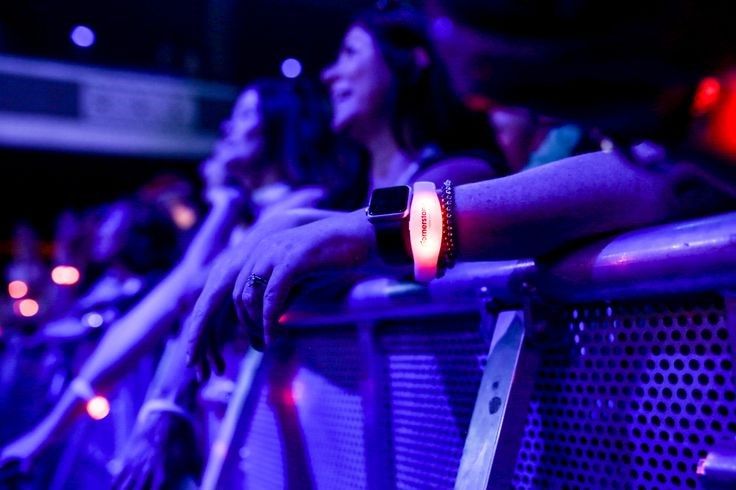
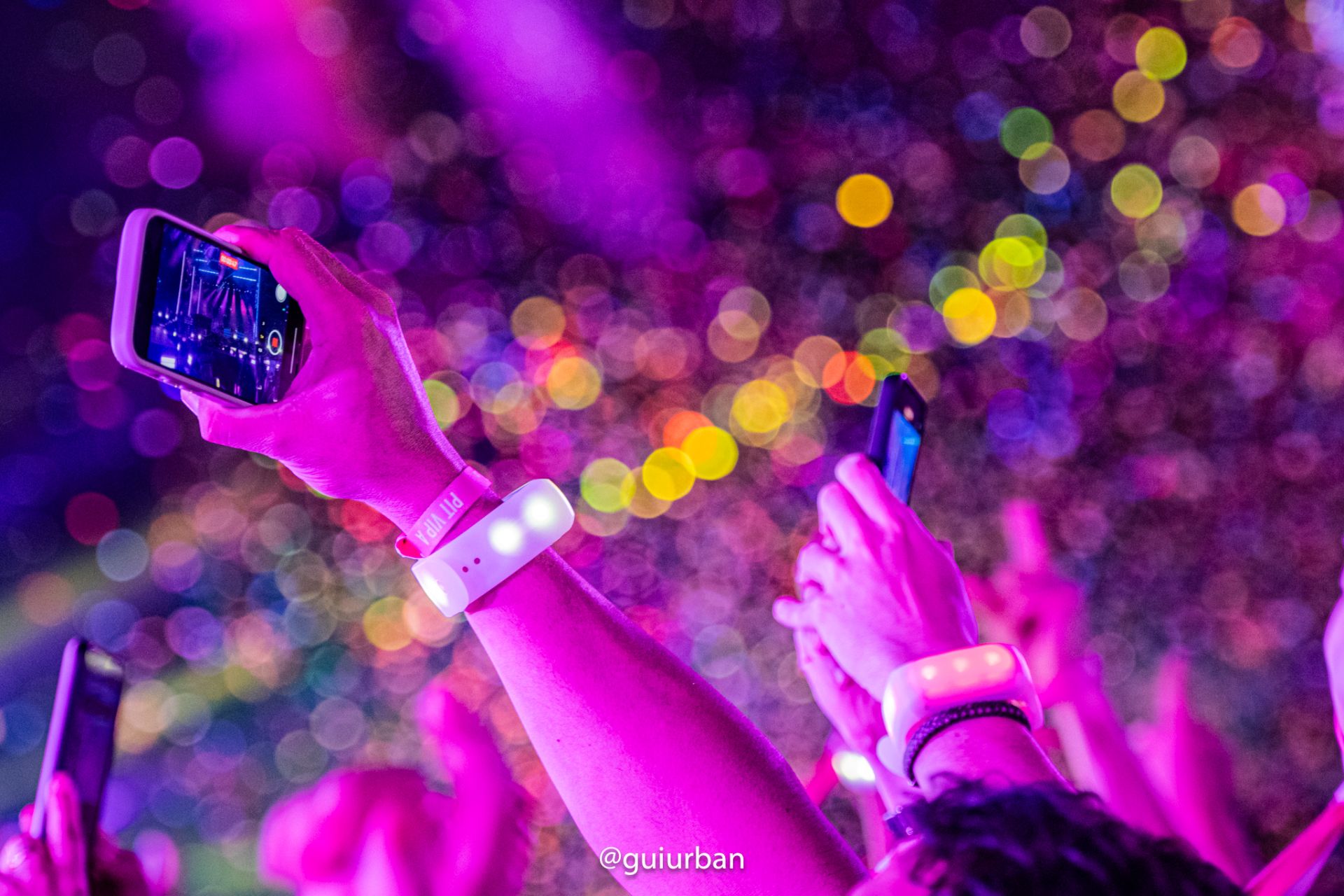
This is the magic that has defined a new era of live events. From the iconic Coldplay Xylobands experience that started it all, to high-energy festival wristbands at events like Greece’s PRIMER Music Festival, to the electric atmosphere of a Wizkid concert, this phenomenon has become a hallmark of modern production. But it isn’t magic. It’s the result of a sophisticated, invisible conductor—a suite of technologies working in perfect harmony to orchestrate light across a vast human canvas. Understanding these core technologies—Radio Frequency (RF), DMX, and Infrared (IR)—is key to understanding the art and science of today’s most immersive events.
Radio Frequency (RF): The Backbone of the Arena
At the heart of any large-scale LED crowd experience is Radio Frequency technology. Think of it as the powerful, unifying voice that can speak to tens of thousands of devices at once. An RF system consists of a central transmitter, which sends out coded signals via radio waves, and the receivers located inside each LED wristband.
The true power of RF lies in its range and scalability. A single, strategically placed transmitter can reliably command every wristband in a sprawling stadium or across a vast festival field. This makes it the backbone for those awe-inspiring moments of unified color and synchronized pulses that define modern concert wristbands. Our proprietary system, for instance, allows a single operator to send commands that are executed in a fraction of a second across more than 100,000 individual devices.
How It Works: Command and Control
The process begins with the lighting designer. They program cues—"all bands turn red," "pulse blue to the beat," "create a shimmering gold effect"—into a control software. This software communicates with the RF transmitter. At the push of a button, the transmitter converts that command into a unique radio signal. This signal is broadcast across the venue, and every radio controlled LED wristband is pre-programmed to listen for it. Upon receiving the signal, the tiny microprocessor in each band instantly executes the command. The result is a perfectly synchronized visual spectacle that appears effortless and instantaneous to the human eye.
DMX: The Language of Theatrical Precision
While RF is the master of mass communication, DMX (Digital Multiplex) is the language of theatrical nuance and detail. Originating in the world of stage lighting, DMX is the industry-standard protocol for controlling professional lighting fixtures like moving heads, strobes, and fog machines. We’ve adapted this powerful protocol for wearable LED technology, enabling an incredible level of granular control.
Where RF is a broadcast—one message to many—DMX allows for individualized addressing. This means that each wristband, or small groups of them, can be controlled as a single "pixel" in a giant visual display. This is the technology that unlocks complex, pixel-mapped effects: chasing colors that race across a stadium, brand logos that materialize in a corporate grandstand, or intricate patterns that sync perfectly with on-screen content. For broadcast events, like a studio show for ITV or the 75th-anniversary celebration for Formula One, this level of precision is paramount. The camera needs to capture clean, deliberate, and perfectly timed lighting effects that translate flawlessly to millions of viewers at home.
The Pixelated Crowd
Integrating DMX requires a more complex setup, often involving DMX-to-RF transmitters that can translate the specific, addressed commands of a lighting desk into signals the wristbands can understand. For our technicians, this involves meticulous pre-show mapping and zoning, ensuring that the lighting designer’s vision for a "living video screen" can be executed flawlessly. It transforms the audience from a simple canvas into a high-resolution, dynamic display, forming the core of truly immersive event technology.
Infrared (IR): Precision Through Proximity
The third key technology in our arsenal is Infrared (IR). Unlike the wide-reaching broadcast of RF, IR is a line-of-sight technology that operates over much shorter distances. It’s the same principle used by your television remote. This apparent limitation is actually its core strength, allowing for the creation of highly targeted, location-specific lighting effects.
By placing small, discreet IR transmitters at strategic points throughout a venue, we can trigger unique behaviors as attendees move through a space. Imagine walking into a specific zone at a corporate event activation and having your custom LED wristband or LED lanyard flash with a sponsor’s color. Picture a specific section of a stadium, like at a Davis Cup match, lighting up to celebrate a winning point. This is the power of IR. It allows for interactive, zonal experiences that RF alone cannot achieve.
Creating Interactive Zones
IR emitters can be programmed to send out a constant signal, affecting any LED band that enters its "bubble." This creates a simple but powerful tool for audience segmentation and interaction. It allows event producers to highlight specific groups, guide attendees through an experience, or add layers of gamification to a live event. It adds a crucial layer of personalization to the mass-audience experience.
A Symphony of Systems
The true genius of modern LED experiences isn’t the dominance of one technology over another, but the seamless integration of all three. For the world’s most ambitious tours and events, our systems often use a hybrid approach. RF serves as the powerful, primary conductor for the entire crowd. DMX is layered on top to provide the intricate, pixel-mapped details that stun the broadcast cameras. And IR is deployed in specific zones to create interactive moments and targeted effects. This multi-layered approach provides lighting designers and show producers with an almost limitless creative palette.
From a single, unifying pulse powered by RF to a complex, data-driven image painted with DMX, the technology is simply the instrument. The goal, as always, is to close the distance between the artist and the audience, to dissolve the boundary between the spectator and the spectacle. It’s about more than just light; it’s about connection, unity, and creating a fleeting but powerful sense of togetherness. It’s about transforming a crowd of thousands into a single, living, breathing entity, conducted by an invisible hand and bound by a shared pulse of light.