The Architecture of Light: Modern Principles for Stadium and Arena Tour Design
The Unseen Architecture of the Modern Spectacle
A stadium tour is more than a concert; it’s an exercise in architecture. It’s the art of transforming a cathedral of sport, a concrete and steel vessel built for athletic drama, into a temporary temple of sound and light. For the artist, it’s the largest canvas imaginable. For the production designer, it’s a masterclass in scale, power, and perception. The challenge is not merely to illuminate a performer, but to choreograph an experience for 50,000 people, transforming a sprawling, impersonal space into a shared, intimate moment.
Modern tour lighting is a discipline of layers. It moves from the macro—the grand, sweeping gestures that paint the entire stadium in a single hue—to the micro—the glint in an artist’s eye, the specific texture on a costume, the subtle, synchronized pulse of thousands of LED wristbands on the arms of the audience. It’s a dialogue between the colossal and the personal, a dance of technology and psychology.
Principle 1: Mastering the Vertical Space
A stadium’s greatest asset and most significant challenge is its verticality. Unlike a theatre or even an arena, the upper tiers of a stadium can feel miles away from the stage. The lighting designer’s first job is to bridge that chasm. This isn’t about simply blasting more light to the cheap seats; it’s about making the entire volume of the venue a part of the show.
This is achieved through several key techniques:
- Volumetric Beams: Using powerful fixtures combined with atmospheric haze to create tangible, three-dimensional columns and shapes of light that extend from the floor to the roof. These beams don’t just light the space; they occupy it, making the air itself a canvas.
- Audience Blinders and Washes: Turning the lights on the audience is a classic technique, but its modern application is far more nuanced. It’s not just for a momentary shock effect. Sweeping washes of color across different sections of the crowd helps to define the scale of the space and creates a sense of a single, unified body.
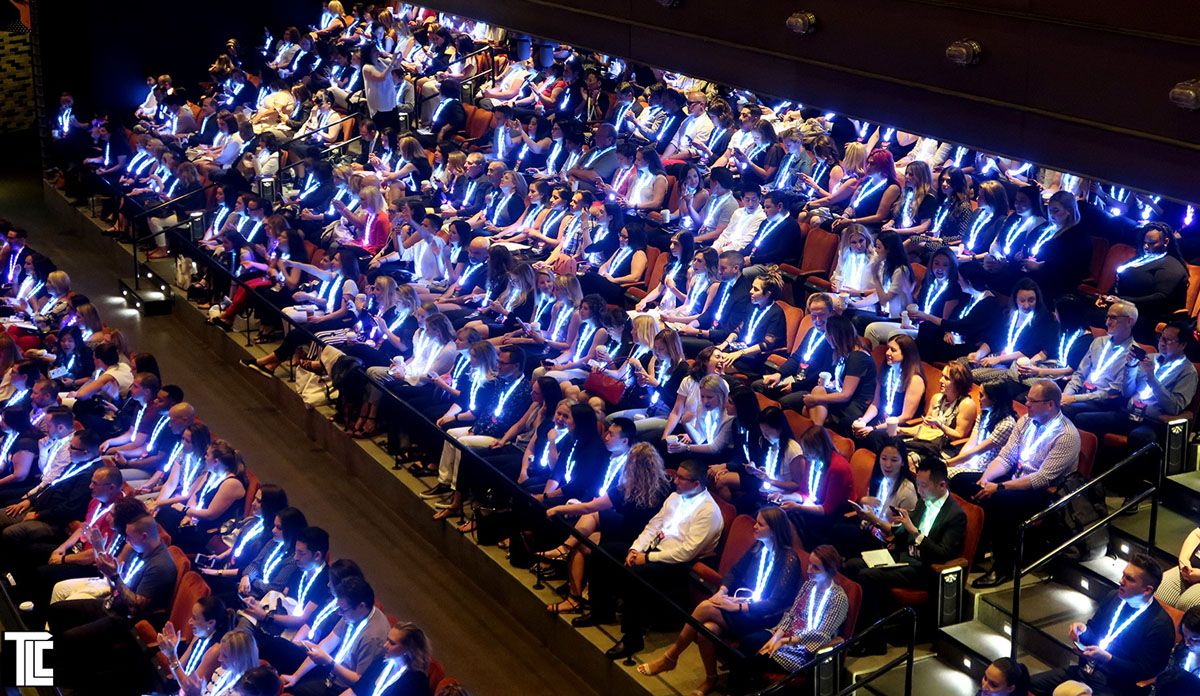
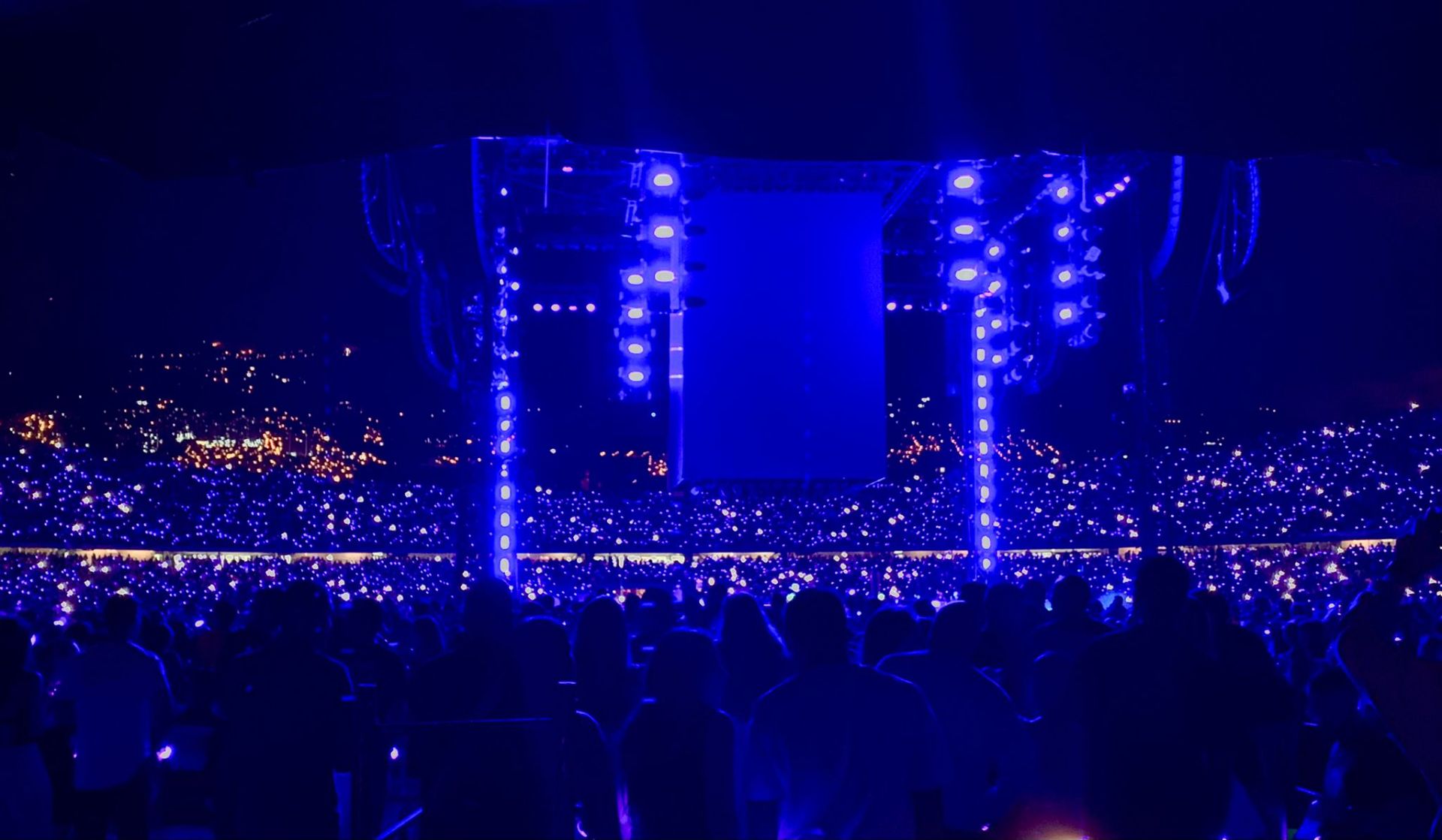
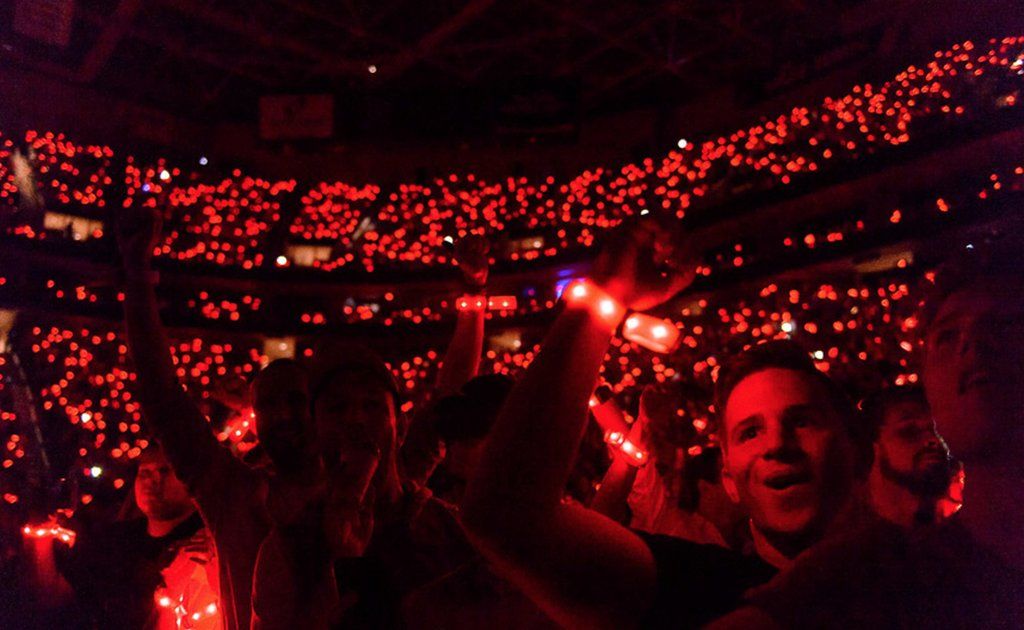
- The Human Canvas: This is where wearable LED technology transforms the dynamic. By deploying tens of thousands of radio-controlled LED wristbands, the audience itself becomes a dynamic, pixel-mapped video screen. Suddenly, the people in the highest seats are not distant spectators; they are an integral part of the visual architecture, carrying the light and energy of the performance to the furthest corners of the venue. This creates a powerful sense of inclusion and turns passive viewers into active participants in the spectacle.
Principle 2: The Art of Dynamic Contrast
In a space as vast as a stadium, the absence of light is as powerful as its presence. A show that operates at maximum intensity from start to finish is not powerful; it’s exhausting. The true masters of stadium design understand the power of contrast and dynamics to command attention and tell a story.
“The brightest moments feel brighter when they emerge from darkness. A single, focused spotlight on a performer in an otherwise blacked-out stadium can be more impactful than a thousand strobing fixtures.”
This involves orchestrating a visual journey with peaks and valleys. Consider the flow of a setlist:
- The Intro: Often a slow burn. It might start with a low, ambient wash, perhaps with the audience’s Xylobands pulsing faintly like a sea of fireflies, building anticipation before the first big lighting cue hits with the downbeat.
- The Ballad: This is the moment to shrink the world. Strip away the visual noise. A single follow-spot, a stark silhouette against a video screen, or the entire stadium bathed in the gentle, unified glow of thousands of LED bracelets creates a profound sense of intimacy, making 50,000 people feel like they are in a small club.
- The Anthem: Unleash the arsenal. This is the moment for full-stadium strobes, rapid-fire color changes, and complex, high-energy chases that ripple through the lighting rig and across the audience’s wrists. The contrast makes the moment feel earned and climactic.
Principle 3: Integrating Light with a Living, Breathing Audience
The most sophisticated tour designs no longer see the audience as a passive entity to be lit, but as a dynamic, interactive element of the show itself. Technology is the bridge that makes this possible. The rise of immersive event technology has fundamentally changed the relationship between the stage and the seats.
When Maluma played to a hometown crowd of 54,000 in Medellín, the show was not just a performance but a city-wide celebration. Similarly, when Wizkid sold out three consecutive nights at London’s O2 Arena, the energy was historic. In these massive venues, unifying the crowd is paramount. Technology like Xylobands allows designers to program light that flows directly from the artist’s performance, through the control desk, and onto every single person in the crowd. A wave of color can start on stage and wash over the entire audience, or a specific drum hit can trigger a flash that illuminates every wrist in the building simultaneously. It’s a powerful tool for creating LED crowd experiences that feel both epic and deeply personal.
This integration extends to broadcast. With many major tours now being live-streamed, as Maluma’s was, the audience becomes the backdrop. A dynamic, illuminated crowd provides a visually stunning spectacle for the millions watching at home, adding a layer of energy that a dark, static audience never could.
The Final Layer: Choreographing Human Connection
Ultimately, the goal of stadium lighting design is not just to be big and loud. It’s to use scale and technology to foster human connection. It’s about ensuring the person in the last row feels as connected to the performance as the person in the front. It’s about creating moments of collective awe, where thousands of strangers are unified by a single wave of light, a shared pulse of color.
From the precise beam that catches a guitar solo to the ocean of light swelling across a sold-out stadium, every choice is an act of architecture. It’s the art of building a temporary city of light, where for a few hours, everyone belongs. The tools may be RF transmitters, DMX controllers, and sophisticated LED fixtures, but the raw material is human emotion. And the final product is an unforgettable, shared memory.