The Human Algorithm: Decoding the Psychology of Mass Audience Engagement
The Unseen Algorithm of the Crowd
At any large-scale event—a stadium concert, a music festival, a championship game—there are two shows happening simultaneously. The first is the one on stage: the meticulously rehearsed performance, the stunning visuals, the powerful sound. The second is the one in the crowd: a complex, ever-shifting human algorithm of emotion, attention, and collective consciousness. For event producers and creatives, mastering the first show is the job. But understanding the second is the art.
What transforms tens of thousands of individuals into a single, unified entity? Beneath the noise and the energy lie deep-seated psychological drivers that dictate how an audience engages with a live experience. It’s a science of belonging, a choreography of attention, and a testament to the power of shared experience.
From Passive Spectators to Active Participants
Historically, the role of the audience was largely passive. You watched, you listened, you applauded. The energy flowed in one direction: from the stage out. But the modern live event has shattered this paradigm. Today, the most successful spectacles are not monologues; they are dialogues. The audience is no longer just a recipient of the experience; they are a critical component of it.
This shift is rooted in a fundamental human need: the desire to belong and to participate. Psychology tells us that active involvement dramatically deepens our emotional investment and memory encoding. When we are part of the action, we feel a sense of agency and co-creation. The experience becomes personal, something we didn’t just witness, but something we helped create. This is the core principle behind the rising demand for Immersive Events. It’s not just about what people see; it’s about what they are empowered to do.
The Psychology of Light and Synchronicity
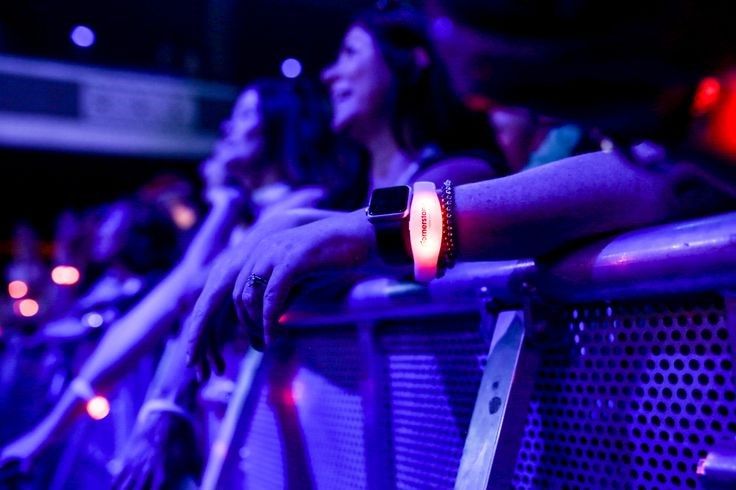
Light is a powerful, primal tool for directing human attention and emotion. On a grand scale, it can sculpt the entire emotional landscape of a venue. But when you place that power in the hands—or on the wrists—of every individual, its psychological impact is magnified tenfold.
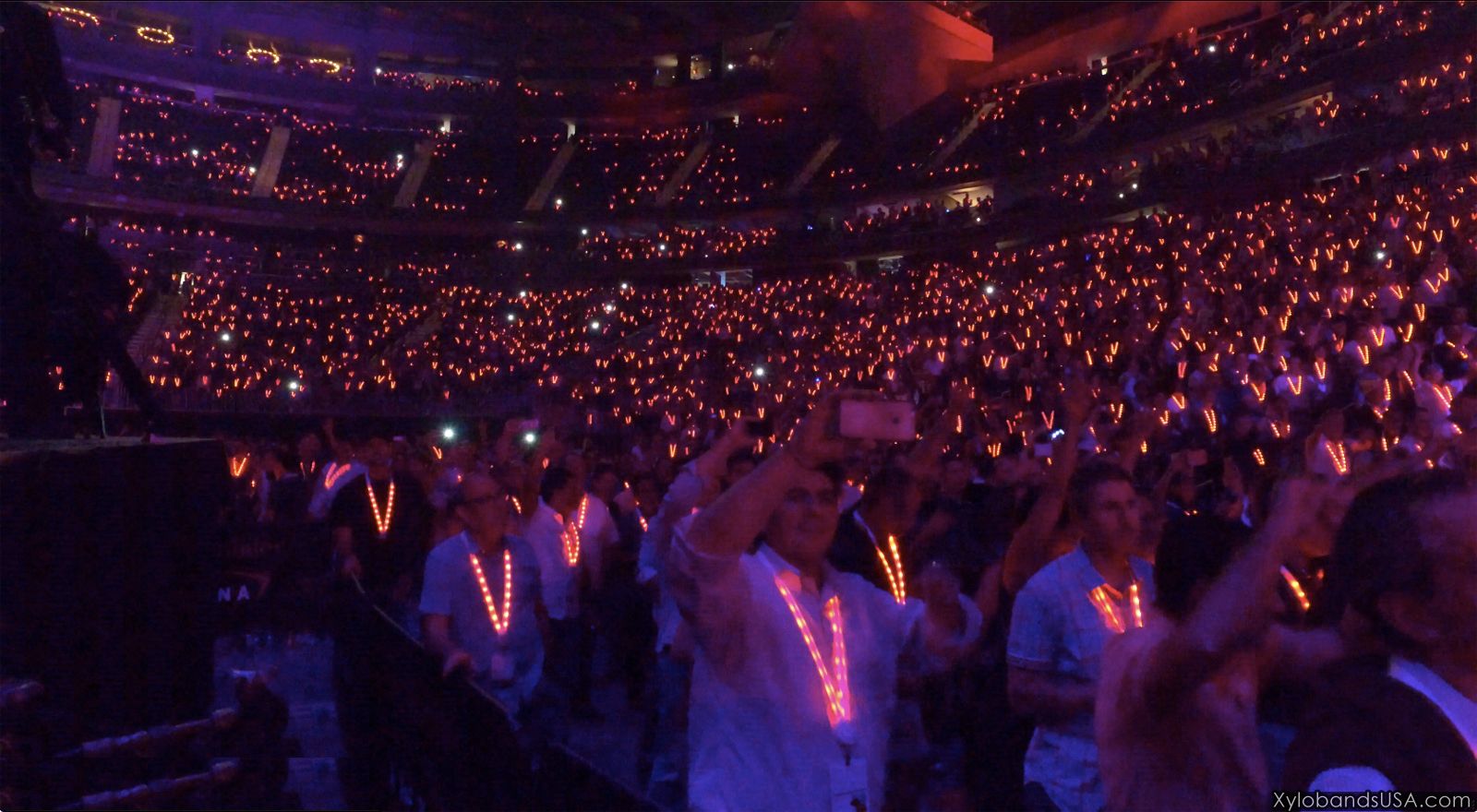
This is the phenomenon we’ve witnessed since Xylobands first lit up Coldplay’s Mylo Xyloto tour. When thousands of LED Wristbands illuminate in perfect synchrony, it triggers a powerful psychological response known as behavioural synchrony. Seeing your light pulse in unison with everyone around you creates an instantaneous, non-verbal bond. It visibly represents a shared state, affirming that “we are all in this together.”
“The entire audience could become one living light show, perfectly synchronised with the music. It would create moments of unity where artists and fans shared the same experience.”
This is not just a visual effect; it’s a tool for engineering collective effervescence—that tangible, electric feeling of shared emotion that Durkheim wrote about over a century ago. From the high-energy beats at Greece’s PRIMER Music Festival to the historic three-night sellout for Wizkid at The O2, turning the audience into a canvas of light doesn’t just augment the show; it deepens the human connection within it. It’s Immersive Event Technology that speaks a universal, psychological language.
Orchestrating Collective Moments
The most memorable moments in live events are often those of mass participation. Think of a stadium-wide card stunt, a unified chant, or a wave of light sweeping across an arena. These moments are powerful because they are collective achievements. They require the coordinated action of thousands, reinforcing a sense of group identity and shared purpose.
Modern LED Event Technology allows producers to orchestrate these moments with unprecedented precision and scale. Consider the challenges of engaging diverse crowds at global events like the Davis Cup or Formula One. Using tools like Radio Controlled LED Wristbands or custom LED Lanyards allows for sophisticated segmentation. You can light up specific sections, create rivalries between colours, or unify everyone in a single, dramatic pulse. You are, in effect, playing a psychological instrument with 50,000 keys.
Key Psychological Drivers in Action:
- Behavioural Synchrony: When people move or act in unison, it fosters feelings of affiliation and cooperation. Synchronised LED Bands are a perfect visual manifestation of this.
- Deindividuation: In a crowd, the sense of ‘I’ can recede, replaced by a sense of ‘we’. This can lower inhibitions and heighten emotional expression, turning a reserved spectator into a roaring fan.
- Social Proof: Seeing others around you actively participating (singing, dancing, lighting up) creates a powerful norm that encourages you to do the same. It’s the permission to lose yourself in the moment.
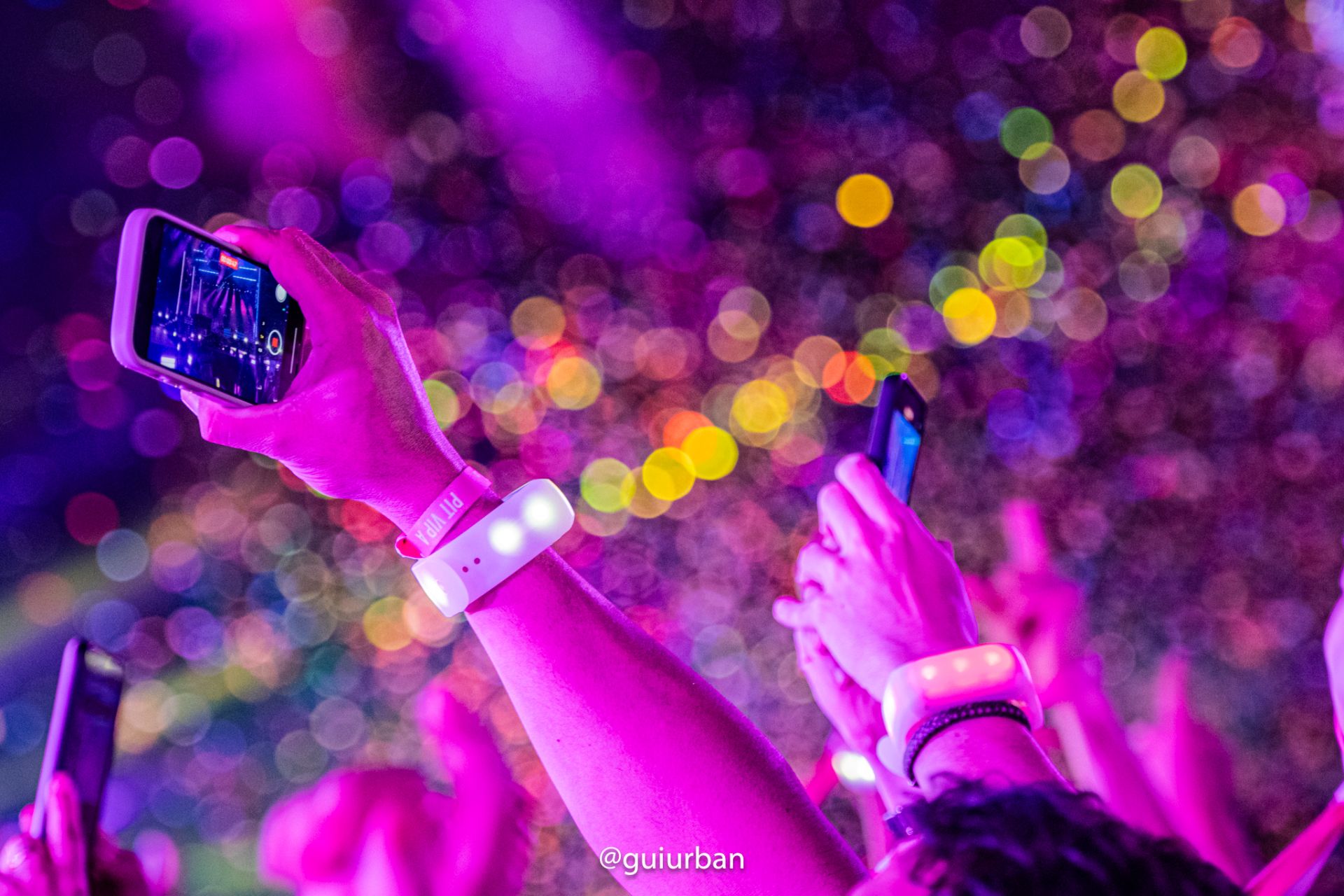
- Agency: Even a simple, passive role—like wearing a wristband that is part of the show—gives a sense of contribution. Your presence is now visibly integral to the spectacle.
The Future is a Shared Experience
As technology continues to evolve, the line between performer and audience will only continue to blur. The goal is no longer just to entertain a crowd, but to connect it. The future of LED Crowd Experiences lies in creating more personalized, interactive, and meaningful forms of participation. From Concert Wristbands that react to an individual’s movement to Corporate Event Activations that use light for team-building, the applications are as vast as the human imagination.
Understanding the human algorithm—the psychology of why we crave connection, why we respond to light, and why we yearn to be part of something bigger than ourselves—is the key to unlocking the next generation of live events. It’s about designing for the heart as much as for the eyes and ears. Because in the end, the most powerful technology is the one that reminds us of our shared humanity, one pulse of light at a time.