The Human Upgrade: A Brief History of Audience Participation
From Chorus to Crowd-Cue: The Unfolding Story of Audience Participation
The desire to be part of something larger than ourselves is a primal human instinct. It’s the force that gathers us in stadiums, theaters, and festival fields. For centuries, the contract was simple: performers create, and audiences receive. Participation was limited to applause, a unified cheer, or the collective gasp at a dramatic turn. But the narrative of live events has always been a story of shrinking distance—not just physical, but emotional and interactive—between the stage and the seats. It’s a story of turning a passive crowd into an active participant, a journey from the Greek chorus to the radio-controlled LED crowd.
The Analog Era: Lighters, Lyrics, and The Wave
Before the digital age, audience participation was purely analog, driven by organic, unprompted moments of unity. Think of the sea of lighters and, later, mobile phone screens, illuminating arenas during a power ballad—a spontaneous tradition that transformed thousands of individuals into a single, flickering constellation. This was perhaps the first instance of the audience physically lighting the show, a precursor to the sophisticated LED crowd experiences of today.
Singalongs and chants are another cornerstone of analog participation. From ancient call-and-response rituals to modern football terrace anthems, the power of the collective voice turns a gathering into a community. Then came “The Wave” in the late 1970s, a simple, powerful, and self-perpetuating piece of human choreography that required no technology, only a shared sense of timing and enthusiasm. These moments, beautiful in their simplicity, revealed a deep-seated desire within audiences not just to witness the show, but to be *in* the show.
The Dawn of Control: From Applause Meters to Interactive Voting
The first significant technological leap in managed audience participation arrived with broadcast media. Early television gameshows introduced the “applause meter,” a rudimentary tool that visualized the audience’s excitement level, directly influencing the on-screen action. While primitive, it was a pivotal shift: for the first time, a piece of technology was translating collective emotion into a measurable input.
This concept evolved with the advent of telephone voting, famously used in talent shows and singing competitions. Suddenly, the audience at home had a direct line to the stage, their individual choices collectively deciding the fate of performers. This model broke down the fourth wall of television, creating a feedback loop that kept millions engaged. Broadcasters like ITV, with whom we’ve worked on shows like *Beat The Chasers*, have masterfully leveraged this two-screen experience, understanding that participation is key to viewer loyalty in an increasingly fragmented media landscape.
The LED Revolution: The Crowd as a Canvas
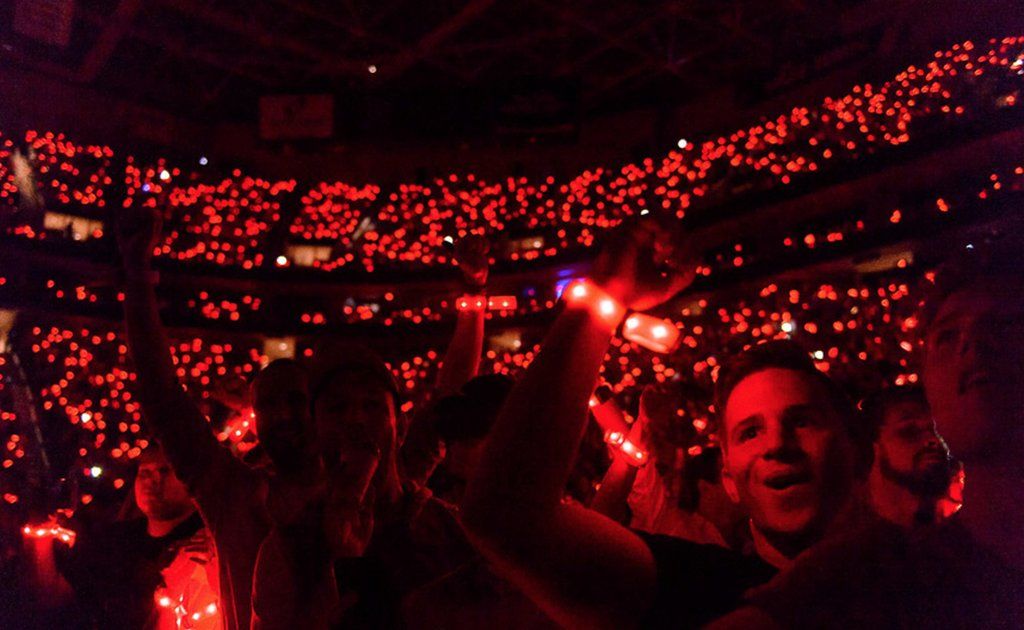
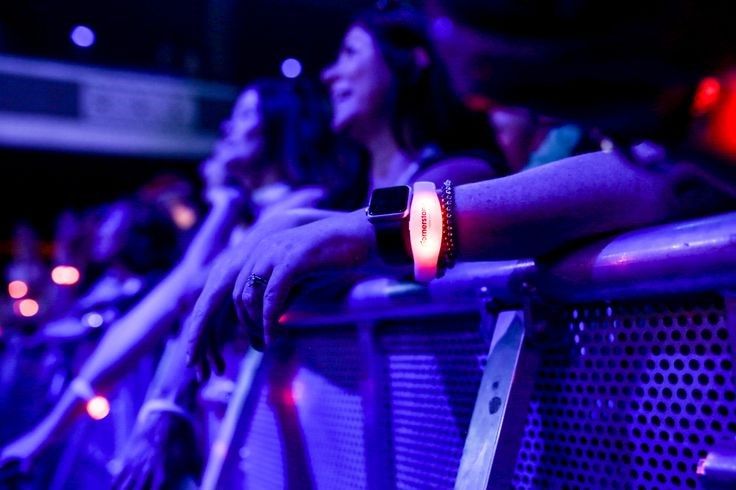
The true paradigm shift in live events came with the invention of wearable LED technology. The spark for Xylobands came in 2011, from a moment of inspiration during a Coldplay performance at Glastonbury Festival. Watching the crowd and hearing the lyrics "Lights will guide you home," our founder, Jason Regler, envisioned an entire audience transformed into a living, breathing light show. This idea, which debuted on Coldplay’s Mylo Xyloto tour, fundamentally changed the relationship between the artist, the environment, and the audience.
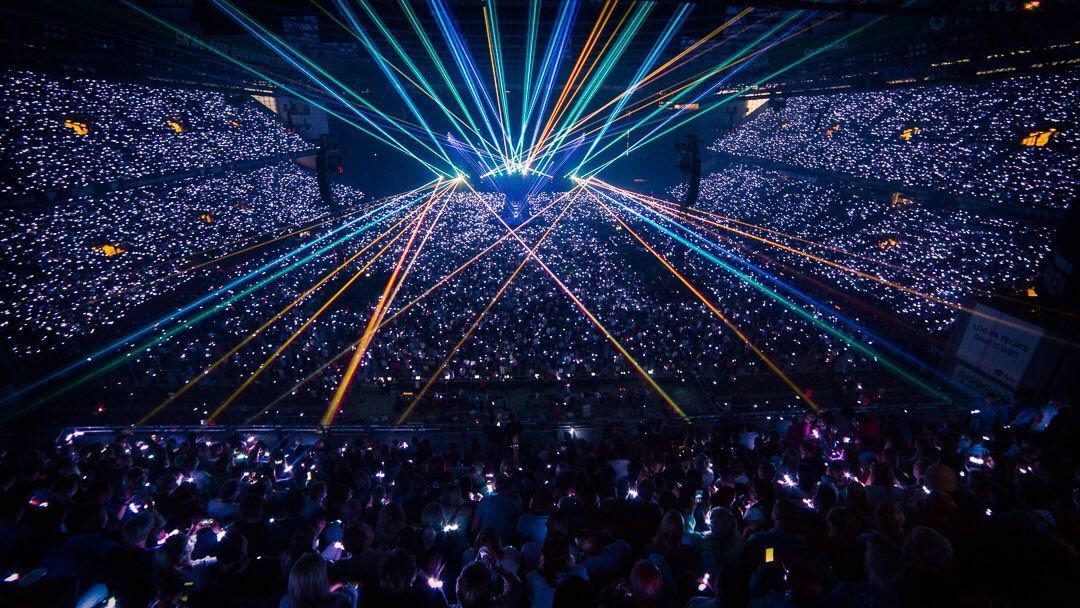
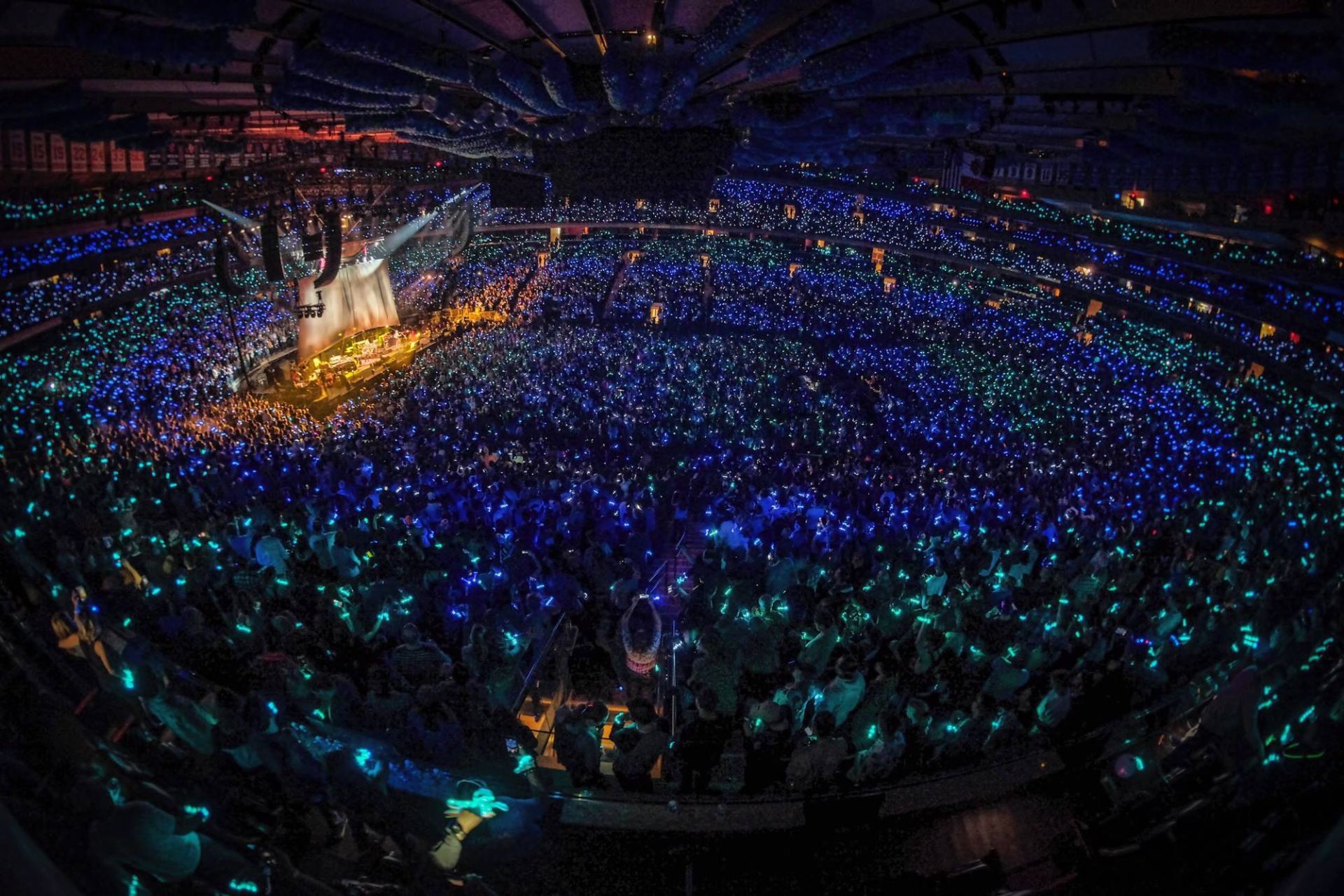
With radio controlled LED wristbands, lighting designers were no longer confined to the stage rig. The audience itself became an immersive, 360-degree canvas. This technology allows for breathtaking moments of unity and visual storytelling—painting an entire stadium in a country’s colors for a national anthem at the Davis Cup, synchronizing tens of thousands of lights to the beat drop at a festival like Primer, or creating dynamic, pulsating effects for a global superstar like Maluma or Wizkid. These are no longer just concerts; they are true immersive events.
Our work with Formula 1 for its 75th-anniversary event demonstrates the precision and creative potential of modern LED wearables. Custom LED lanyards were designed for different teams and hospitality levels, allowing the creative team to segment the audience and design complex, targeted light cues that brought the entire arena into the F1 story. This is the new frontier of corporate event activations and live entertainment—using light to foster identity, segment an audience, and make every single person feel like a vital part of the spectacle.
The Future is Synchronised: Beyond Light
Today, the evolution continues. Modern immersive event technology is about more than just light. The same RF infrastructure that powers a stadium of Xylobands can be used for so much more. We’re moving toward a future where wearables provide haptic feedback, integrate with augmented reality overlays, and facilitate frictionless interaction, from cashless payments to personalized content delivery.
The core principle, however, remains unchanged. From the first lighter held aloft in a darkened arena to the millions of synchronized LED bands that now illuminate the world’s biggest stages, the goal is the same: to deepen the connection between the artist and the audience. Technology is not the end, but the means—a tool to amplify the human desire for collective joy and shared experience. It’s about making tens of thousands of people feel like one, creating a singular, unforgettable moment in time. The ultimate upgrade has never been the technology itself, but the human experience it enhances.