The Narrative Arc: Storytelling Through Arena and Stadium Lighting
Act I: The Empty Canvas, The Charged Air
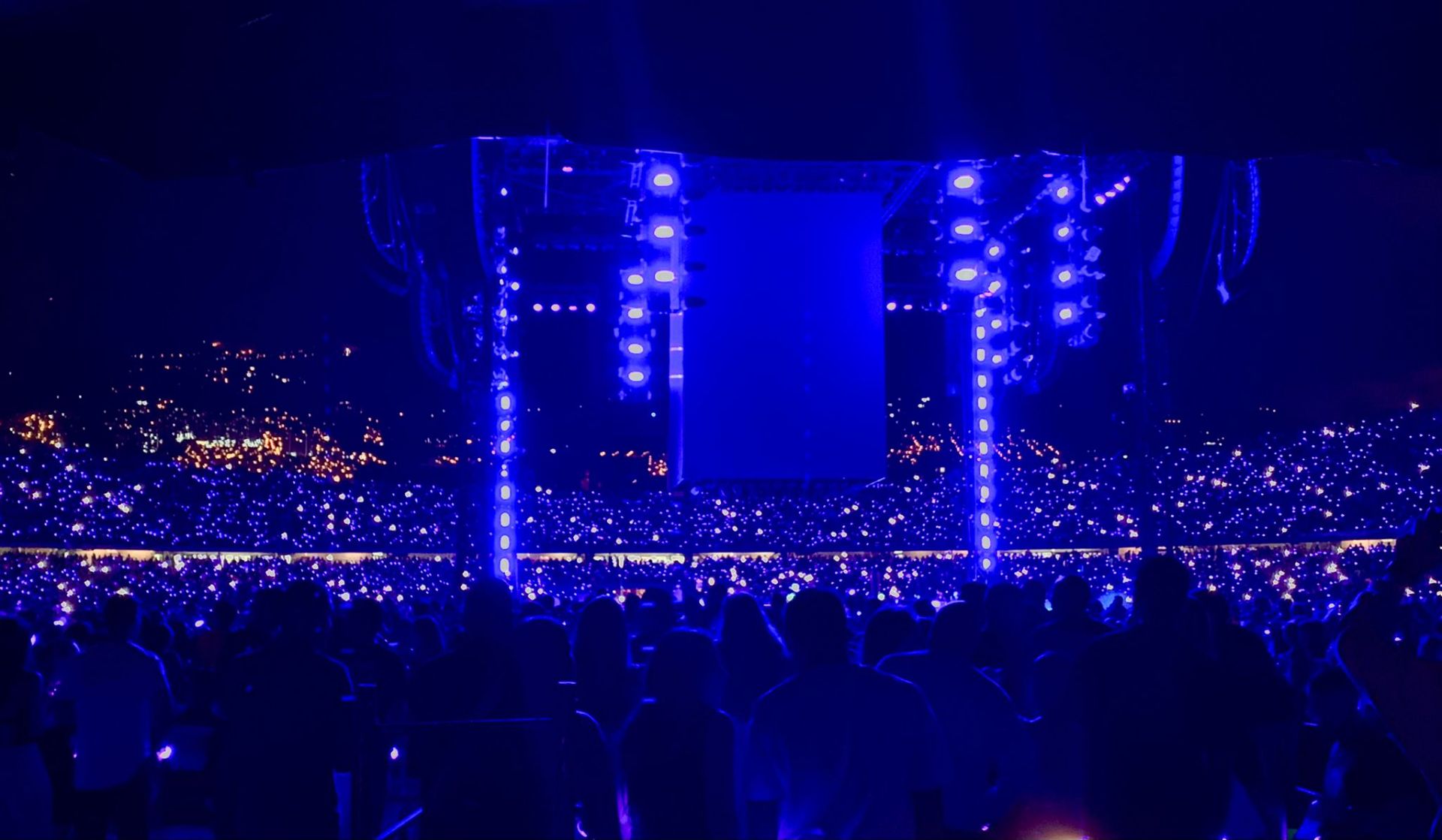
The house lights are down. A low-frequency hum vibrates through the concrete. A fine haze hangs in the air, catching the occasional architectural detail in a soft, anticipatory glow. This is the first, and perhaps most critical, phase of modern stadium and arena lighting design. It isn't about the spectacle yet; it’s about establishing the world. Before the first note, the lighting designer’s job is to transform a cavernous space of steel and seats into a vessel for a shared story. It’s a deliberate calibration of mood, using subtle washes of colour, projected textures, and programmed darkness to build a palpable sense of collective tension and excitement. This is the overture, written in photons. It’s the quiet that gives the eventual roar its power, defining the emotional geography of the space before the performers even set foot on stage.
Act II: The Living Set Piece
When the show ignites, the design philosophy explodes outward. The proscenium is gone, the fourth wall is shattered, and the entire volume of the arena becomes the set. The most profound shift in large-scale tour production has been the integration of the audience itself as a primary visual element. No longer passive spectators, the crowd is now a kinetic, sentient canvas. This is a principle we at Xylobands have been pioneering since our technology first illuminated Coldplay’s Mylo Xyloto tour.
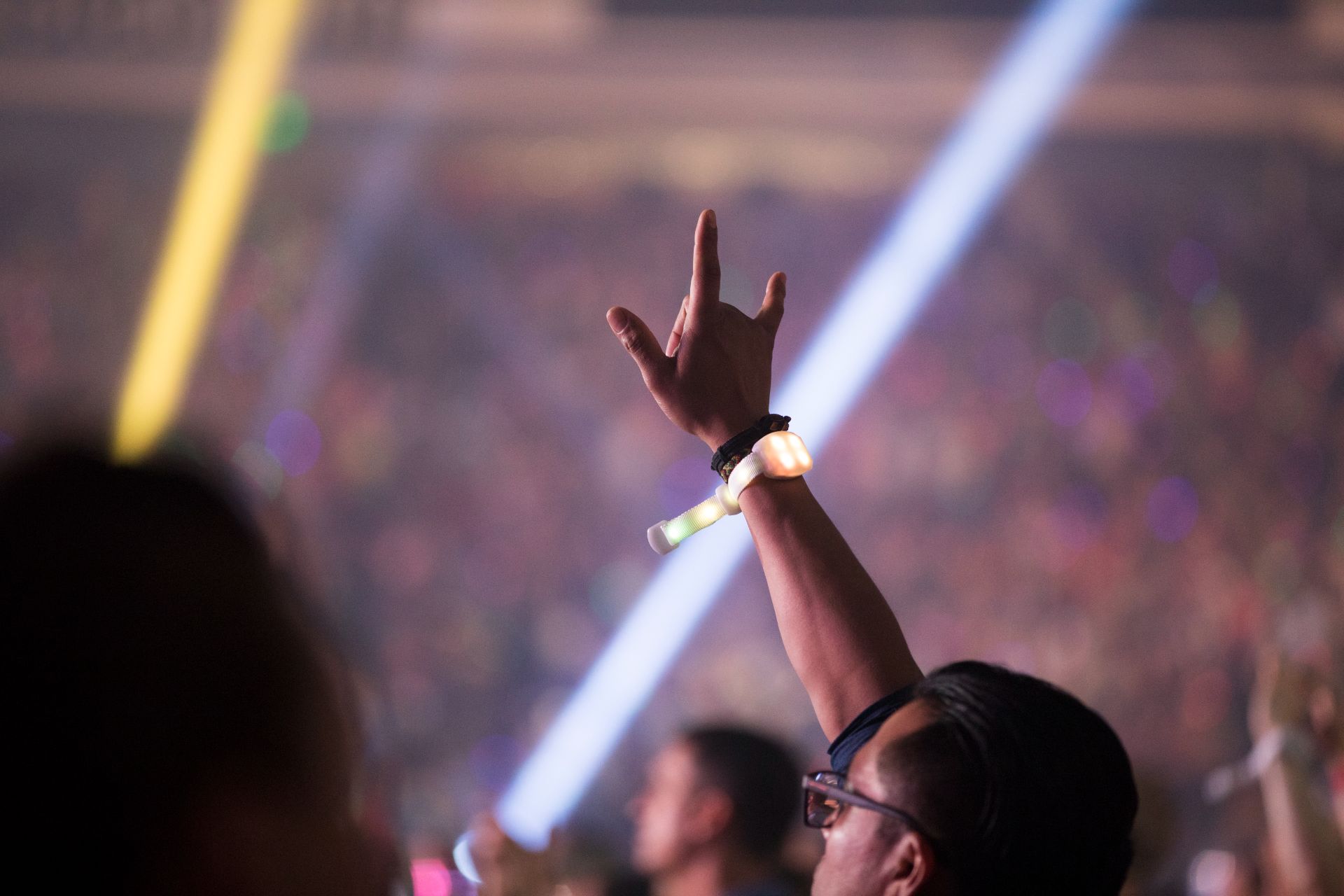
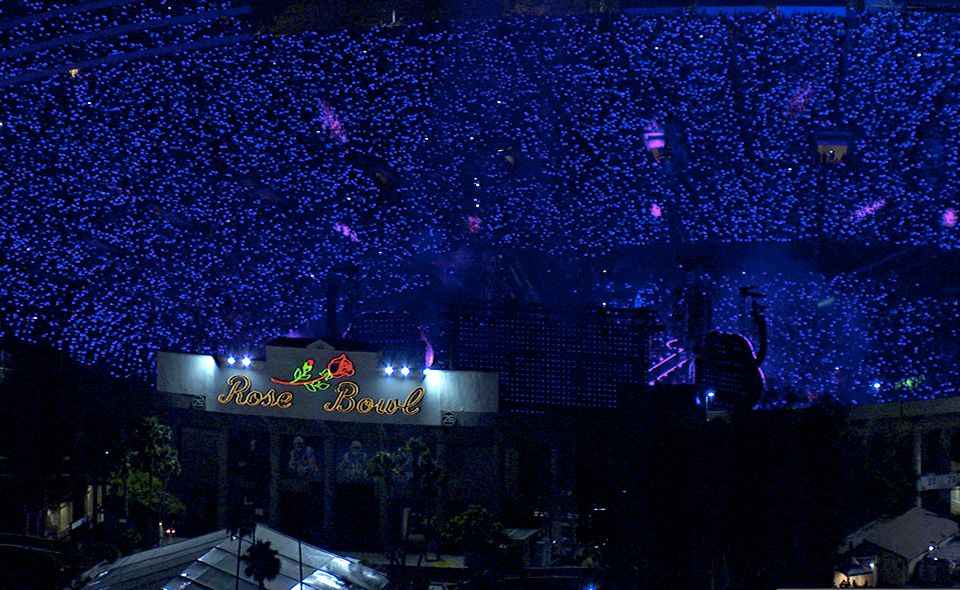
This is where the audience becomes an instrument. Through the strategic deployment of Wearable LED Technology, from Concert Wristbands to custom pendants, each individual becomes a pixel in a monumental image. The design is no longer just about what happens on stage; it’s about the dialogue between the stage and the stands. A wave of colour can crash from the back of the arena to the front, mirroring a musical crescendo. The entire stadium can be plunged into a unified, single-colour state for a moment of intimate connection, then erupt into a chaotic, strobing galaxy of light for an explosive chorus.
Several core principles govern this second act:
- Scale & Intimacy: The challenge is to make a show feel epic and personal simultaneously. For Maluma’s historic Medellín concert, a crowd of 54,000 was united in a shared visual experience. By controlling the light on each person, a designer can make an artist feel connected to the fan in the last row, painting with a brush that spans hundreds of metres.
- Colour as Language: At this scale, colour must be unambiguous. It’s pure emotion. The shift from a cool, melancholic blue to a fiery, passionate red isn’t just a lighting change; it’s a narrative beat that 80,000 people feel at once. It’s a primal form of storytelling that bypasses the analytical brain and hits right in the heart.
- Pacing & Dynamics: A show that is always at maximum intensity is a flat line. The most powerful LED Crowd Experiences are built on contrast. Moments of total darkness, the quiet heartbeat of thousands of pinprick lights, or a slow, gentle pulse create the negative space that gives the bombastic, full-throttle moments their breathtaking impact. It’s the careful, rhythmic control of light and its absence that crafts the show’s emotional journey.
Act III: The Lingering Echo
The encore is not the end of the show; it’s the final paragraph of the story. It’s the moment that crystallizes the memory for every fan. The lighting here transitions from pure spectacle to emotional resonance. It’s the "lights will guide you home" moment that inspired our founder while watching Coldplay at Glastonbury—the genesis of the Coldplay Xylo Band phenomenon. It’s about creating a unified field of light that symbolizes a collective, shared experience. It’s the final, visual confirmation that everyone in the room was part of something bigger than themselves.
But the story doesn’t even end there. The most forward-thinking productions consider the post-show experience. As tens of thousands of Xylobands spill out into the night, still pulsing with a soft, uniform glow, the arena itself seems to exhale light into the city. It extends the magic beyond the walls of the venue, making the journey home part of the narrative. This thoughtful approach to Immersive Event Technology also carries a responsibility. For productions like Wizkid’s historic three-night, sold-out run at The O2, we ensured wristbands were collected, reused, and recycled, proving that unforgettable spectacle and sustainability can coexist.
The Unseen Architecture
Underpinning this entire narrative structure is a sophisticated, invisible technical framework. The seamless orchestration of thousands of moving lights, video panels, lasers, and up to 100,000 individual Radio Controlled LED Wristbands requires a mastery of multiple communication protocols. Stage lighting typically runs on DMX, a robust, wired standard perfect for complex, high-data programming. For the audience, however, an RF (Radio Frequency) system is essential. It allows a single transmitter to send commands over vast distances, synchronizing every LED Bracelet and pendant with flawless accuracy.
The art is in making this complex technical choreography feel effortless—like magic. When the technology becomes invisible, the story takes over. The result is a fundamental redefinition of the live event. The stadium is no longer just a venue that contains the show; with the right design philosophy and the right LED Event Technology, the entire space, filled with its thousands of radiant fans, becomes the show.