The Second Sunset: A Modern Guide to the Art of the Encore
The Encore Paradox
It’s a strange ritual, the encore. The lights go down, the band waves and exits stage left, and the audience, knowing full well what’s expected, begins the coordinated roar for more. It’s a scripted moment of spontaneity, a predictable surprise. Yet, in the hands of a master production team, this final chapter is the most powerful tool in the arsenal of live experience design. It’s the last word, the final flavour, the emotional crest that the audience will carry with them out into the night.
The craft is not in the "if" but in the "how." How do you transform this predictable ritual into a moment of genuine, breathtaking surprise? How do you make the expected feel entirely new? In an era of infinite distraction, the encore has evolved from a simple curtain call into a complex, multi-sensory statement. It’s a second sunset, a final, brilliant flare before the darkness returns, and designing it requires artistry, technical precision, and a deep understanding of human psychology.
Deconstructing the Final Act: The Old Rules No Longer Apply
For decades, the formula was simple: save a hit. Play the one song everyone has been waiting for, bathe the stage in a dramatic wash of light, and send them home humming the melody. That still works. But the modern audience, saturated with spectacular visuals on their phones, expects more. The contemporary encore is not just a song; it’s a fully immersive environment.
The goal is to engineer a moment of collective effervescence—a term coined by sociologist Émile Durkheim to describe the sense of shared energy and simultaneous action that unites a group. In live production, this is our holy grail. It’s the instant a stadium of 50,000 people becomes a single, breathing entity, unified by sound and light.
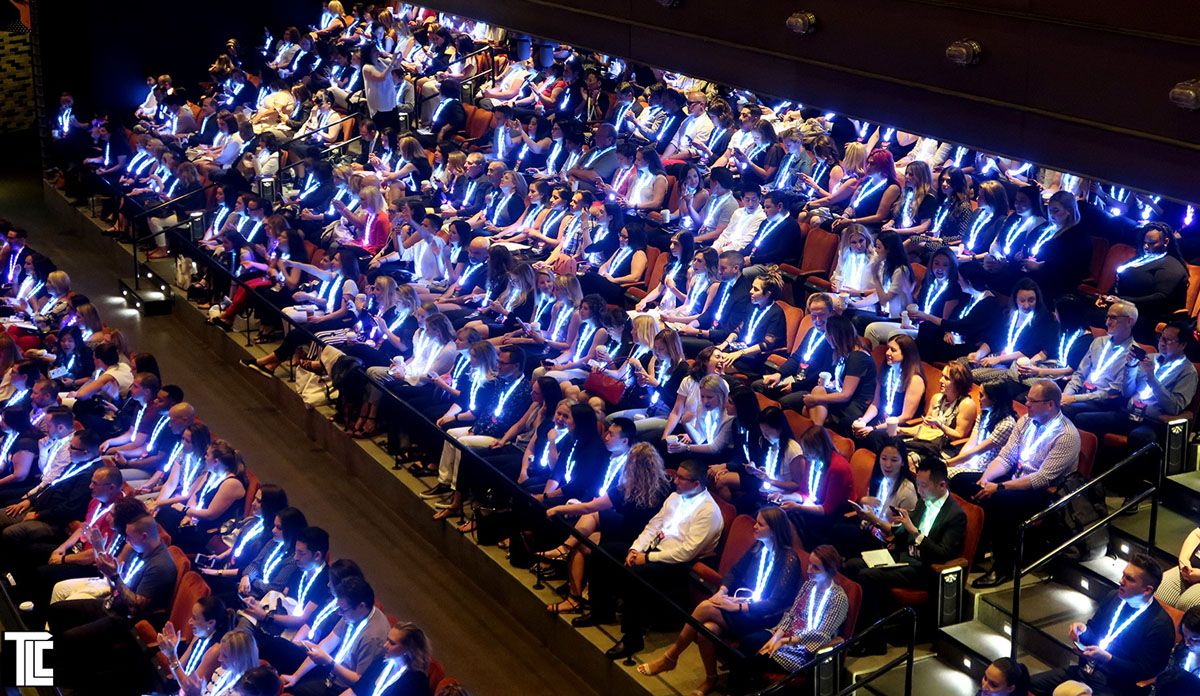
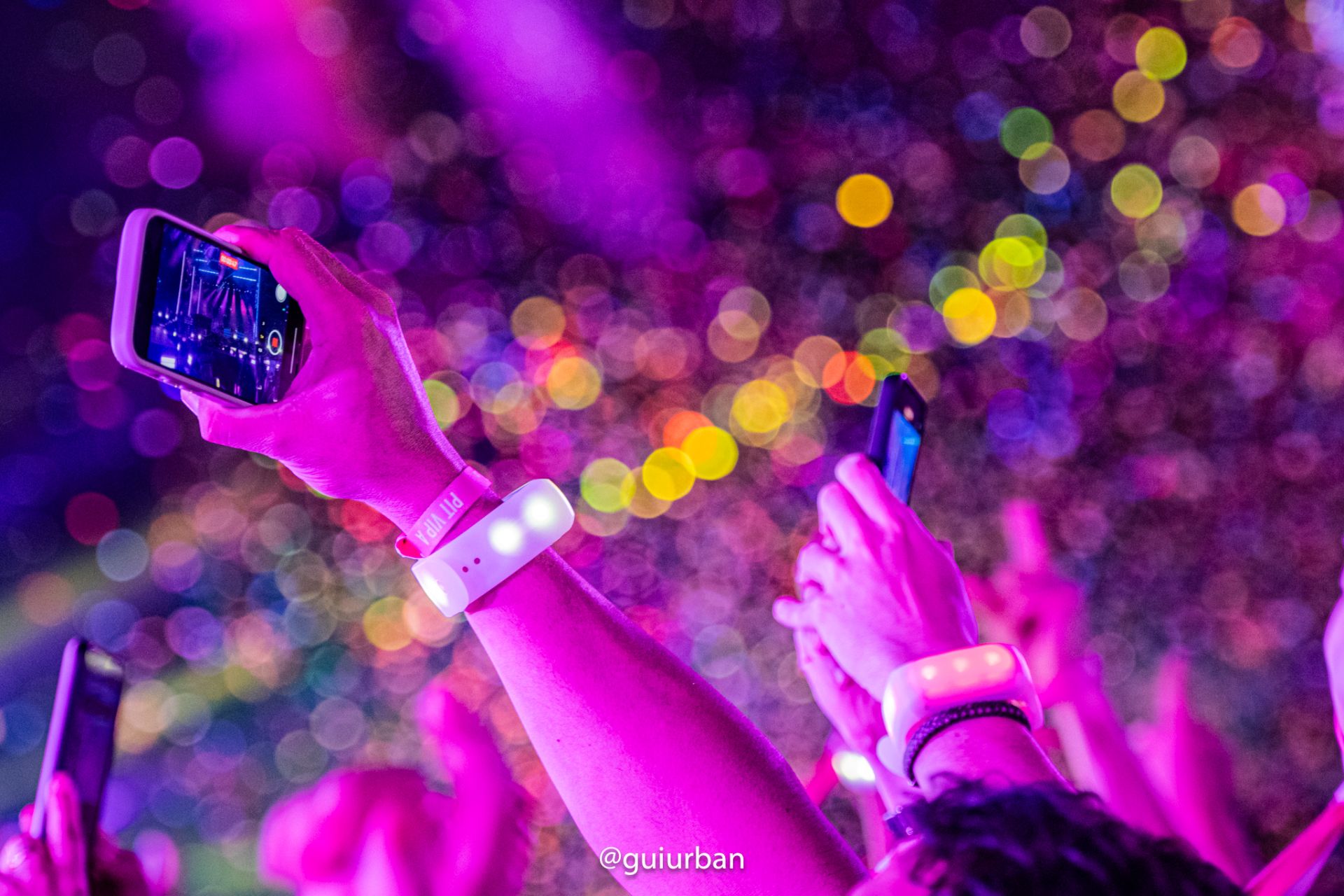
This is where immersive event technology becomes a critical part of the narrative. Imagine the encore for a massive festival like Greece’s PRIMER Music Festival. As the final DJ of the night returns to the decks, the entire festival ground doesn’t just hear the music—they wear it. Thousands of festival wristbands, dark until this very moment, explode with strobing light, perfectly synchronized to the beat drop. The crowd isn’t just watching the show; they are the show. This is the power of turning the audience into the canvas.
The Psychology of the Second Peak
The "peak-end rule," a psychological heuristic identified by Nobel laureate Daniel Kahneman, posits that we judge an experience based on how we felt at its most intense point (the peak) and at its end. This is why the encore is so critical. It’s the final peak and the definitive end rolled into one. It’s the last and most vivid memory you gift your audience.
A truly masterful encore doesn’t just reiterate the show’s themes; it reframes them, giving the audience a new lens through which to remember the entire evening.
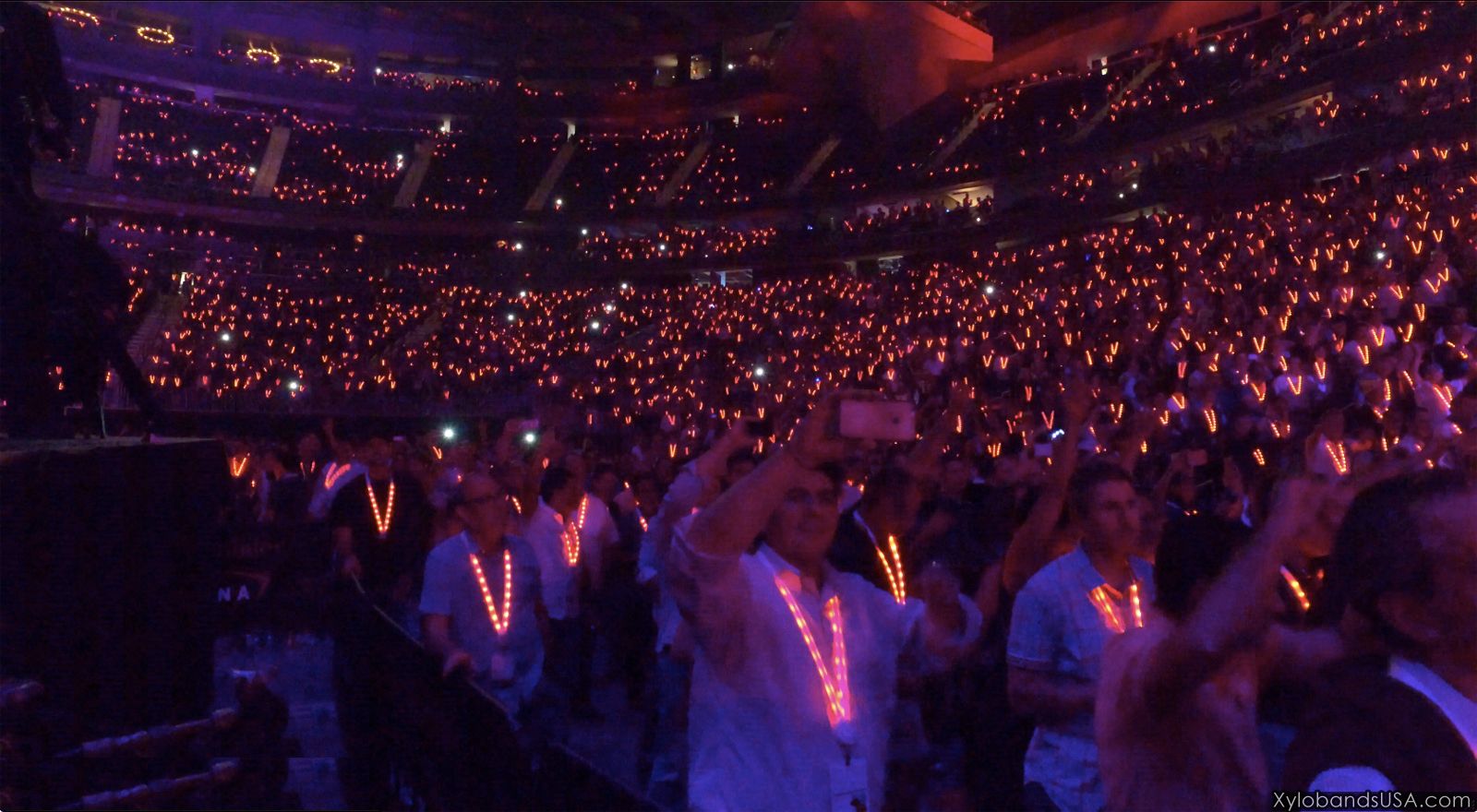
This requires a delicate choreography of emotion. You’ve taken the audience on a journey—through high-energy anthems and intimate ballads. The encore is the destination. For Maluma’s historic 2022 homecoming concert in Medellín, the show was a celebration of culture and career. Watched by 54,000 in the stadium and millions streaming worldwide, the encore wasn’t just another song; it was a crowning statement, amplified by a sea of synchronized light that turned the entire stadium into a vibrant, pulsating tribute to Colombian pride. The LED bands were a visual echo of the collective joy, a tangible representation of a historic moment for the artist and his city.
The Technical Ballet of the Final Moment
Delivering this final, flawless moment requires a zero-failure operational mindset. While the audience is lost in the spectacle, a hidden ballet of technology is at play. Whether through radio frequency (RF), DMX, or infrared control, the system cueing the lights, sound, pyrotechnics, and wearable LED technology must be seamless and utterly reliable.
This is where the show’s creative vision meets robust technical execution. The artist might say, “I want the stadium to feel like a galaxy of stars for this last song.” The technical director’s job is to translate that poetry into precise programming. At Xylobands, this is our world. We work with production teams to map out entire arenas, programming our radio controlled LED wristbands to create waves of colour, intricate patterns, and sudden, dramatic blackouts that amplify the emotion on stage.
This technology offers a level of creative granularity that was previously impossible. We can segment the audience by seating block, creating visual conversations between different parts of the stadium. We can make the light chase the artist as they walk the stage. We can turn a corporate event activation into a stunning brand reveal, or make 50,000 Coldplay Xylobands pulse with the same heartbeat. The palette is no longer just on the stage; it extends to every single person in the venue.
The Lasting Impression: Beyond the Lights
Ultimately, the craft of the encore is about memory. It’s about ensuring the feeling of that final chord, that last flash of light, resonates long after the house lights come up. In a world of fleeting digital moments, the live encore remains a powerful, analogue experience of community and shared emotion.
By integrating the audience directly into the fabric of the show with tools like custom LED wristbands and other forms of immersive event technology, we are not just creating a spectacle. We are building a memory. We are taking a predictable ritual and turning it into the most unforgettable moment of the night, sending the audience home not just with a song in their head, but with the feeling of having been part of something truly extraordinary.