The Two-Screen Problem: Mastering Light for the Live Crowd and the Camera
The Challenge: Translating Three Dimensions for a Two-Dimensional Medium
Broadcasting a live event isn’t just about pointing cameras at a stage. It’s about translating a three-dimensional, multi-sensory experience into a compelling two-dimensional narrative for an audience that might be thousands of miles away. This is the core challenge faced by every producer, lighting designer, and showrunner in the business: how to make the viewer at home feel the energy of the crowd in the room. Lose the immersion, and you lose the audience.
At its heart lies what we call the “two-screen problem.” The first screen is the live venue—the stage, the performers, and the physical audience. The second is the television, laptop, or mobile device in the hands of the global audience. The lighting that works for one often compromises the other. A spectacular effect for the arena can appear as a blown-out mess on camera. Conversely, lighting purely for broadcast can leave the live audience feeling disconnected, like extras on a film set rather than active participants.
This is where the real art of modern broadcast production lies: in creating a unified visual language that serves both the live and remote viewer simultaneously. It requires a mastery of light that not only illuminates the performance but also captures the collective energy of the event. For major broadcasters like ITV, who produce some of the world’s most-watched live shows, solving this problem is not just a technicality—it’s fundamental to their success.
The Solution: Painting with the Crowd
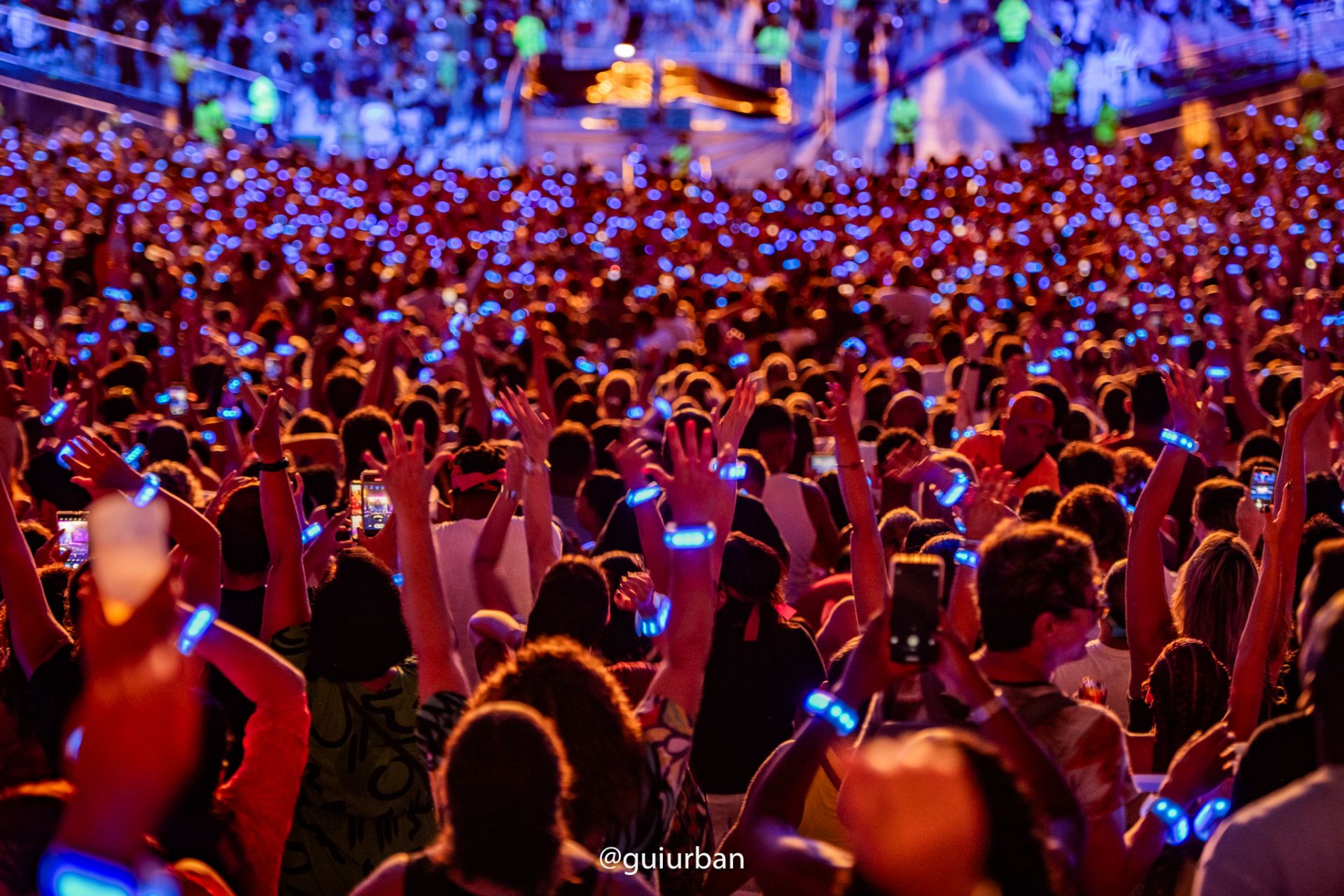
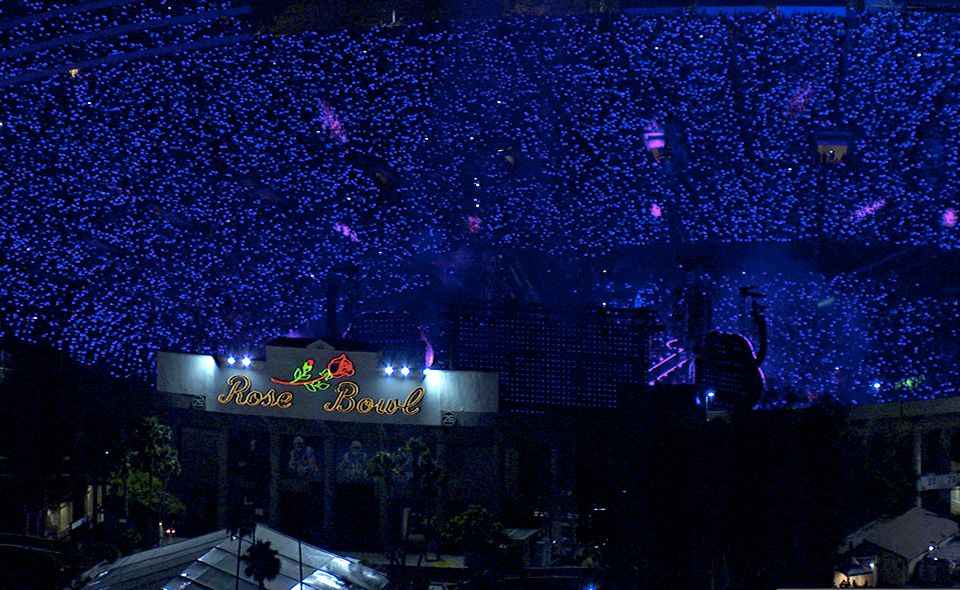
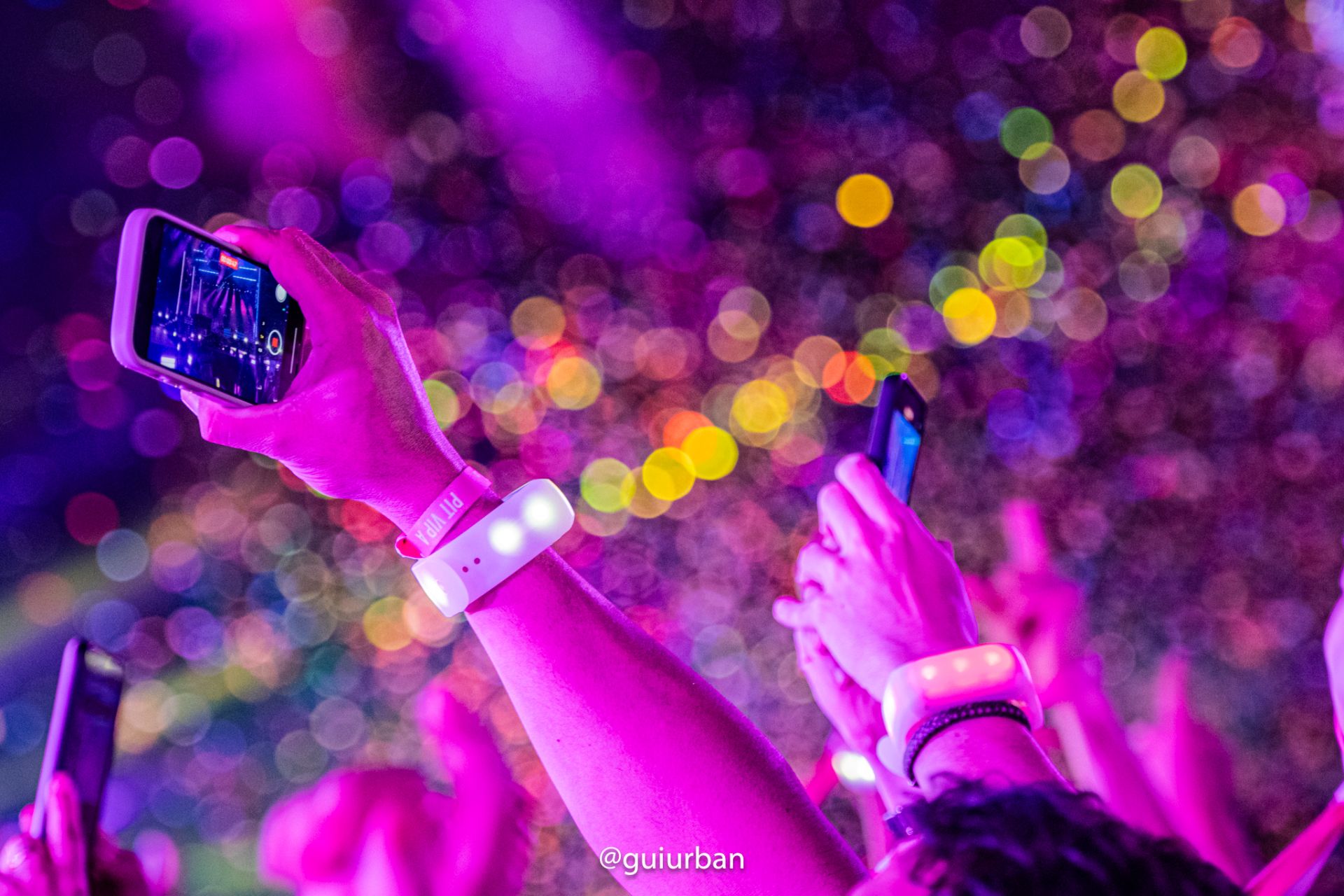
For years, the audience was just a passive observer. Today, thanks to wearable LED technology, they are the canvas. By integrating technologies like radio-controlled LED wristbands, broadcasters can now extend the lighting design far beyond the physical stage and into the crowd itself, transforming thousands of individuals into a single, dynamic visual element.
This approach was pioneered on shows like ITV’s Beat The Chasers, where the tension and excitement are paramount. In a high-stakes quiz format, the ebb and flow of the game need to be felt. When a contestant is winning, the studio can erupt in a cascade of triumphant colour. When the pressure mounts, the room can be plunged into a tense, pulsing red. These are not just decorative effects; they are narrative tools. They provide visual cues that amplify the emotional stakes for both the studio audience and the viewers at home.
By making the crowd an integral part of the lighting design, producers achieve several key objectives:
- Visual Scale: It gives the camera a deep, textured, and vibrant background to frame the main action, making the production feel larger and more cinematic.
- Emotional Resonance: The light synchronises with key moments, creating a powerful visual shorthand for the emotional arc of the show.
- Audience Immersion: For those in the studio, being part of the light show is a powerful experience. It transforms them from spectators into participants, heightening their engagement and, in turn, their on-screen energy.
The Technology: The Unseen Conductor
Making this happen requires robust and sophisticated LED event technology. The system needs to be reliable, responsive, and capable of complex, real-time control. This is where Xylobands come in. Our systems are designed for the high-stakes environment of live television, offering production teams the precision they need to orchestrate these intricate visual narratives.
“When you’re live to millions, there is zero margin for error. The technology has to be flawless. It’s not just about wristbands lighting up; it’s about telling a story in perfect sync with the action.”
The core of this capability lies in the control software and the transmission hardware. Whether using RF, DMX, or infrared signals, the "invisible conductor" allows a single lighting operator to cue thousands of individual light sources—from LED wristbands to LED lanyards and even larger fixtures like LED orbs—as if they were a single instrument. This level of control enables the nuanced, beat-perfect execution seen on ITV’s entertainment flagships and other global broadcasts like the Eurovision Song Contest.
Beyond the Studio: Unifying Global Audiences
The principles mastered in the television studio are now shaping LED crowd experiences on a global scale. Artists like Maluma and Wizkid have turned their stadium shows into broadcast-quality spectacles, knowing their performances will be streamed to millions. At Maluma’s historic Medellín concert, 54,000 fans became a living backdrop, their synchronised Xylobands creating an immersive spectacle for the 240+ countries tuning in on Amazon Prime.
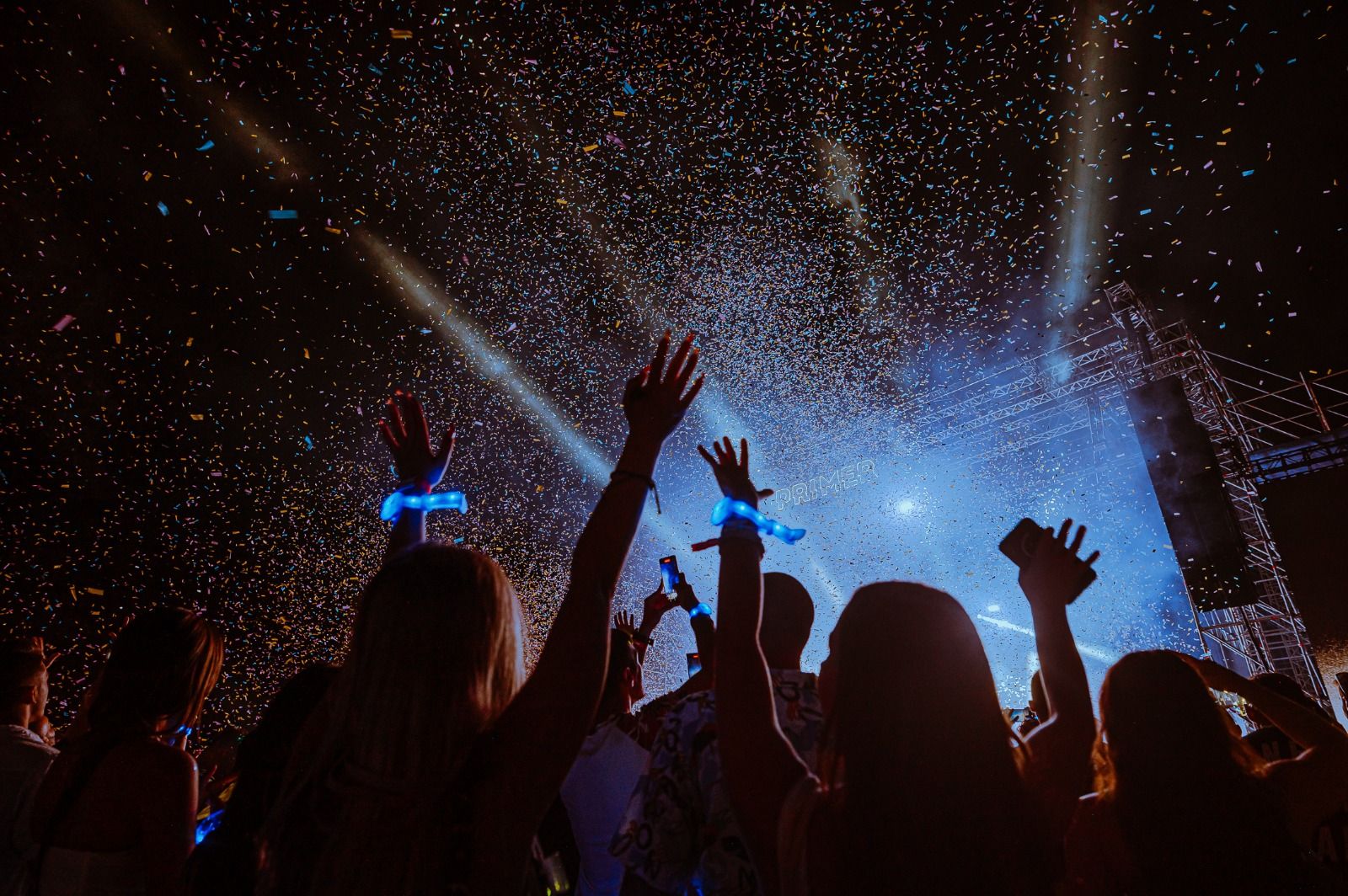
This convergence of live and broadcast is the new frontier of event production. Whether it’s a music festival like Primer, a major sporting event like the Davis Cup, or a high-profile brand moment like Formula One’s 75th-anniversary show, the goal is the same: to create a powerful, shared experience that resonates equally with the person in the front row and the person on their sofa.
As audiences and technologies evolve, the line between the live event and the broadcast will continue to blur. The future of live entertainment belongs to those who can master both screens, using light not just to illuminate, but to unite.