The Unfolding Story of Audience Participation: From Lighters to LEDs
The Unfolding Story of Audience Participation: From Lighters to LEDs
The impulse is as old as performance itself: to be more than a spectator. To reach out from the darkness of the crowd and connect with the spectacle on stage. For decades, the simplest tool available was fire. A lone Bic lighter, held aloft during a ballad, was a small but profound act of participation—a tiny beacon of individual appreciation that, when multiplied by thousands, transformed a stadium into a constellation. It was a visual vote, a way for the audience to signal, “We are with you.”
This simple, analogue gesture laid the conceptual groundwork for everything that followed. It proved a fundamental truth of live events: audiences don’t just want to watch the show; they want to be the show. The evolution from that single flame to the sophisticated, centrally controlled LED crowd experiences of today is a story of technological innovation driven by this basic human need for connection and participation.
The Analogue Wave: Lighters, Flashcards, and the Dawn of Collective Display
The lighter era, romantic as it was, had its limitations. It was a spontaneous, somewhat chaotic display, beautiful in its randomness but impossible to direct. The first attempts to organize the crowd into a cohesive visual element came from the world of sports, particularly American college football. Intricately planned card stunts, where thousands of fans held up colored cards to form massive images or slogans, represented a leap in coordinated audience participation. It required planning, precision, and a central command. The individual became a pixel in a much larger picture, willingly sublimating their personal expression for a moment of collective, overwhelming impact.
This was the first real taste of the crowd as a canvas. However, it was a static medium. The image could be breathtaking, but it was frozen in time. The display was a single, powerful moment, not a dynamic, flowing part of the performance. The technology had created a new potential, but the narrative possibilities were still limited.
The Digital Spark: Mobile Phones and the First Interactive Light
The next major shift arrived with the mobile phone. The ubiquitous screen, with its flashlight function, became the digital successor to the lighter. It was brighter, safer, and present in nearly every pocket. Apps were developed that allowed phones to be synchronized, pulsing with color in time with music. It was a step toward dynamic, interactive light, but it came with its own set of challenges. It relied on attendees downloading an app, having sufficient battery, and keeping their phones held high. More importantly, it kept the audience’s attention on their device, creating a sea of screens that could inadvertently place a barrier between the fan and the artist—a digital wall at the very moment a bridge was being attempted.
While a significant step, the mobile phone solution highlighted a core challenge: for true immersion, the technology needs to be invisible. It should enhance the human experience, not mediate it. The goal is to draw people deeper into the shared moment, not pull them out of it to interact with a personal device.
The Xylobands Revolution: Inventing Wearable, Immersive Light
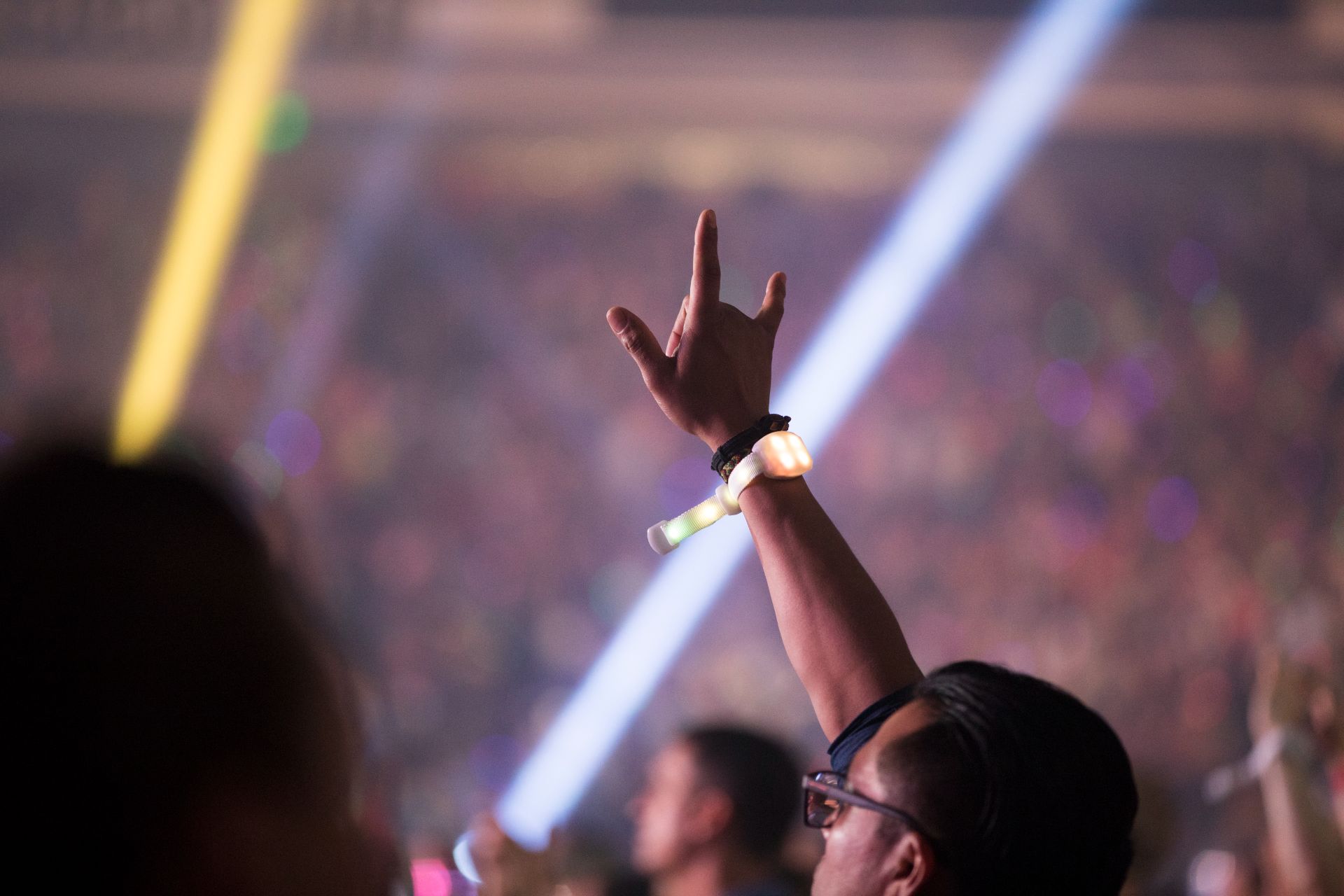
The true paradigm shift occurred when the technology moved off the screen and onto the body. The story of Xylobands is a direct response to this challenge. Inspired by watching Coldplay’s performance of “Fix You” at Glastonbury, our founder, Jason Regler, envisioned a way to make the lyric “lights will guide you home” a literal, shared reality for every single person in the crowd. The idea was to create wearable LED technology—specifically, radio controlled LED wristbands—that would place the light directly on the fans, turning the entire audience into a single, synchronized canvas of light and color.
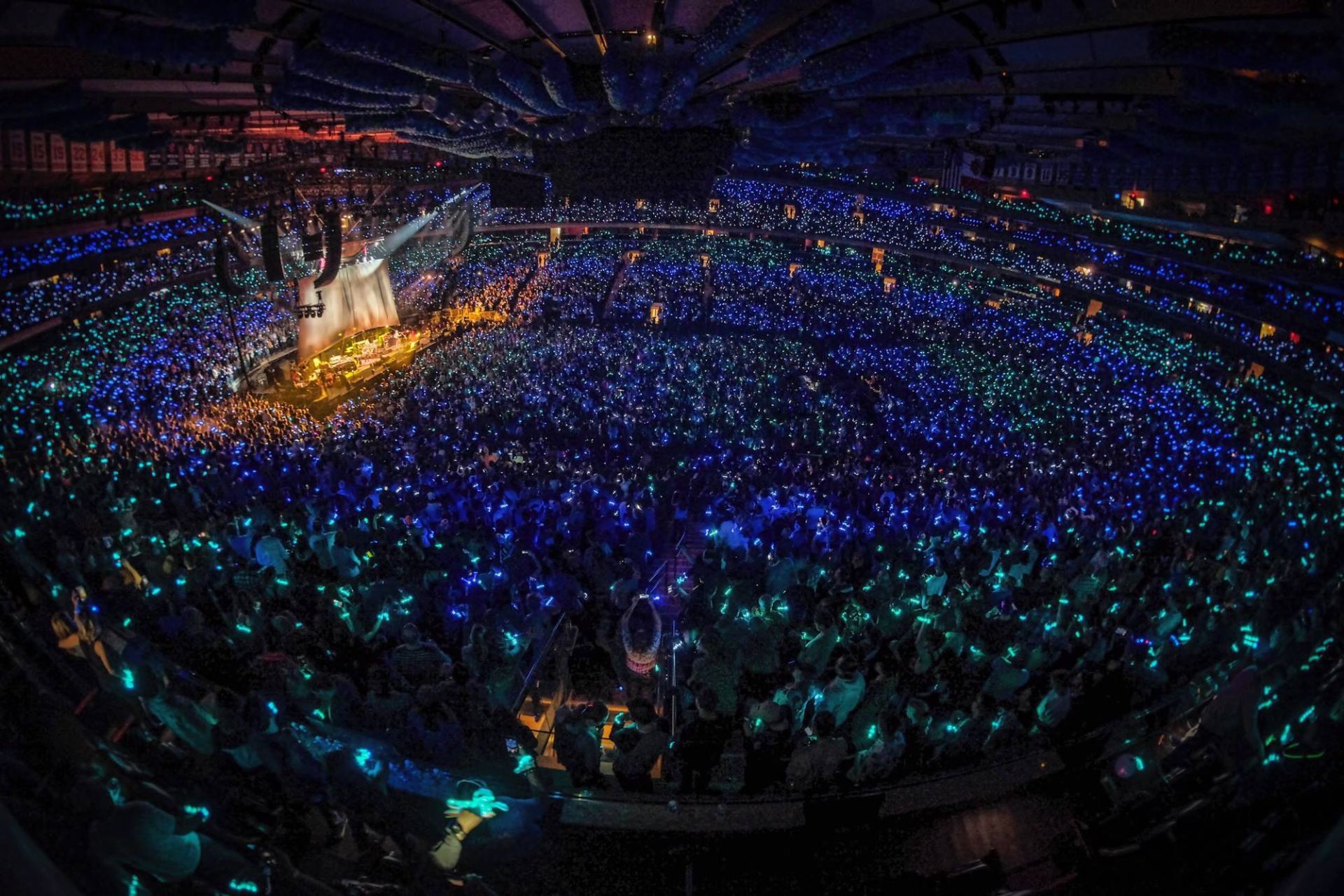
When Xylobands debuted on Coldplay’s Mylo Xyloto tour in 2012, it was a watershed moment. For the first time, a lighting designer had control not just of the stage rigging, but of tens of thousands of individual lights worn by the audience. The effect was immediate and profound. The boundary between the stage and the crowd dissolved. The audience wasn’t just watching the light show; they were the light show. This innovation transformed the concert from a performance to be observed into a truly immersive event.
From those first Coldplay Xylobands, the technology has evolved, becoming a staple for world-class artists like Wizkid and Maluma, and global events from the Davis Cup to Formula One. The system allows for the creation of complex, sweeping visual effects, chases, and color blocks that flow across the stadium in perfect sync with the music and action. The audience becomes a living, breathing part of the show’s choreography.
The Future of Participation: Data, Personalization, and Co-Creation
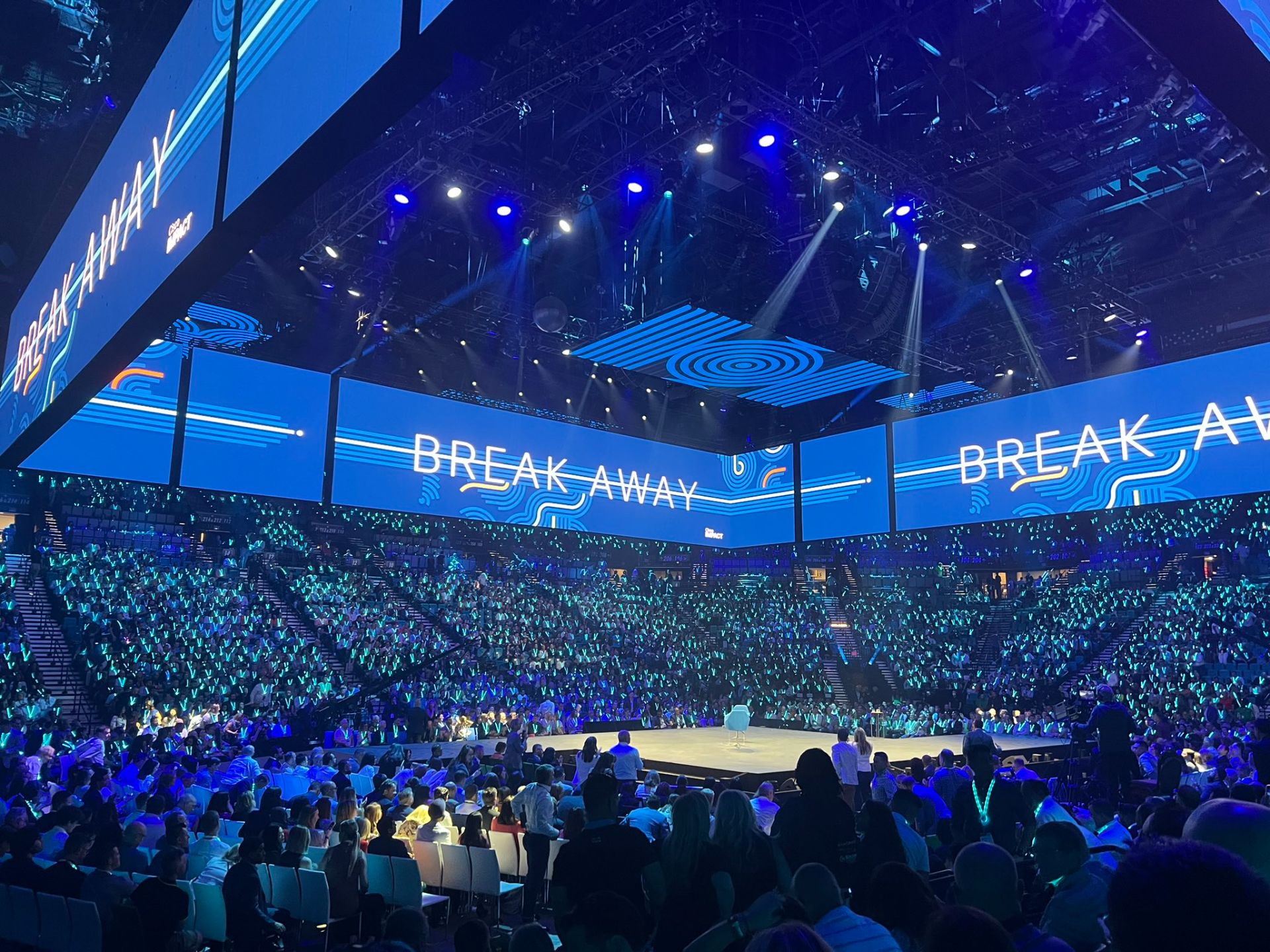
Today, the technology continues to evolve beyond simple, centralized control. Modern LED bands and LED lanyards can be integrated with event apps, ticketing systems, and social media, opening up new avenues for personalized interaction. Imagine a wristband that glows a specific color based on your favorite team at a sporting event, or one that identifies you as a long-time fan of a band. At corporate events, this technology is being used to foster networking and segment audiences for specific activations, transforming a standard conference into a dynamic corporate event activation.
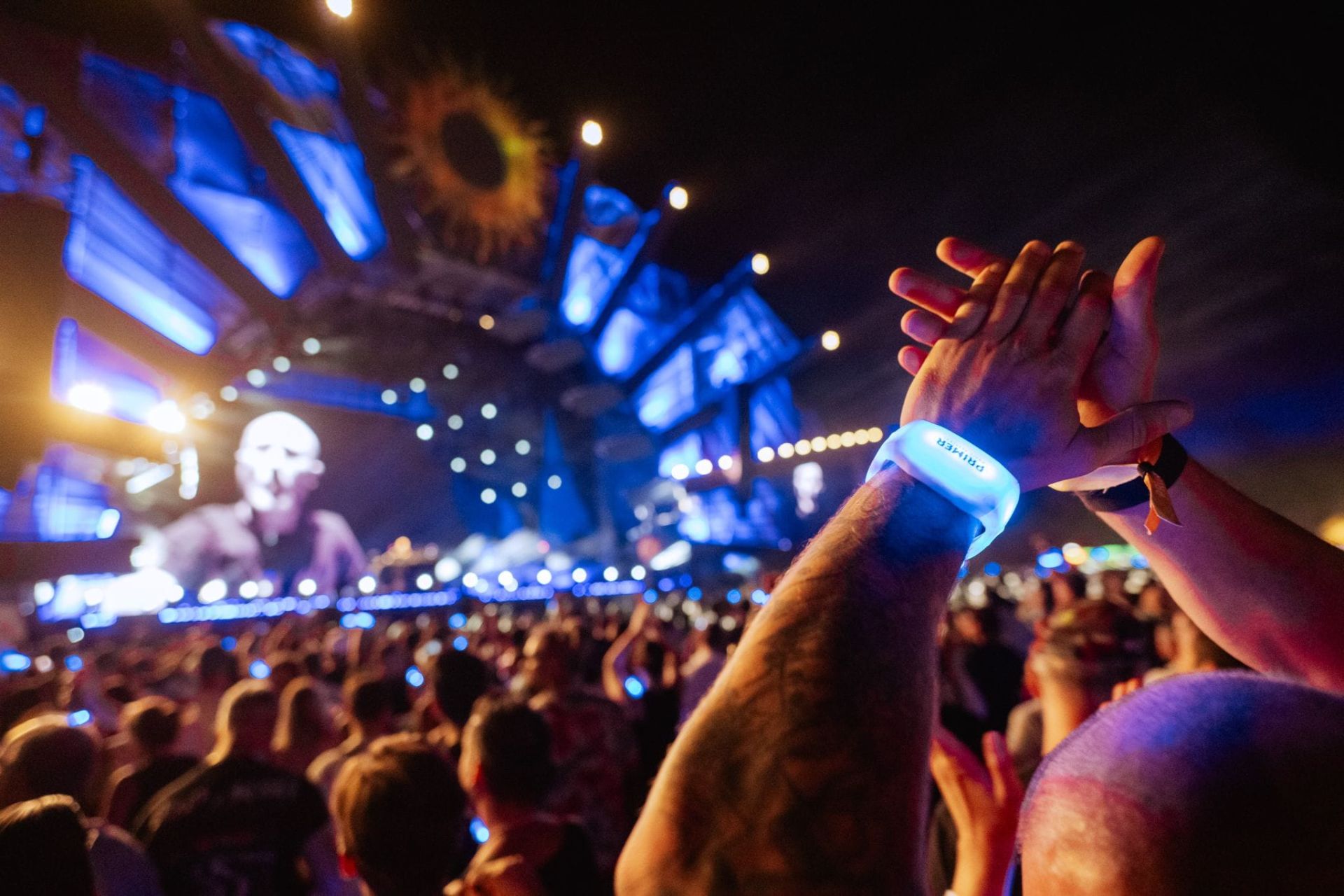
We’ve deployed custom pendants for Formula One, helping to celebrate its 75th anniversary by creating distinct lighting effects for different teams and hospitality levels. We’ve turned festival grounds like Greece’s PRIMER Music Festival into pulsating fields of light, enhancing the sense of collective energy. These are no longer just concert wristbands; they are nodes in a complex, interactive network—a key piece of immersive event technology.
The journey from a single flame to millions of synchronized LED wearables is more than a story of technological progress. It’s the story of a deepening understanding of what audiences crave: connection, participation, and a role to play in the spectacle. The future is not just about illuminating the crowd, but about empowering it. It’s about creating systems where the audience can co-create the experience in real-time. The fourth wall is gone for good. What happens next will be determined not just by the artists on stage, but by the collective, illuminated energy of the crowd itself.