The Unseen Engine: A Culture of Perpetual R&D in Live Events
The Whiteboard and the Warehouse
Every groundbreaking piece of event technology starts not with a circuit board, but with a question. A “what if?” scribbled on a whiteboard in a quiet room, miles and years away from the roar of a stadium. It’s a process of relentless curiosity, of dismantling the present to build the future. In the world of live entertainment—a sector defined by ephemeral moments and zero tolerance for failure—the most brilliant innovations aren’t born in a flash of genius. They are forged in a culture of perpetual research and development.
This is a world we know well. The journey from a simple idea—imagining a crowd at Glastonbury lit not by lighters, but by synchronised, wearable light—to a global technology standard is not a straight line. It’s a winding, iterative path of prototyping, testing, and refinement. It’s the unseen engine that powers the spectacle, the quiet work that makes the loud moments possible.
From Spark to Signal: The Philosophy of Perpetual Prototyping
The core philosophy is simple: nothing is ever finished. The product that ships today is merely the most advanced version of a perpetual prototype. It’s a snapshot in an ongoing evolution. This mindset is crucial in an industry where audience expectations and creative ambitions are constantly escalating. The breathtaking lighting effect of last year’s tour is this year’s baseline.
Consider the journey of our own LED wristbands. The first-generation models, which debuted on Coldplay’s Mylo Xyloto tour, were revolutionary. They transformed the audience from passive spectators into an active, illuminated part of the show’s canvas. But the R&D didn’t stop when the tour ended. In fact, it accelerated. Every show, every festival, every corporate event became a real-world laboratory.
- Signal Integrity: How can we make the radio-frequency communication more robust in dense, unpredictable environments like a festival field or a concrete arena?
- Power Efficiency: How can we extend battery life to cover multi-day events like the PRIMER Music Festival, while ensuring maximum brightness and responsiveness?
- Ergonomics and Sustainability: How do we make wearables more comfortable, more durable, and, critically, more environmentally responsible through reuse and recycling programs?
These questions drove the development of successive generations of Xylobands, each iteration improving on the last. This commitment to perpetual R&D is what allows for the creation of truly immersive event technology.
The Cross-Disciplinary Lab: Beyond the Lighting Desk
True innovation in event technology doesn’t happen in a silo. It requires a cross-pollination of disciplines. Our R&D process is a constant dialogue between electrical engineers, software developers, industrial designers, and the most important group of experts: the on-the-ground production crews and creative teams who use the technology.
Feedback from a tour manager for an artist like Maluma or Wizkid is as valuable as a breakthrough in battery chemistry. Insights from the broadcast team for a high-profile televised event like the Davis Cup or Beat The Chasers directly inform the development of lighting solutions that excel both live and on-camera. This feedback loop is the lifeblood of relevant innovation. It ensures that the technology being developed doesn’t just work in a lab; it solves real-world problems under immense pressure.
“The feedback from a tour manager is as valuable as a breakthrough in battery chemistry. It ensures the technology doesn’t just work in a lab; it solves real-world problems under immense pressure.”
Anticipating the Canvas: R&D as Creative Partnership
The most forward-thinking R&D doesn’t just react to the needs of the present; it anticipates the creative demands of the future. It’s about asking not just, “What do you need to do now?” but, “What do you want to be able to do next?”
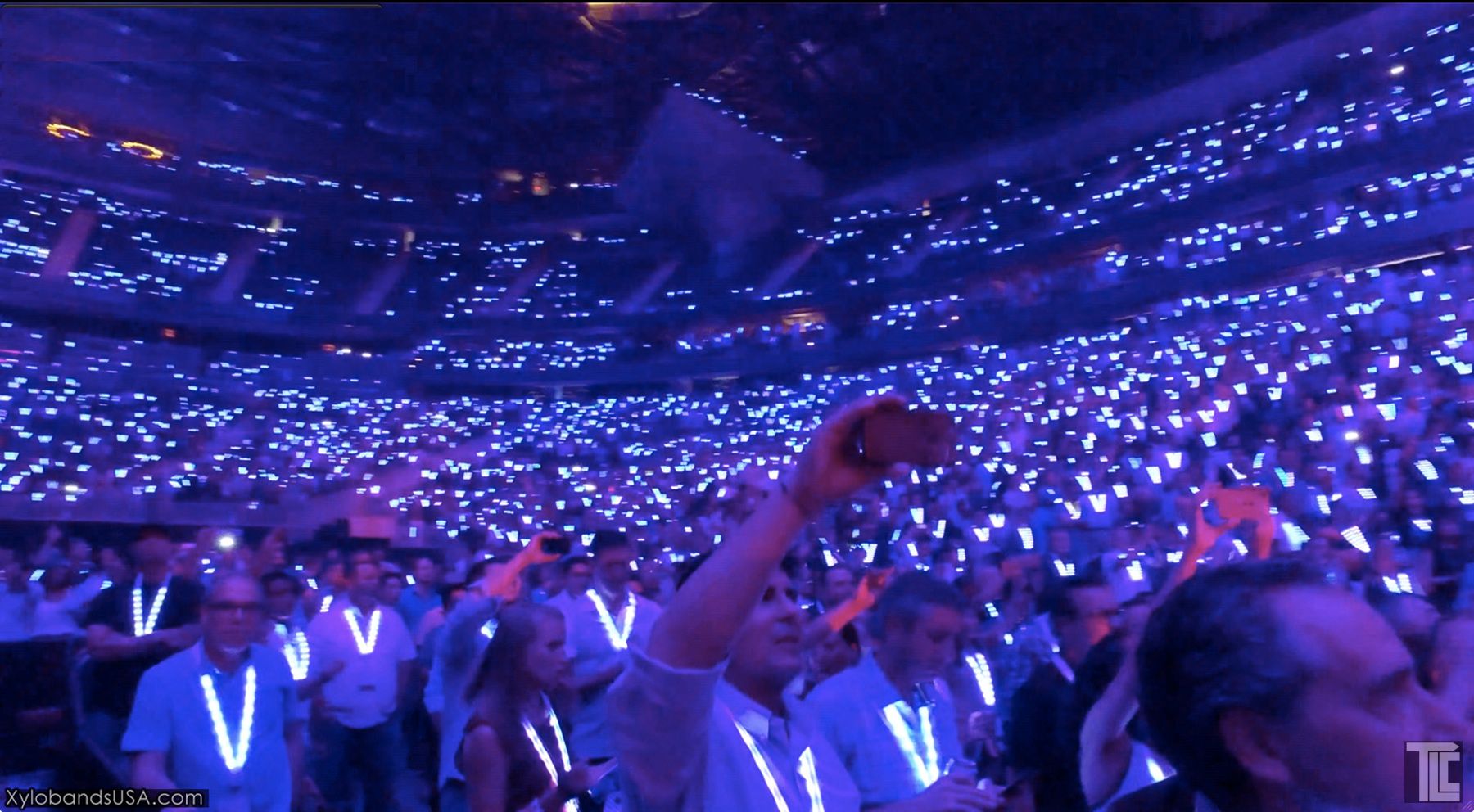
This is where R&D becomes a form of creative partnership. When the team behind the Formula 1 75th Anniversary celebration wanted to segment a 13,000-strong arena crowd by team affiliation and hospitality tier, it required more than just a standard wristband. It led to the development of custom LED Lanyards (the Xylo Pendant), each pre-assigned to a specific zone. This wasn’t just a new product; it was a new tool for audience segmentation and targeted, high-impact creative moments. The technology enabled a new layer of storytelling.
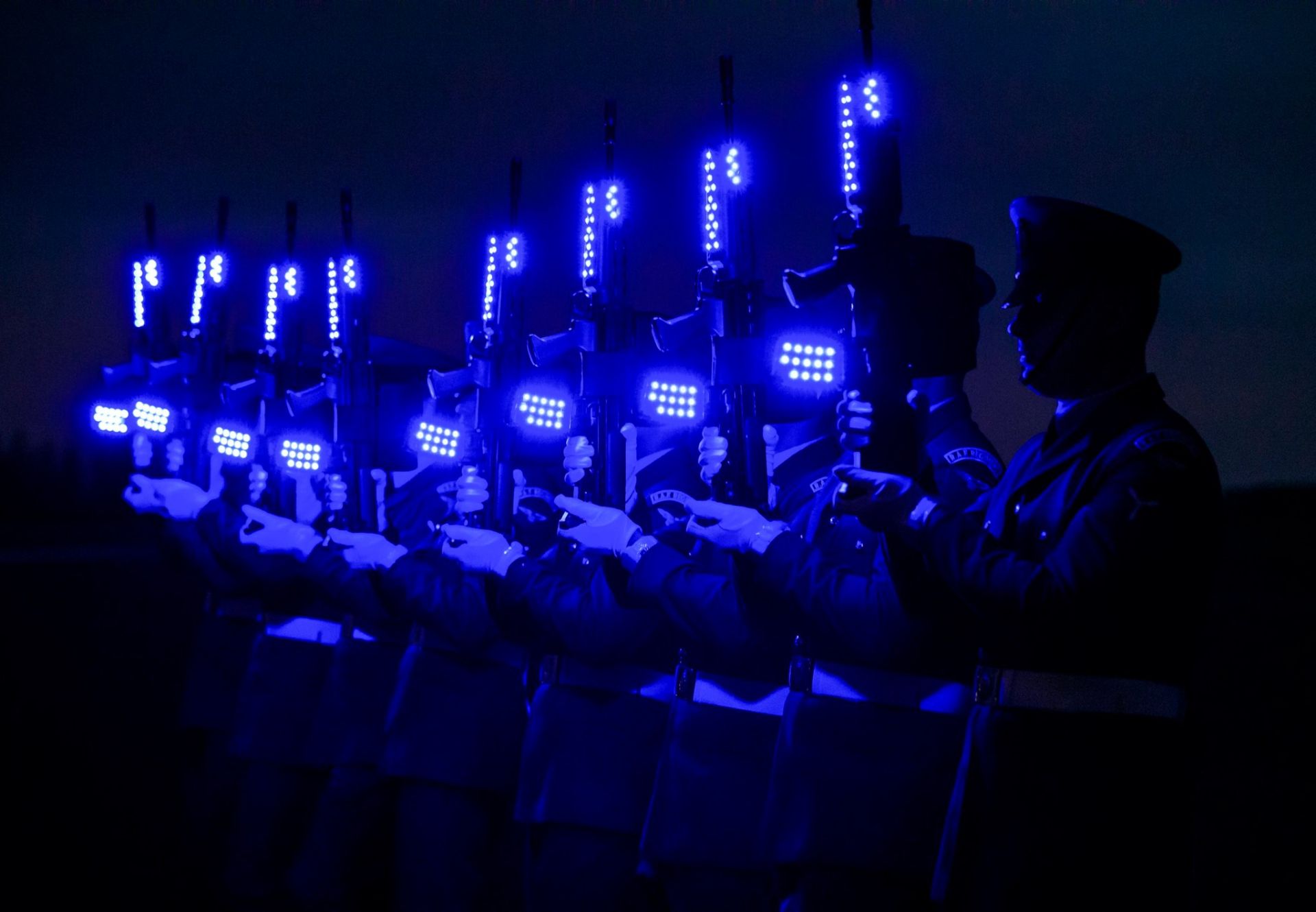
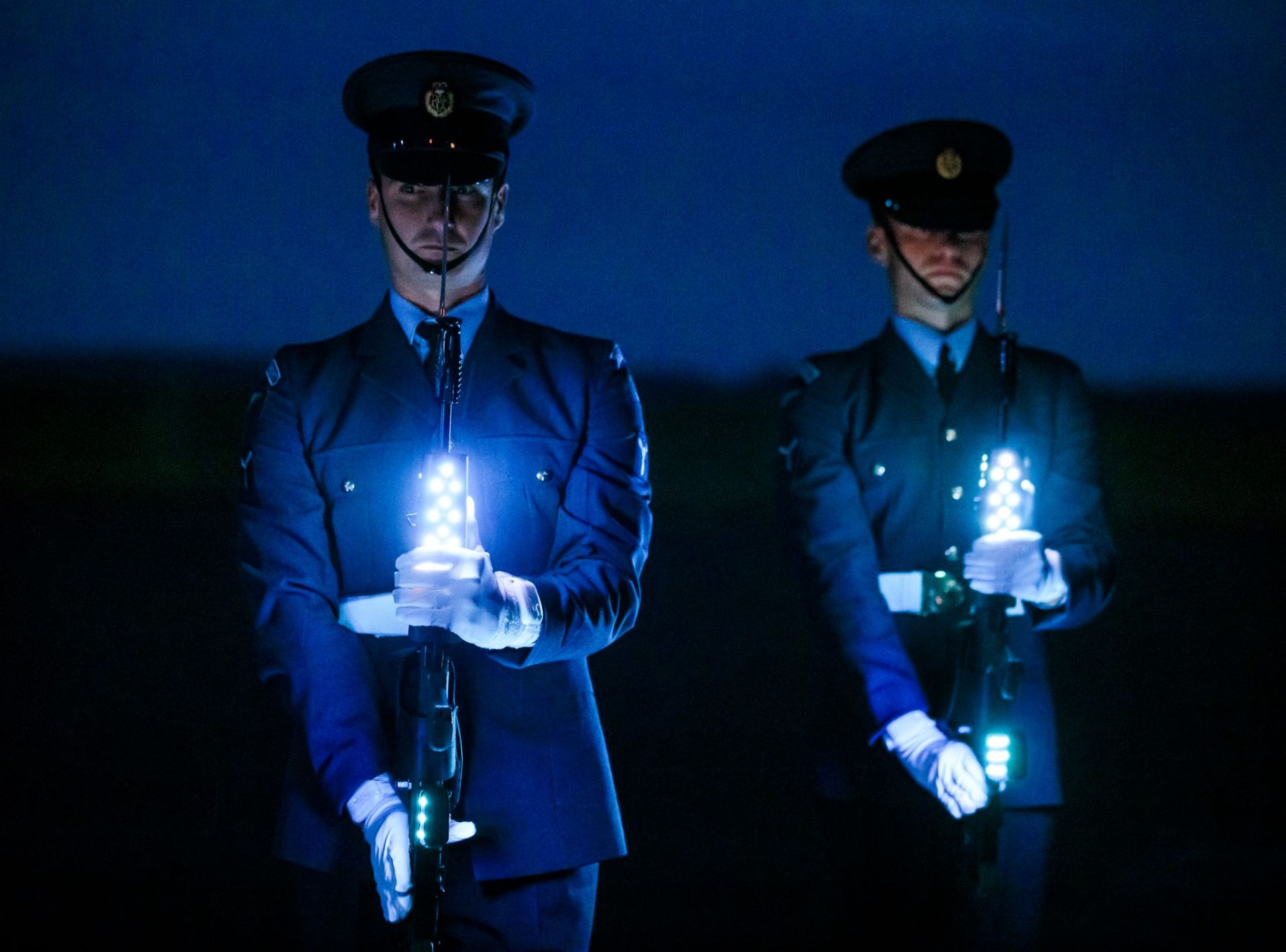
This proactive approach turns a technology supplier into a creative collaborator. It means developing systems—from radio controlled LED wristbands to LED Orbs—that are not just powerful, but also intuitive and flexible for the designers and programmers who will ultimately use them to paint with light.
The Unseen Engine of the Live Experience
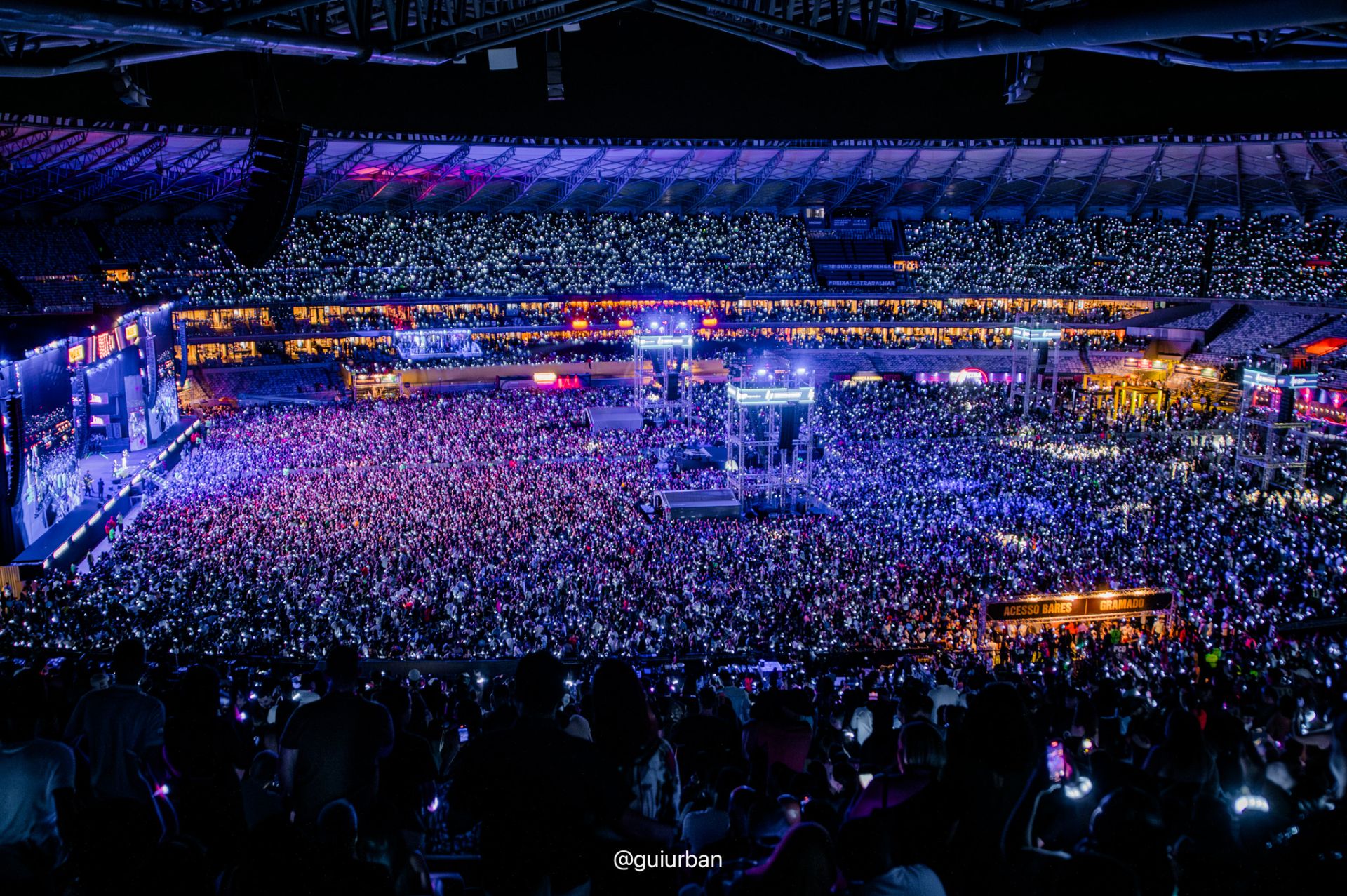
The audience rarely sees the years of development, the failed prototypes, the countless hours of testing. They see the final result: a sudden, breathtaking moment of unity. A stadium erupting in synchronized colour. A sea of light pulsing to the beat, turning a crowd of thousands into a single, living organism.
That is the purpose of the unseen engine. The culture of perpetual R&D isn’t about technology for its own sake. It’s about the relentless pursuit of more powerful, more meaningful, and more human ways to connect people. It’s about building the tools that allow artists and creators to imagine bigger, and to craft those fleeting, unforgettable moments that are the very essence of the live experience. The work continues, not in search of a final, perfect product, but in the endless, exciting quest for what’s next.