The Unseen Journey: Mastering the Global Logistics of Live Events
The Unseen Journey: Mastering the Global Logistics of Live Events
The final hour before doors open is a moment of suspended energy. A stadium, an arena, a festival field—each is a cathedral of potential, waiting for the congregation. For the audience, the experience begins when they scan their ticket. For the artist, it starts with the first note. But for the production team, the journey began months, even years, earlier, navigating a labyrinth of global logistics, freight, and customs that is every bit as complex as the show itself.
This is the unseen engine of the live spectacle. It’s a world of ATA carnets, freight forwarders, and meticulous inventory management, where a single missing component can compromise an entire production. For global tours and large-scale brand activations, success is not just about creative vision; it’s about the flawless execution of a supply chain that spans continents.
The Global Chessboard: Strategy Beyond the Stage
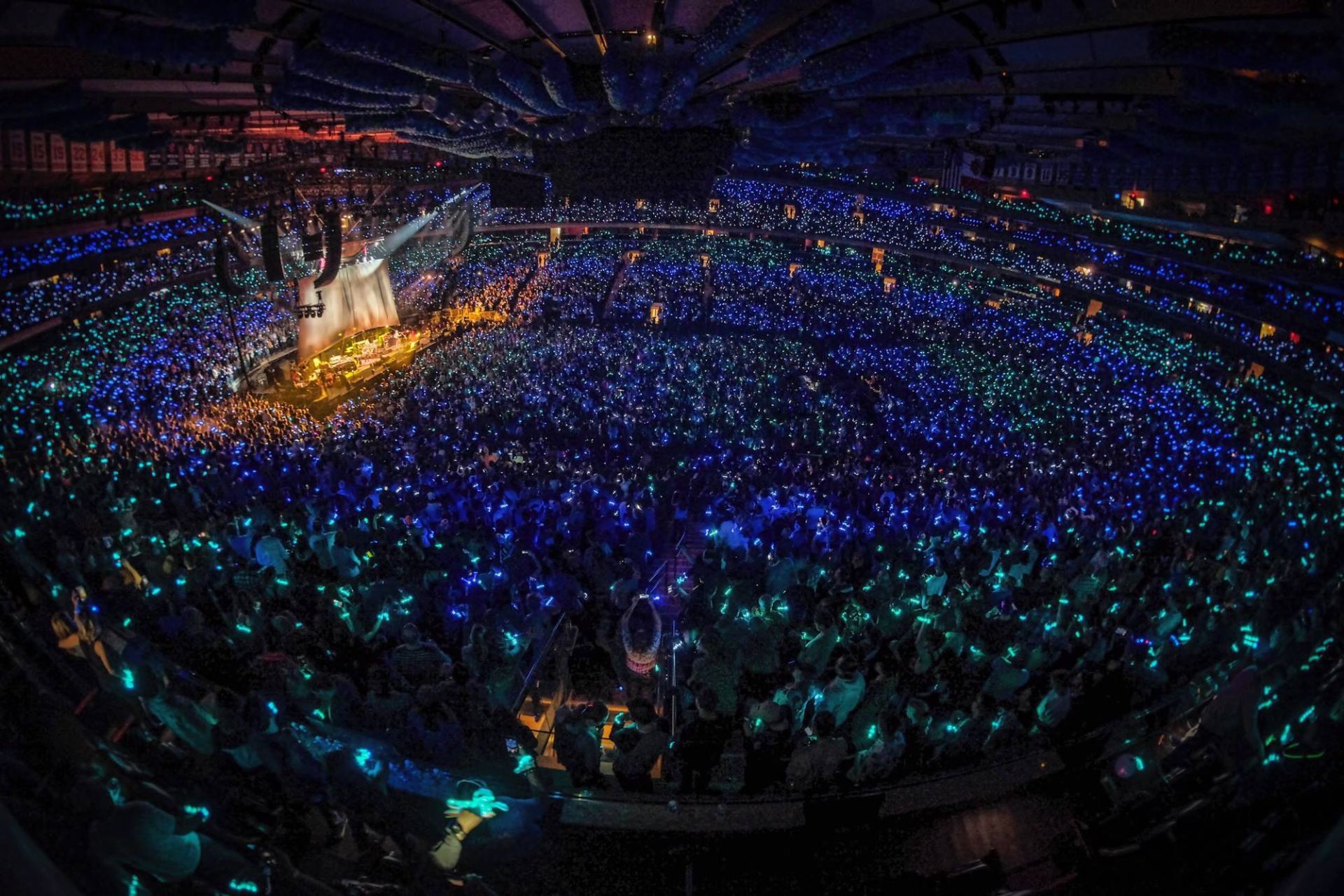
A major global tour is a mobile ecosystem. It’s a travelling circus of steel, silicon, and human talent. The logistics involved in moving lighting rigs, sound systems, video walls, and experiential technology like our LED wristbands from one country to another are monumental. Consider the journey of our equipment for a client like Maluma, whose 2022 concert in Medellín, Colombia, was streamed to over 240 countries. The technology that lit up 54,000 fans didn’t just appear; it was part of a carefully orchestrated logistical ballet.
This process begins with a deep understanding of international trade and customs regulations. Every country has its own set of rules, taxes, and documentation requirements. The ATA Carnet, often called the “passport for goods,” is a critical tool, allowing for the temporary importation of professional equipment and merchandise without incurring duties or taxes. But even with a carnet, navigating customs requires precision. A miscategorized item or a clerical error can lead to costly delays, with trucks and containers held at a border while a production schedule hangs in the balance.
“You can have the most groundbreaking creative concept, but if you can’t get your equipment to the venue on time and in perfect condition, the idea remains an idea. Logistics is the bridge between imagination and reality.”
Air, Sea, and Land: Choosing Your Path
The mode of transport is dictated by three factors: time, budget, and the nature of the cargo. For a multi-leg stadium tour with tight turnarounds, air freight is often the only viable option. It’s the fastest way to move sensitive and high-value equipment across oceans. However, it’s also the most expensive and has the largest carbon footprint.
Sea freight offers a more economical and sustainable alternative for gear that can be shipped well in advance. Tour planners often use a multi-pronged approach, duplicating certain parts of the production rig. While one system is being used for the European leg, its identical twin is already on a container ship bound for North America. This leapfrogging strategy is essential for maintaining momentum on a world tour.
On the ground, a fleet of trucks takes over, managed by logistics partners who specialize in the unique demands of live entertainment. These aren’t standard haulage jobs; they involve tight load-in schedules, complex unloading sequences, and drivers who understand the rhythm and pressures of the event world.
The Science of the Pack: Inventory, Redundancy, and Deployment
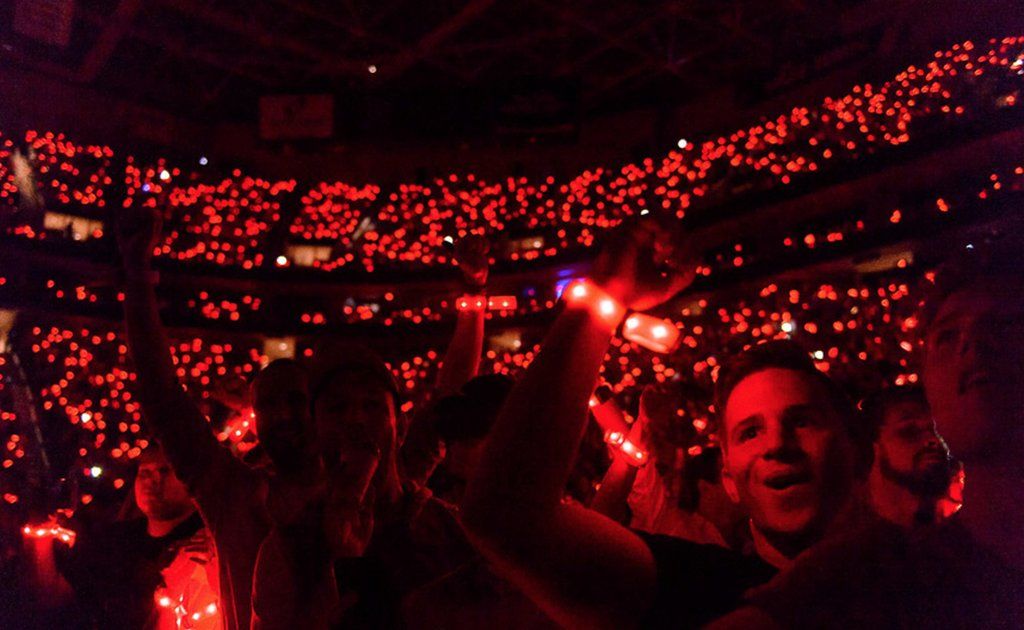
Packing for a global event is a science. Every flight case is meticulously organized, and every piece of equipment is cataloged in a master inventory system. At Xylobands, we’ve refined this process over thousands of events. When we deploy 32,000 LED Bracelets for a client like Wizkid at The O2 or 13,000 custom LED Lanyards for Formula One, our team knows exactly what’s in each case, where it needs to go, and how it integrates into the wider production.
Key considerations include:
- Redundancy: Critical components, like radio frequency transmitters or control desks, are always packed with backups. There is no room for a single point of failure when millions of dollars and a global broadcast are on the line.
- Power & Connectivity: Equipment must be compatible with local power standards across the globe. This means carrying a comprehensive inventory of adapters, transformers, and power conditioners to handle anything from 110V in North America to 230V in Europe and beyond.
- Deployment & Recovery: The logistics don’t end at load-in. For products like ours, the plan includes the efficient distribution and, increasingly, the collection of the units for recycling or reuse. This reverse logistics is a critical part of a modern, sustainable event model.
The Human Element: The Unsung Heroes of the Road
Beyond the paperwork and the technology, global logistics is a fundamentally human endeavor. It’s about the relationships between production managers, freight forwarders, and local crews. It’s about the tour manager who has the head of customs in São Paulo on speed dial, and the logistics coordinator who can find a replacement part in a foreign city at a moment’s notice.
These professionals are the unsung heroes of the live events industry. They operate under immense pressure, solving problems that the audience will never see. They are the ones who ensure that when the house lights go down and the first wave of light washes over the crowd, every piece of the puzzle is exactly where it needs to be.
From a warehouse in the UK to an arena floor in Tokyo, the journey is a testament to human ingenuity and meticulous planning. It’s the unseen, vital current that powers the global spectacle, turning complex challenges into seamless, immersive event technology and unforgettable shared experiences.