The Two-Screen Experience: Mastering Light for Broadcast and Live Audiences
The Camera Never Blinks: Why Your Live Show Needs a Broadcast-First Lighting Strategy
In the world of live television, the audience isn’t just the sea of faces in the venue; it’s the millions watching from their screens across the globe. This creates a unique challenge for producers and lighting designers: how do you create an electric, visually stunning experience for the people in the room without compromising what the camera captures? The answer lies in mastering the two-screen experience, an approach that treats the broadcast feed as the primary canvas.
Events like ITV’s Beat The Chasers, major sporting spectacles for Formula One, or the Davis Cup are no longer just live shows; they are content factories. The camera is not a passive observer but an active participant, and every lighting choice must be made with its lens in mind. Get it right, and you create a seamless, vibrant spectacle for both audiences. Get it wrong, and the energy of the room can appear flat, washed out, or chaotic on screen.
The Challenge of the Dual Audience
Lighting for a live audience is about emotion, energy, and immersion. It’s about grand gestures, deep shadows, and powerful beams that cut through the space. Lighting for a camera, however, is a science of color temperature, flicker rate, and dynamic range. The human eye can process a vast range of light and shadow, but a camera sensor is far less forgiving.
A blast of white light that feels exhilarating in a stadium can blow out the highlights on a broadcast feed, losing all detail. Conversely, subtle, moody lighting that looks fantastic in person can dissolve into muddy, noisy shadows on television. This is the central conflict: designing for the human eye versus engineering for the camera sensor. The solution is not to compromise but to integrate, using technology that serves both masters.
Painting with People: Integrating the Crowd into the Broadcast
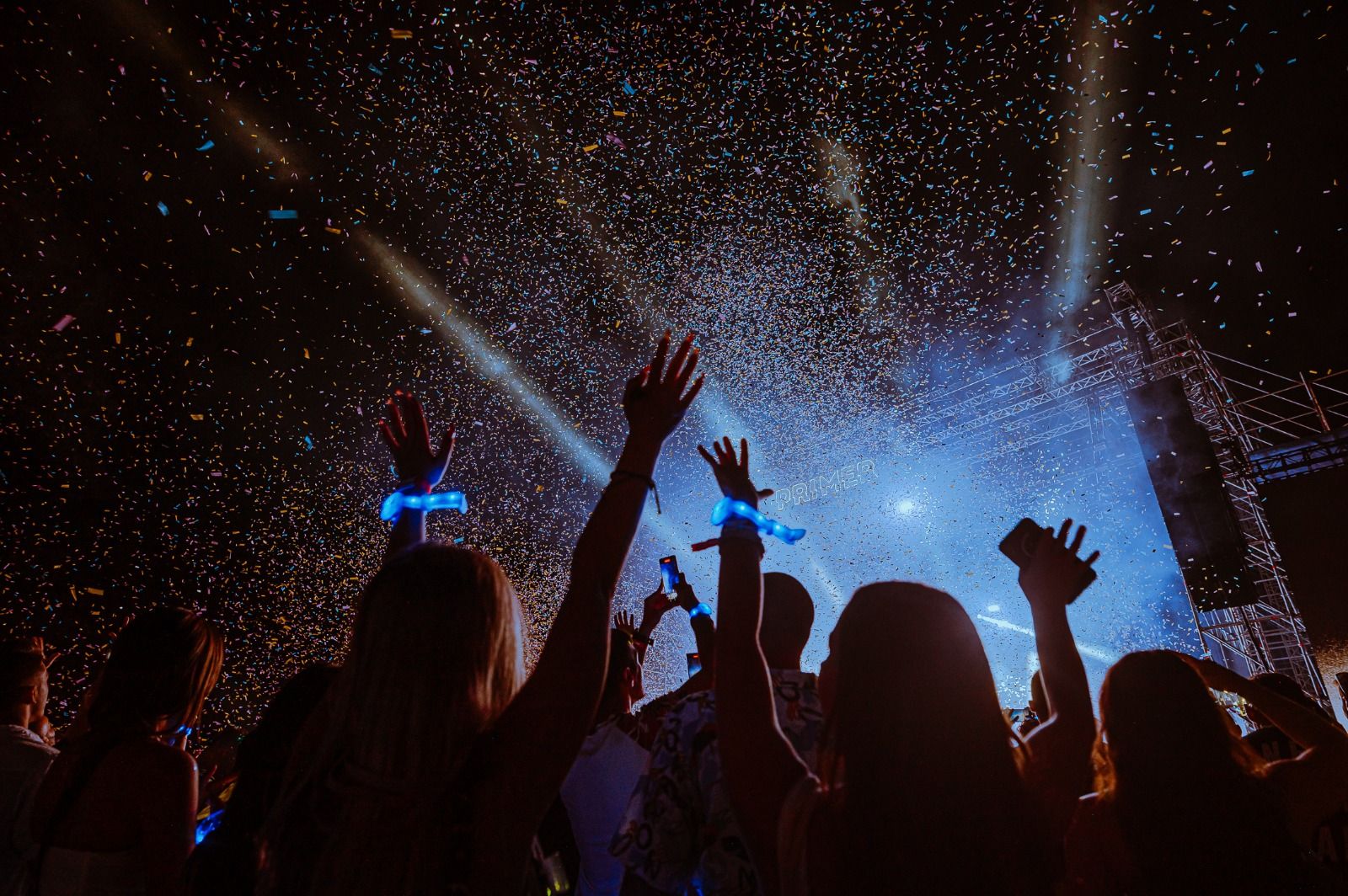
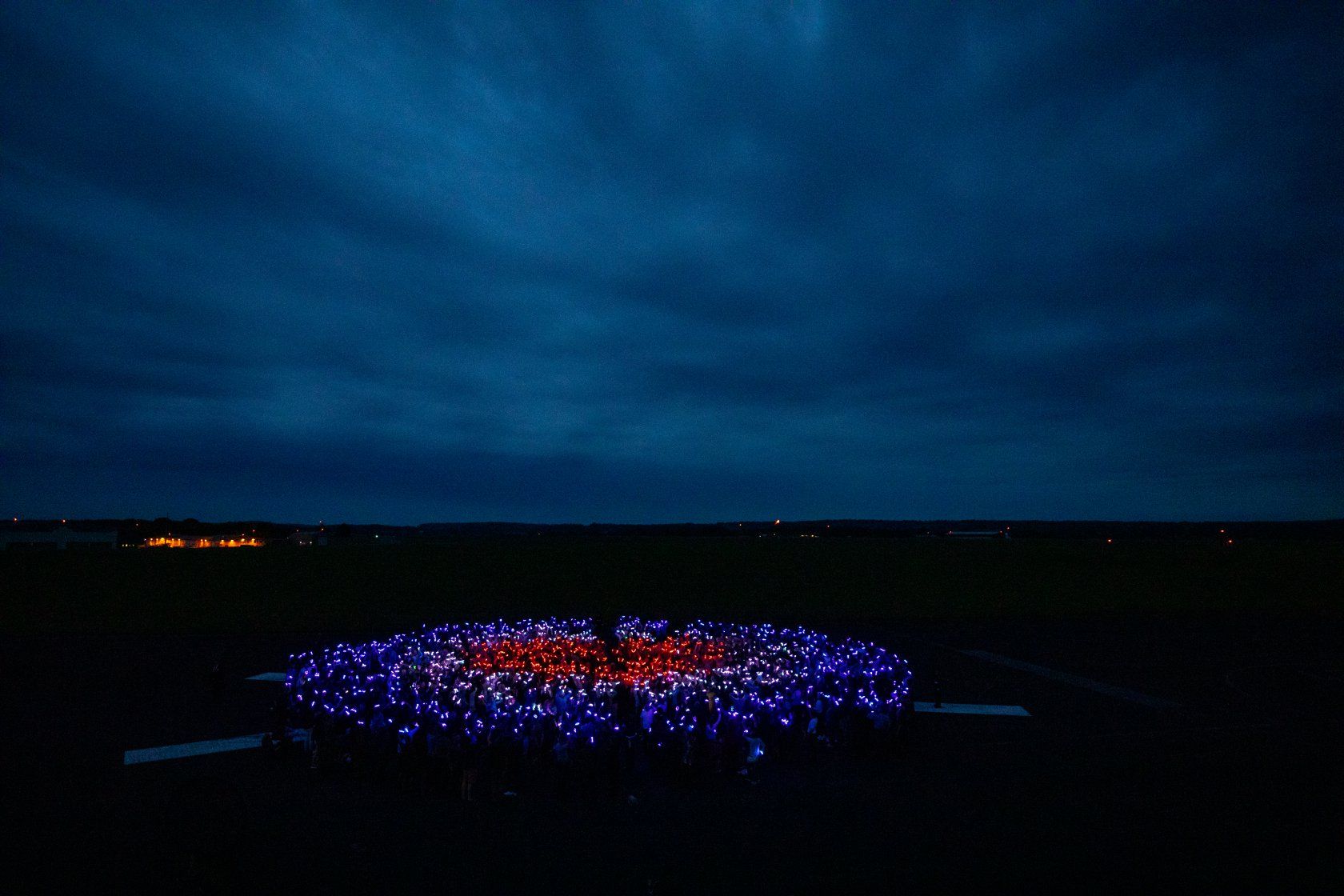
The most forward-thinking productions no longer see the audience as a passive backdrop. They see them as a living, breathing part of the set design—a human canvas. This is where Immersive Event Technology like Xylobands becomes essential for broadcast events. By turning every audience member into an individually controlled pixel, you can extend the lighting design far beyond the stage.
Consider a high-stakes TV final or a global broadcast like the Formula One 75th-anniversary show. Traditional stage lighting can create a spectacular focal point, but it often leaves the audience in relative darkness, creating a visual disconnect on screen. This is a missed opportunity.
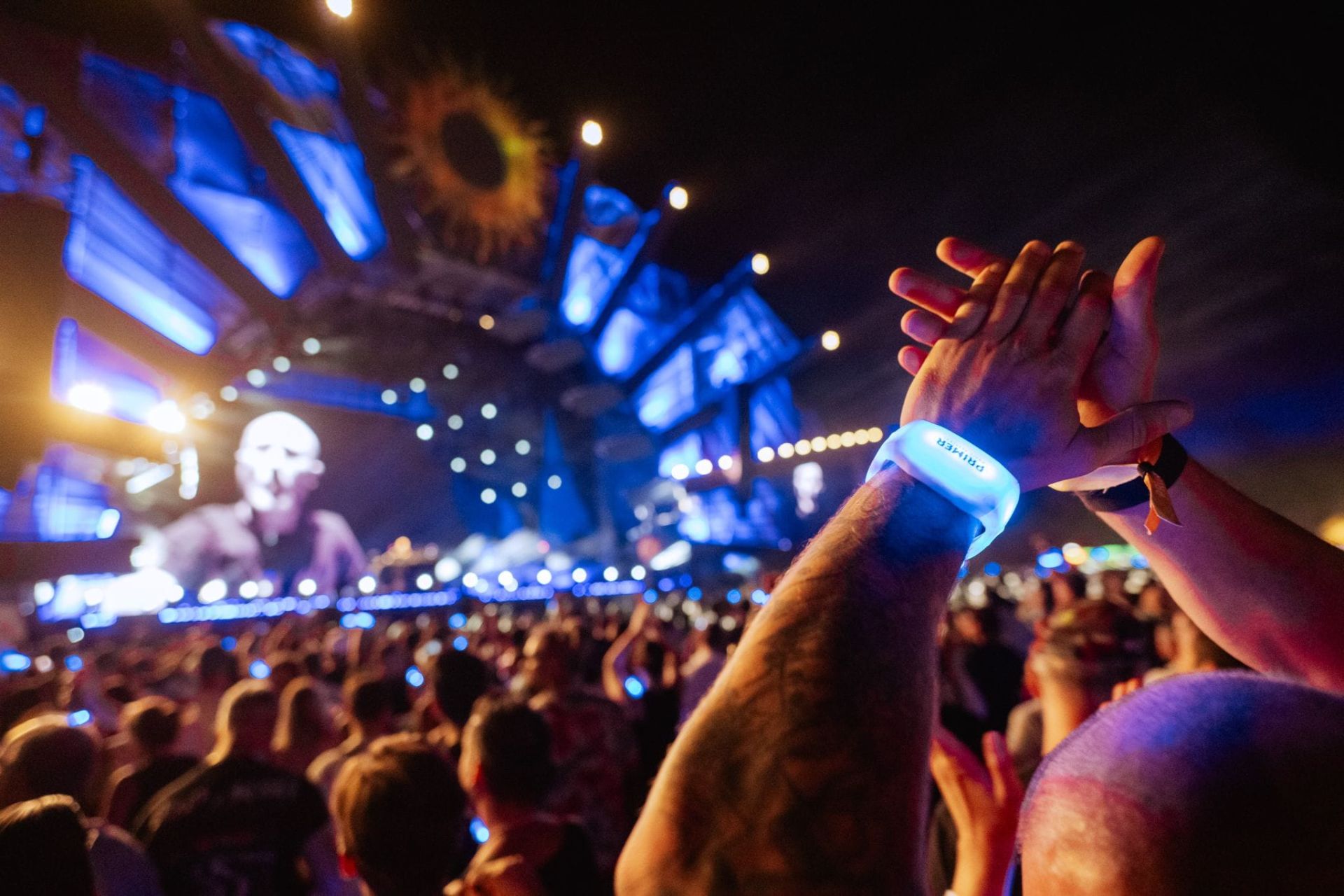
With Radio Controlled LED Wristbands, the crowd itself becomes a dynamic light source. Here’s why that’s a game-changer for broadcast:
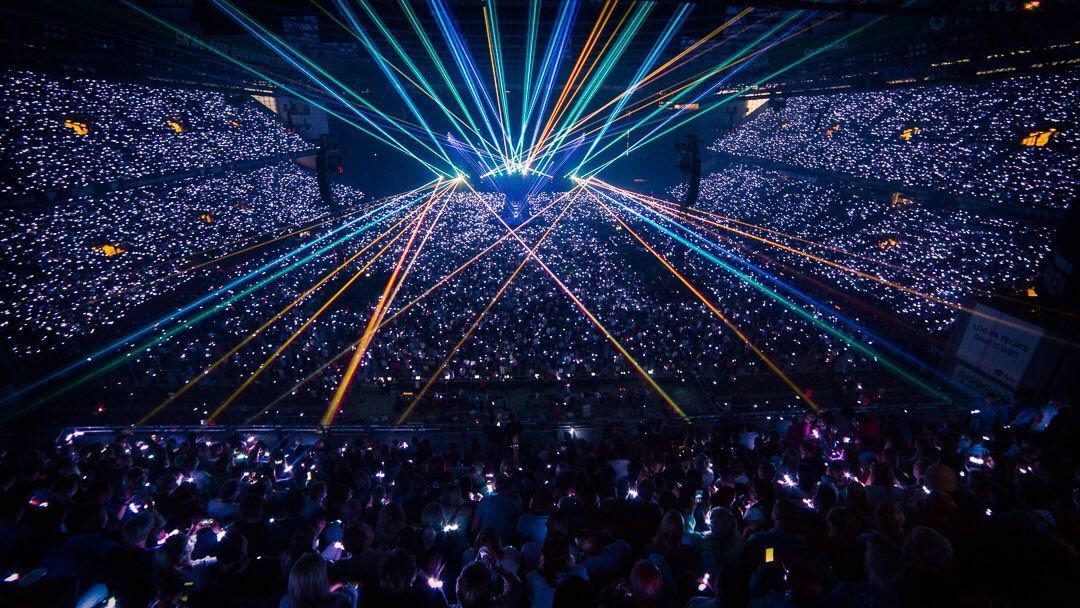
- Controlled Ambiance: Instead of unpredictable phone screens, you have a uniform, controllable light source. You can wash the entire arena in a team’s color, create pulsing effects synchronized to music, or generate complex patterns that ripple across thousands of people.
- Camera-Friendly Effects: The output of LED Bands is engineered for the camera. The colors are pure, the brightness is adjustable, and the refresh rates are designed to be flicker-free, ensuring the effect translates perfectly to the screen.
- Deepening the Narrative: For shows like The Masked Singer or Dancing With The Stars, wristbands can be used to support the story. Imagine the audience glowing in a specific color for each contestant, visually representing audience voting or reactions in real-time. It’s a powerful tool for visual storytelling.
The Technical Advantage: Beyond the Glow
The magic of creating these LED Crowd Experiences isn’t just in the wristbands themselves, but in the robust control system behind them. For a live broadcast, there is no room for error. The system must be flawless, with zero latency and perfect synchronization.
Our work with clients like ITV, the BBC, and on massive live streams like Maluma’s Medellín concert—broadcast to over 240 countries—has been built on a foundation of technical reliability. The technology is designed to integrate seamlessly with broadcast lighting and video control systems, allowing the show’s lighting director to cue audience effects with the same precision as any other fixture in the rig.
This is crucial. The audience lighting can’t be an afterthought; it must be a fully integrated component of the production. Whether it’s Custom LED Wristbands for a corporate event activation or LED Lanyards for a VIP experience, the underlying technology ensures that what the director sees in the control room is exactly what the audience at home sees on their screens.
From Spectator to Spectacle
The future of live broadcast events lies in closing the gap between the in-venue experience and the at-home one. It’s about making the viewer on their sofa feel the same collective energy as the fan in the front row. Technology that turns the audience into part of the show is the bridge that makes this possible.
When you see a crowd of 50,000 people light up in perfect unison at a Wizkid concert or a stadium of sports fans transformed into a pulsating mosaic of team colors, you are witnessing more than just a light show. You are seeing a production that understands the power of the two-screen experience.
By placing camera-friendly, wearable LED technology directly in the hands of the audience, producers can create visually compelling narratives that resonate equally in the stadium and on the screen. The crowd is no longer just watching the show; they are the show. And for the global audience watching at home, it’s a spectacle that pulls them right into the heart of the action.