The Two-Screen Experience: Mastering Light for Broadcast and Live Audiences
The Challenge of the Two-Screen Experience
In the high-stakes world of live broadcasting, event producers face a unique challenge: creating a spectacular visual experience for the in-venue audience while delivering a flawless, camera-ready show for millions watching at home. This is the two-screen imperative—a delicate balance of art and science where the needs of the camera lens are as critical as the energy of the live crowd. From global sports championships like the Davis Cup to high-energy TV game shows such as ITV’s Beat The Chasers, mastering light for two distinct audiences is the key to a successful production.
A lighting design that feels electric and immersive in a stadium can appear chaotic or poorly exposed on screen. Conversely, a setup optimised purely for broadcast can leave the in-person audience feeling disconnected, viewing the event as if through a screen rather than being part of it. The central question becomes: how do you create a unified, dynamic experience that translates seamlessly from the arena to the living room?
The Science of Camera-Ready Lighting
Broadcast cameras have specific technical requirements that differ significantly from the human eye. Key considerations for a lighting designer include:
- Color Temperature and Rendering: Cameras require consistent color temperatures to reproduce colors accurately. A mix of different light sources can create a jarring, unprofessional look on screen. The Color Rendering Index (CRI) is also crucial, as lights with a high CRI ensure that skin tones, costumes, and branding appear natural and vibrant to the broadcast audience.
- Flicker-Free Operation: Many LED fixtures have a refresh rate that, while invisible to the naked eye, can cause strobing or banding effects when filmed, particularly in slow-motion replays. Flicker-free lighting technology is non-negotiable for any professional broadcast.
- Dynamic Range and Contrast: The human eye can process a much wider dynamic range—the difference between the darkest and brightest points—than even the most advanced cameras. A lighting director must manage contrast carefully, using fill lights to soften harsh shadows and ensuring key elements, like a performer’s face or a presenter at a podium, are never lost in overly dark or bright spots.
Painting with People: The Role of Audience Lighting
In modern broadcasting, the audience is no longer a passive observer; they are an integral part of the set. Shows like The Masked Singer and major concert broadcasts for artists like Maluma and Wizkid demonstrate that a lit, engaged crowd adds immense production value. An energized audience, visibly participating in the event, creates a sense of scale and excitement that translates directly to viewers at home.
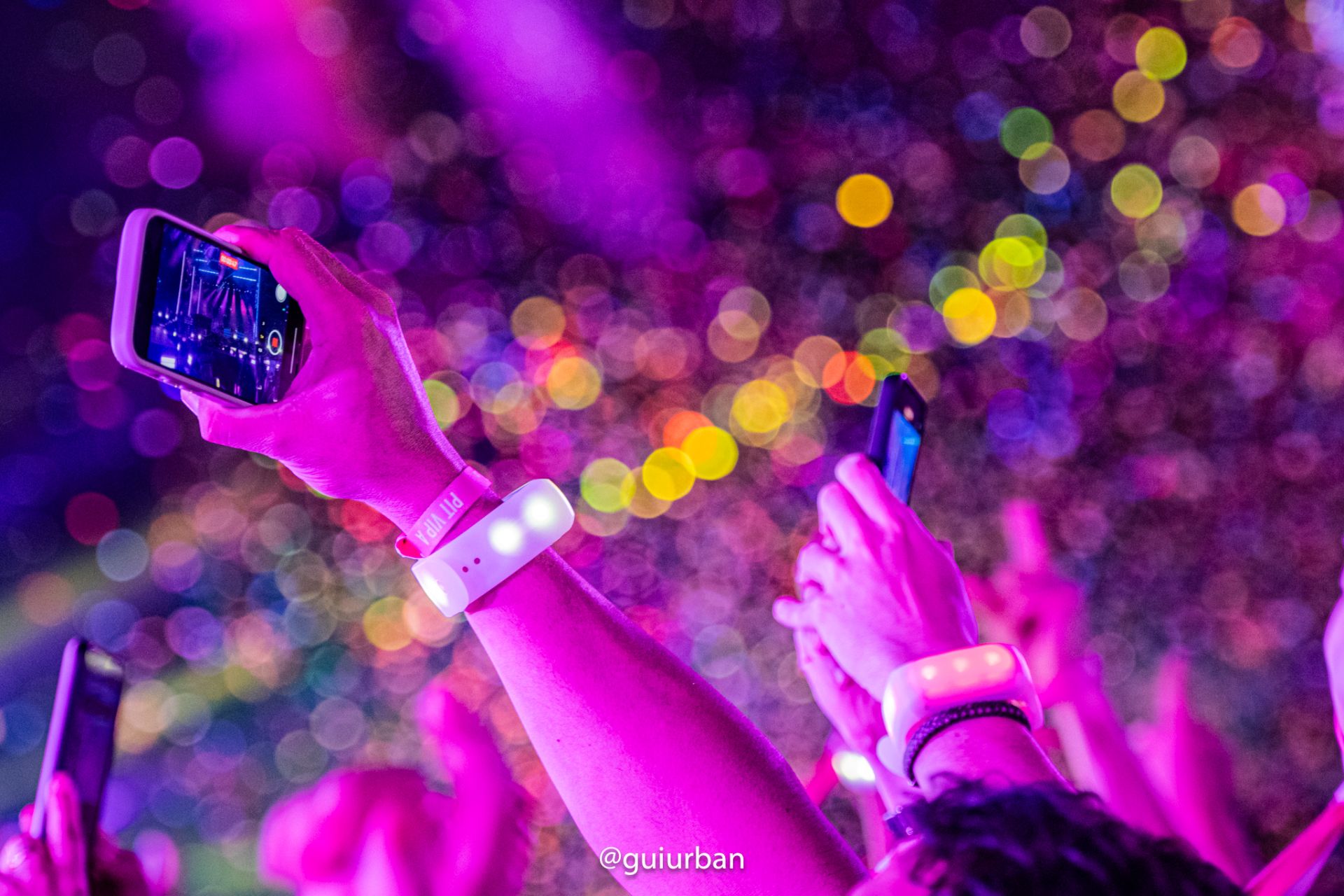
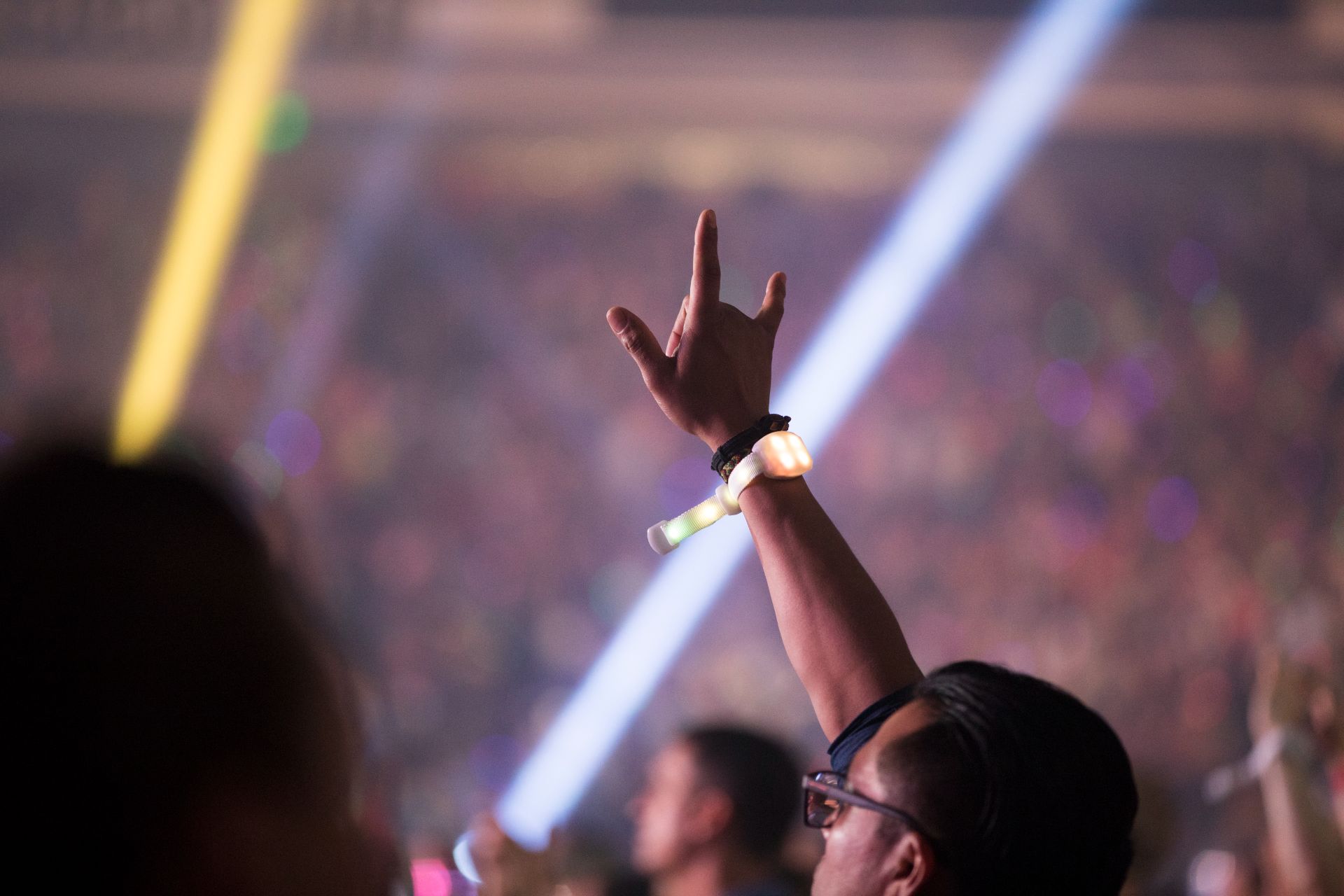
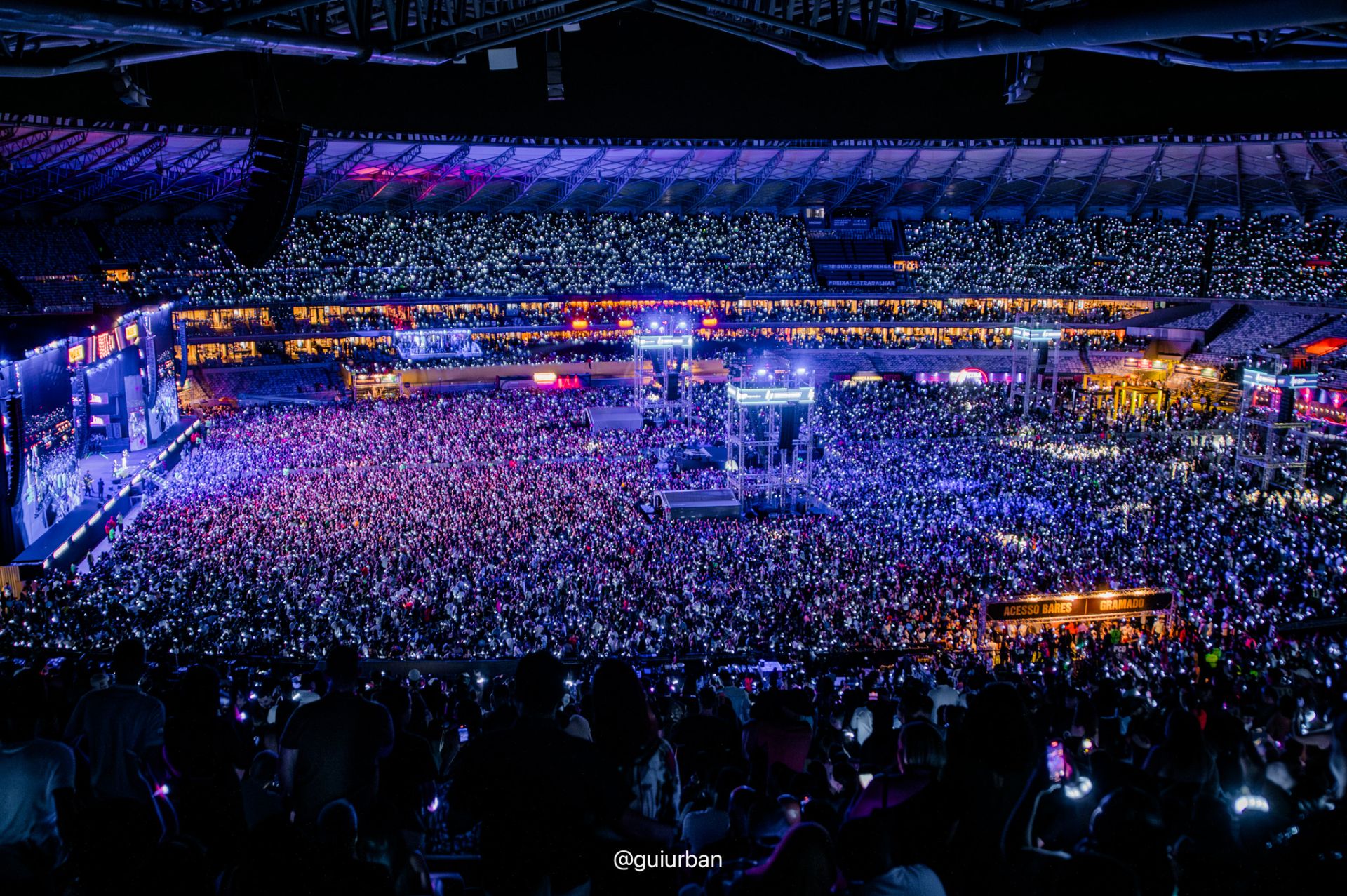
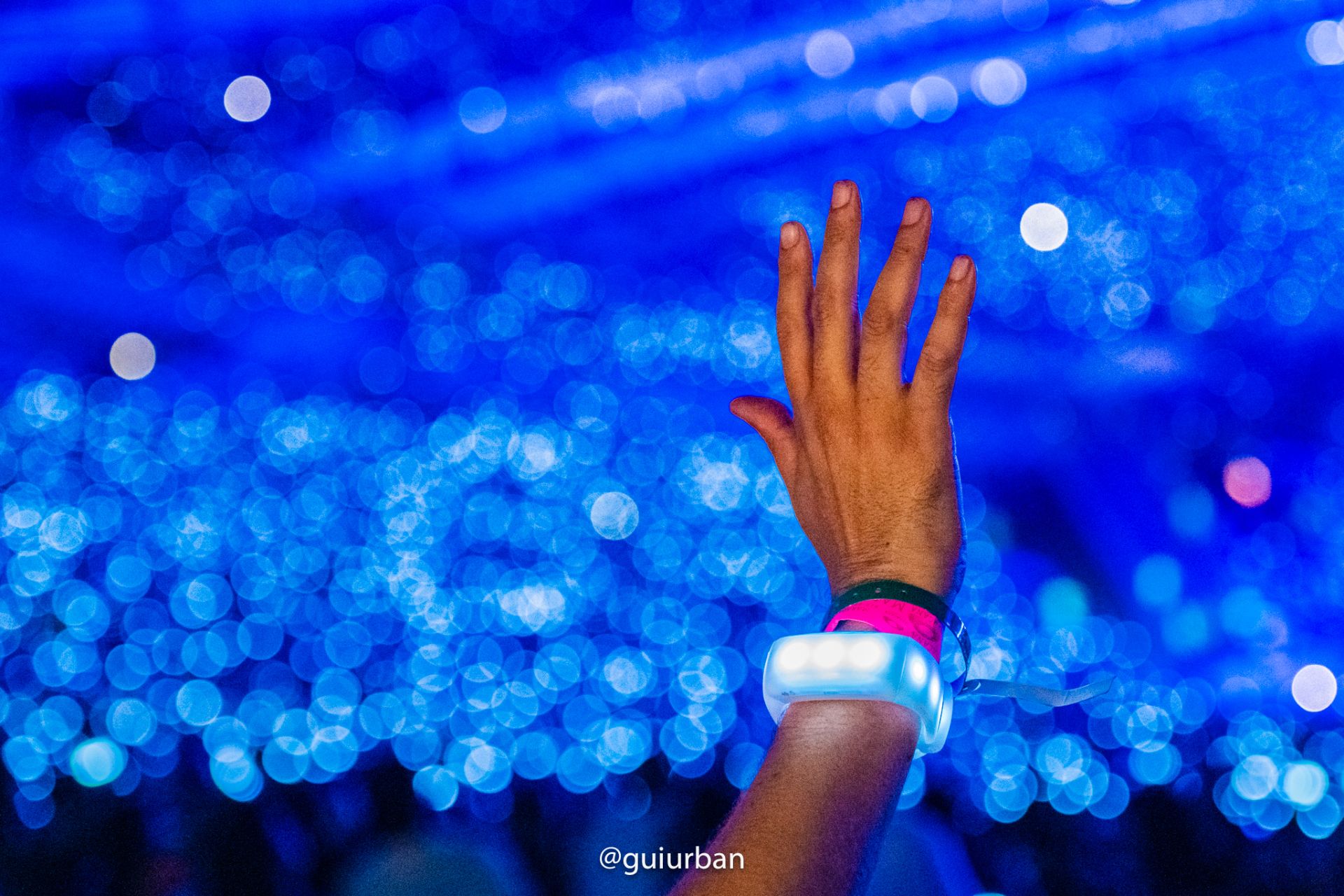
This is where wearable LED technology transforms the dynamic. By equipping the audience with radio-controlled LED wristbands or LED lanyards, producers gain a powerful tool. They can essentially paint with light across the entire venue, turning thousands of individuals into a single, cohesive canvas. This approach solves a key broadcast challenge: filling the vast, dark spaces of an arena with controlled, camera-friendly light that adds depth and vibrancy to wide shots without overwhelming the primary stage lighting.
For the 75th-anniversary celebration of Formula One, a live broadcast event, custom Xylo Pendants were used to integrate the audience directly into the show’s visual design. The crowd became a living part of the spectacle, creating immersive LED experiences that looked as good on camera as they felt in the room.
Choreographing Light for the Lens and the Live Experience
Achieving a perfect balance requires a unified creative and technical strategy. The lighting director, broadcast director, and show producer must work in lockstep.
Key Strategies for Success:
- Audience as a Dynamic Set Piece: Utilize tools like Xylobands to create synchronized, color-coded sections in the crowd. This can be used to highlight specific moments, support branding for corporate event activations, or simply create breathtaking visual compositions for aerial camera shots.
- Separation and Depth: Use backlighting and audience lighting to create a clear separation between performers, the stage, and the crowd. This adds depth to the camera shot and prevents the background from becoming a flat, uninteresting black hole.
- Controlled Ambiance: While strobe effects and rapid color changes can energize a live crowd, they can be jarring on television. The key is to program crowd lighting that provides dynamic movement and color but remains within broadcast-safe parameters. Our systems allow for precise control over brightness and pulsation, ensuring the effect enhances rather than distracts.
- Seamless Integration: The most effective productions integrate audience lighting directly into the show’s narrative. Whether syncing with a headline DJ set at a festival, the crowning moment of a sports final, or a key reveal in a TV show, the lighting should feel like a deliberate, choreographed element of the story.
The Future of Broadcast Events
As the line between live and broadcast events continues to blur, the ability to produce a captivating two-screen experience is no longer a luxury—it's a necessity. The technology is no longer just about illumination; it's about creating shared moments of connection on a global scale. By turning the audience into an active, illuminated participant, producers can deliver the visceral energy of a live event to viewers anywhere in the world.
The human element remains the most powerful component of any live show. By thoughtfully lighting the crowd, we are not just exposing them for the camera; we are amplifying their energy and making them a central character in a story shared by millions. That is the art and science of mastering the two-screen experience.