The Unblinking Eye: A New Era of Broadcast-Ready Live Events
The Camera is the New Front Row
In the world of major live events, the audience is no longer just the sea of faces in the arena; it’s the millions watching from screens across the globe. The roar of a stadium is powerful, but the unblinking eye of the broadcast camera is permanent. This shift has fundamentally changed the physics of event production, especially in lighting design. What dazzles in person can appear chaotic on screen. What feels immersive in a venue can look flat and disconnected to a viewer at home. Mastering the art of broadcast-ready lighting means designing for two audiences simultaneously: the one in the room and the one on the other side of the lens.
For event producers, tour managers, and brand marketers, this convergence of live and broadcast is the new frontier. It demands a technical approach that treats the camera not as a passive observer, but as the most important seat in the house. The goal is to translate the visceral energy of a live crowd into a compelling visual narrative that captivates a global television audience, from high-stakes game shows like ITV’s Beat The Chasers to major sporting spectacles like the Davis Cup.
Translating Atmosphere for the Lens
The core challenge lies in translation. The human eye is incredibly forgiving; it can process immense dynamic range, from deep shadows to brilliant highlights, all at once. A camera sensor cannot. It requires carefully managed light with controlled frequencies and intensities to avoid flicker, banding, and blown-out hotspots. This is where professional-grade LED event technology becomes mission-critical.
Modern broadcast cameras are highly sensitive. When lighting an audience, every element must be engineered to be camera-friendly. This involves several key considerations:
- Flicker-Free Operation: Many consumer-grade LEDs have a refresh rate that is invisible to the naked eye but creates distracting flickering or banding on camera, especially during slow-motion replays. Professional systems like Xylobands are engineered for high-frequency PWM (Pulse Width Modulation) to ensure a clean, stable image for any frame rate.
- Color Consistency and Saturation: A vibrant red to the eye can look like a noisy, oversaturated mess on camera. Broadcast-safe lighting ensures that colors are rendered accurately and beautifully, maintaining the integrity of the show’s creative vision and the legibility of sponsor branding.
- Controlled Brightness: While a blast of light can create an exciting moment in a stadium, it can overwhelm a camera sensor. The ability to precisely control the intensity of thousands of individual light sources is crucial. It allows lighting designers to build dynamic looks without creating exposure problems for the broadcast director.
The Audience as a Living Set Piece
In a broadcast environment, the audience is no longer just a collection of spectators; they are a dynamic, controllable part of the set. By turning the crowd into a canvas of light, producers can extend the visual themes of the show directly into the stands, creating a sense of scale and immersion that translates powerfully to the screen.
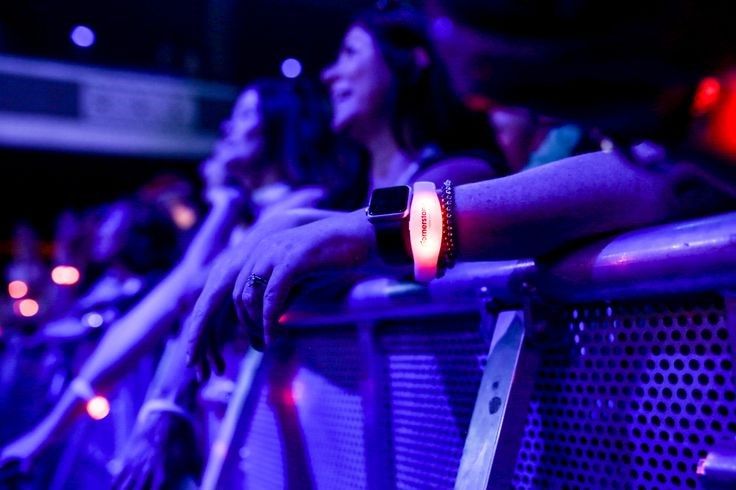
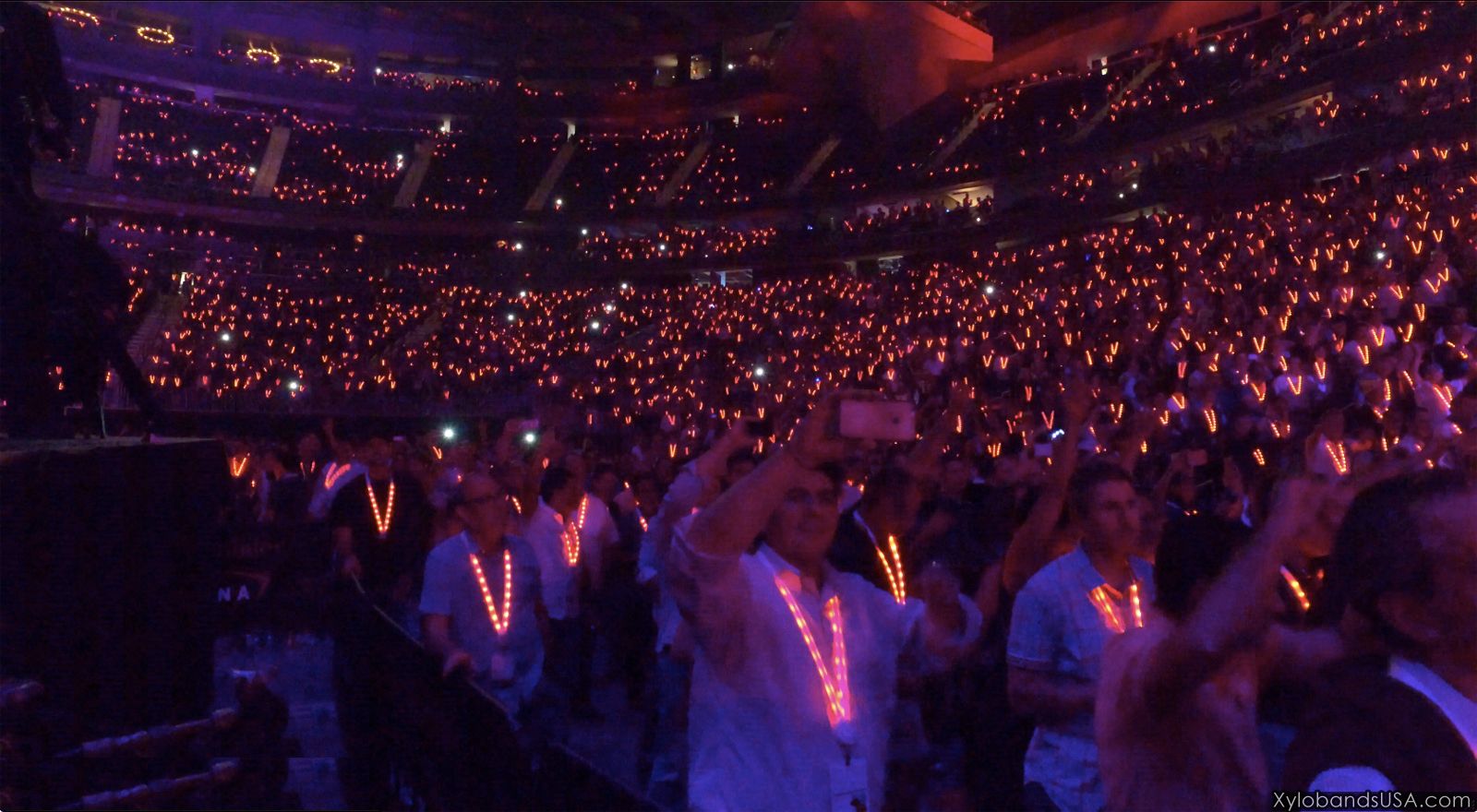
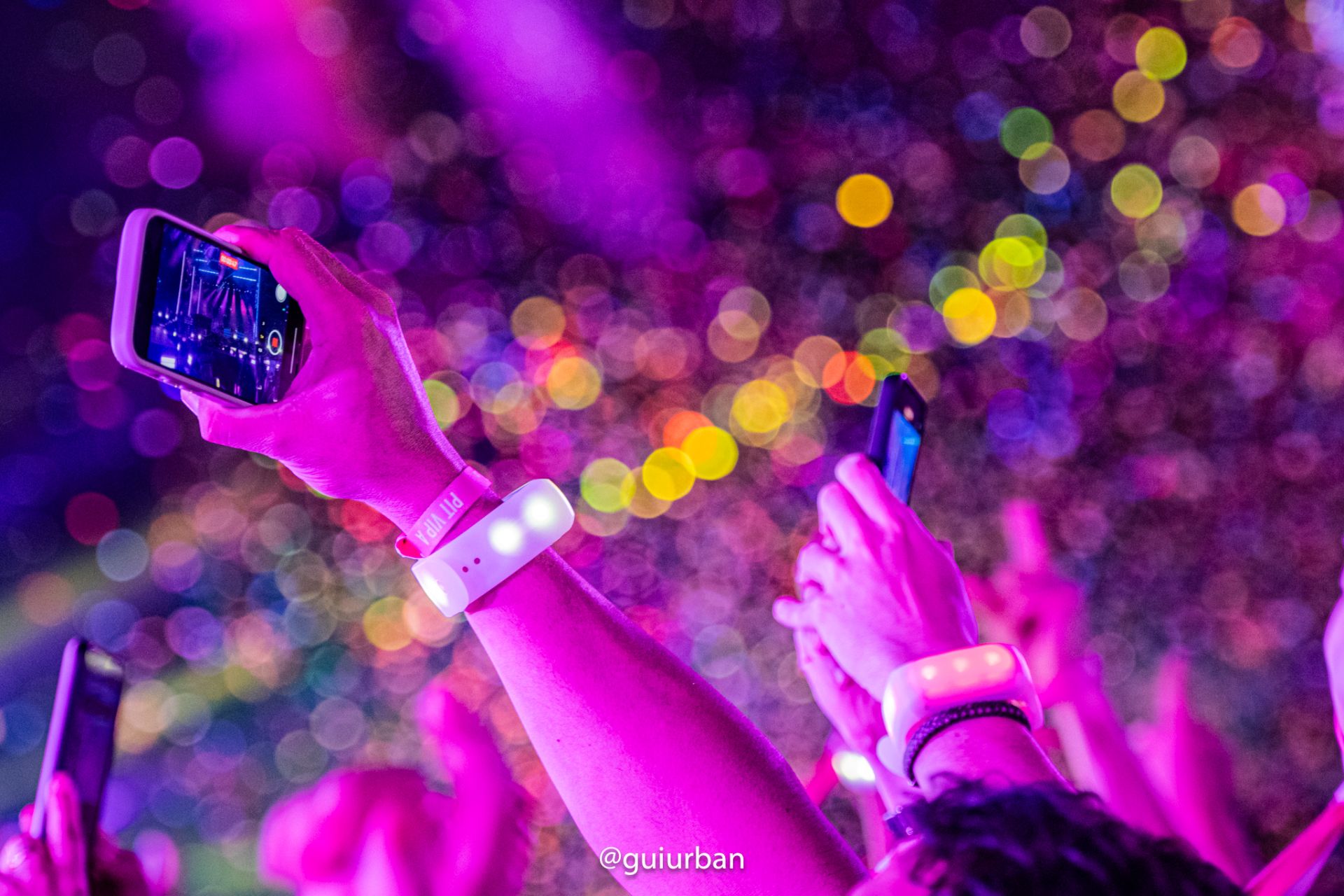
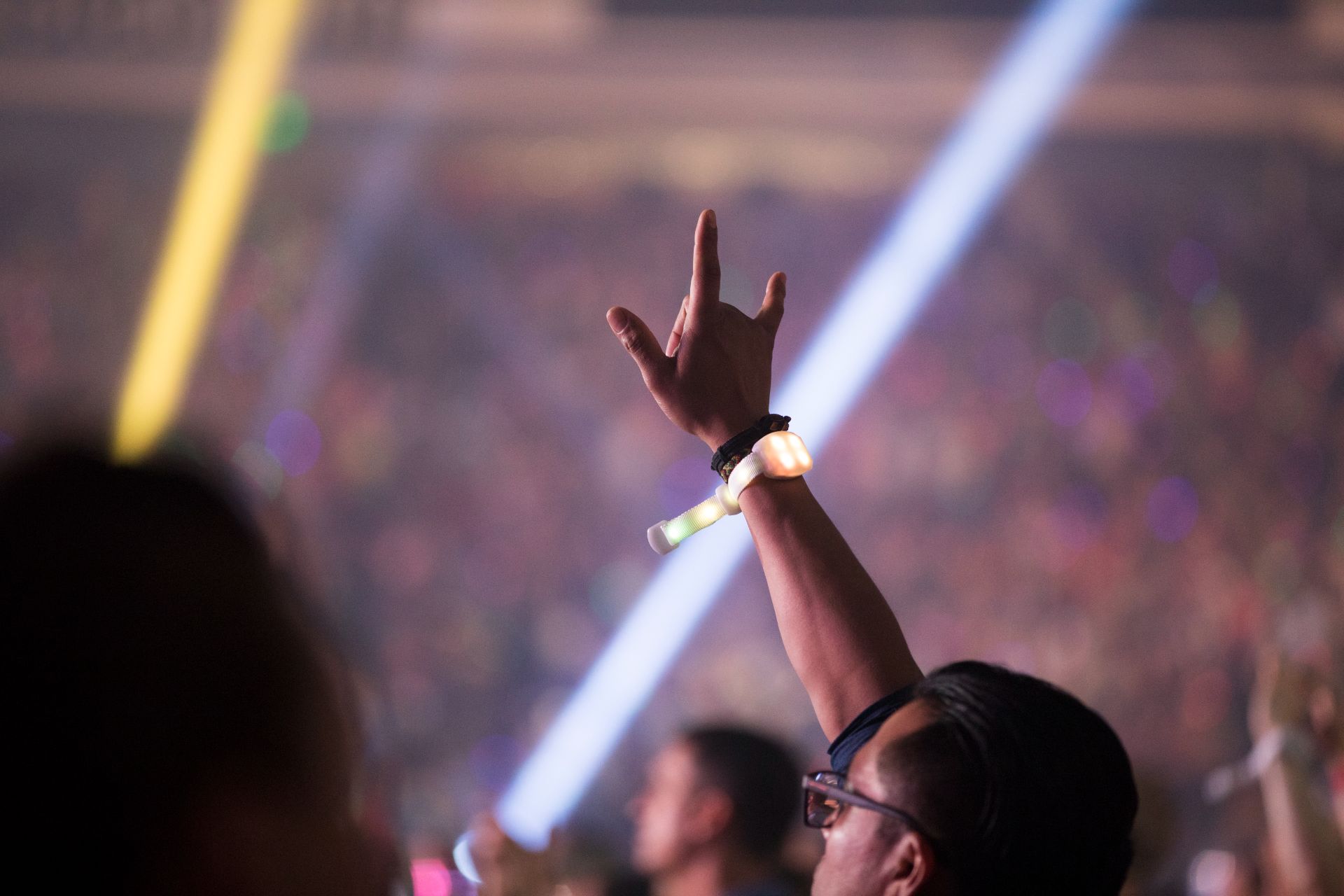
This is where wearable LED technology shines. By equipping the audience with radio-controlled LED bracelets or lanyards, you create thousands of programmable pixels. This transforms static seating blocks into a living, breathing backdrop. For a global broadcast, the effect is transformative. Instead of panning across a dark or unevenly lit crowd, cameras can capture sweeping, choreographed waves of color and energy that are perfectly synced to the action.
Look at Maluma’s 2022 Medellín En El Mapa concert, streamed live in over 240 countries. The 54,000-strong crowd, illuminated with Xylobands, wasn’t just watching the show—they were the show. The synchronised light created a spectacular visual texture for the broadcast, making viewers at home feel connected to the immense scale and energy of the event. Similarly, at the 75th-anniversary celebration for Formula One, custom LED Lanyards helped turn the entire O2 Arena into a dynamic backdrop for the live TV production, creating specific visual effects across different seating sections.
Case Study: ITV & Beat The Chasers
Studio-based television productions present their own unique set of lighting challenges. The environment is more controlled, but the scrutiny of the camera is even more intense. For a high-tension quiz show like ITV’s Beat The Chasers, the atmosphere is everything. The lighting needs to build suspense, celebrate victories, and underscore defeats, all while ensuring the contestants and hosts are perfectly lit.
By integrating Xylobands into the studio audience, the show’s producers gained a powerful tool to magnify these emotional moments. The wristbands could pulse with a tense, anxious rhythm during a difficult question or erupt in a flash of brilliant color to celebrate a win. For the broadcast, this adds a layer of visual punctuation, making the show’s dramatic arcs more compelling for the viewer at home. The crowd’s reactions become a visible, tangible part of the on-screen drama, creating a more immersive experience that holds audience attention.
Designing for the Global Stage
As live events increasingly become global media properties, designing for the lens is no longer optional. The most successful corporate event activations, music festivals, and international tours are those that deliver a stunning experience for every audience, regardless of their location.
This requires a deep understanding of broadcast technology and a commitment to using tools engineered for the job. From ensuring your LED wearables are flicker-free to designing audience lighting that complements the main stage design, every decision must be viewed through the lens of the camera. By embracing this philosophy, you don’t just create a great live show; you create a powerful and lasting piece of broadcast history. You create immersive events where the boundary between being there and watching from afar simply melts away.