The Unfolding Audience: A Brief History of Participation Tech
The Roar of the Crowd: An Ancient History
The desire to be more than a passive observer is as old as performance itself. In the grand amphitheatres of ancient Rome and Greece, the audience was a powerful, unpredictable force. Their roar of approval or disapproval was the original participation technology—a visceral, analogue system for real-time feedback that could make or break a gladiator, athlete, or playwright. The entire structure of these venues, from acoustics to sightlines, was engineered to harness this collective voice. The crowd wasn't just watching the show; their judgment *was* the show.
This raw form of participation, driven by applause, jeers, and chants, remained the primary mode of audience interaction for centuries. From the pits of Shakespearean theatres to the grand opera houses of Europe, the dynamic was the same: a physical, vocal force that performers had to command, persuade, or endure.
The Dawn of the Analogue Signal
The 20th century introduced new, more structured forms of interaction, moving from pure vocalization to simple, binary signals. Perhaps the most iconic example is the television studio "APPLAUSE" sign. This simple device was revolutionary, directing the unseen and unheard home audience by cueing the live studio crowd, shaping the emotional arc of a broadcast for millions. It was a primitive but effective form of audience choreography.
The concert hall saw its own evolution. The gesture of holding up a lit flame—first lighters, then mobile phones—became a powerful symbol of solidarity and emotional connection during ballads. It was a spontaneous, decentralized form of lighting design originating entirely from the audience. For performers, seeing that field of small lights was a tangible, visual confirmation of a shared moment, a powerful signal that the message in their music was being received. But this spontaneous gesture also highlighted a limitation: it was beautiful, but uncontrollable and chaotic.
From Analogue Flames to Digital Spectacles
The leap into the 21st century marked a paradigm shift, moving from analogue, audience-initiated gestures to centrally controlled, digitally orchestrated experiences. The question was no longer just *if* the audience could participate, but *how* their participation could be woven into the very fabric of the production itself. This is where the story of Xylobands begins.
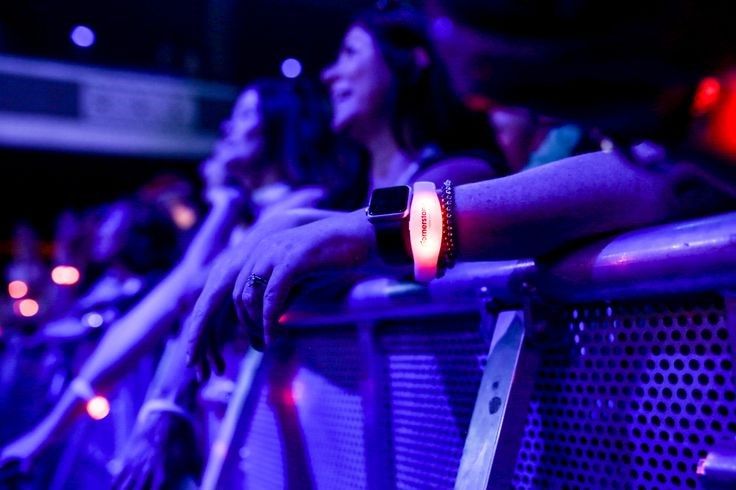
Inspired by the line "Lights will guide you home" during a Coldplay performance at Glastonbury, our founder Jason Regler envisioned a way to systematize that field of lighters. He imagined transforming the entire audience into a single, unified canvas of light. This idea led to the invention of radio-controlled LED wristbands, a new form of immersive event technology that debuted on Coldplay’s Mylo Xyloto tour in 2012.
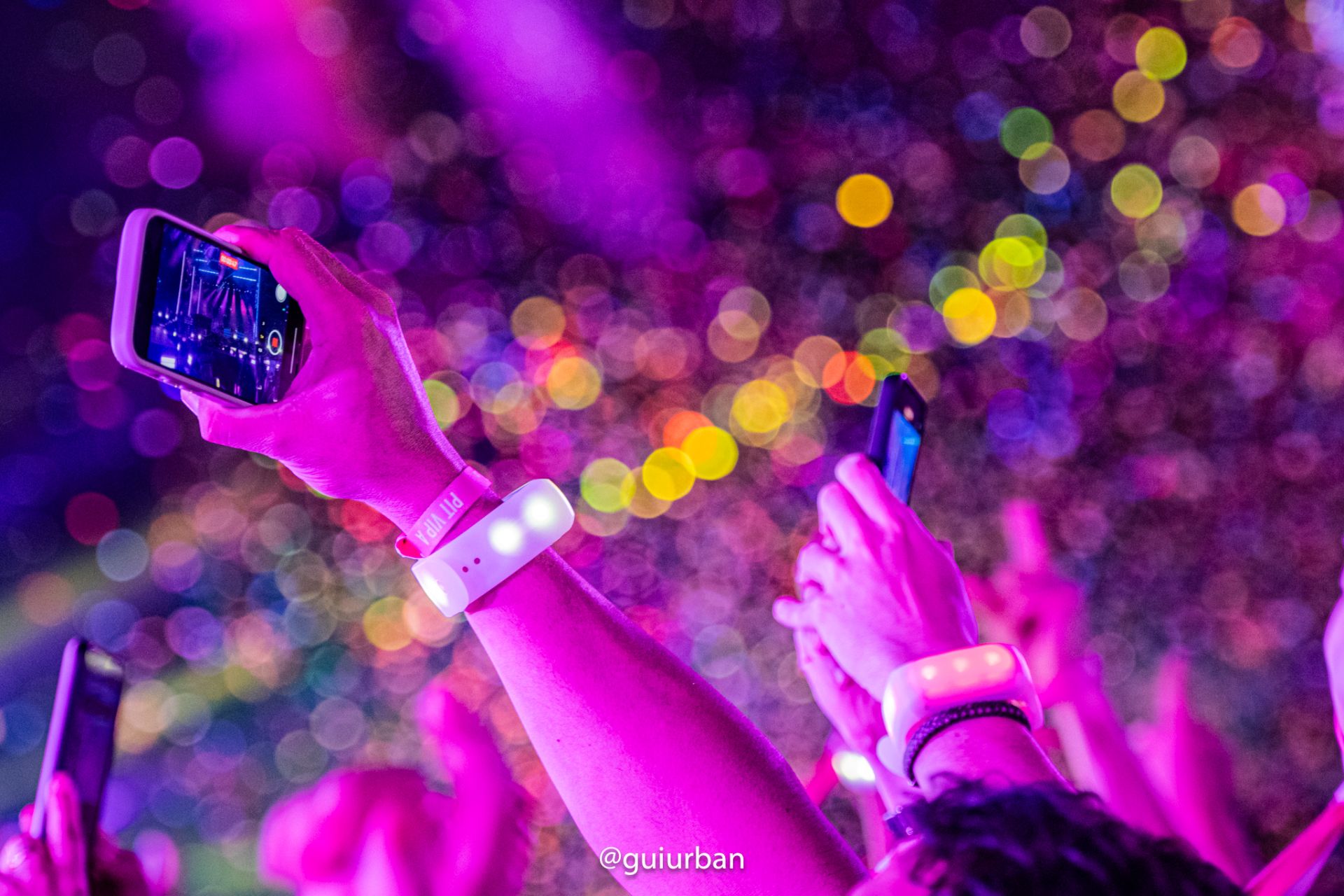
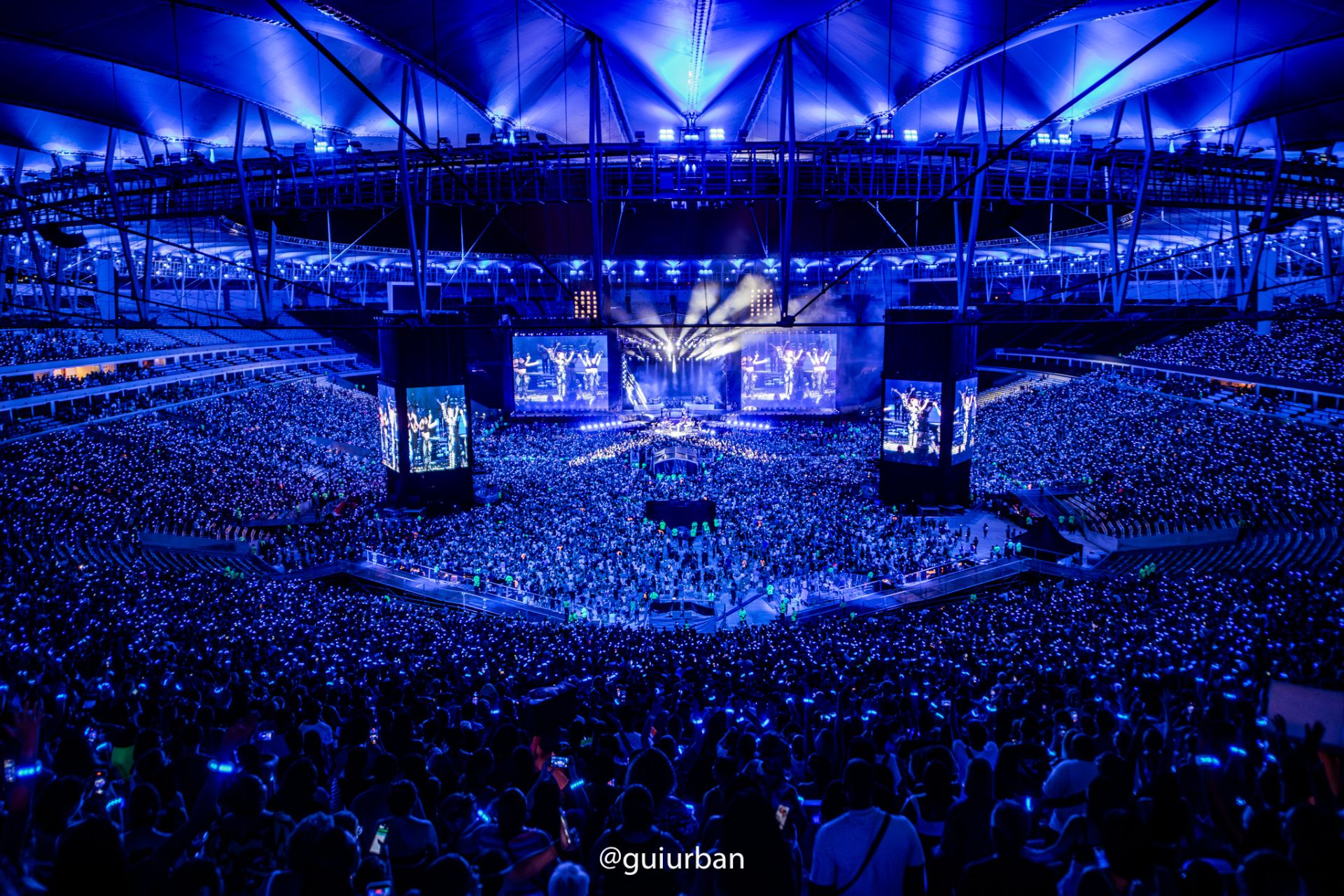
Suddenly, the creative director had a new instrument to play: the crowd itself. Each member of the audience, adorned with a Coldplay Xylo Band, became a pixel in a massive, living display. This was a fundamental change. Participation was no longer just an emotional response; it was a technical element, as controllable and impactful as lighting, sound, or video. The technology allowed for staggering displays of unity and artistry, turning tens of thousands of individuals into one cohesive, pulsating entity synchronized with the music.
The Modern Toolkit: RF, DMX, and the Programmable Crowd
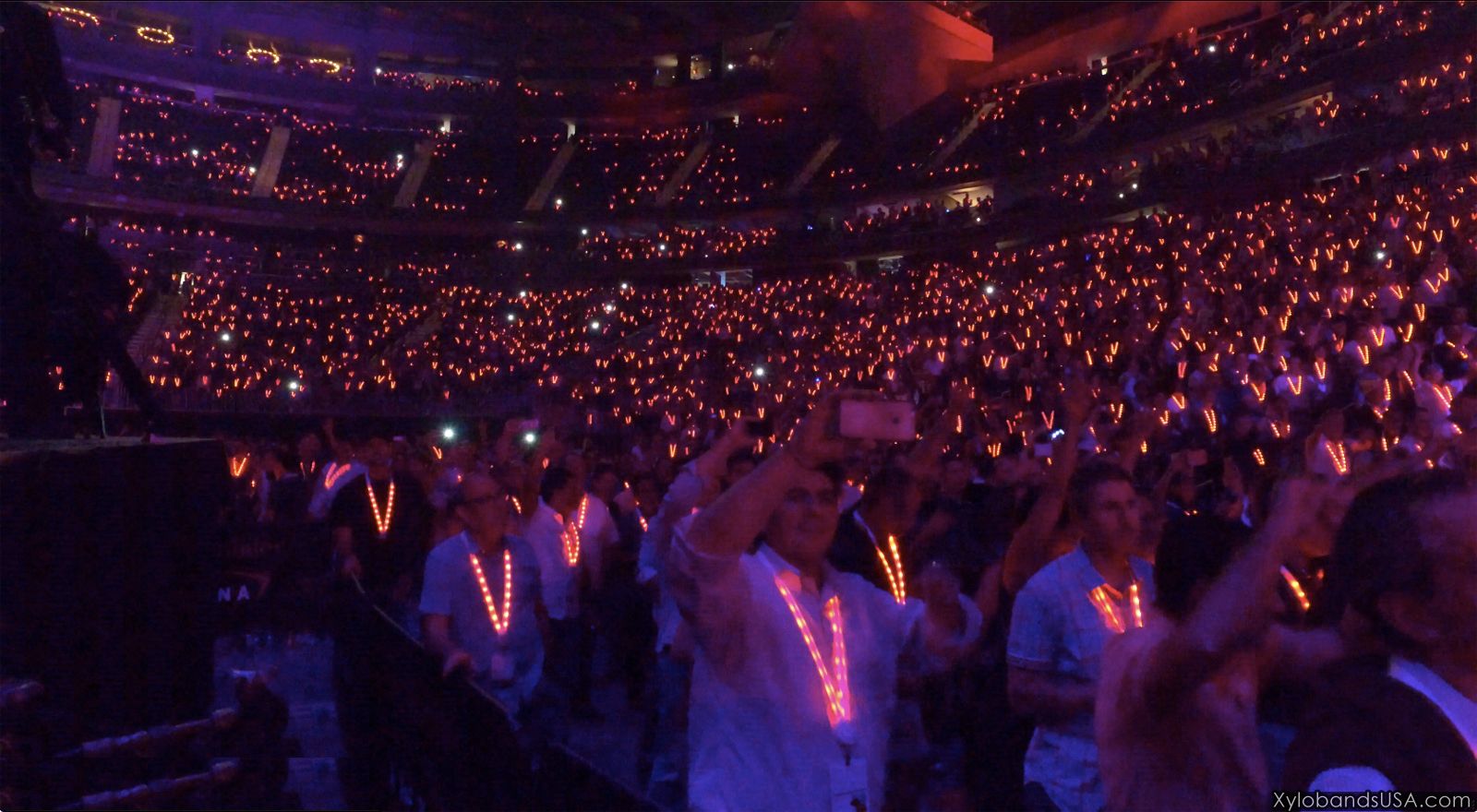
Today, the technology has evolved into a sophisticated ecosystem. Radio Controlled LED Wristbands are just one component of a much larger toolkit. We now deploy a range of wearable LED technology, including LED Lanyards and custom pendants, to create multi-layered visual designs. The control systems have also matured, integrating seamlessly with industry-standard protocols like DMX, which allows a show’s lighting designer to control the wristbands from their console just as they would any other fixture.
This integration is key. It means LED crowd experiences are no longer a standalone gimmick but a core part of the design language. At major sporting events like the Davis Cup or Formula One, we can segment the crowd by team colors, flash patterns across an entire stadium, or create moments of high drama for broadcast. For corporate clients, this technology turns passive attendees into active participants, making corporate event activations more memorable and engaging. At music festivals like Greece’s PRIMER, our festival wristbands amplify the energy of electronic music, creating a symbiotic relationship between the DJ, the music, and the crowd’s visual response.
The applications extend beyond pure spectacle. In television studios, such as for ITV’s game shows, our systems can be used for audience voting or to visually represent team success, providing instant, clear, and camera-ready feedback that enhances the drama for viewers at home.
The Future: A Two-Way Conversation
The evolution of audience participation is far from over. The journey from the roar of the Colosseum to the synchronized light of Xylobands shows a clear trajectory: a move towards more intentional, more integrated, and more artistically ambitious forms of crowd engagement.
The next frontier is interactivity—a true two-way conversation between the stage and the audience. As wearable technology becomes more sophisticated, we can envision a future where the audience’s collective energy, movement, or even biometric data could influence the show in real-time. The crowd will not just be a canvas for the artist’s vision, but a co-creator in the live experience. The unfolding audience, once a passive observer, is now an indispensable part of the spectacle, forever changing what it means to be at a live event.