The Unseen Hierarchy: A Blueprint for Leadership in Creative Production
The Architecture of Trust
In the intricate machinery of major tours, global broadcasts, and large-scale corporate event activations, leadership isn't a title; it's a currency. It's the trust that flows between a tour director and a production manager, a creative lead and a technical supplier, an artist and their entire ecosystem. The most successful productions aren't run by a single commander issuing orders from a distant perch. They are guided by an unseen hierarchy—a distributed network of authority built on expertise, mutual respect, and a shared obsession with flawless execution.
This model of leadership moves away from rigid, top-down command and toward a fluid, trust-based system. It acknowledges that the lighting director knows more about their domain than the producer, and the logistics lead understands freight and customs in a way the artist’s management doesn’t need to. True leadership in this environment is about architecting a framework where these specialists are empowered to make critical decisions within their sphere of influence, confident that their counterparts are doing the same. It’s a choreography of command, where each leader—from the front office to the loading bay—owns their part of the spectacle.
Command Intent vs. Micromanagement
The core principle of this blueprint is "command intent." A creative director’s vision for an arena show doesn’t need to specify the exact DMX channel for every fixture. Instead, the intent is communicated: "We want the encore to feel like a sunrise," or "This moment needs to feel intimate, like the artist is singing to each person individually."
This is where technical artisans and suppliers like Xylobands come in. We don't just provide LED wristbands; we translate creative intent into tangible, technical reality. When we worked on the Formula One 75th-anniversary show, the goal wasn't just to hand out LED Lanyards. The creative team wanted to segment the arena, using our custom pendants to create dynamic, team-specific lighting effects that integrated into the live broadcast. Our role was to understand that higher-level objective and execute the complex distribution and programming to make it happen. This is the essence of the trust-based model: the client communicates the *what* and the *why*, and trusts their specialist partners to deliver the *how*.
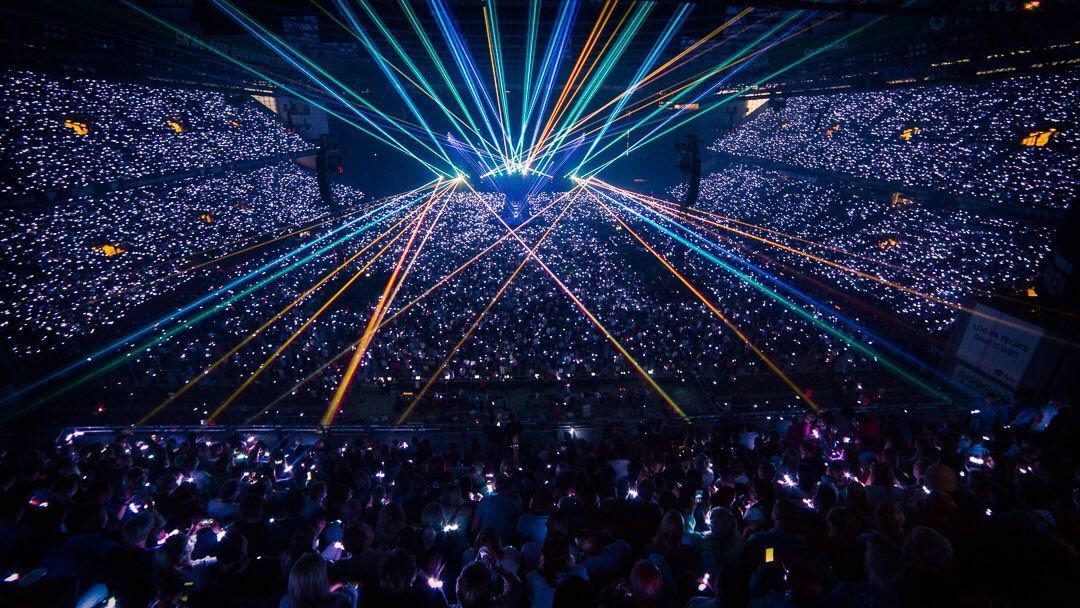
This approach stands in stark contrast to micromanagement, which stifles innovation and creates bottlenecks. When every minor decision requires top-level approval, the entire production grinds to a halt. The unseen hierarchy empowers action at the edges, fostering agility and resilience—critical attributes when a show for 50,000 people, like Maluma’s historic Medellín concert, is also being streamed live to 240 countries.
Cultivating a Culture of Extreme Ownership
For this leadership model to function, every individual and team must operate with a sense of extreme ownership. This military-derived concept means that every person is accountable for their tasks, the success of the mission, and the welfare of the team. There is no "that's not my job."
When our team deploys radio controlled LED wristbands for a festival like Primer in Greece, our ownership extends beyond simply delivering the hardware. It includes ensuring the wristbands are distributed correctly, the RF system has clear channels, and the on-site operator is perfectly in sync with the show caller and DJs. This sense of end-to-end responsibility is what prevents catastrophic failures in live production. It ensures that when Wizkid sells out The O2 for three consecutive nights, the concert wristbands don't just work; they become a seamless, reliable part of an iconic cultural moment. The same principle applies across the board, from the rigger checking their load calculations to the tour manager verifying visa paperwork.
Key Pillars of the Unseen Hierarchy:
- Clear Communication of Intent: Leaders must articulate the vision and the end goal, not the minutiae of execution.
- Radical Trust in Specialists: Hire the best, then empower them to do what they were hired for. This fosters an environment where cutting-edge immersive event technology can be deployed with confidence.
- Accountability at All Levels: Every team member owns their contribution to the mission's success or failure.
- Feedback Loops, Not Just Reporting Chains: Information must flow in all directions. The crew on the ground often has the most crucial, real-time insights.
Leadership as the Unifying Signal
Ultimately, the role of senior leadership in this model is to act as the unifying signal. They are the ones who set the tone, define the mission, and select the right partners. They create the psychological safety that allows for honest communication and rapid problem-solving. They don’t command every instrument in the orchestra, but they act as the conductor, ensuring every section plays in perfect harmony.
From a product launch for Audi to the high-pressure environment of the Davis Cup, the success of these complex productions rests not on the shoulders of one individual, but on the strength of this unseen hierarchy. It’s a leadership philosophy built for an era of increasingly sophisticated immersive events, where the spectacle is too grand and the technology too complex for any single person to master. It’s a blueprint for turning a collection of world-class specialists into a singular, unstoppable creative force.