The Human Spectrum: A New Vision for Accessible and Inclusive Live Events
The Unspoken Barrier to Collective Joy
Picture a stadium, roaring with life. Tens of thousands of fans, united by a single artist on stage, their voices and hearts beating as one. It’s a powerful image, one that our industry is built on. But within that crowd, there are unseen barriers. For millions of people with sensory sensitivities, mobility challenges, or neurodivergence, the very elements that define a spectacular live event—the dazzling lights, the deafening sound, the dense crowds—can be overwhelming and exclusionary.
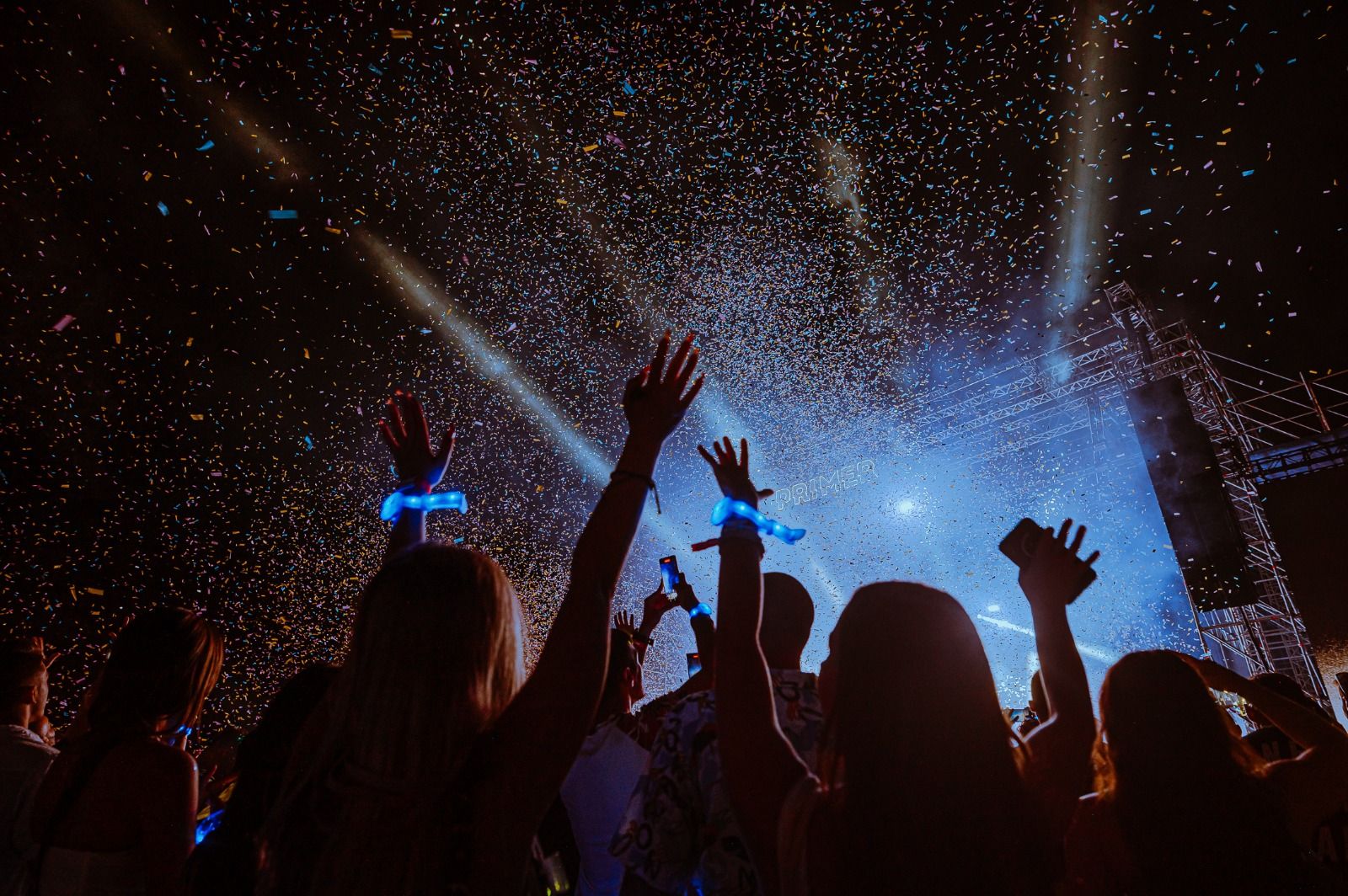
The magic of live entertainment lies in its power to create moments of profound collective joy. From the soaring choruses at a Coldplay concert to the electric atmosphere of a festival like PRIMER, these are the experiences that connect us. As event producers, designers, and artists, our mission is to craft these moments. But are we crafting them for everyone? The future of our industry depends on answering that question with a definitive “yes.” It’s time to move beyond compliance and embrace a new vision for accessible and inclusive design.
Beyond Ramps: A Sensory Approach to Accessibility
For too long, accessibility in live events has been a checklist of physical accommodations: wheelchair ramps, accessible seating, and designated parking. While these are fundamentally important, true inclusivity requires a deeper, more nuanced approach. It demands that we consider the full spectrum of human experience, particularly the sensory one.
For individuals with autism, PTSD, or sensory processing disorders, a typical concert environment can be a minefield. Sudden flashes of light, unpredictable loud noises, and the sheer volume of stimuli can trigger anxiety and sensory overload. This doesn’t mean we must dilute the power and energy of our productions. Instead, it challenges us to design with greater intention and empathy, using technology to create a more adaptable and comfortable environment.
This is where the conversation turns to control and personalization. What if an audience member could tailor their sensory experience in real time?
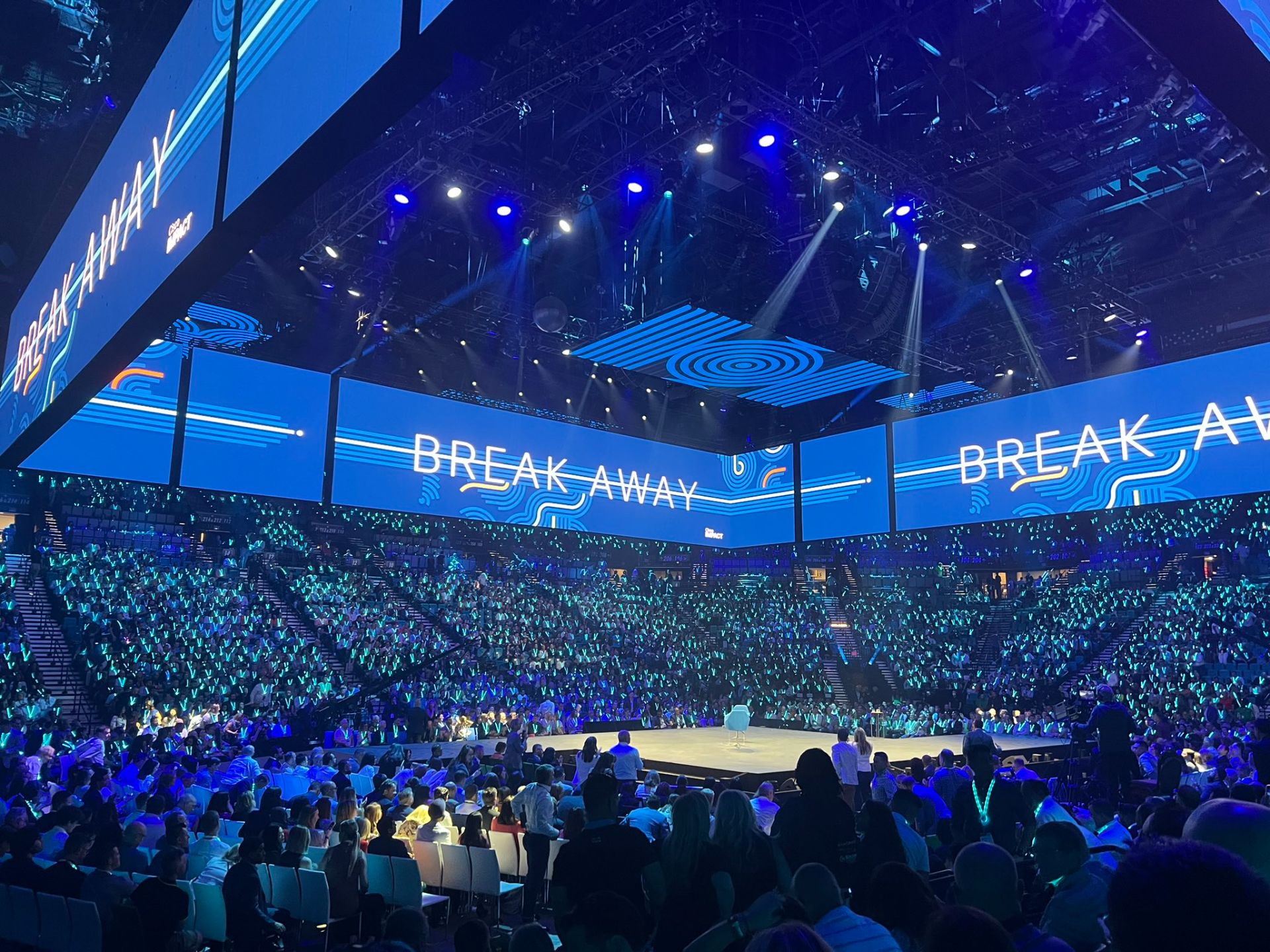
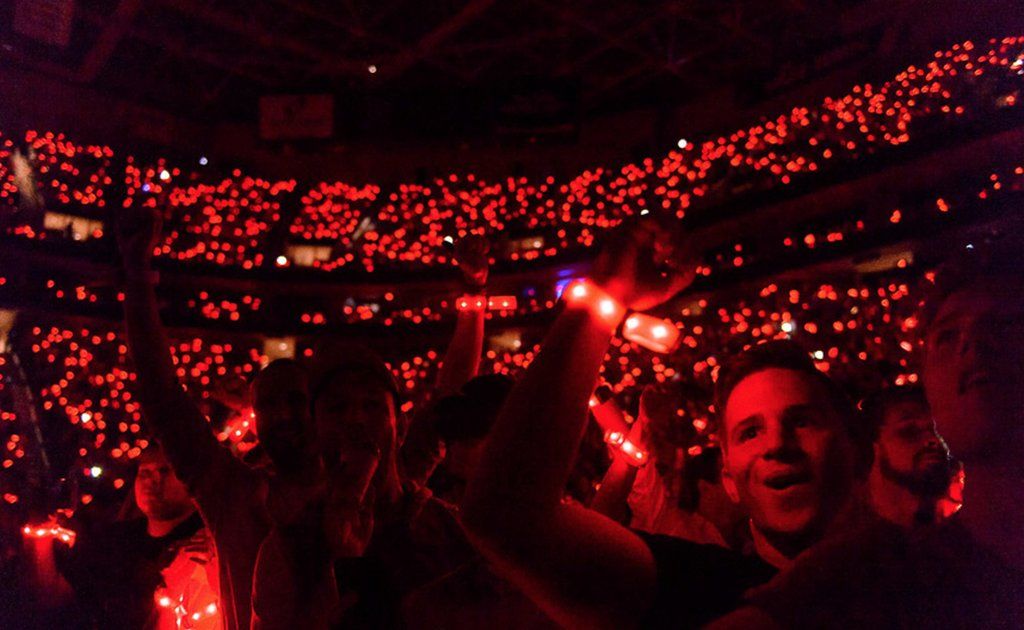
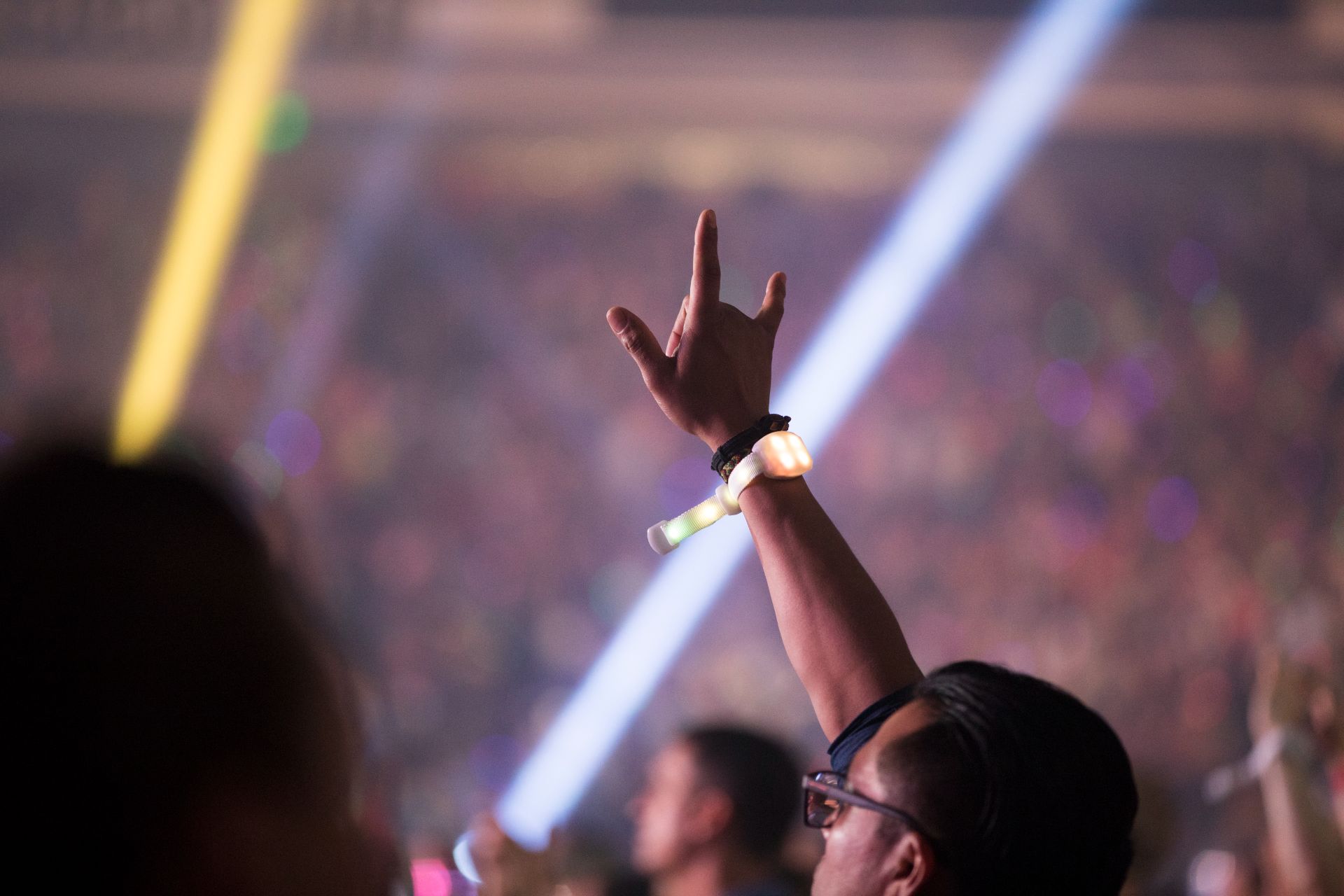
This is not a futuristic fantasy. Wearable LED technology, like the Xylobands that have become synonymous with global tours and major broadcasts, offers a compelling starting point. While these devices are masters of creating unified, large-scale visual moments, their underlying radio-controlled (RF) and infrared systems hold the potential for more personalized applications. Imagine a designated “low-sensory” section where an individual’s LED wristband emits a softer, less frenetic light pattern, or a mobile app that allows users to opt into a less intense lighting scheme. This provides a bridge, allowing everyone to feel part of the collective while respecting their individual sensory needs.
Designing for All Senses: Light, Sound, and Space
An inclusive event strategy is a multi-sensory one. It’s about creating a holistic experience where every element is considered through the lens of accessibility.
1. The Visual Environment
Strobe effects and rapid-fire lighting are staples of high-energy shows, but they can be disorienting or even dangerous for people with photosensitive epilepsy or vestibular disorders.
- Variable Intensity Zones: We can designate areas where lighting effects are programmed to be less intense. The same technology that allows us to create complex, arena-wide light shows can be used to create zones of visual calm.
- Clear Communication: Providing clear warnings about the use of strobe effects—both online before the event and on-site—allows attendees to make informed decisions and prepare themselves.
2. The Auditory Experience
Volume is not the only factor. The clarity and predictability of sound are equally important.
- Sensory Havens: Creating designated quiet spaces or “sensory rooms” where attendees can decompress from the auditory intensity is becoming a best practice at forward-thinking festivals and arenas.
- Haptic Feedback: For guests who are deaf or hard of hearing, the experience of music is not lost. Immersive event technology can translate sound into vibration. Wearable devices, or even specialized flooring, can transmit the bass and beat of the music, creating a powerful tactile experience that connects them to the performance in a different, but equally valid, way.
3. Spatial Awareness and Flow
The anxiety of navigating a dense crowd can be a significant barrier. Overcrowding, unclear signage, and confusing layouts can be particularly challenging for individuals with anxiety or mobility issues.
- Intelligent Crowd Management: Immersive event technology can play a crucial role here. Using LED lanyards or wristbands to guide attendees via color-coded pathways can improve flow and reduce congestion. For example, a post-show exit route could be illuminated in green, while restrooms are coded blue, providing clear, language-agnostic visual cues that are easy to follow in a noisy environment. This not only enhances safety but also reduces the cognitive load on all attendees.
The Business Case for Inclusive Design
Embracing inclusive design is not just a moral imperative; it’s a strategic advantage. The disability community represents a significant and largely underserved market. By creating genuinely accessible experiences, we unlock new audiences, build profound brand loyalty, and enhance our reputation as leaders in the field. When an event feels truly welcoming, it generates powerful word-of-mouth that no marketing campaign can replicate.
Moreover, designing for accessibility often leads to innovations that improve the experience for everyone. Clearer signage, better crowd flow, and more thoughtful sensory design benefit every single person in the venue, not just those with a diagnosed disability. This is the "curb-cut effect" in action: a solution designed for a specific need ultimately creates a better, more usable environment for all.
The Road Ahead: A Call for Empathy-Driven Innovation
Creating truly inclusive LED experiences requires a paradigm shift. It asks us to move from a mindset of accommodation to one of genuine welcome. It challenges us to use the powerful tools at our disposal—from radio-controlled LED wristbands to sophisticated crowd analytics—not just to create spectacle, but to create connection and comfort.
The journey begins with empathy. It involves consulting with accessibility experts and, most importantly, listening to the voices of people with disabilities. Their lived experiences are the most valuable resource we have in redesigning our events. By co-creating with this community, we can build experiences that are not just accessible, but are rich, engaging, and universally resonant.
The future of live events is one where the crowd is not a monolith, but a vibrant spectrum of individuals. Our task is to ensure that every person, regardless of their physical or neurological makeup, can find their place in the light. When we achieve that, we will have done more than sell tickets; we will have created true community.