The Architecture of Atmosphere: Lighting Design for Arenas and Stadiums
The Challenge of Scale
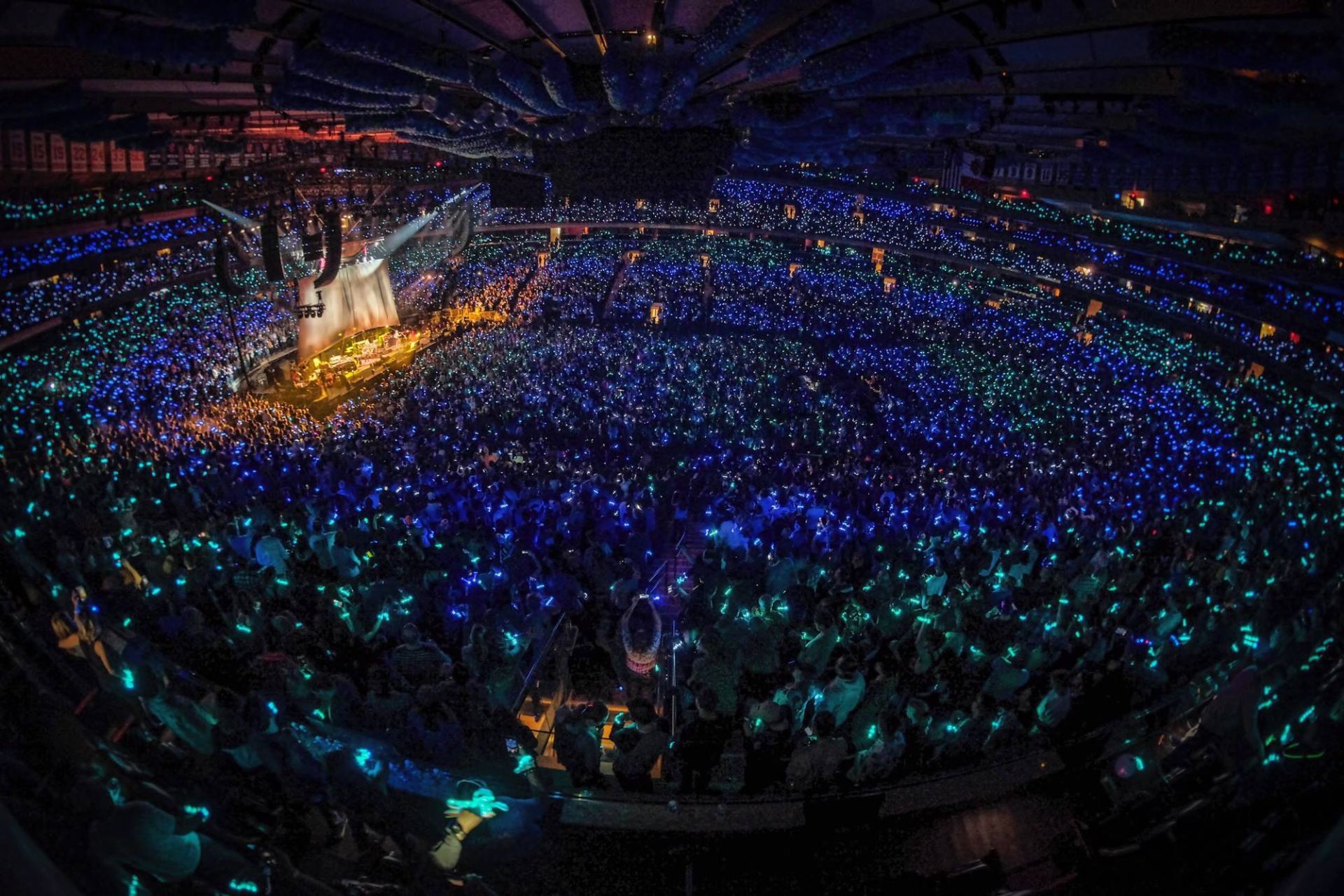
An arena tour is not just a scaled-up theatre show; it’s a different species of live experience. A stadium show is another leap entirely. When your canvas stretches to accommodate 20,000, 50,000, or even 80,000 people, the fundamental principles of lighting design are tested. The intimate wash that works in a 2,000-seat venue becomes an invisible pinprick of light in a stadium. The challenge is twofold: how do you ensure a powerful, legible visual experience for every single person, and how do you unite a vast crowd into a single, cohesive audience?
The answer lies in understanding the architecture of atmosphere. It requires a macro-view of the entire space, treating the venue not as a container for the show, but as an integral part of the set itself. Every surface—from the stage to the seats, the aisles, and the air itself—becomes a potential medium for light.
Principle 1: Painting with a Broader Brush
In-stadium lighting, the primary goal is impact over intricacy. While subtle, detailed programming has its place, the sheer scale of the environment demands bold, architectural statements. Think in terms of massive, unified blocks of colour, sweeping movements that traverse the entire length of the venue, and powerful beams that sculpt the upper echelons of the arena. These grand gestures are what read clearly from the back row.
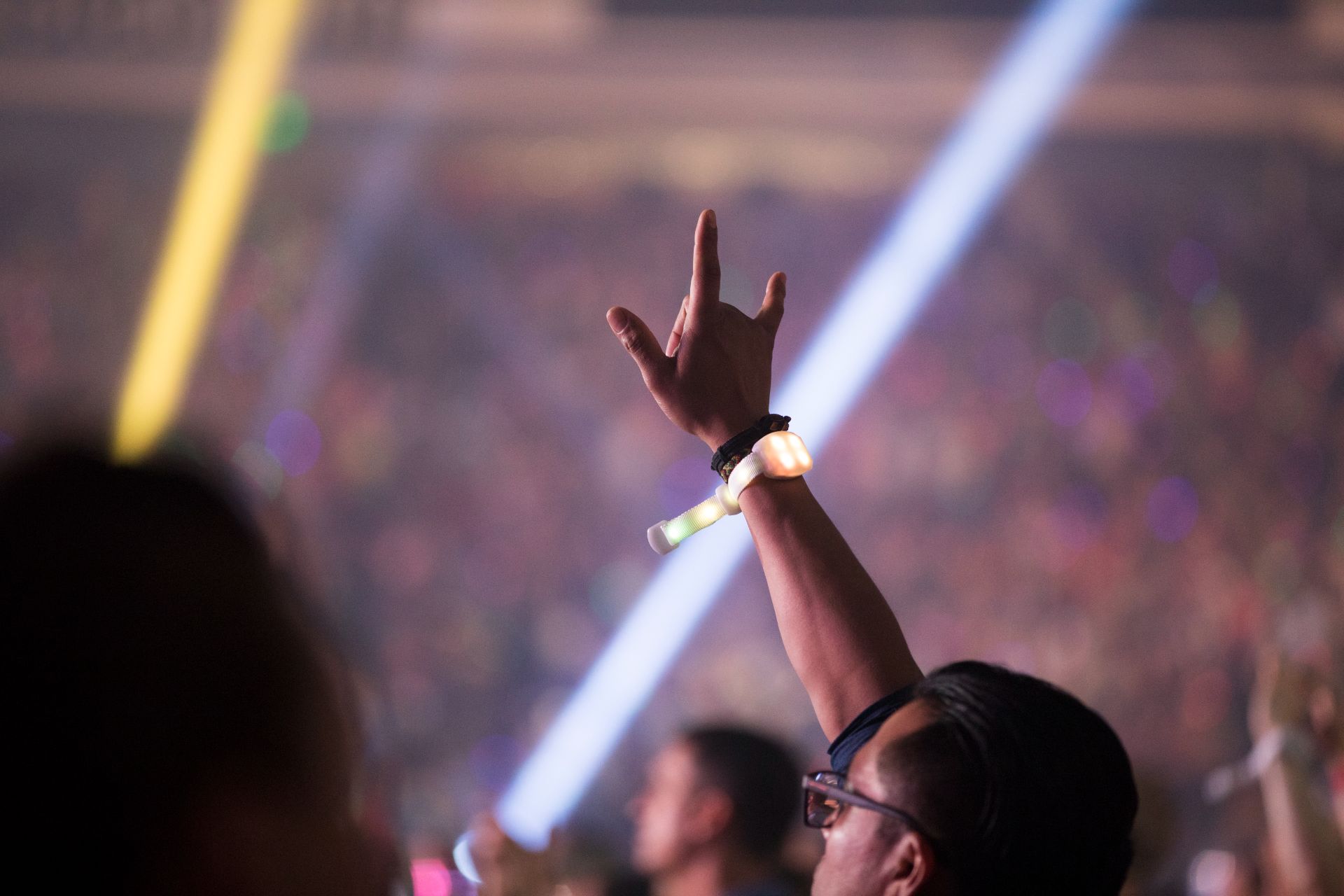
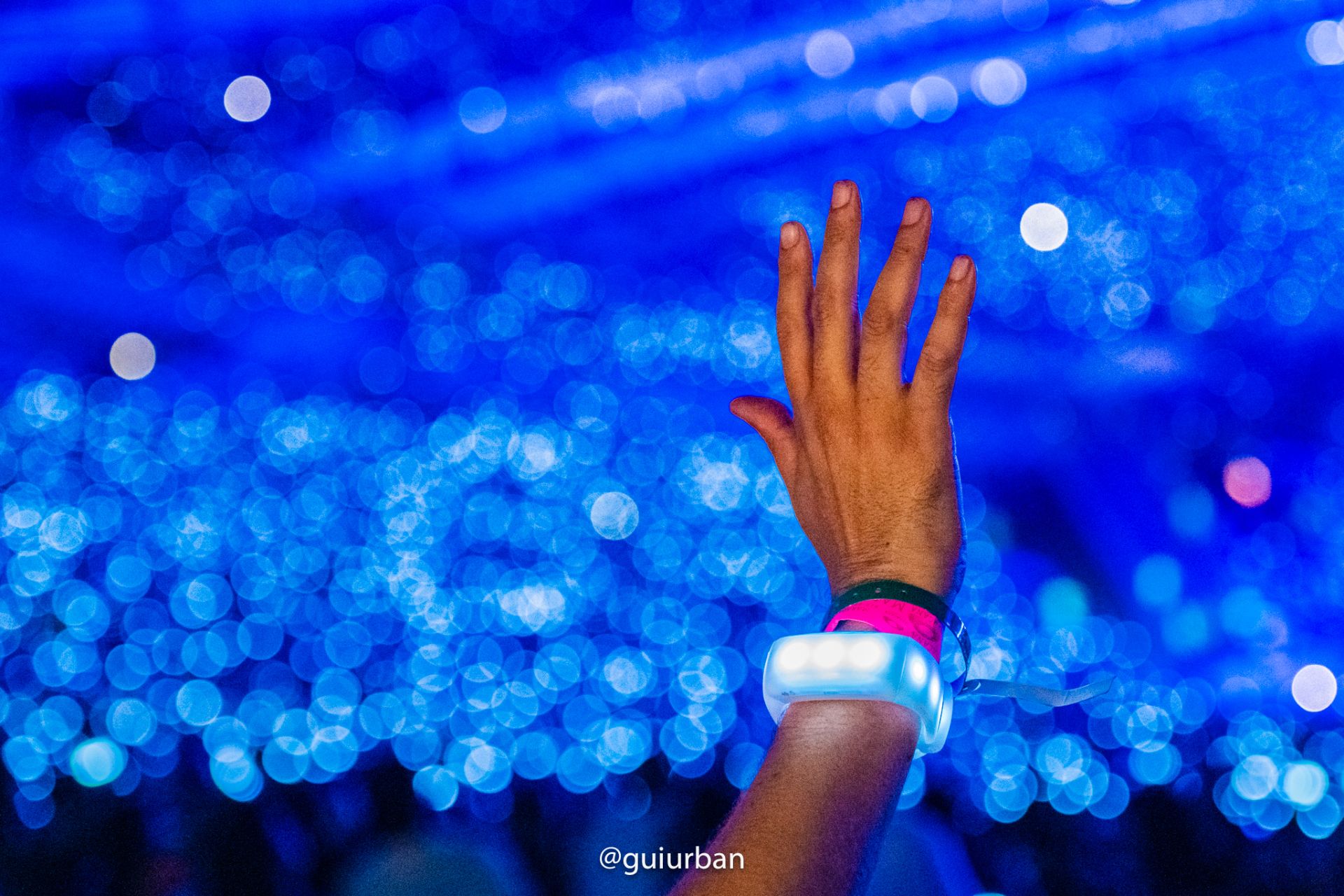
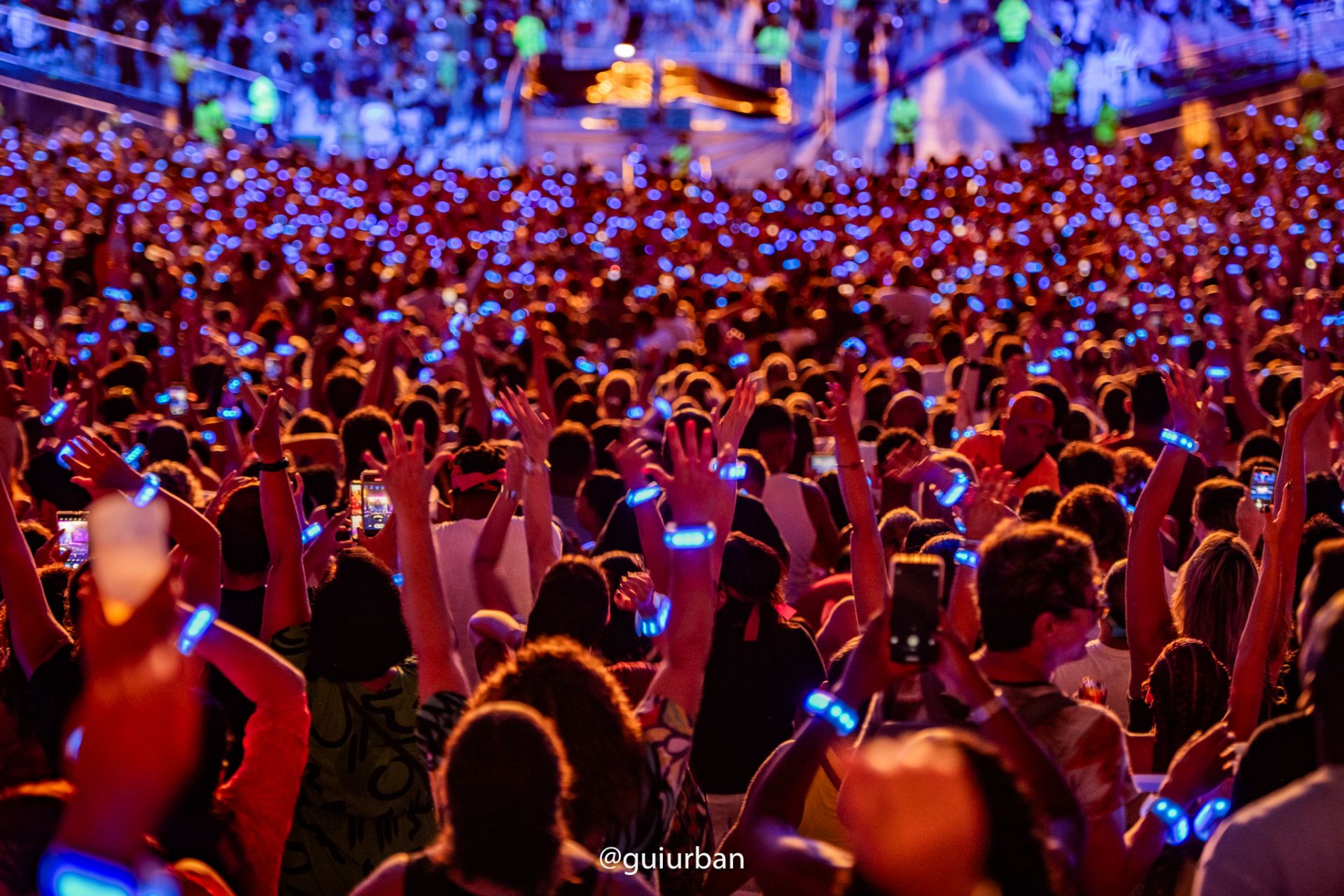
This is where the concept of the “negative space” becomes critical. The audience is no longer just a group of spectators; they are a vast, dynamic surface waiting to be activated. This is a core philosophy at Xylobands. By deploying thousands of synchronised LED wristbands, we transform the crowd from a passive observer into a living, breathing part of the lighting design. Suddenly, the most distant seats are not the worst in the house, but a vital part of a 360-degree panorama of light, as seen on massive tours for artists like Wizkid and Maluma.
Principle 2: Layering for Depth and Dynamics
While broad strokes are essential, a truly compelling design is built in layers. A typical stadium rig can be broken down into three key layers:
- The Key Light: This is the performers’ light—the follow spots and front washes that ensure the artists are clearly visible. In an arena, this requires powerful fixtures and precise operation to cut through the ambient wash of the stage rig.
- The Performance Rig: This is the architecture of the stage itself—the trusses, moving heads, video walls, and effects that create the immediate world of the performance. This layer provides the detailed, fast-paced cues and eye candy that are most impactful for the front sections and broadcast cameras.
- The Audience Light: This is the layer that bridges the gap between the stage and the back of the room. It includes traditional blinders and house lighting, but its most potent form is modern wearable LED technology. By incorporating the crowd into the design, you create a sense of shared experience and scale that no stage rig alone can achieve. This is the essence of creating truly immersive events.
These layers must work in harmony. A perfectly timed strobe effect on stage can be amplified tenfold when it is echoed by 50,000 concert wristbands flashing in perfect sync across the stadium.
Principle 3: Designing for the Camera’s Eye
The camera is the most important audience member in the room.
In the modern touring era, every major show is a broadcast. Whether for a live stream, a documentary, or social media, the performance must be as compelling on a screen as it is in person. This adds another dimension to lighting design. What reads as a powerful silhouette in the room might look like a murky mess on camera. What feels like an immersive, dark moment in the arena can become a flat, unengaging shot on a global feed.
Lighting for the lens requires careful consideration of colour temperature, contrast ratios, and frame composition. It often means working hand-in-hand with the broadcast director to ensure key moments are captured effectively. It also means seeing the audience as a critical part of the broadcast backdrop. A dark, anonymous crowd is a missed opportunity. A crowd alive with light provides depth, scale, and energy, turning every wide shot into a spectacular visual statement. This is why radio controlled LED wristbands have become indispensable for major televised events, from the halftime show to award ceremonies and global sporting events like the Davis Cup.
The Unifying Power of Light
Ultimately, the goal of any large-scale lighting design is to foster a sense of connection—connection to the artist, to the music, and to everyone else sharing the experience. In a venue that can feel isolating due to its sheer size, light is the most powerful tool for unification.
By treating the entire stadium as a canvas and extending the design out into the audience, you break down the barrier between the performer and the fan. You create a shared visual language that everyone understands, regardless of their distance from the stage. From the first beat to the final encore, a well-executed lighting design transforms tens of thousands of individuals into a single, sentient entity, bound together by sound and light. It’s the art of turning a massive space into a surprisingly intimate room, creating moments of collective wonder that define the magic of live music on its grandest scale.