The Broadcast Balancing Act: Lighting for the Camera and the Crowd
The Two Audiences: In the Room and On the Screen
Every live event has an audience. But when that event is broadcast, the audience isn’t just the thousands of cheering fans in the arena; it’s also the millions watching from their screens around the world. This creates a fundamental challenge for event producers and lighting designers: how do you create a spectacular, immersive experience for the people in the room while also delivering a perfectly framed, visually stunning product for the cameras?
This is the broadcast balancing act. It’s an art and a science that requires a deep understanding of camera sensors, color temperatures, and the psychology of both the live and at-home viewer. Get it right, and you create a shared, iconic moment. Get it wrong, and one audience’s experience suffers at the expense of the other. The lighting that feels electric and immersive in a stadium can appear blown out or chaotic on a television screen. Conversely, lighting optimized purely for broadcast can leave the in-venue atmosphere feeling sterile and distant.
The Challenge of the Sensor: Human Eye vs. Camera Lens
The core of the challenge lies in the difference between the human eye and the camera sensor. Our eyes are marvels of biological engineering, capable of processing an incredible dynamic range—the difference between the darkest shadows and the brightest highlights. A camera sensor, while technologically advanced, has a much narrower dynamic range. Bright lights that look spectacular in person can easily "clip" on camera, turning into distracting, formless white patches that lose all detail.
This is particularly true for modern live productions, which rely heavily on vast LED screens, high-intensity moving lights, and pyrotechnics. For the broadcast director, these elements present a constant battle against overexposure. But there's another critical layer: the audience itself. A dark, passive crowd can look like a void on camera, creating a dead space that kills the energy of the broadcast. The goal is to make the audience a visible, vibrant part of the show, which is where wearable LED technology comes into play.
Painting the Crowd into the Picture
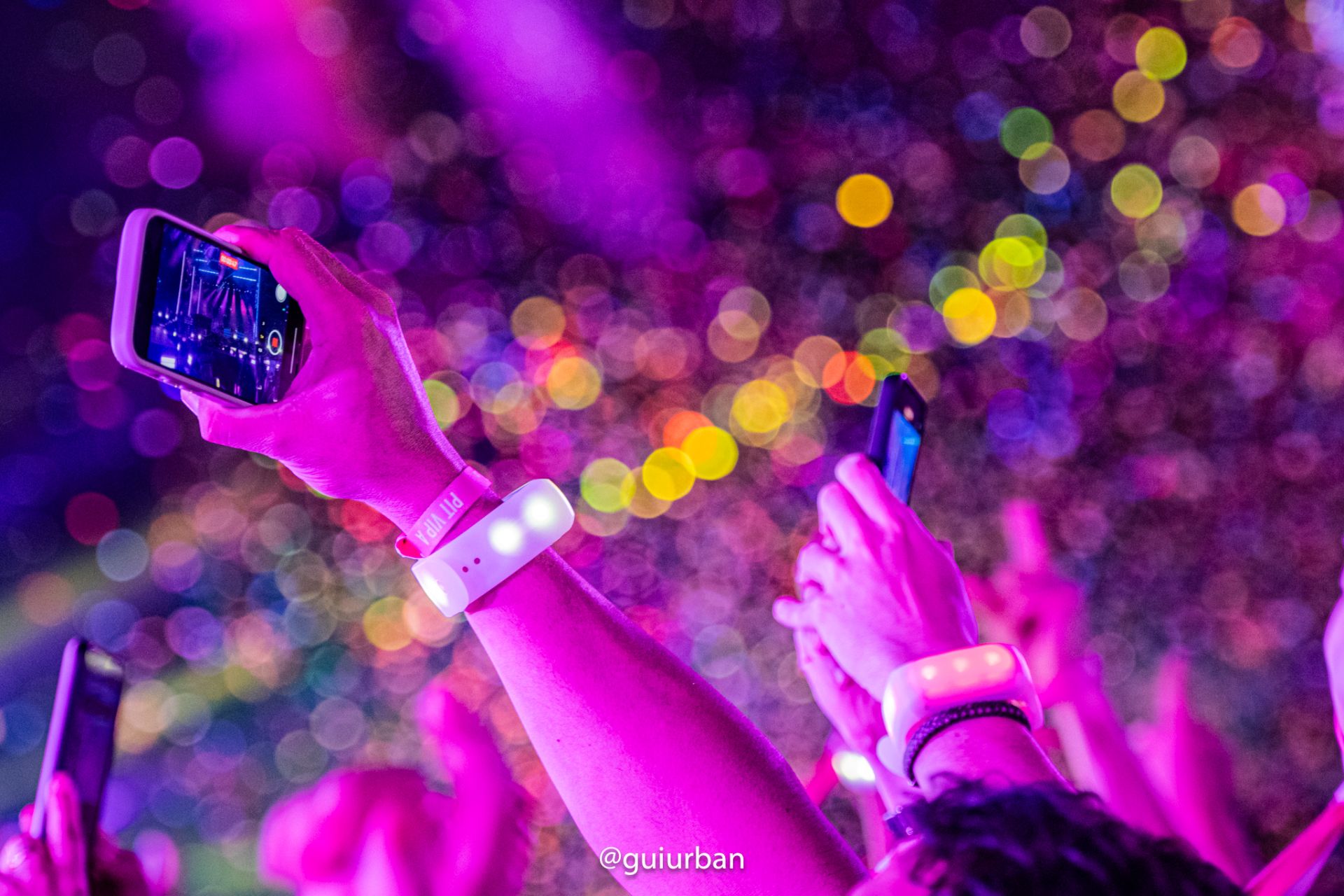
Historically, audience lighting was a crude affair, often involving blasting the crowd with harsh white light, which made them visible but also pulled them out of the moment. Today, we have far more sophisticated tools. Technologies like radio controlled LED wristbands and other LED wearables allow us to integrate the audience directly into the lighting design in a way that serves both the in-room experience and the camera.
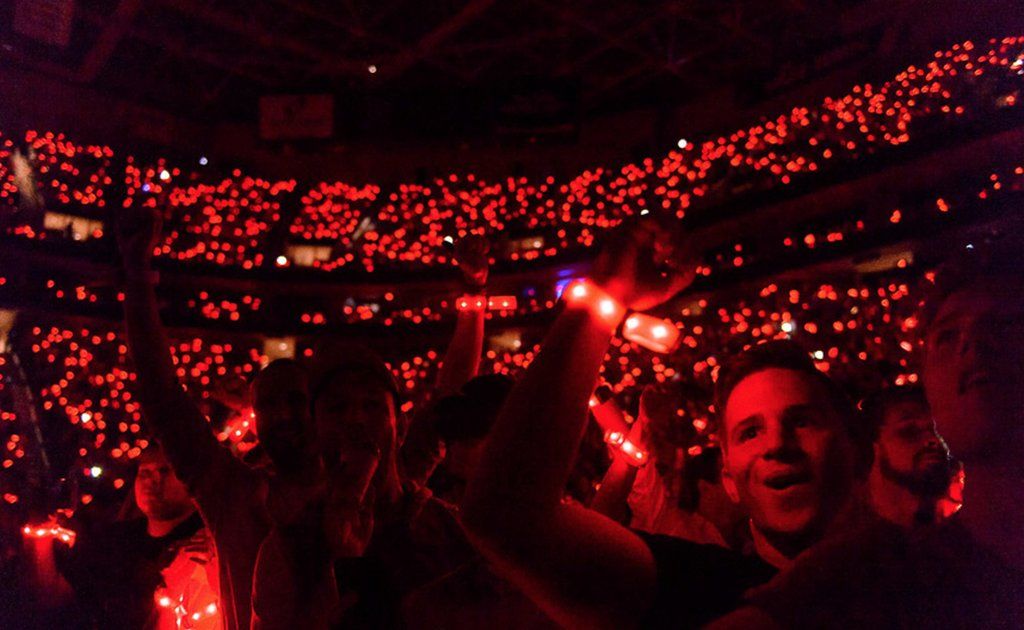
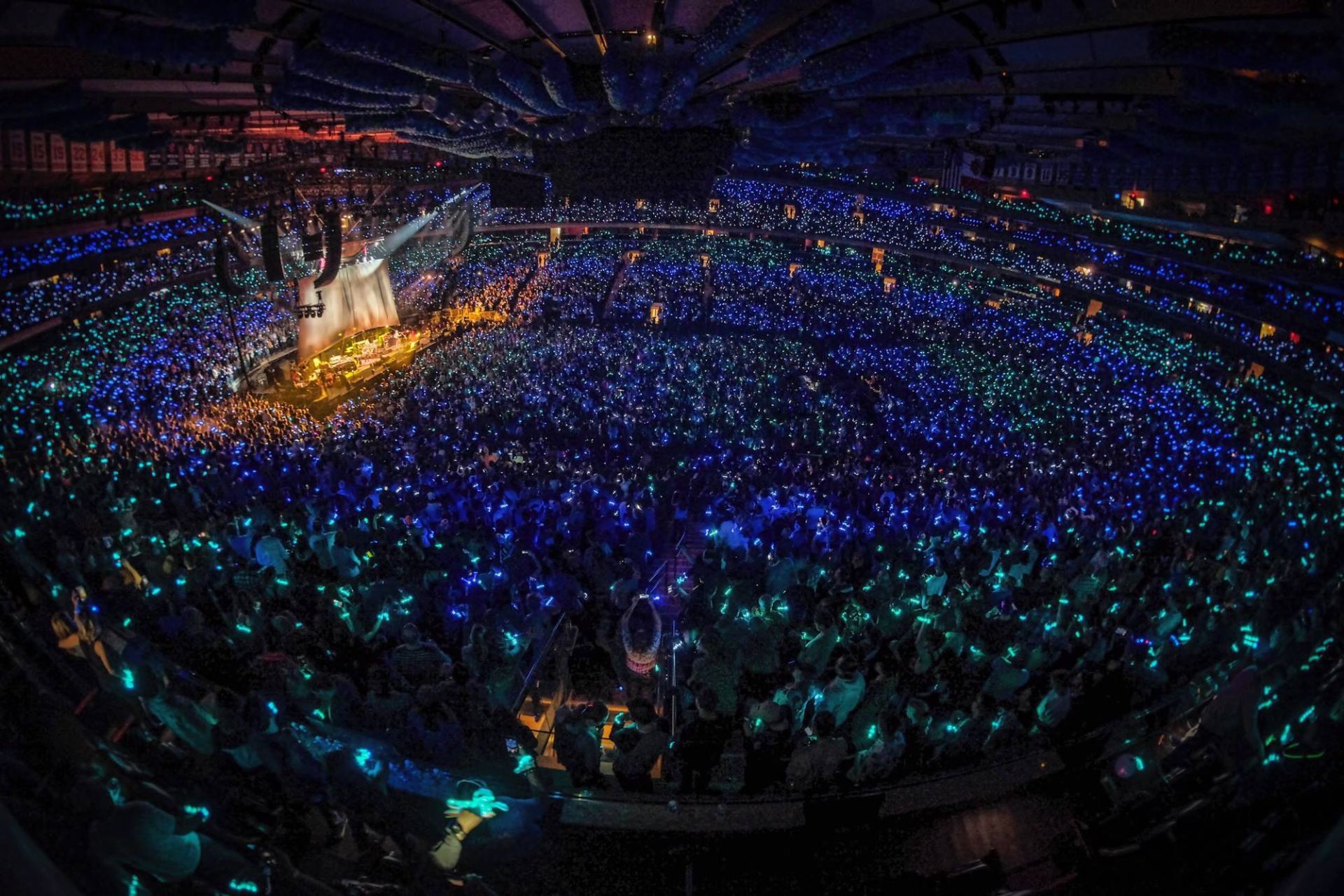
Instead of being a passive mass, the crowd becomes a living, breathing canvas of light. We can make them part of a synchronized color wash, pulse in time with the music, or create complex, flowing patterns that ripple across the venue. For the camera, this transforms a potential black hole into a dynamic, textured element of the shot. For the fan, it deepens their sense of participation and belonging. This approach has been used to great effect in global broadcasts from the Formula One 75th anniversary show to the halftime show at the Super Bowl, turning tens of thousands of individuals into a single, coherent visual entity.
Case in Point: The Live TV Studio
The principles extend beyond massive arenas and into the more intimate setting of a television studio. On shows like ITV’s ‘Beat The Chasers UK’, the in-studio audience is a key component of the broadcast’s energy. The lighting must be precise. It needs to capture the dramatic tension of the game, highlight the contestants and the formidable "Chasers," and energize the studio audience without causing lens flare or color balance issues for the cameras. By deploying LED bands, producers can add visual punctuation to key moments—a correct answer, a dramatic countdown—making the audience a reactive, visual chorus that enhances the drama for the viewer at home.
A Unified Visual Language
Ultimately, mastering lighting for a broadcast event is about creating a unified visual language that speaks to both audiences simultaneously. It means seeing the event not as two separate experiences, but as one interconnected spectacle. The light that sweeps across the stadium during a goal celebration must translate into a compelling visual on screen. The subtle glow from thousands of concert wristbands during a ballad must create a sense of intimacy for both the fans in the back row and the viewer on their couch.
As technology evolves, from brighter, more efficient LED event technology to more sensitive camera sensors, the possibilities for these immersive events will only expand. The goal remains the same: to close the distance between the live and broadcast experience, using light to create a single, shared moment of collective awe that resonates in the venue and far beyond.