The Fourth Wall is Made of Light: A History of Audience Participation
The Unspoken Contract: A History of Audience Participation
From the roar of the Colosseum to the flickering lighters at a rock concert, the desire for an audience to be more than a passive observer is as old as performance itself. It’s an unspoken contract: the artist gives their energy, and the crowd reflects it back, creating a feedback loop that defines the live experience. For decades, this exchange was purely analogue—applause, singalongs, and the spontaneous sea of flames during a ballad.
The lighter, specifically, became an iconic, if accidental, piece of audience participation technology. It was a simple, individual act that, when multiplied by thousands, created a powerful visual statement of unity and shared emotion. It was the first time the crowd could collectively create light, painting a picture of their collective feeling. But it was also chaotic, uncontrolled, and, from a production standpoint, entirely unpredictable.
The digital age brought the mobile phone, which quickly supplanted the lighter. Its flashlight function offered a safer, more reliable source of light, but it remained a fundamentally individualistic act. The audience was a collection of single lights, not a unified canvas. Production teams were still at the mercy of the crowd's impulse, unable to harness this visual potential and integrate it into the show's design.
The Spark of an Idea: The Birth of LED Crowd Experiences
The transition from analogue participation to truly immersive event technology began with a simple question: What if you could synchronise every single point of light in the audience? This was the thought that led to the invention of Xylobands. The vision was to transform the crowd from a collection of individuals into a single, living, breathing entity of light, moving in perfect harmony with the performance.
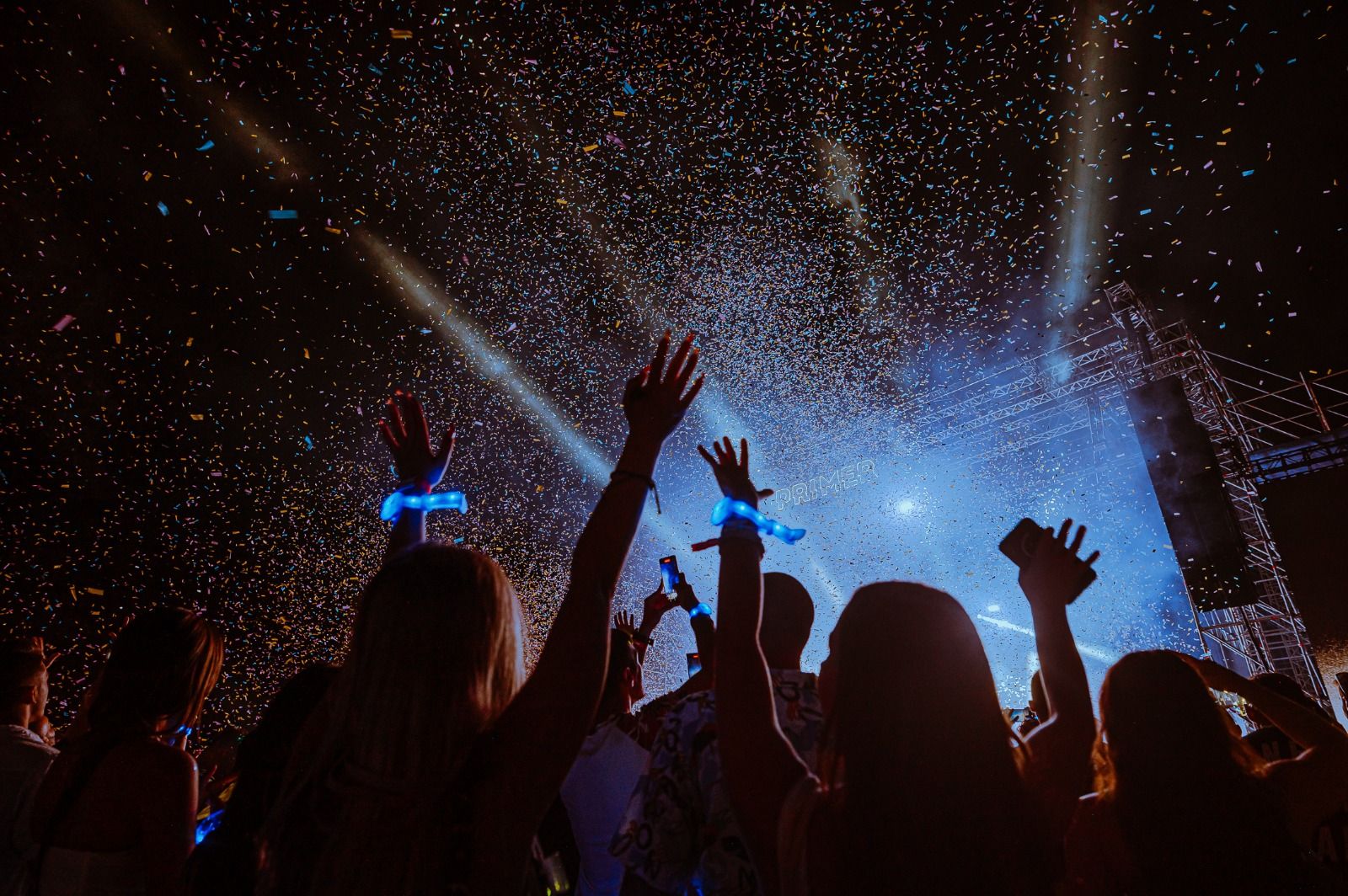
When Coldplay took our radio-controlled LED wristbands on their Mylo Xyloto tour in 2012, it marked a seismic shift. For the first time, a Creative Director could paint with the audience itself. The crowd was no longer just watching the show; they were the show. This innovation turned every seat in the house into the best seat, weaving thousands of people into the very fabric of the performance. The Coldplay Xylobands phenomenon created a new language of connection between artist and fan.
From Wristbands to an Ecosystem of Light
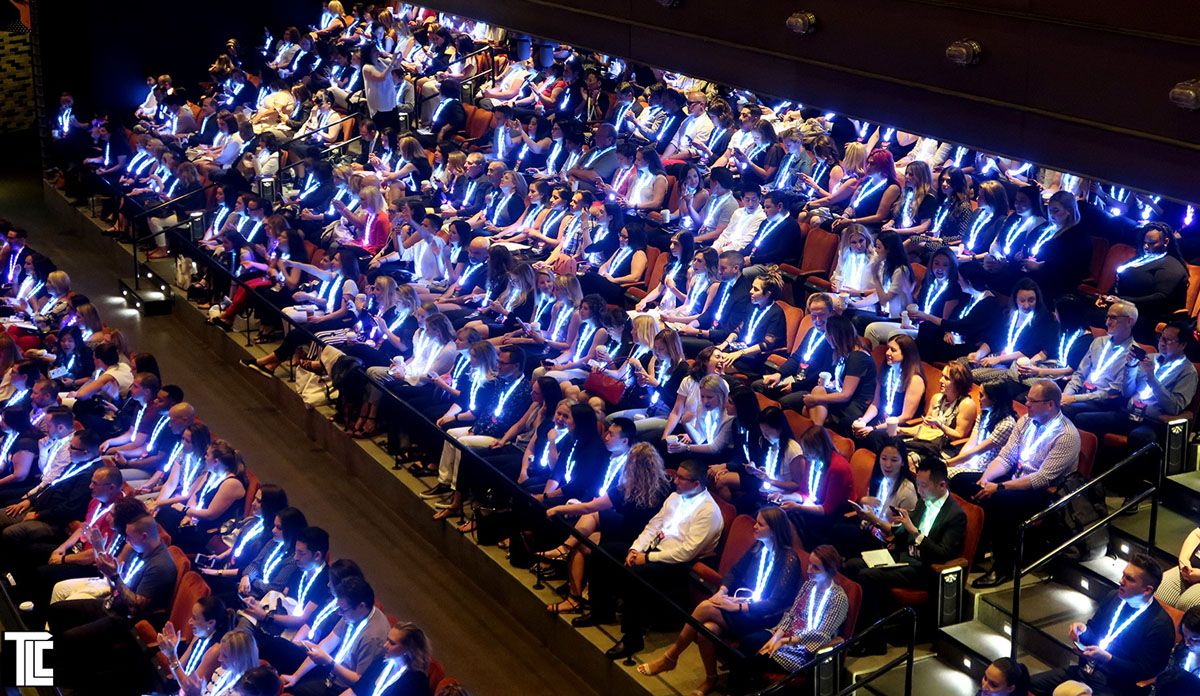
The initial concept of the LED wristband was a catalyst, opening the floodgates for a new era of wearable LED technology. The technology has since evolved into a sophisticated ecosystem of devices designed for diverse event environments. Today, it’s not just about wristbands. LED Lanyards transform corporate guests into moving brand activations, while custom shapes like the Xylo Pendant used at the Formula One 75th-anniversary event allow for highly bespoke, branded experiences.
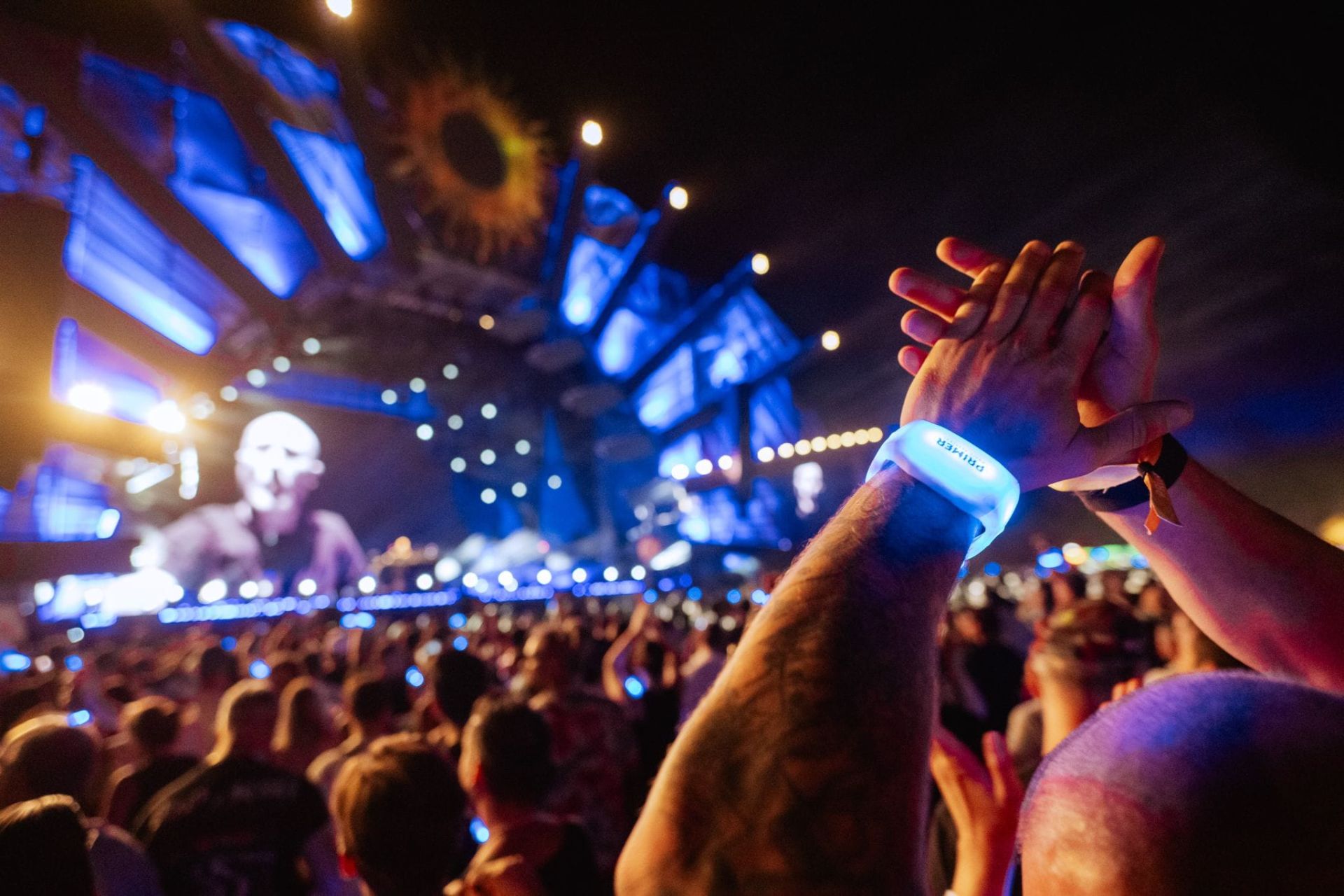
This evolution is driven by the understanding that different events have different needs. A high-energy music festival like Greece's PRIMER demands robust, vibrant festival wristbands that can withstand the elements and the energy of the crowd. In contrast, a televised broadcast, like our work with ITV on shows such as 'Beat The Chasers', requires precise control and the ability to create dynamic effects that translate powerfully to the screen.
The technology itself has become more refined. The introduction of segmented wristbands allows for multi-colour animations on a single device, while improved radio frequency control enables the orchestration of ever-more complex and nuanced designs across vast spaces, from arenas like The O2 for Wizkid's landmark shows to entire festival fields.
The Future is a Shared Experience
Looking back, the evolution from a simple flame to a stadium-wide, synchronised light show is a story about a fundamental human need: the need to connect. Technology has not created this need, but it has provided a powerful new set of tools to satisfy it.
Today’s immersive events are built on this principle. Whether it’s a global music tour for an artist like Maluma, a major sporting event like the Davis Cup, or a large-scale corporate gathering, the goal is the same: to break down the barrier between the performer and the observer. It is about creating a single, shared moment that is bigger than any individual component.
The sea of lighters was a beautiful, spontaneous accident. The sea of Xylobands is a deliberate, designed experience—a testament to how technology can amplify our innate desire to be part of something larger than ourselves. The fourth wall is no longer a physical barrier; it’s a canvas of light, and every single person in the audience holds a brush.