The Invisible Network: A Deep Dive into LED Wristband Technology
The Unseen Command: How Do LED Wristbands Work?
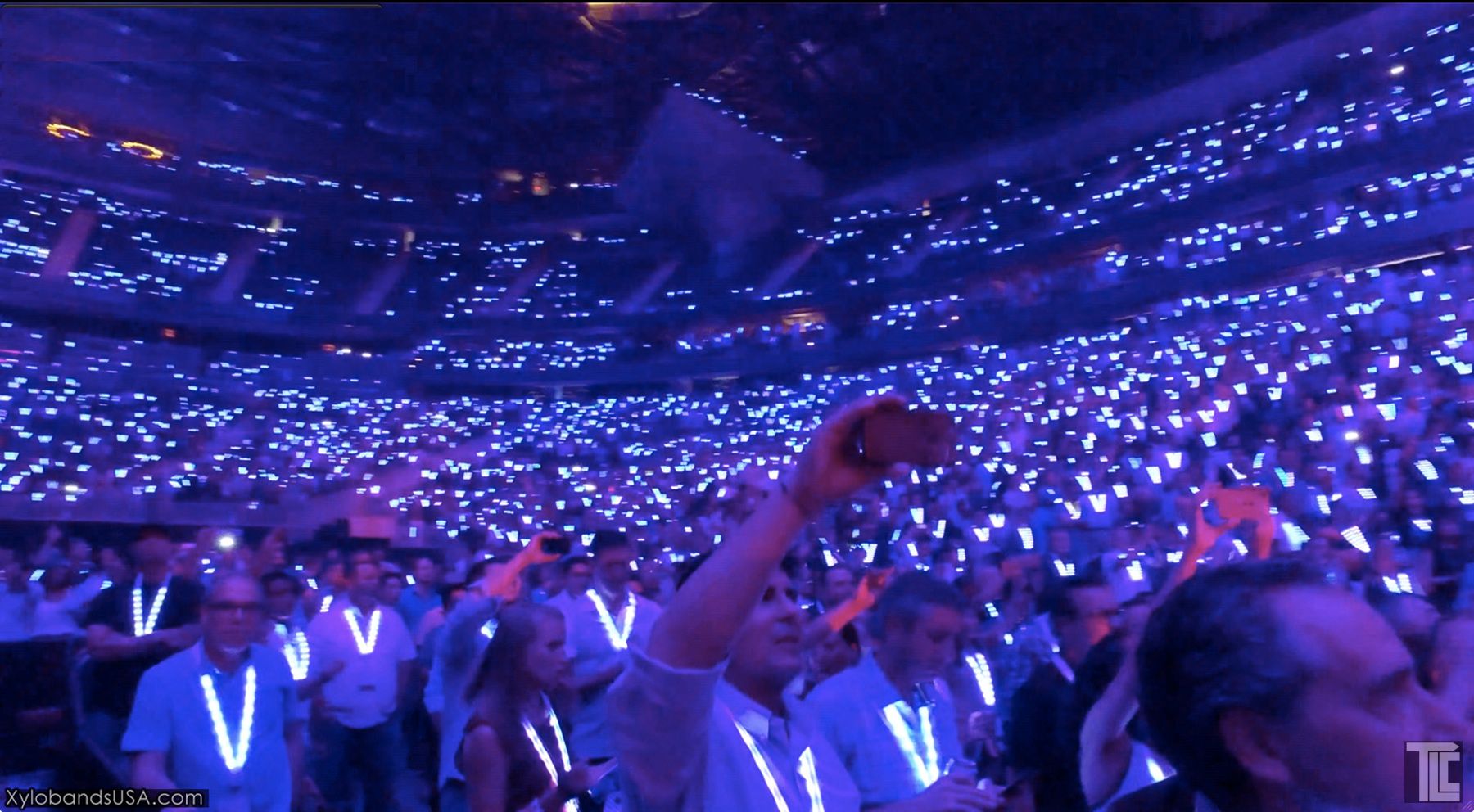
To the audience, it feels like magic. A sudden plunge into darkness, followed by a silent, instantaneous explosion of light. Tens of thousands of individual wrists, suddenly united in a single, pulsing, visual rhythm. It’s a core component of modern Immersive Events, from stadium rock tours to high-stakes Corporate Event Activations. But it isn’t magic—it’s a finely-tuned orchestration of invisible signals, a silent conversation between a lighting controller and every single device in the crowd.
At Xylobands, we have pioneered and perfected this technology for over a decade, turning millions of audience members into individual, intelligent pixels in a grand, moving canvas. The experience is emotional and primal, but the technology that underpins it is precise, robust, and surprisingly complex. The core of our system, and the secret to its ability to create seamless LED Crowd Experiences, lies in three primary methods of control: Radio Frequency (RF), DMX, and Infrared (IR). Each has its own strengths, and they are often used in combination to create layered, dynamic, and flawless live experiences.
The Wide-Area Network: Radio Frequency (RF) Control
The workhorse of large-scale live events is Radio Frequency, or RF. It’s the technology that allows a single operator to command a stadium of 80,000 people as easily as a club of 800. Think of it as a private radio station, broadcasting commands instead of music.
Our proprietary RF transmitters send low-frequency radio waves across a designated area, carrying specific instructions: “turn on,” “flash green,” “pulse to the beat.” Every Xylo Band in the venue is equipped with a tiny, sophisticated receiver, listening for these commands. When a signal is broadcast on the correct frequency, the wristbands obey instantly.
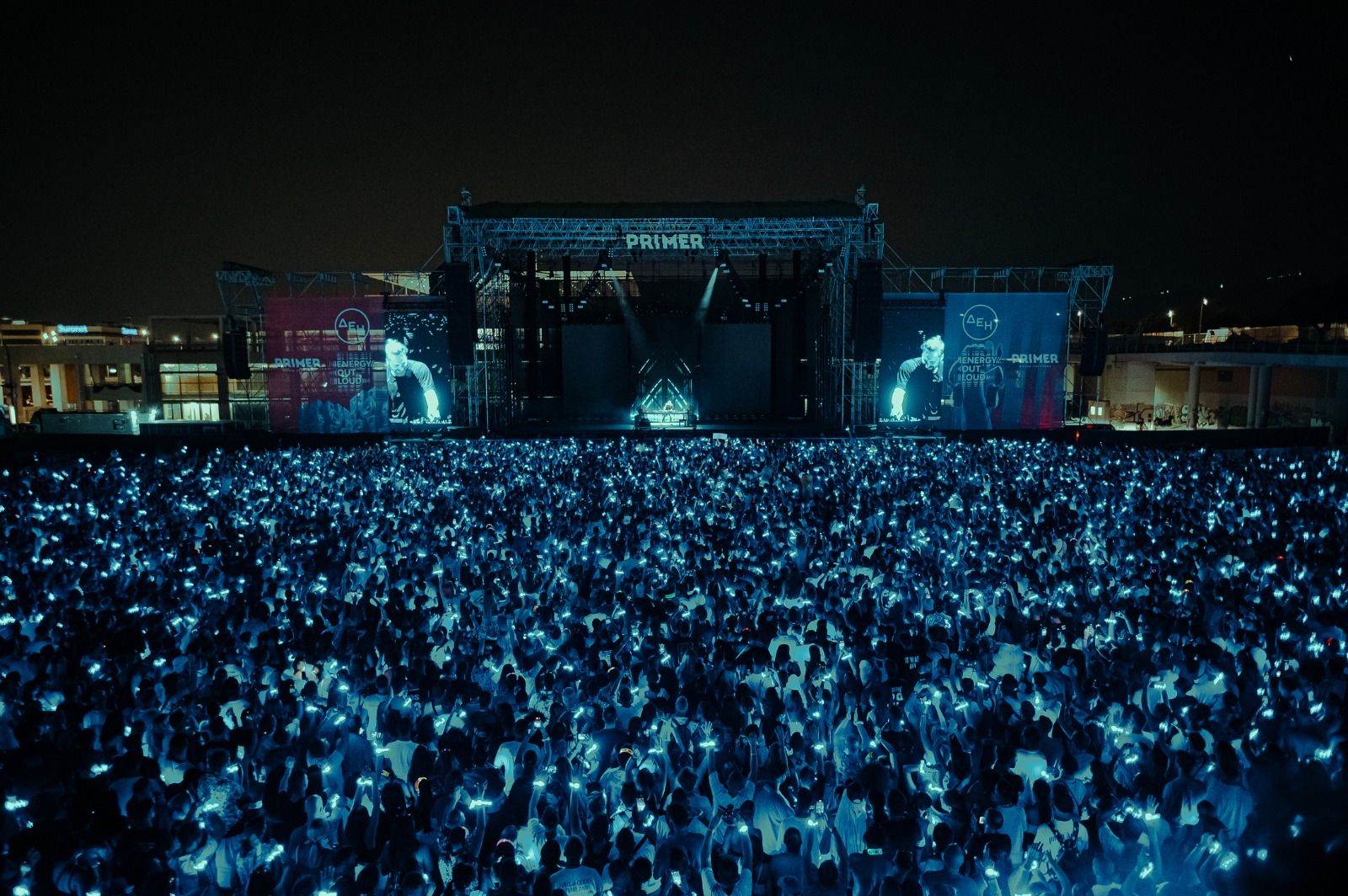
The beauty of RF is its range and scalability. Our systems can cover vast areas, from festival fields like Greece’s PRIMER Music Festival to sprawling arenas. By strategically placing transmitters and repeaters, we can ensure total coverage, eliminating dead zones and guaranteeing that every single wristband—from the front row to the back of the stands—responds in perfect sync. This is the technology that makes the iconic Coldplay Xylobands moments possible, uniting a sea of people in a shared visual experience.
RF is about mass communication. It’s about creating a single, powerful, unified statement across an entire audience, turning thousands of individuals into one cohesive entity.
Key Advantages of RF:
- Scale: Capable of controlling hundreds of thousands of devices over large distances.
- Robustness: Less susceptible to physical obstructions like people, staging, or architecture.
- Zoning: Allows operators to divide the audience into multiple groups or “zones.” This is crucial for creating complex visual effects, like having different sections of a stadium light up in competing team colors, as seen at events like the Davis Cup, or creating dynamic, sweeping patterns across the crowd.
The Lighting Designer’s Language: DMX Integration
While RF is perfect for broad, sweeping commands, lighting designers and show producers often require a more granular level of control, integrated directly into their show programming. This is where DMX comes in. DMX (Digital Multiplex) is the universal language of professional lighting and stage effects. It’s the protocol used to control everything from moving-head stage lights and smoke machines to pyrotechnics.
Our systems are designed to integrate seamlessly with DMX controllers. A lighting designer doesn’t need a separate system to operate the LED Bands; they can program them directly from their lighting desk. The Xylobands transmitter acts as a bridge, translating DMX commands into our proprietary RF signals.
This means the wristbands can be treated as just another fixture in the lighting rig. A designer can trigger a specific color on the wristbands to match a wash light on stage, create a sparkle effect that syncs with a video cue, or have the audience lighting build in intensity along with the musical crescendo. This integration is essential for turning a collection of individual lights into a storytelling tool, making the audience an extension of the stage design itself. From global tours for artists like Wizkid and Maluma to complex broadcast productions for ITV, DMX integration ensures the crowd is part of the show’s DNA.
The Close-Range Trigger: Infrared (IR) Technology
If RF is the wide-area broadcast, Infrared (IR) is the hyper-local, targeted whisper. Using the same fundamental technology as a television remote control, IR emitters send a narrow, focused beam of light carrying commands. This light is invisible to the human eye, but our wristbands see it perfectly.
So why use IR when RF can cover a whole stadium? Precision and location-based activation.
Imagine a corporate conference where you want to light up the wristbands of only the people who visit a specific sponsor’s booth. Or a game show like Beat The Chasers UK, where a contestant’s wristband needs to flash at the precise moment they hit a buzzer. Or consider a fan activation at a Formula One event, where passing through a specific gate triggers a unique welcome sequence on your LED Lanyard.
This is the power of IR. Because its signal is line-of-sight and short-range, it’s perfect for creating location-specific LED Experiences. We can install small, discreet IR emitters in doorways, under tables, or within event activations. When a wristband enters the emitter’s field, it can be programmed to trigger a specific, localized effect. This allows for a level of interactivity and personalization that a wide-area RF signal can’t achieve. It’s a tool for creating individual moments and targeted interactions within a larger crowd experience.
Key Advantages of IR:
- Precision: Activates only the wristbands within a very small, defined area.
- Interactivity: Perfect for creating responsive, location-based experiences and gamification.
- No Interference: The focused nature of IR means it won’t interfere with other signals, making it ideal for complex environments with multiple activations.
The Symphony of Signals
The true art of creating world-class Immersive Event Technology is not in choosing one of these technologies, but in knowing how to orchestrate all three. A typical large-scale event utilizes a hybrid system. The main show cues—the big, full-stadium moments—are run on RF, integrated via DMX into the show’s master lighting program. Simultaneously, discreet IR emitters might be placed at entrances, merchandise stands, or VIP lounges to trigger smaller, more intimate moments of engagement.
This multi-layered approach ensures that from the moment an attendee walks into a venue until the final encore, their Wearable LED Technology is an active part of their experience. It is a silent, robust, and powerful network, an invisible architecture that transforms a crowd of spectators into a unified, living, breathing spectacle of light. It’s more than just technology; it’s the science of awe.