Lighting for the Live and At-Home Audience
The Two-Audience Challenge
In the high-stakes world of live television production, every choice is magnified. The energy of a studio audience, the flawless delivery of on-screen talent, the seamless transitions between segments—it all culminates in the final broadcast that reaches millions of homes. But there’s a silent, powerful force at play that underpins it all: light. And for broadcast-focused events, light serves two masters: the human eye and the camera lens.
This is the two-audience problem. A live spectacle must feel electric and visually stunning for the people in the room, while also translating into a crisp, vibrant, and perfectly exposed picture for the broadcast camera. Get it wrong, and you risk compromising one experience for the other. The studio audience might be dazzled by a light show that appears blown-out and distracting on screen. Conversely, a scene lit perfectly for the camera can feel flat and lifeless to the live observer. Mastering this balance is the hallmark of world-class production.
The Camera’s Eye: A Different Perception
A fundamental principle production designers must contend with is that cameras don't "see" like people do. The human eye has an incredible dynamic range, capable of processing vast differences in brightness and shadow simultaneously. A modern broadcast camera, while technologically advanced, is far more limited. It requires carefully controlled conditions to produce the desired image. Too much contrast, and you lose detail in the highlights or shadows. The wrong color temperature can skew skin tones and misrepresent brand colors. Fast, strobing effects that might electrify a stadium can create flickering or "banding" on screen, a fatal flaw in a professional broadcast.
This is where the technical art of broadcast lighting comes into play. It involves a deep understanding of concepts like:
- Color Temperature and CRI: Ensuring that all lighting elements, from key lights on talent to large-scale atmospheric effects, are calibrated to a consistent color temperature (measured in Kelvin) and have a high Color Rendering Index (CRI). This ensures that colors, especially skin tones, are rendered accurately and naturally by the camera.
- Flicker-Free Operation: Professional LED fixtures must have a high enough refresh rate to remain invisible to the camera sensor, even during slow-motion replays. This is non-negotiable for any broadcast environment.
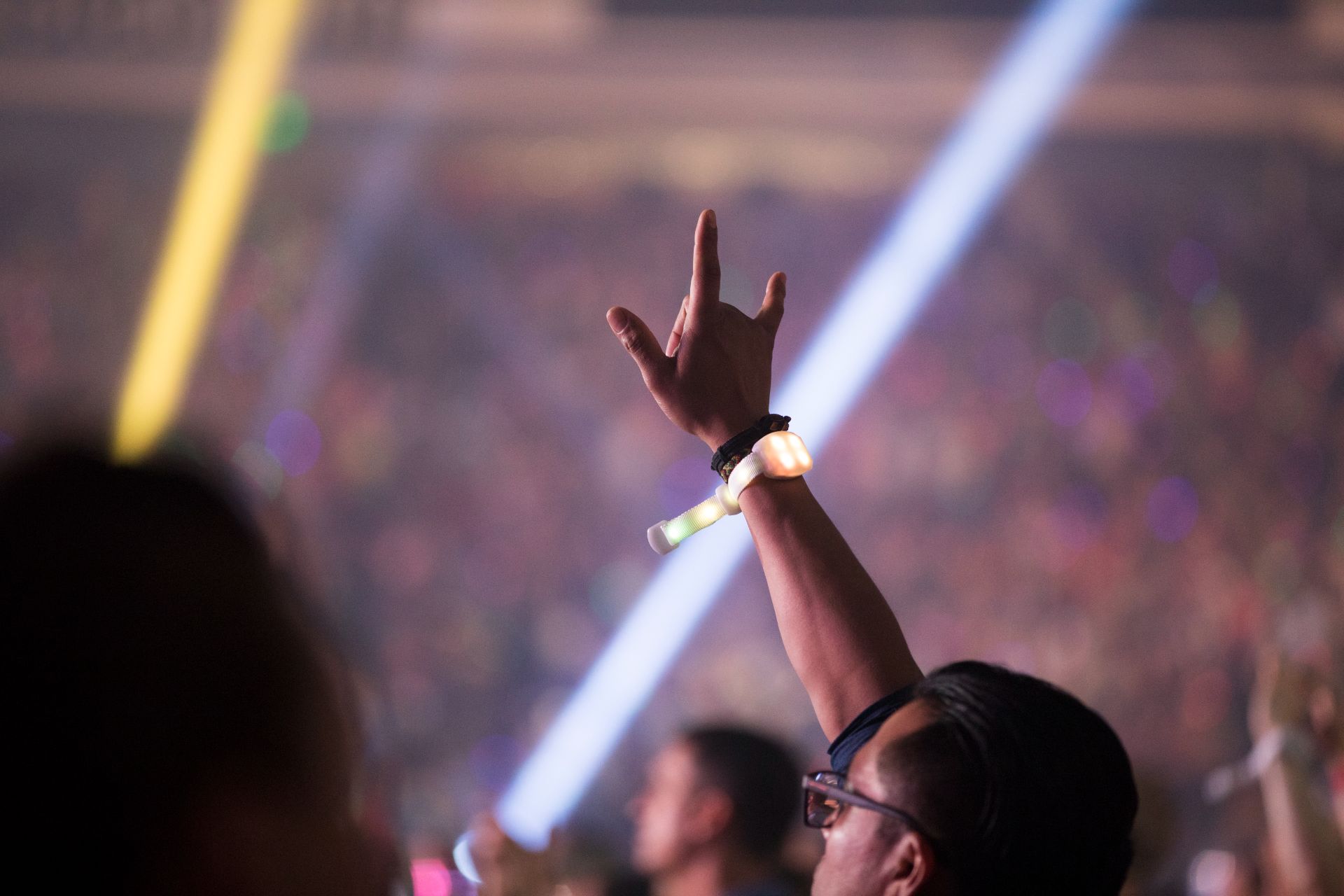
- Controlled Brightness and Contrast: Lighting designers work meticulously with broadcast engineers to keep the entire visual canvas within the camera's dynamic range. This means that even the brightest audience-facing elements, like LED Wristbands, must be programmable with granular control over intensity.
Case Study: The Studio as a Stage with ITV and 'Beat The Chasers'
Nowhere is this synthesis of live energy and broadcast precision more apparent than in the modern television game show. Productions like ITV’s 'Beat The Chasers UK' are built on tension, spectacle, and audience participation. The studio isn't just a backdrop; it’s an active participant in the drama. The audience’s reactions, their collective gasps and cheers, are integral to the show's pacing and energy.
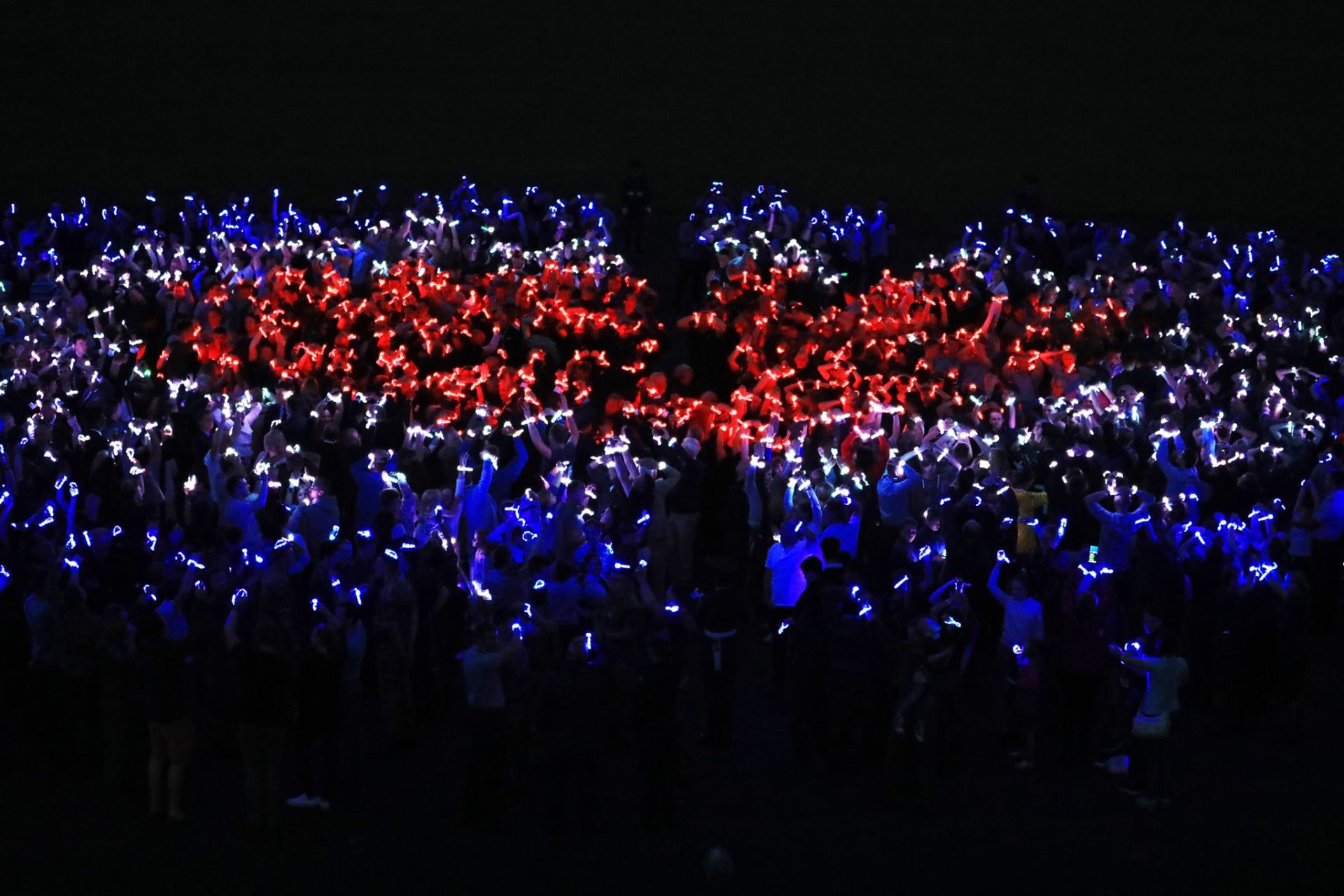
In our collaborations with ITV, including on shows like 'Beat The Chasers', Xylobands become a tool to bridge the gap between the live and broadcast experiences. By placing controllable LED bands on every audience member, the production team gains a dynamic, camera-friendly canvas that extends beyond the stage. We can paint with light across the entire studio, creating visual cues that build tension, celebrate a victory, or plunge the room into color for a commercial break. Crucially, this is achieved with broadcast-safe technology. The brightness, color, and refresh rate of every single wristband are precisely controlled, ensuring the effect is powerful for the studio audience but perfectly exposed and flicker-free for the millions watching at home.
This transforms the audience from passive spectators into a living, breathing part of the set design—a key component of creating dynamic, modern Immersive Events for television.
Scaling the Spectacle: From Studio to Stadium
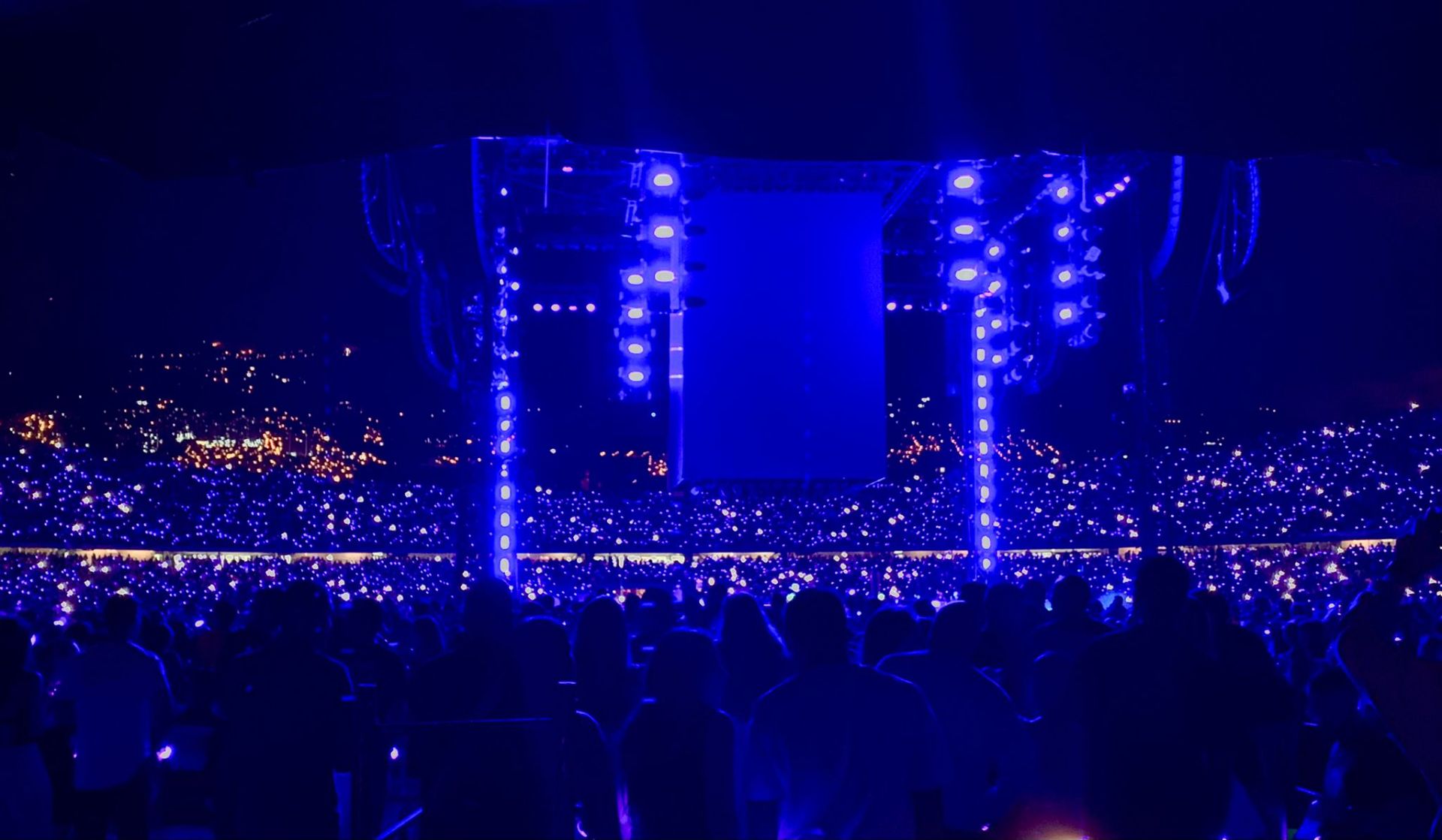
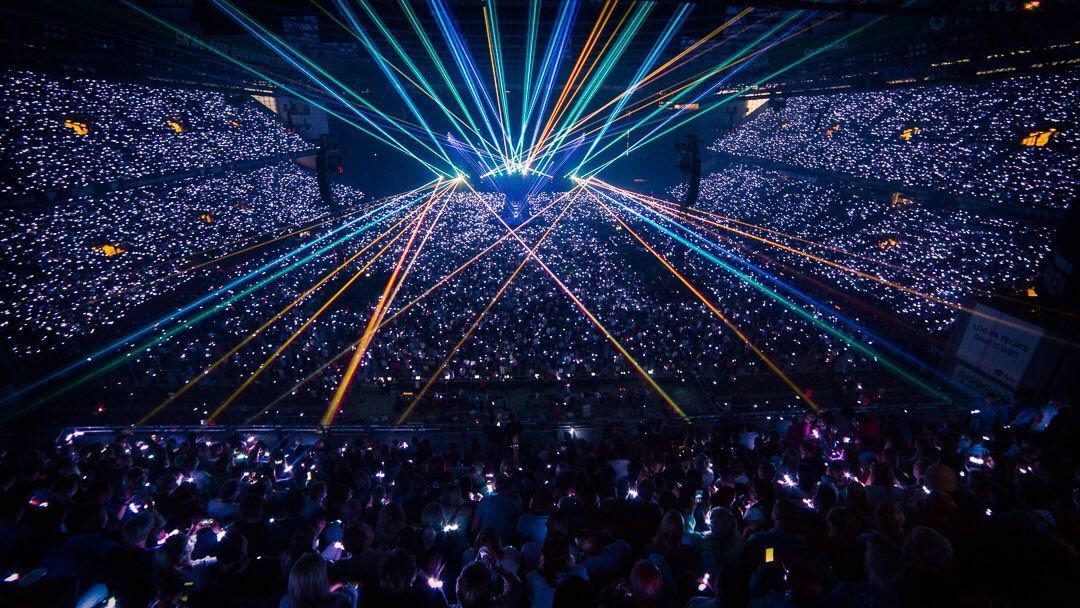
This principle of dual-audience lighting extends far beyond the television studio. Large-scale broadcast events, such as Maluma’s 'Medellín En El Mapa' concert—streamed live to over 240 countries—present the same challenge on a monumental scale. A stadium of 54,000 people, each a point of light, creates an incredible spectacle for those present. But for the director cutting the broadcast, it’s a vast visual element that needs to be controlled.
Through technologies like our proprietary RF systems, we can ensure that an entire stadium of Concert Wristbands reacts in perfect unison, creating massive, sweeping visual moments that are both breathtaking in person and spectacular on camera. When Maluma’s stage explodes with pyro, the entire stadium can flash in perfect sync, an effect that translates powerfully through the lens. This is the future of LED Crowd Experiences, where the audience becomes a core part of the broadcast narrative.
The Future is Unified
As the line between live and broadcast events continues to blur, the technology that illuminates them must evolve. The future belongs to unified systems that treat the in-venue and at-home audiences as two sides of the same coin. From game shows to global music tours, from corporate keynotes to major sporting events like the Davis Cup, success is no longer just about how a show looks, but how it *feels*—to everyone, everywhere.
By engineering light that serves both the human eye and the camera sensor, we can create truly shared moments. It’s a technical discipline, but the result is pure human connection, turning millions of individual viewers into a single, unified audience, captivated by the power of a shared spectacle.