Lighting for the Lens: Mastering the Live Broadcast Spectacle
The Two-Audience Imperative
In the world of live production, there is no greater technical challenge than the live broadcast. Unlike a standard arena show or festival, which is designed solely for the eyes of the people in the room, a broadcast event is a performance for two distinct audiences: the thousands of cheering fans in their seats, and the millions experiencing it through a lens, hundreds or thousands of miles away. Mastering this dual-audience delivery is a complex art form, balancing the raw, visceral energy of a live event with the exacting technical demands of broadcast cinematography.
The core of the challenge lies in a simple truth: what looks good to the human eye often looks chaotic or flat on camera. The modern broadcast camera is a precise, unforgiving instrument. It drinks in light but abhors over-saturation. It craves dynamic range but punishes uncontrolled contrast. The job of the lighting designer, therefore, is not just to create a spectacle, but to engineer an experience that translates flawlessly across two vastly different mediums.
The Camera as the Primary Witness
For any broadcast event, the camera is the most important witness. Every lighting decision must be filtered through its "eyes." This means moving beyond traditional stage lighting principles and embracing a more cinematic approach. Key considerations include:
- Color Temperature and CRI: Consumer LED lights might create a "wow" effect in a room, but on camera, they can produce unsightly color spikes or make skin tones appear unnatural. Professional broadcast lighting demands high Color Rendering Index (CRI) fixtures to ensure that colors, particularly skin tones, are rendered accurately for the at-home viewer.
- Flicker-Free Performance: Many light sources, including some LED screens and fixtures, have a refresh rate that is imperceptible to the human eye but can cause significant flicker or banding when filmed, especially in slow-motion. All lighting elements, from the main rig to individual wearables, must be certified flicker-free at the frame rates used by broadcast cameras.
- Controlling the Chaos: A live audience is an unpredictable environment. The sea of mobile phone screens, once a celebrated sign of engagement, is now a major source of uncontrolled light pollution for broadcast directors. Similarly, house lighting, exit signs, and even reflections from arena surfaces can contaminate a carefully crafted shot. A successful broadcast requires meticulous control over every photon in the environment.
Painting with a Wider Brush: Beyond the Stage
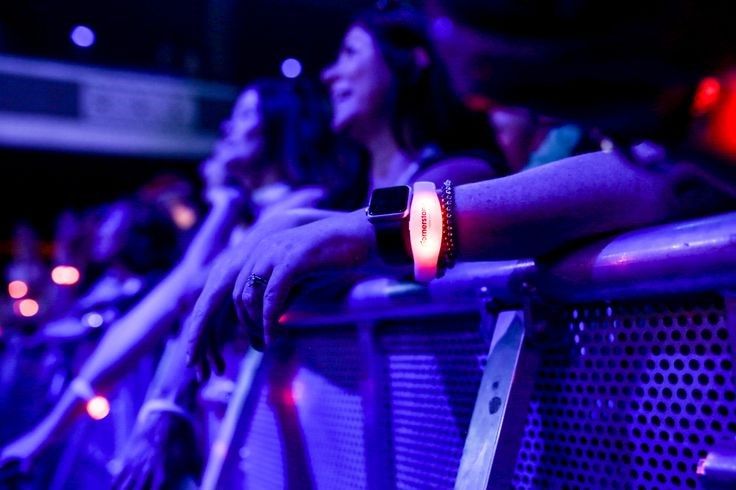
While the focus is on the stage, the most compelling broadcasts make the entire venue a canvas. This is where the audience itself becomes part of the spectacle. We have seen this evolution firsthand, working with partners like ITV on shows such as Beat The Chasers UK, where the studio audience is an integral part of the show’s visual energy. By equipping the crowd with synchronized LED wristbands, directors gain a powerful tool to extend the lighting design beyond the stage and into the stands.
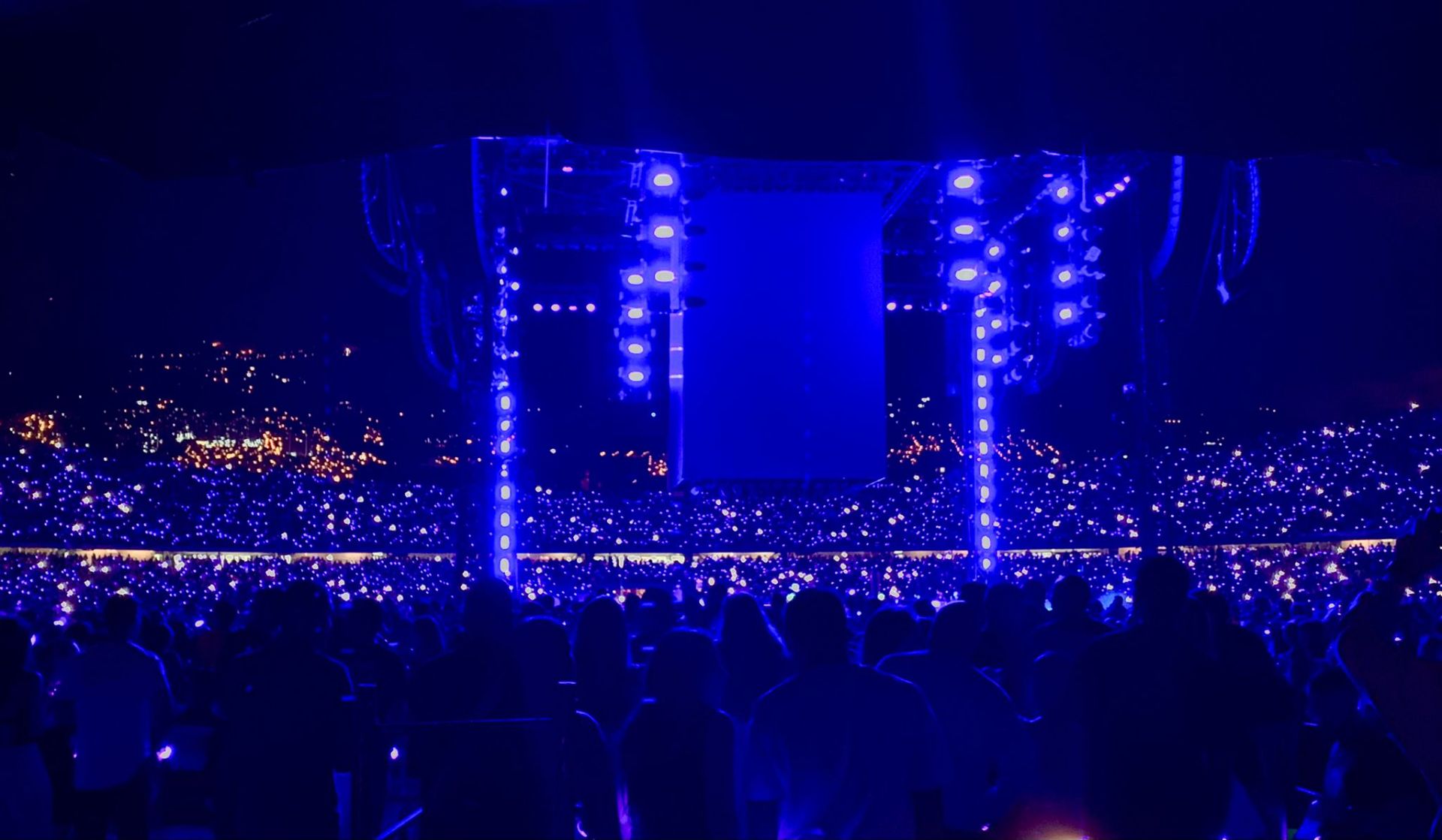
This approach transforms thousands of individual spectators into a single, living, breathing extension of the show’s design. Imagine a game show where the audience erupts in a specific color to celebrate a win, or a live music performance where ripples of light pulse through the crowd in perfect time with the beat. It’s not just visually stunning; it’s a narrative device. For the viewer at home, it creates a palpable sense of scale and energy, making them feel the electricity of being there. This is a core component of creating immersive LED Crowd Experiences.
"When you light the crowd, you’re not just illuminating people. You are giving the camera a sense of depth, scale, and human energy that you can’t fake. You’re turning passive spectators into active participants in the visual story."
Case Study: The Global Livestream
The technical stakes are never higher than during a global livestream. Maluma’s 2022 homecoming concert in Medellín, streamed to over 240 countries, is a prime example. With 54,000 fans in the stadium and millions more watching live, the production had to deliver a flawless experience for both audiences. Similarly, events like the 75th-anniversary celebration for Formula One or Wizkid’s historic sell-out run at The O2 Arena depend on this dual-audience mastery.
In these scenarios, wearable LED technology serves a critical function. Our radio-controlled LED wristbands and LED lanyards are engineered with broadcast in mind. The brightness, color, and refresh rate are all calibrated to perform for the camera. For the F1 event, custom pendants allowed for segmented lighting effects, turning sections of the arena into team colors—a visually rich story for both the live attendees and the broadcast. This transforms the audience from a passive backdrop into a dynamic, programmable video surface, offering directors an unparalleled creative tool.
The Future is Engineered for the Lens
As the line between live and digital experiences continues to blur, designing for the lens is no longer optional; it is the central discipline of modern event production. The most successful producers, brands, and artists will be those who understand that they are no longer just putting on a show, but creating a broadcast-ready asset. They will be the ones who see the audience not as a sea of faces, but as a human canvas.
From corporate event activations to global music tours, the principle is the same: light for the camera first, and you will capture the magic for everyone. By embracing technologies like Xylobands that bridge the gap between the stage and the stands, you can create a truly immersive spectacle—one that feels intimate and epic, both in the front row and on the screen half a world away.