The Lens and the Light: Mastering Live Event Production for the Broadcast Age
The Two-Audience Problem
In the world of high-stakes live production, every event plays to two distinct audiences. The first is tangible: the thousands of fans in the venue, feeling the bass in their chests, their energy a palpable force. The second is remote, yet exponentially larger: the millions watching a curated broadcast from their screens. A successful production must deliver a spectacular, emotionally resonant experience to both. This is the fundamental challenge of modern event broadcasting, and its solution lies in mastering the complex interplay between the lens and the light.
What ignites a stadium with visceral, raw energy can translate poorly through a camera’s sensor. What a human eye perceives as a dazzling wash of color, a broadcast camera might see as a blown-out, over-saturated mess. Differences in flicker rates, color temperatures, and dynamic range can create a jarring disconnect between the live experience and the broadcast feed. Lighting, the very element that defines the mood and visual structure of a show, becomes the critical variable. Getting it wrong doesn't just diminish the broadcast; it fails to translate the true scale and emotion of the event.
Engineering for the Camera: The Science of Broadcast-Ready Light
To bridge the gap between the human eye and the camera sensor, lighting technology must be engineered with a deep understanding of broadcast science. This is where professional-grade, controllable LED systems move beyond simple illumination and become sophisticated tools for visual storytelling.
Flicker: The Unseen Enemy
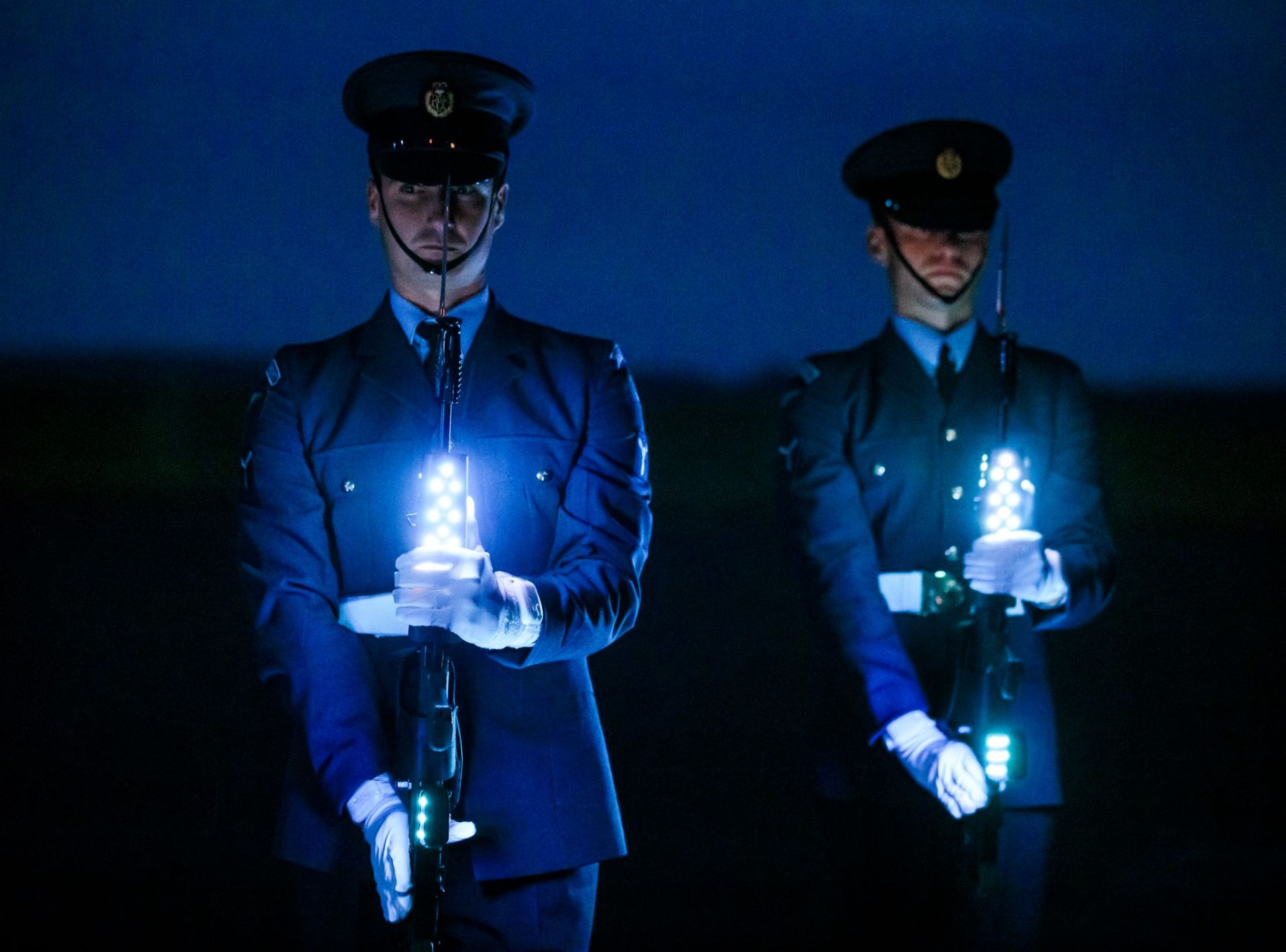
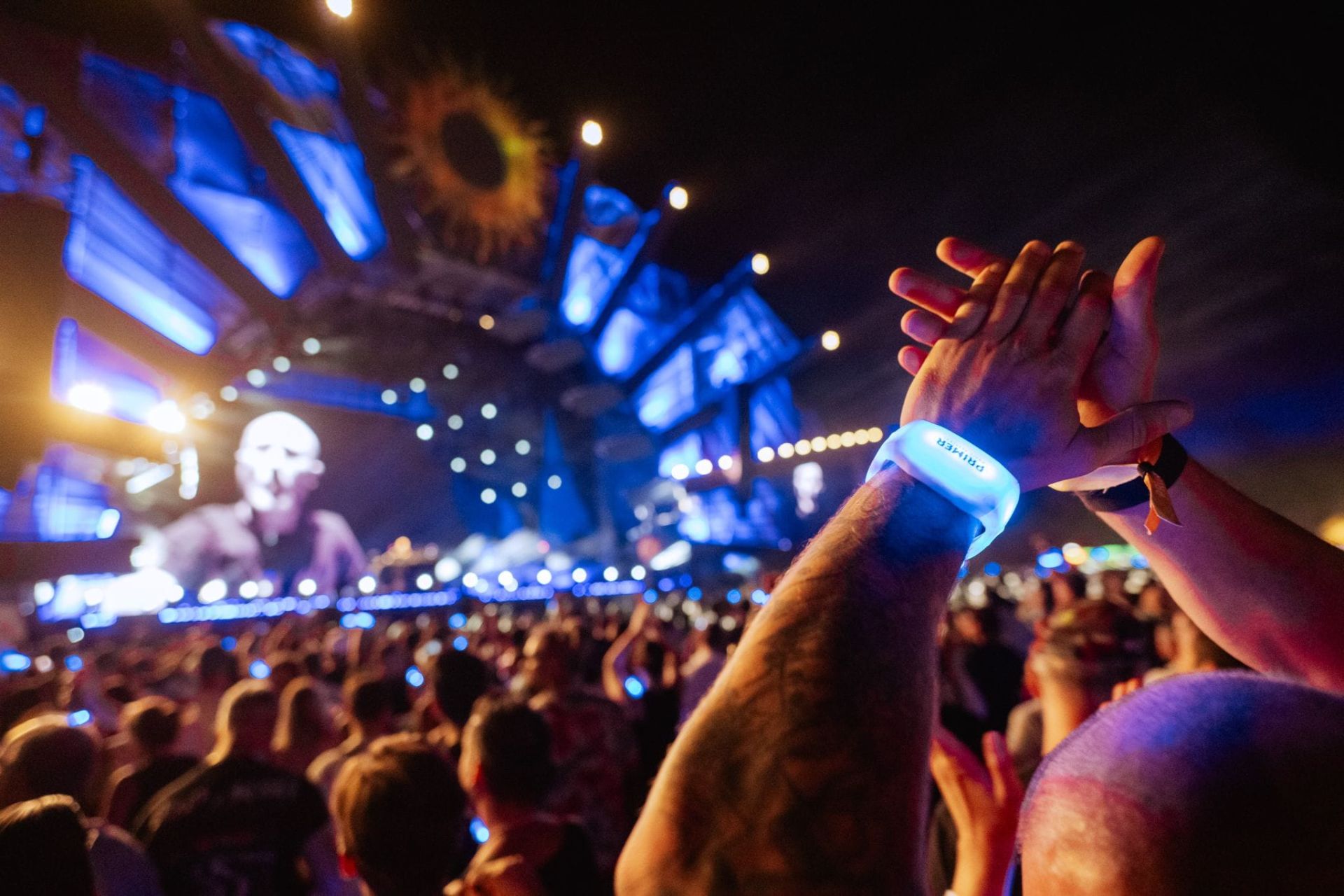
The single greatest threat to clean broadcast footage is flicker. Caused by a mismatch between a light source's refresh rate and the camera’s frame rate, it manifests as banding or strobing that is invisible to the naked eye but disastrous on screen. Professional-grade Wearable LED Technology, such as Xylobands, is engineered for flicker-free performance under the exacting standards of high-speed broadcast cameras, ensuring a clean, stable image regardless of the camera’s shutter speed.
Color Science and Consistency
Broadcast cameras are calibrated for specific color temperatures (measured in Kelvin) to ensure that colors appear natural and consistent across different shots and camera angles. When you introduce thousands of independent points of light into the environment, as with an audience-wide installation, color consistency is paramount. Each wristband, lanyard, or orb must emit the exact same shade of red, blue, or white as its neighbor. This requires rigorous calibration and high-quality LEDs that adhere to the strict color rendering demands of a professional lighting designer and broadcast engineer.
Dynamic Range and Precision Control
A camera’s sensor has a much narrower dynamic range than the human eye. It cannot process the darkest shadows and brightest highlights simultaneously. An audience lighting system must therefore be exquisitely controllable. The ability to program not just the color but the precise intensity of tens of thousands of LED Bands allows a lighting director to "paint" the crowd, creating texture, depth, and focus without creating hotspots that would compromise the broadcast image. Using robust RF and DMX control protocols, operators can manage the entire crowd as a single, dynamic lighting fixture integrated seamlessly into the main show file.
The Audience as a Living Canvas
When these technical hurdles are overcome, a profound creative opportunity emerges. The audience is no longer a passive entity to be lit, but an active, dynamic part of the set design—a living canvas for the broadcast.
For the viewer at home, the boundary between the performance and the audience dissolves. The shot of a roaring crowd is no longer just a reaction; it’s an extension of the stage lighting, a wave of color and energy that mirrors the peak of a song or the climax of a sporting moment.
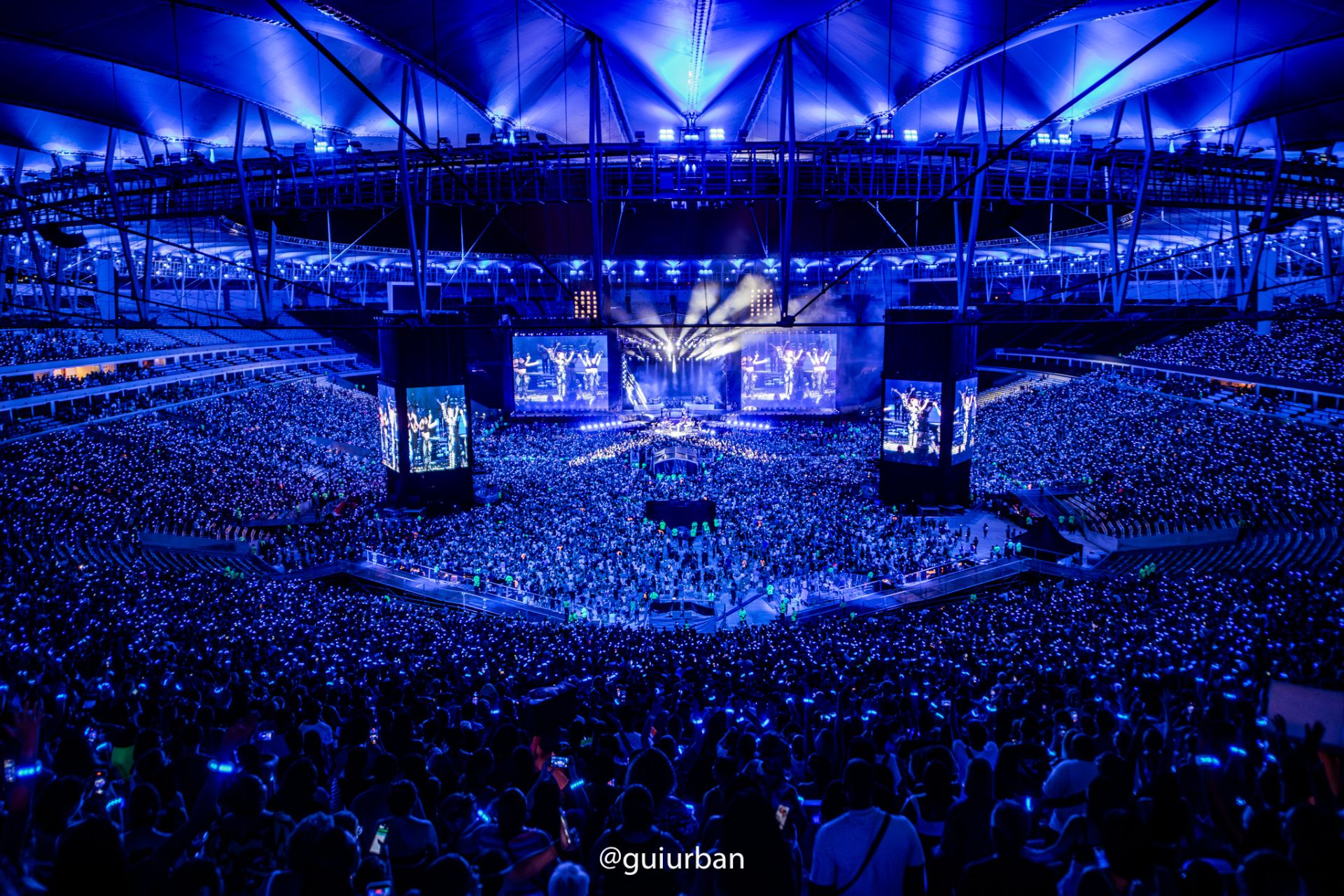
This principle was demonstrated on a global scale during Maluma's 2022 "Medellín En El Mapa" concert. Streamed live to over 240 countries, the 54,000-strong crowd was an integral part of the broadcast spectacle, with synchronized lighting immersing the home viewer in the electric atmosphere of his hometown stadium. Similarly, the record-breaking Dil-Luminati Tour for Punjabi superstar Diljit Dosanjh saw over 200,000 wristbands deployed, creating an immense, unified visual that was built for the cinematic wide shots essential to any modern arena tour broadcast.
From the Arena to the Studio: Scalable Impact
The power of broadcast-ready Immersive Event Technology lies in its scalability. The same core principles that illuminate a stadium for a global music artist can be used to build tension and punctuate drama in an intimate television studio. High-stakes game shows, live political debates, and talent competitions all rely on lighting to shape the narrative.
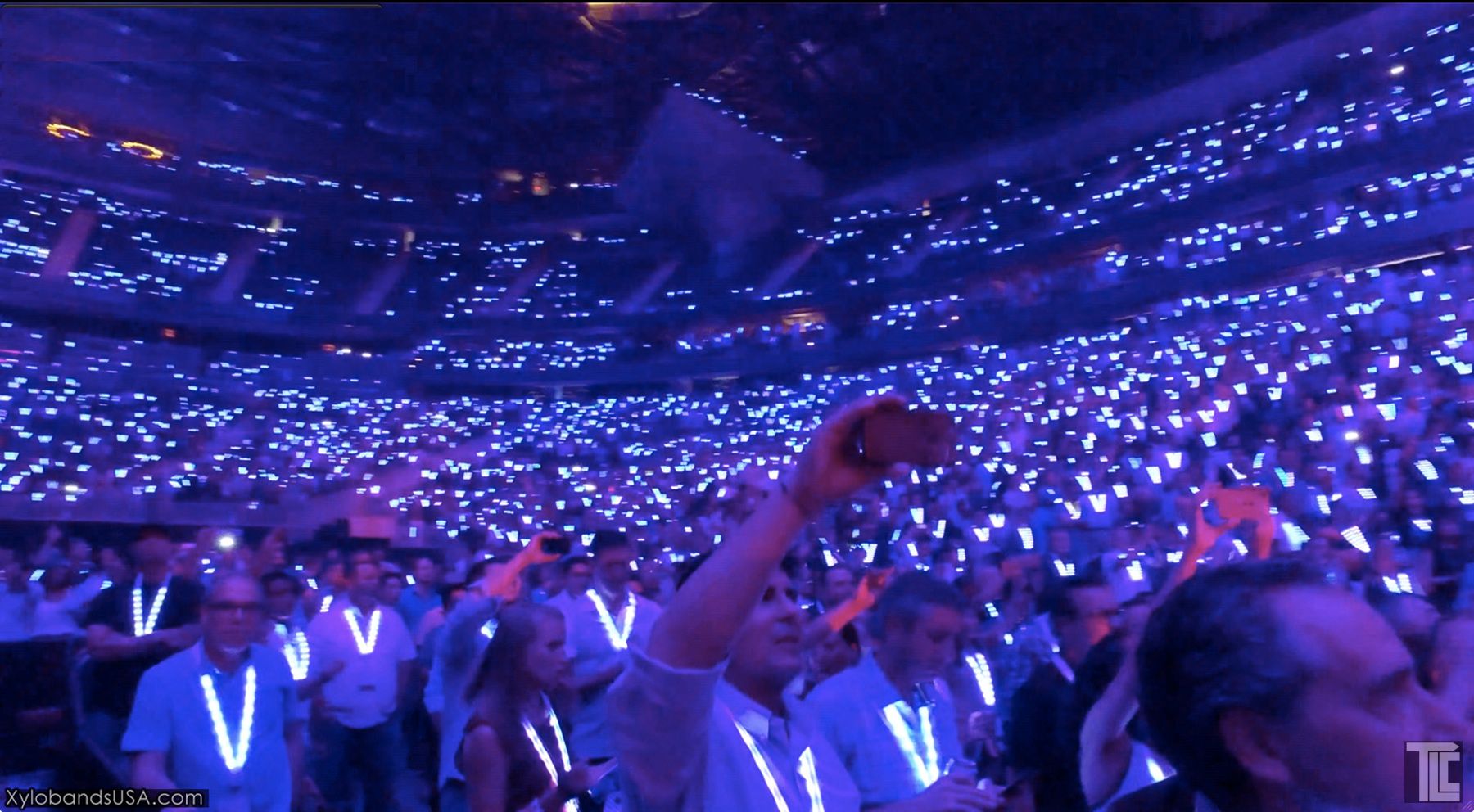
In a fast-paced format like ITV's "Beat The Chasers," operator-controlled lighting cues can instantly change the energy of the room, heightening the drama of the countdown clock or celebrating a win with a flash of light. At a major broadcast like the Formula One 75th-anniversary event, custom LED Lanyards can segment the audience by team or hospitality tier, allowing for branded moments and targeted visual effects that look stunning on camera. In both vastly different scenarios, the audience becomes a key visual asset for the television director.
A Unified Field of Vision
Ultimately, the goal of a modern broadcast is to create a unified experience—to make the viewer on their couch feel the same surge of collective energy as the fan in the front row. To achieve this, the crowd can no longer be an afterthought in the lighting plot; it must be a foundational element, engineered from the ground up to be camera-friendly, controllable, and creatively integrated.
By mastering the science of broadcast-ready light, producers and designers can transform the live audience from a collection of individuals into a single, cohesive visual entity. This transforms the broadcast from a simple documentation of an event into a truly shared spectacle, creating powerful, memorable moments that resonate equally in the venue and in living rooms around the world. The future of live broadcasting is not just about showing the event; it's about illuminating it from within.